Kemeys Manor: A Historic Manor House and Family Estate
Site at a Glance
- Popularity
- Medium
- Country
- United Kingdom
- Primary era
- Early Modern
- Eras represented
- Medieval, Early Modern
- Civilizations
- English
- Site type
- Domestic
- Remains
- Manor House
On this page10 sections
History
Medieval origins and the Kemeys family
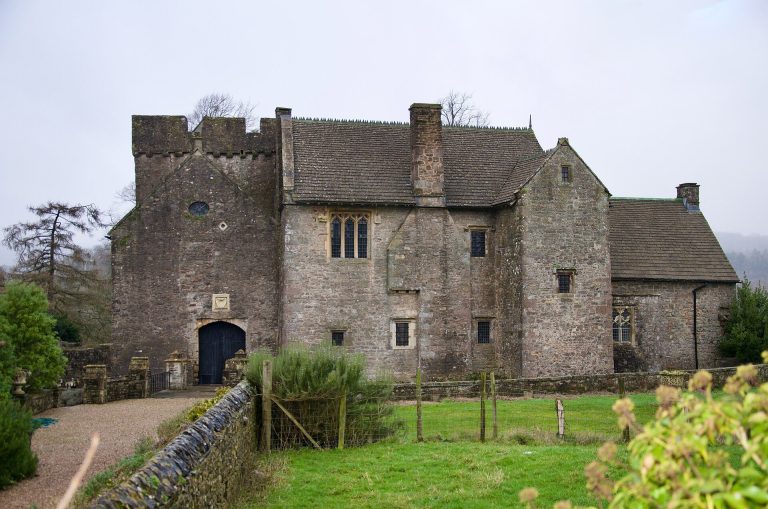
Kemeys Manor is a manor house in the United Kingdom with 13th-century origins and a vernacular character, reflecting local building traditions. It became the home of the Kemeys family, whose long tenure shaped the estate’s history.
In the early 13th century, Edward, Lord of Kemeys, established his family in South Wales. His descendants held the manor until the estate was sold in the early 18th century, an association lasting about 500 years. Over the intervening centuries, family members married into prominent families in Monmouthshire and Glamorgan and served as High Sheriffs of Monmouthshire. A High Sheriff held a county office connected with representing the Crown and carrying out legal and ceremonial duties.
Expansion and the end of family ownership
The manor was substantially enlarged during the 16th and 17th centuries. After the estate’s sale in the early 18th century, the manor passed among several owners. Kemeys Folly, a hunting lodge built by George Kemeys south of the manor in the late 17th century, later became separate from the estate.
Kemeys Folly and later history
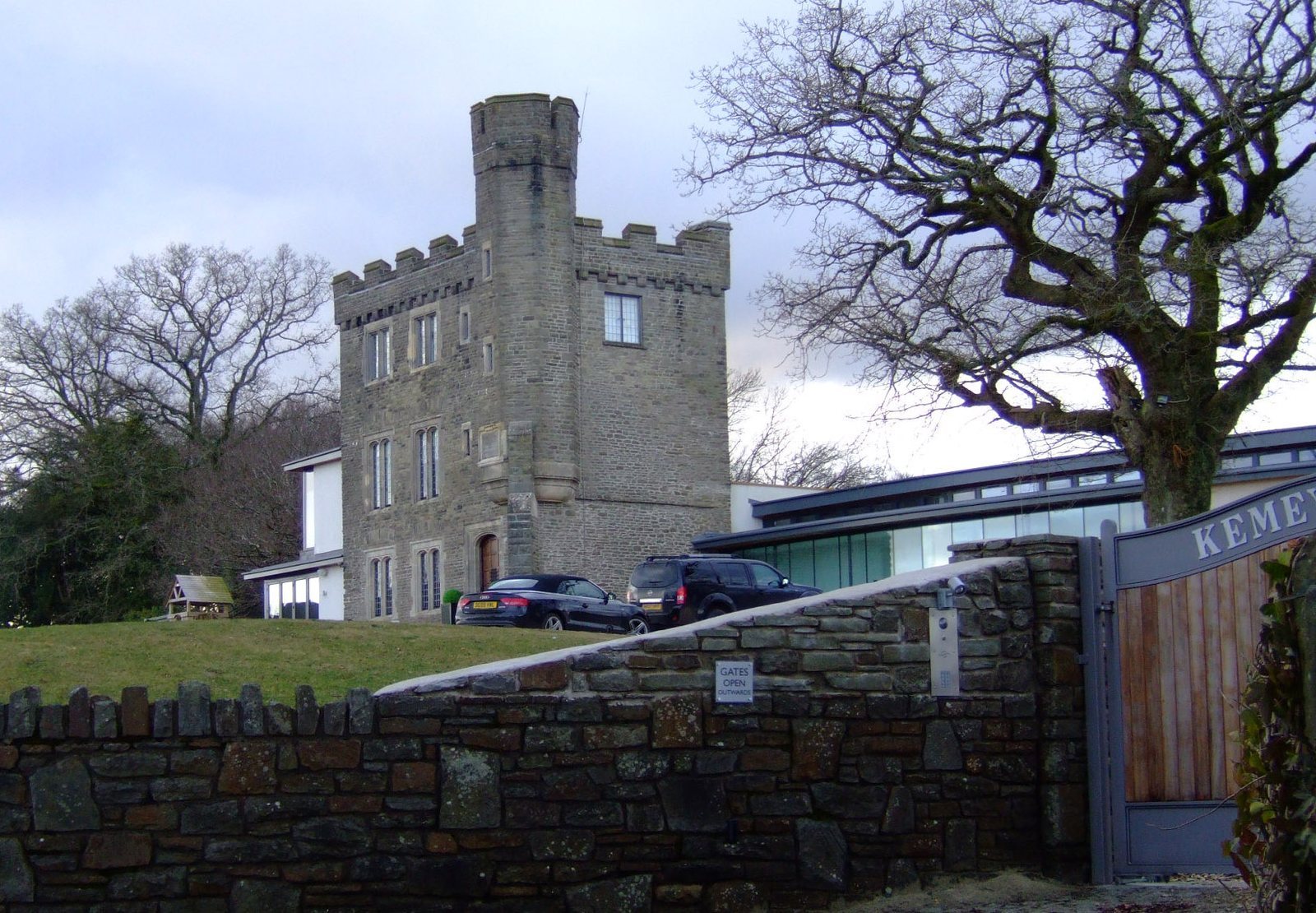
A severe fire damaged the folly in 1910. T. E. Watson, a Newport coal-mine owner, carried out its reconstruction as a memorial to John Lawrence and Horton Addams-Williams. The building was converted into a house in 1911–1912 and rebuilt again in the early 21st century.
A local tradition tells of a joking exchange between George Kemeys and his uncle. George claimed that he could see eleven counties from the folly, and his uncle replied that eleven counties could see the building. A description published in 1801 also praised its outlook.
The manor is listed Grade II*, a category for buildings of more than special interest. Its northern barn and Kemeys Folly are Grade II buildings, a category for buildings of special interest. The surrounding park is listed at Grade II on the Cadw/ICOMOS Register of Parks and Gardens of Special Historic Interest in Wales under the name Kemeys House. Cadw is the Welsh Government’s historic-environment service; ICOMOS is an international body concerned with conserving monuments and sites.
Remains
Manor and grounds
The manor
The well-preserved manor is a two-storey building with a slate roof and mullioned windows, which are divided into sections by vertical bars. Its tower, hall and attached ranges retain medieval origins, particularly in the base of the tower. Most of the present building dates to the 16th and 17th centuries. Inside, 17th-century plasterwork survives. Fred Hando described rows of pegs in the hall as equipment for stretching harp strings.
Walls and terraces
Walls and terraces dating from the 16th century remain in the grounds and have undergone little alteration since they were built.
Barn
A barn stands north of the manor.
Kemeys Folly
The folly stands on a steep escarpment south of the manor. It consists of a square tower and a turret, both topped with notched battlements. Extensions added in the early 21st century form part of the building. Its outlook reaches north into Wales and south across the Bristol Channel to Somerset.