Schloss Monrepos: A Baroque Residence of the House of Wied
Site at a Glance
- Popularity
- High
- Country
- Germany
- Primary era
- Modern
- Eras represented
- Modern
- Civilizations
- German
- Site type
- Domestic
- Remains
- Elite Residence
On this page11 sections
History
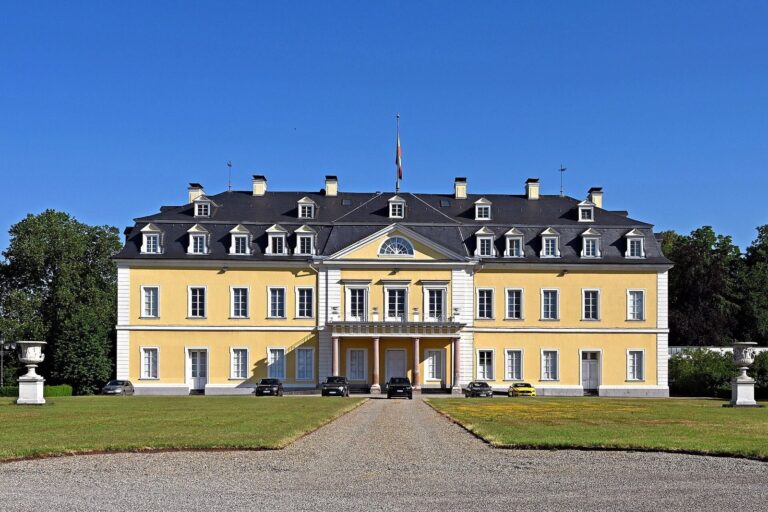
Schloss Monrepos was a Baroque residence of the House of Wied, a German princely family associated with the Neuwied area. It stood near the Hanhöfe in Germany, above the family’s ancestral castle at Altwied. Baroque was an ornate European style prominent in the seventeenth and eighteenth centuries. Count Alexander von Wied-Neuwied commissioned the residence, which Behagel von Adlerskron, a builder from Frankfurt, constructed from 1757 to 1762.
Early use and changing name
The residence was first called Montrepos, meaning “mountain rest,” and later Monrepos, meaning “my rest.” The change reflected the fashion of the time. In 1795, during the War of the First Coalition, a European conflict in which several powers opposed revolutionary France from 1792 to 1797, a boys’ school run by the Moravian Brethren moved there. The Brethren are a Protestant community with roots in a pre-Reformation Bohemian religious movement.
The nineteenth-century estate
During the nineteenth century, Monrepos served as the princely family’s summer residence. Around 1844–45, the castle was altered. Princess Elisabeth zu Wied was born there on 23 December 1843 and grew up at Monrepos. She later became known by her literary name, Carmen Sylva, and became Queen of Romania.
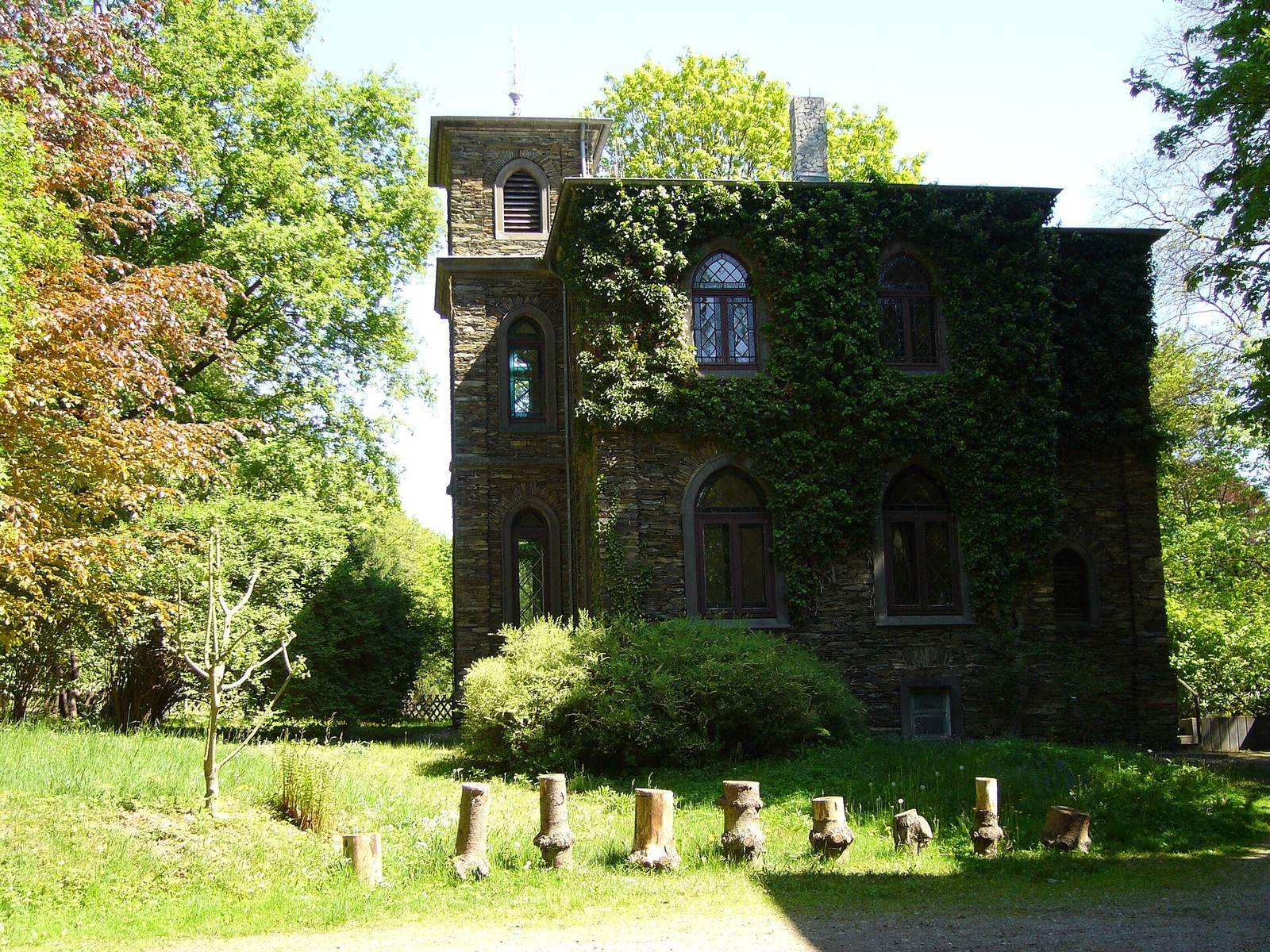
From 1872 to 1902, the Segenhaus served as the residence of Princess Marie zu Wied, the widowed mother of Elisabeth. Carmen Sylva stayed there during her exile from 1892 to 1894 and on visits to Germany. Queen Emma of the Netherlands, Marie’s niece, also came to rest there. Marie and Carmen Sylva planned to make the house a centre for artists from around the world.
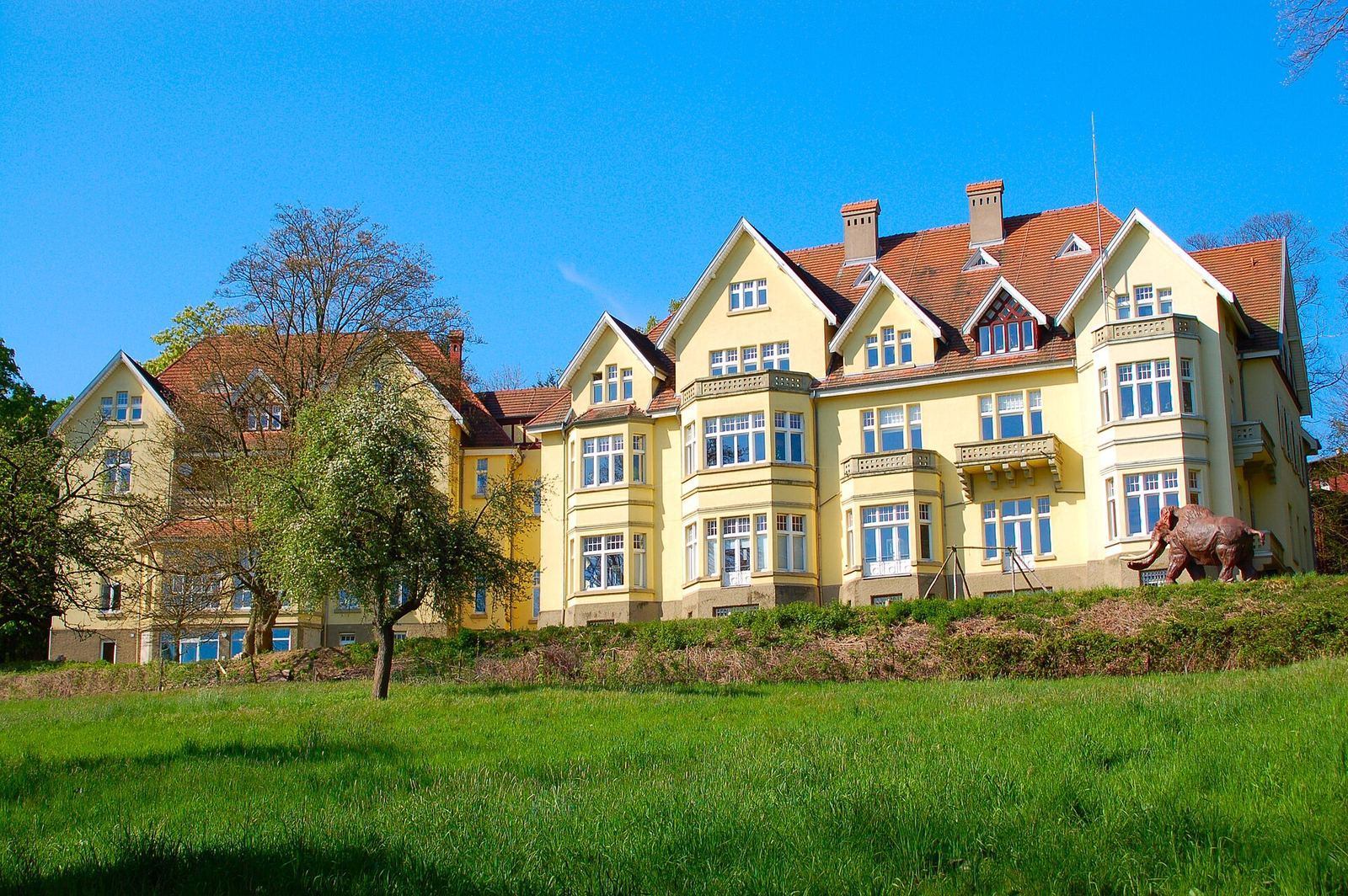
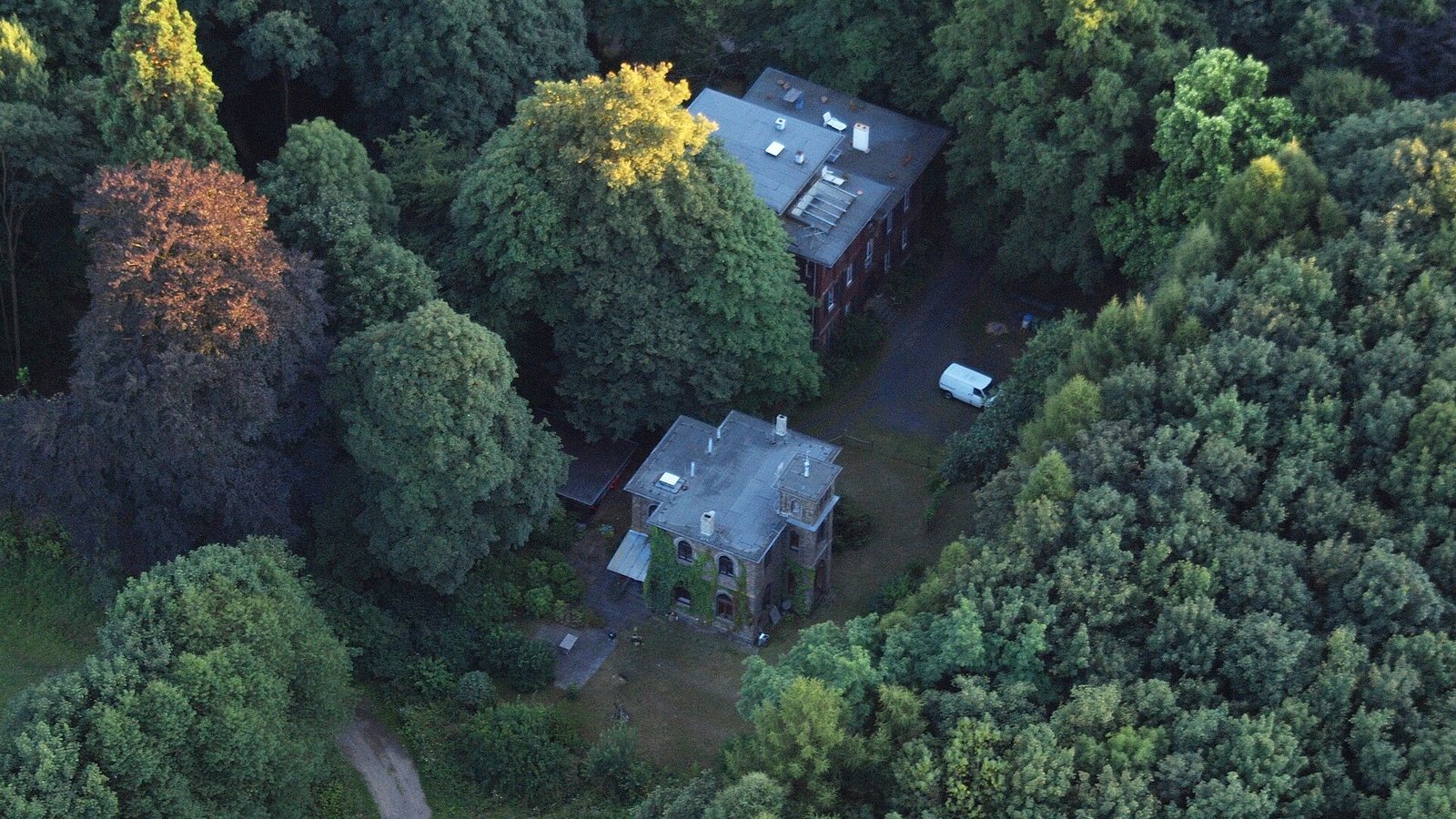
The Schwedenhaus was built in 1888 as a hunting lodge for the Swedish Crown Prince, later King Gustav V. In 1909, Waldheim, also called the Palais of the Princesses, was built nearby as a home for the widow of Prince Wilhelm of Wied and their daughters, Elisabeth and Luise.
Decline, destruction, and later use
Monrepos saw little use between the world wars and was eventually left empty and allowed to deteriorate. High upkeep costs and the lack of a buyer led its owner, Friedrich Wilhelm, Prince of Wied, to arrange its destruction. With state approval, the Niederbieber Volunteer Fire Brigade set the castle alight on 30 April 1969, using 100 litres of petrol and 300 litres of crude oil.
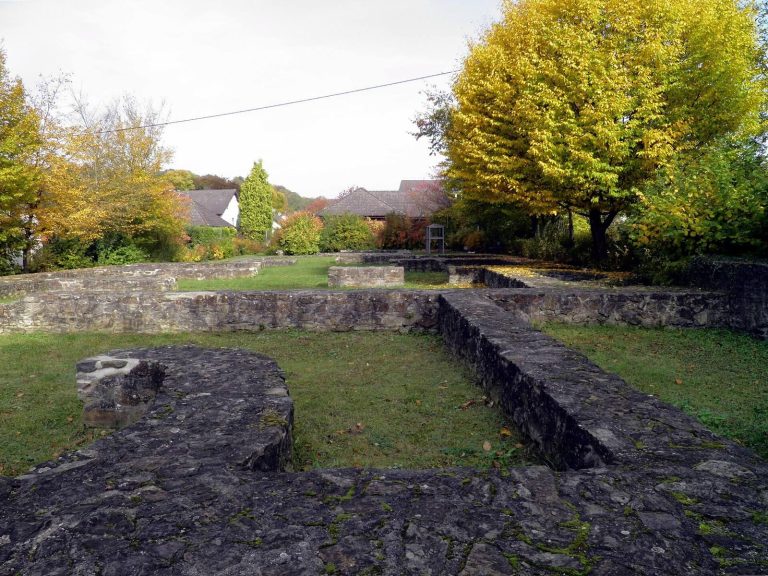
The Segenhaus also fell into disrepair after its heirs lost much of their wealth during a period of inflation and could not maintain it. Its ruin was levelled during a German armed forces exercise in 1971. Waldheim stood unoccupied after Luise’s death in 1965. A Paleolithic research unit of the Roman-Germanic Central Museum, a German archaeological research institution, had been established in the Schwedenhaus in 1981. From 1986, Waldheim was converted into a museum and opened in 1988 as the Ice Age Museum; the research unit moved there that year. Waldheim now houses the Monrepos Archaeological Research Center and Museum for Human Behavioral Evolution.
Remains
The estate brought together the principal residence and a group of nearby domestic, service, and commemorative buildings. Planned gardens and wooded grounds formed part of its setting, and the architecture included the formal main house, villas, and timber-built structures.
The principal residence
The castle was an elongated building with a flat roof and 31 vertical lines of windows across its facade. Its left, central, and right sections were joined, each with two storeys and a slight projection at its centre. In a later form, the central and corner sections had three storeys and projecting balconies. Statues, vases, and coats of arms ornamented the roof railing. Its snow-white paint gave it the local name “White Castle.” The grounds included artfully arranged gardens with small hermitages.
Other estate buildings and landscape
Waldheim
Waldheim was a villa near the castle, also known as the Palais of the Princesses. A section called the Dachsbau was attached to the Princesses’ house at an angle.
Segenhaus
The Segenhaus was a villa in the style of an Italian country house. Its name came from the village of Segendorf. The wrought-iron entrance gate bore the initials “S H.” An old gatehouse stood in front of the gate, with the Amselheim farther along; both belonged to the estate.
Schwedenhaus
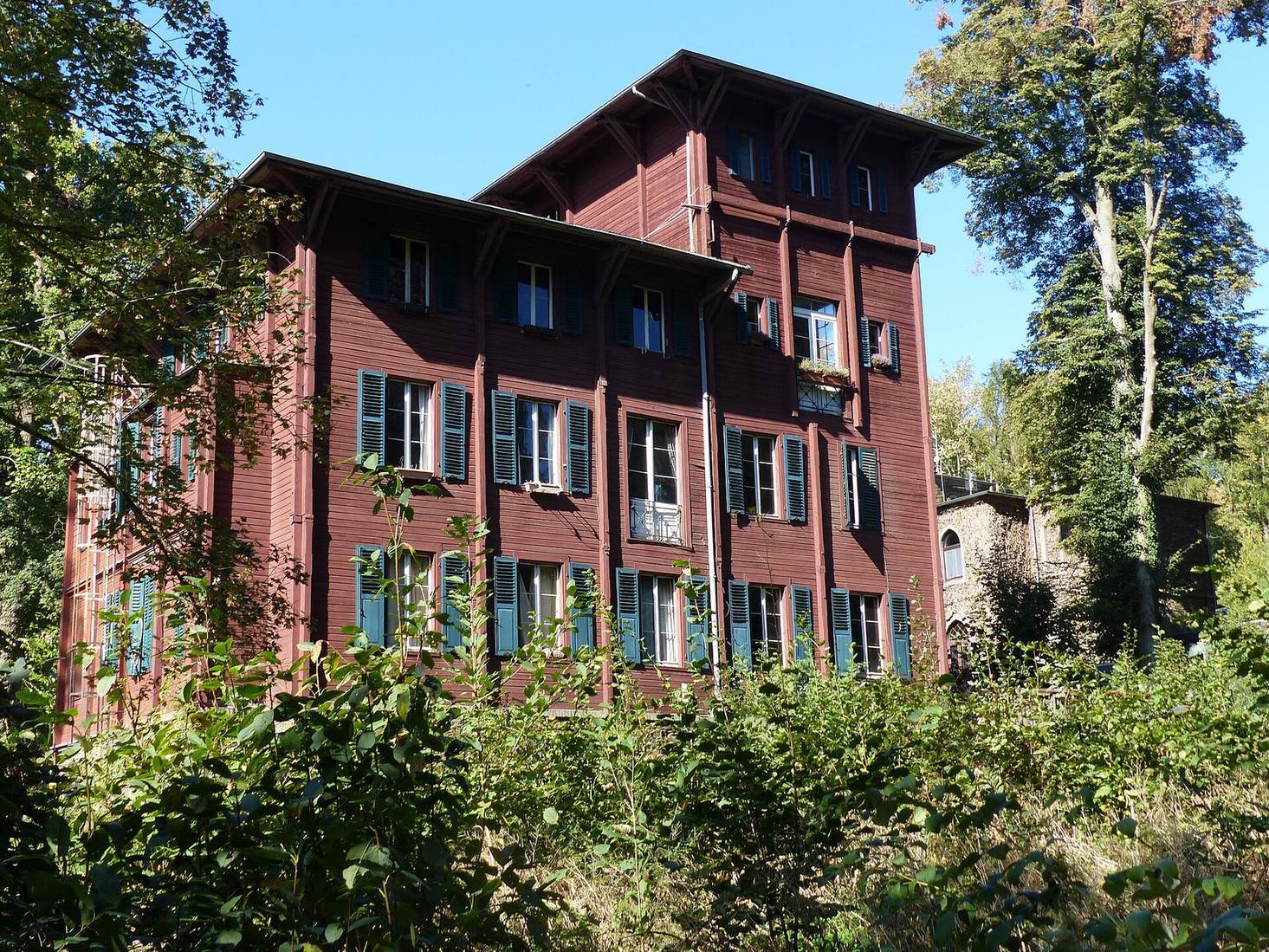
The Schwedenhaus was built in a Scandinavian timber style.
Other buildings and wooded grounds
Other features near the castle included the princely Wied forest cemetery, the Carmen-Sylva resting place, a kitchen house, a stable dating to 1890, a forestry and residence house, and the earliest stable, also called the Bakehouse. The houses and service buildings were inhabited. Prince Maximilian of Wied planted exotic trees in the surrounding woods, bringing them back from his research travels.