Schloss Schönberg: A Castle and Palace in Bensheim, Germany
Site at a Glance
- Popularity
- Medium
- Country
- Germany
- Primary era
- Early Modern
- Eras represented
- Medieval, Early Modern, Modern
- Civilizations
- Electoral Palatinate, German, Holy Roman Empire
- Site type
- Domestic
- Remains
- Castle
On this page7 sections
History
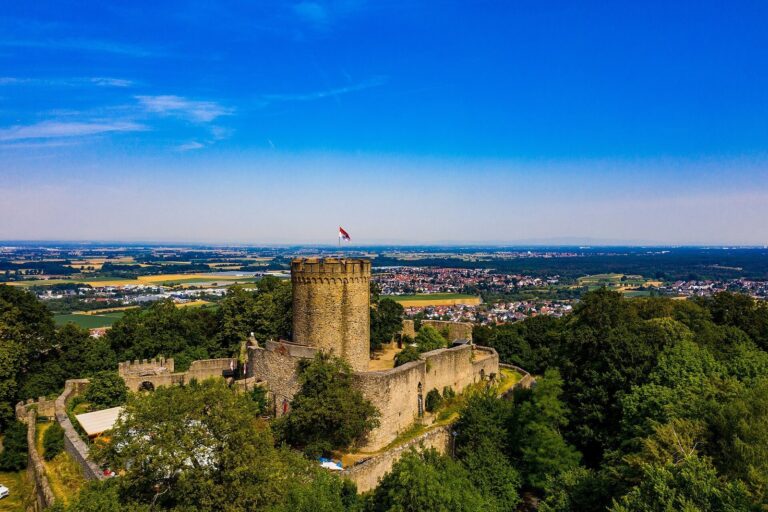
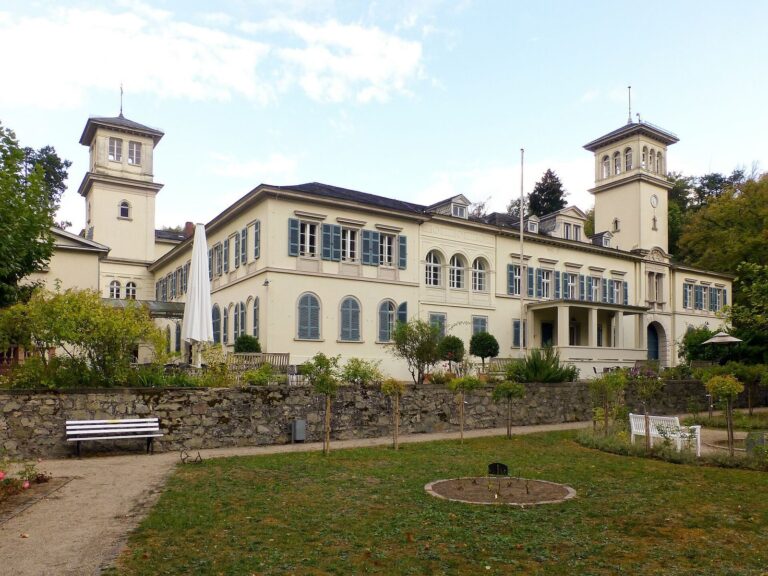
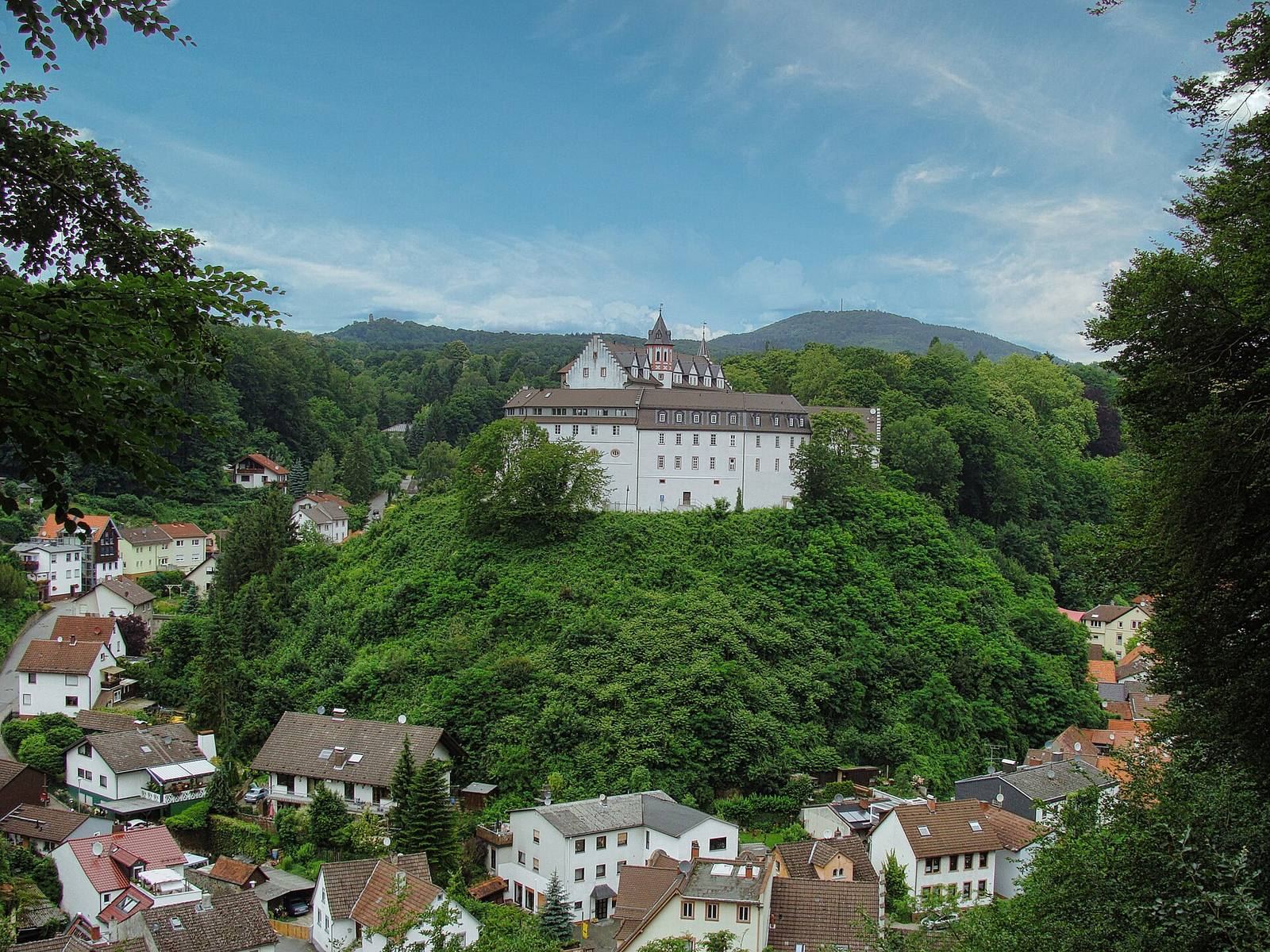
Schloss Schönberg is a castle and later palace in the Schönberg district of Bensheim, southern Hesse, Germany. It originated in the thirteenth century and was built to control the important Lautertal road. By 1303, it was already described as a fortress.
Medieval fortress and border position
The castle belonged to the County of Erbach. The Erbach family, a German noble house, held it as a fief, or land granted under a feudal relationship, from the Electoral Palatinate, a territory ruled by a prince-elector. Schönberg stood near the territory of Kurmainz, an ecclesiastical principality ruled by an archbishop-elector, and the lands of the Counts of Katzenelnbogen. When the Katzenelnbogen line ended, its lands passed to the Landgraves of Hesse in 1479. The new neighbors were territorial princes, and Schönberg continued to serve as a border stronghold.
Siege and transformation into a residence
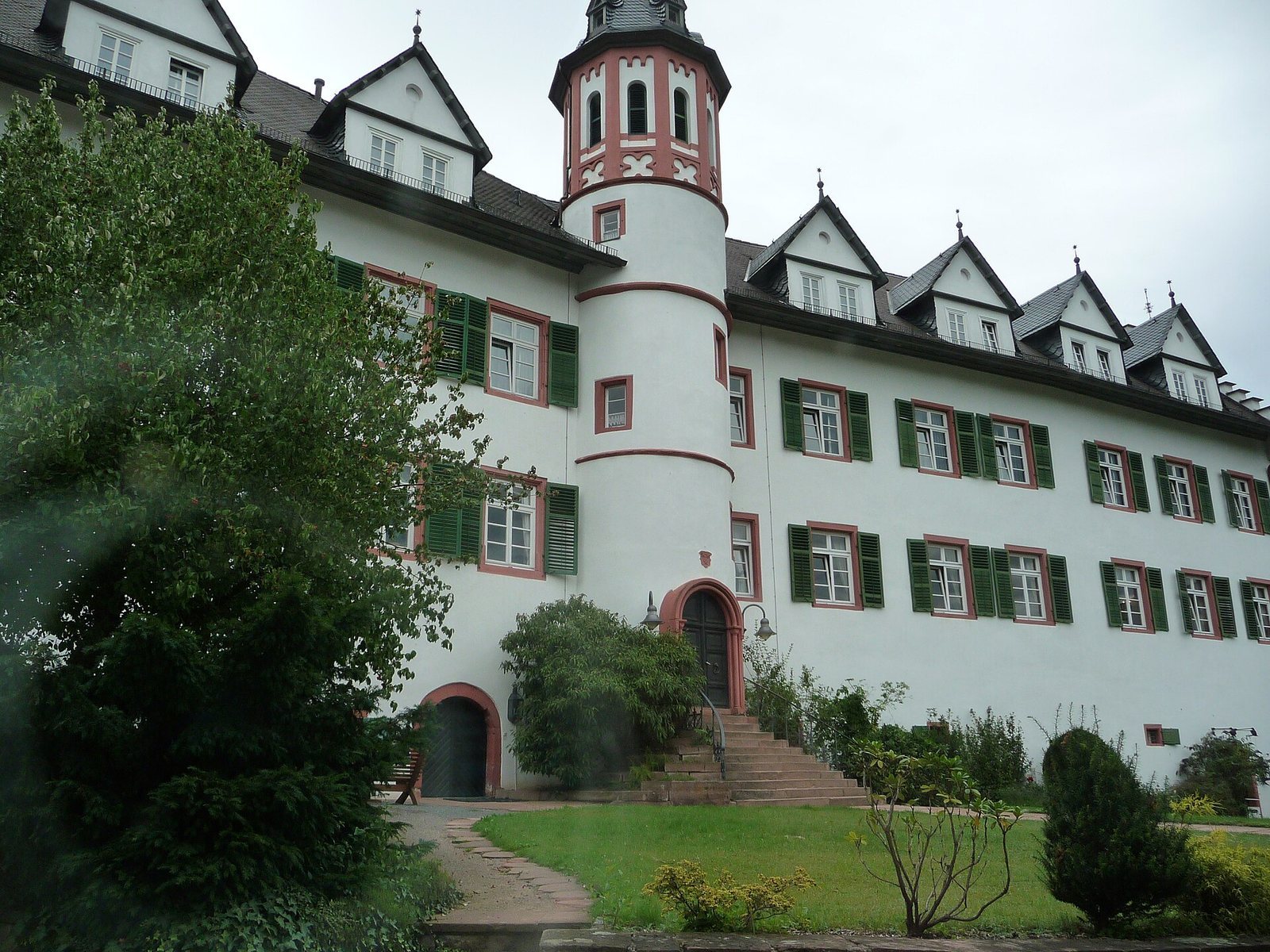
In 1504, during the War of the Landshut Succession, a conflict over the inheritance of the Duchy of Bavaria-Landshut, Landgrave Wilhelm II of Hesse besieged and bombarded the castle. A major fire left it badly damaged. After the Erbach family attained the rank of counts in 1532, it undertook extensive rebuilding. By the middle of the sixteenth century, the fortress had become an unfortified palace and a residence for the counts.
In 1717, the House of Erbach divided into separate branches, and Schönberg became the seat of the Erbach-Schönberg line. Around 1728–29, Count Georg August von Erbach-Schönberg began extensive rebuilding that enlarged the former fortress into a palace. The Napoleonic Wars left the complex undamaged.
Later alterations and changing uses
Extensive alterations followed in the 1840s and 1850s. In 1902, Princess Maria von Erbach commissioned the complex’s last major addition. Schönberg suffered little damage during the Second World War. In 1956, the princely branch sold the palace to the Ruhrknappschaft, a miners’ pension institution based in Bochum. After conversion into a convalescent home, it opened as a preventive-health facility on 17 October 1957, with Federal President Theodor Heuss in attendance.
Schönberg later served as a training and conference center for Deutsche Rentenversicherung Knappschaft-Bahn-See. It was put up for sale in December 2011, bought by a regional entrepreneur in 2014, and has remained privately owned.
Remains
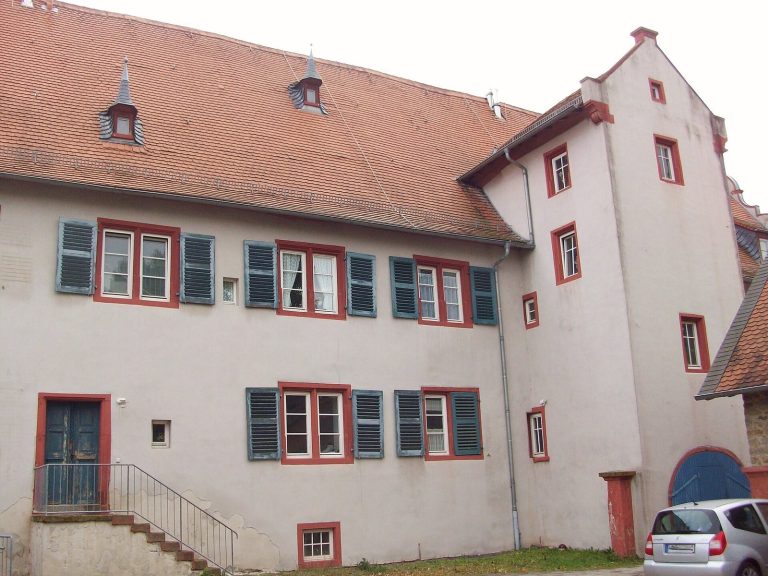
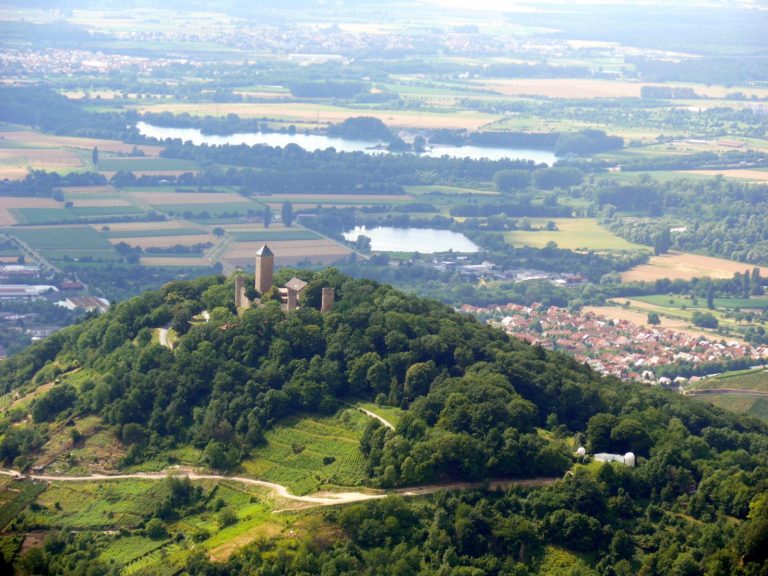
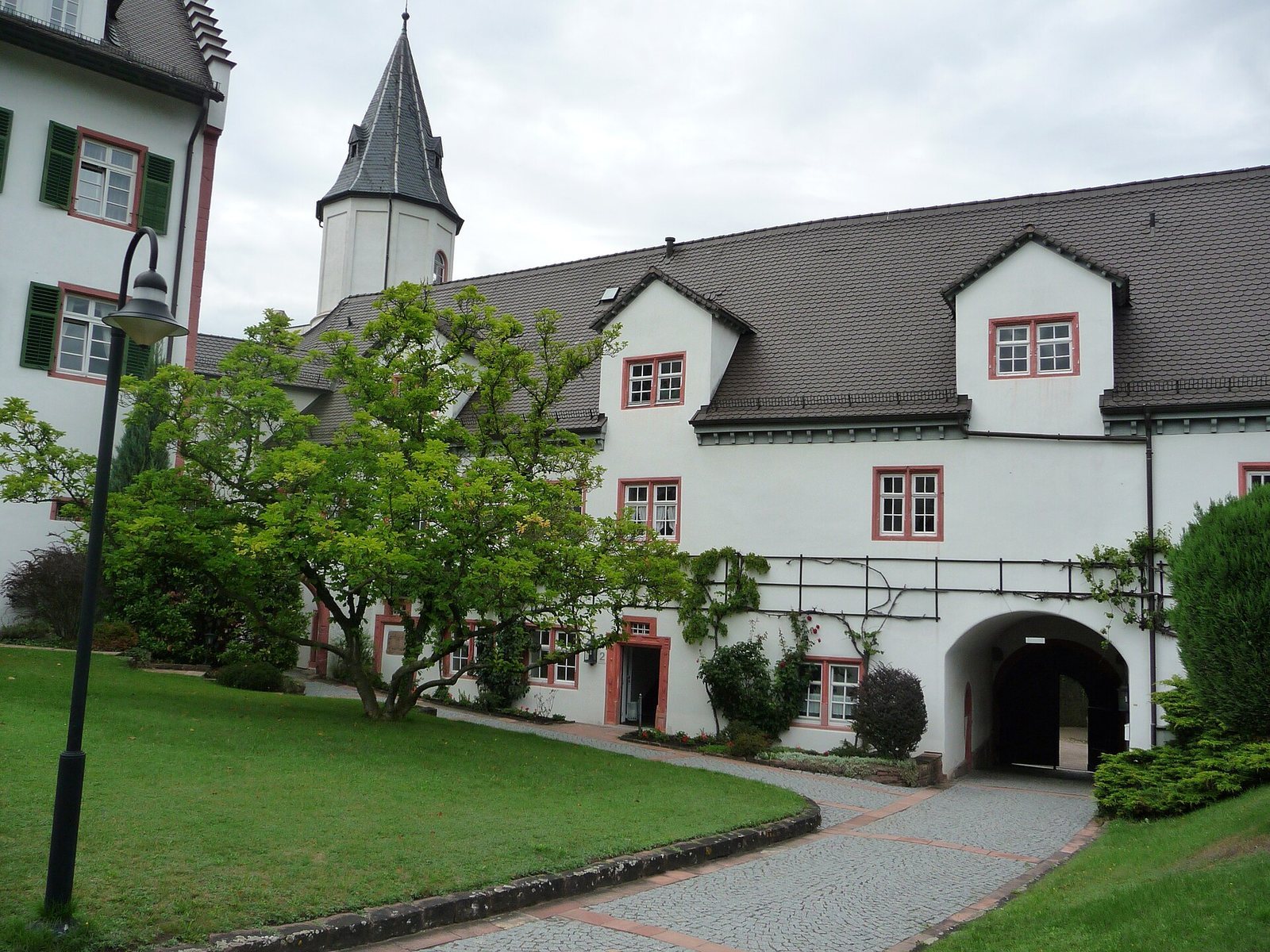
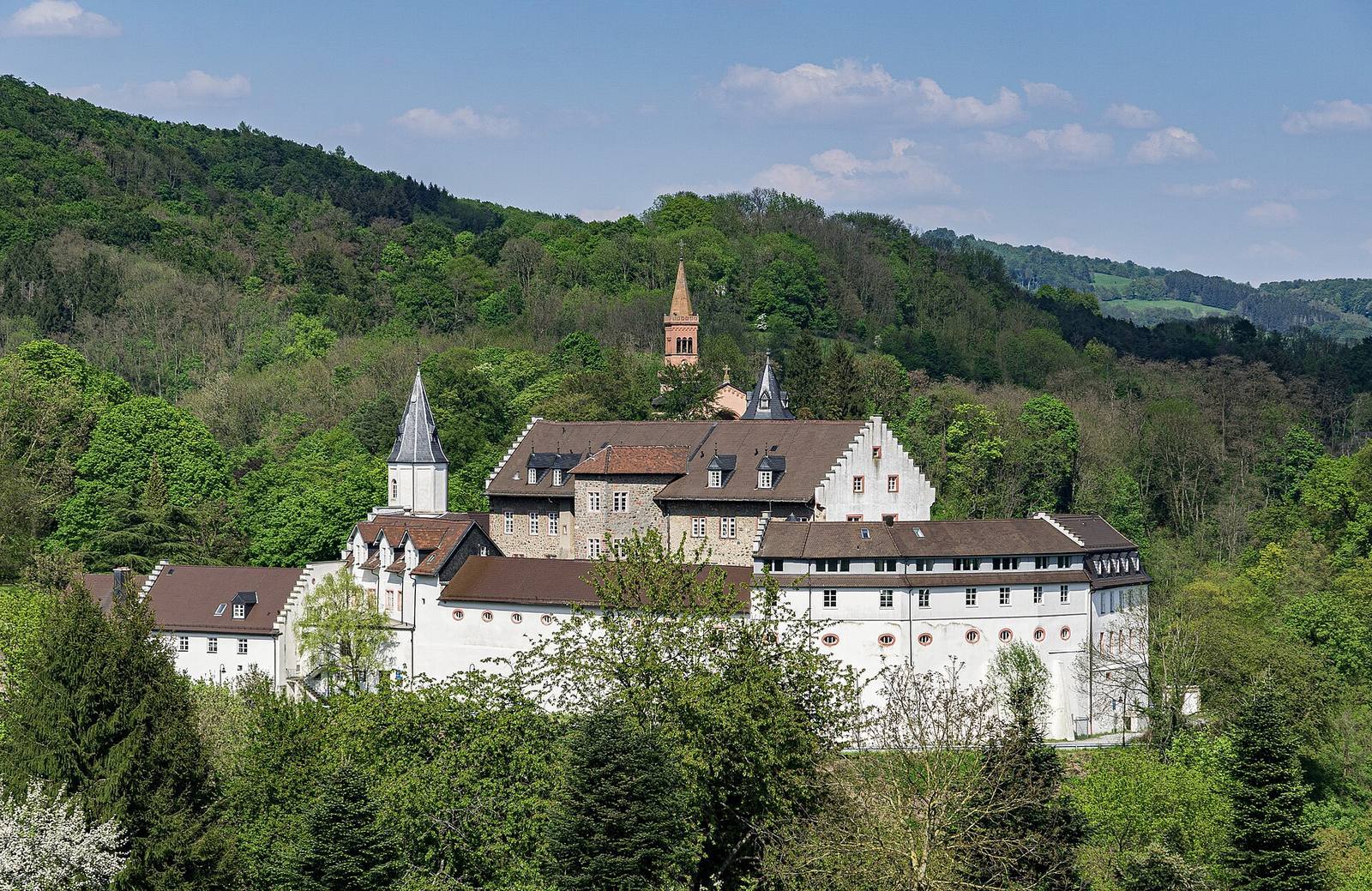
The complex stands on a high spur above Schönberg and the Schönberger Valley. Its layout brings together traces of the original northern defenses, later residential buildings, a courtyard terrace, landscaped grounds, and a pavilion.
Defenses and residential buildings
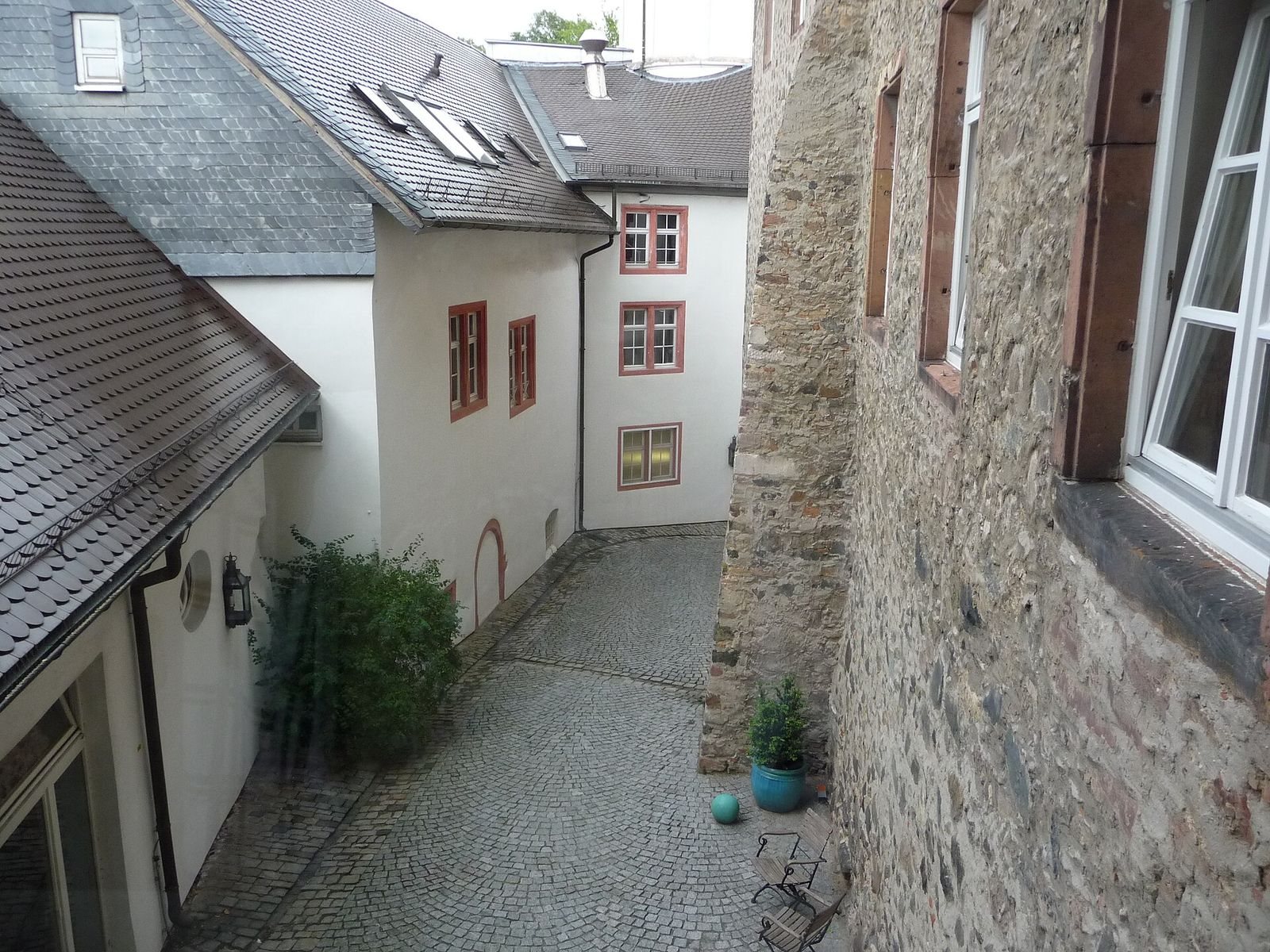
The steepest defenses faced north, where the slope was gentler and an attack was considered most likely. A stone shield wall, a defensive wall protecting the most vulnerable approach, and towers guarded this side; one of the oldest towers survives. The complex also includes a main residential building and north wing. Alterations in the 1840s and 1850s reshaped these buildings and the courtyard, where an eastern terrace was created.
Gardens and pavilion
The grounds include a landscape park developed from a Baroque garden that was enlarged in the eighteenth century. A terrace pavilion, designed by Bensheim architect Heinrich Metzendorf, forms another part of the complex.