Boulogne Castle: A Medieval Fortress and Renaissance Residence in France
Site at a Glance
- Popularity
- Medium
- Country
- France
- Primary era
- Early Modern
- Eras represented
- Medieval, Early Modern
- Civilizations
- French, Holy Roman Empire
- Site type
- Domestic
- Remains
- Castle
On this page6 sections
History
Boulogne Castle is a medieval castle in France, built in the 11th or 12th century. It later became the centre of one of the twelve baronies of the Vivarais, a historical region in southeastern France; a barony was a territory held under a baronial title.
The medieval fortress and the Lestrange family
The castle’s history became closely tied to the Lestrange family, which had connections to the royal court from the 14th century. In 1384, Raoul de Lestrange acquired it from Louis II, Count of Diois and Valentinois. He strengthened the fortress with funds inherited from his brother Guillaume, Archbishop of Rouen. In 1390, Raoul also bought Grozon from Louis II.
The castle stayed with the Lestrange family for generations before passing through the Hautefort, Saint-Nectaire, and de Fay families. Marie de Lestrange, the family’s only child and heir, married René d’Hautefort, and their descendants held the castle into the 18th century.
Renaissance residence and later history
Around 1550, the French noblewoman and courtier Marie de Langeac transformed the former fortress into a Renaissance residence, a style shaped by renewed interest in classical forms.
In 1620, Claude d’Hautefort de Lestrange, a Catholic, married the Protestant Marie Paule de Chambaud. Their union prompted disputes with people in Privas and clergy in the Vivarais. The conflict culminated in 1629, when troops of Louis XIII, king of France from 1610 to 1643, besieged Privas during the Huguenot Wars, conflicts between Catholics and Protestants in France. The castle’s fortifications were demolished at the end of the wars.
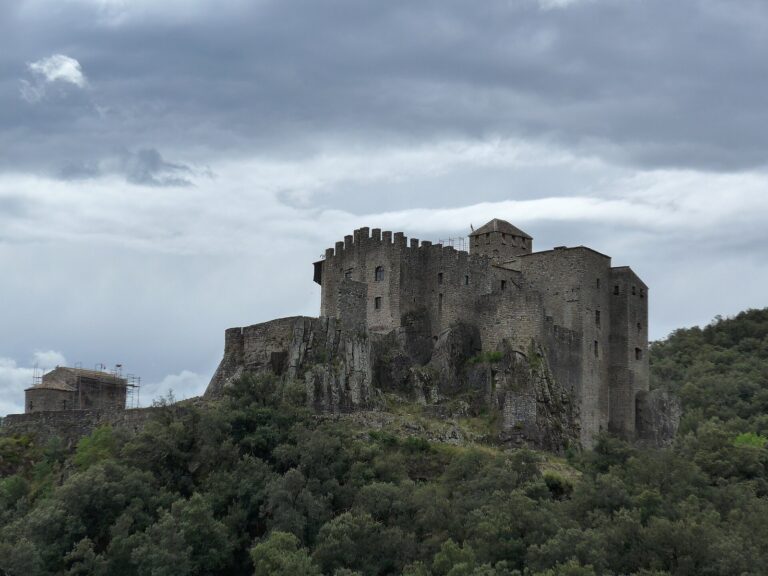
The residence remained intact until the French Revolution, when it was sold as state-owned property in 1793. In 1820, a resident of Saint-Étienne-de-Boulogne removed building materials from the castle. Its ruins were classified as a French historic monument in 1915 and placed on a heritage-at-risk list in 2024.
Remains
Medieval fortifications
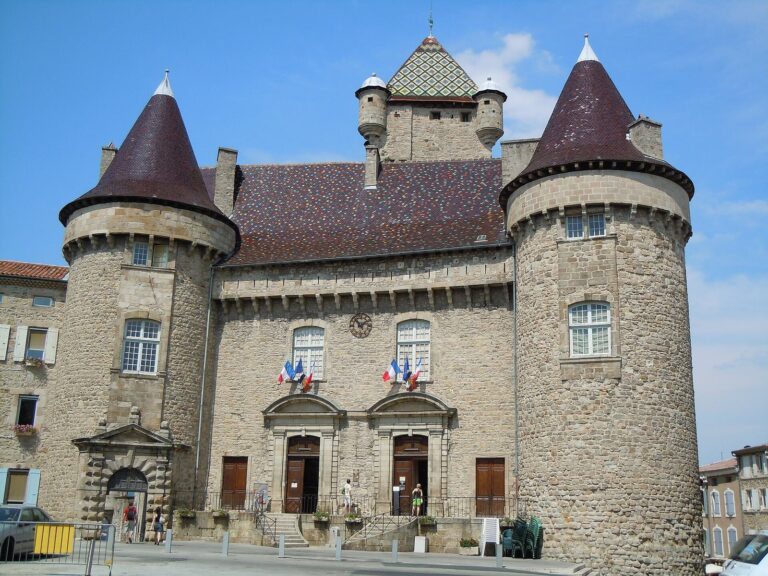
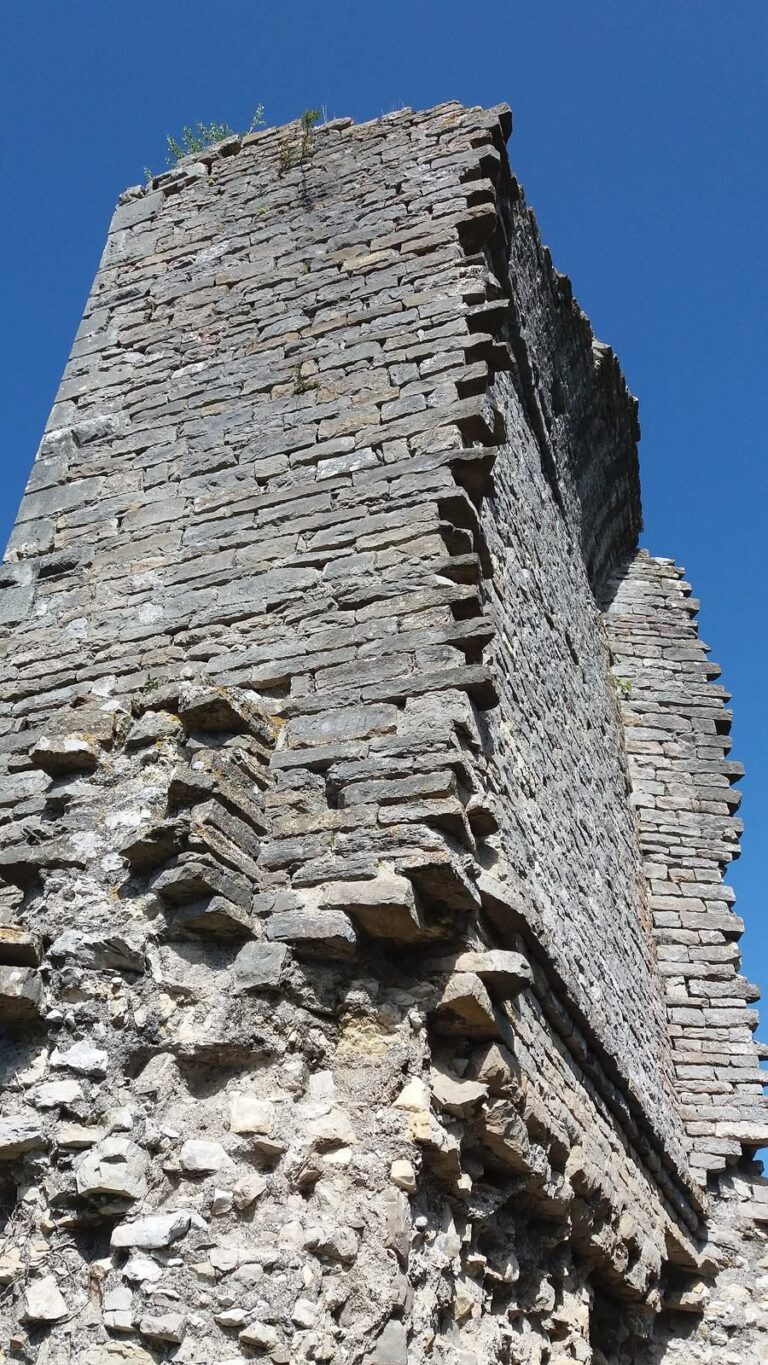
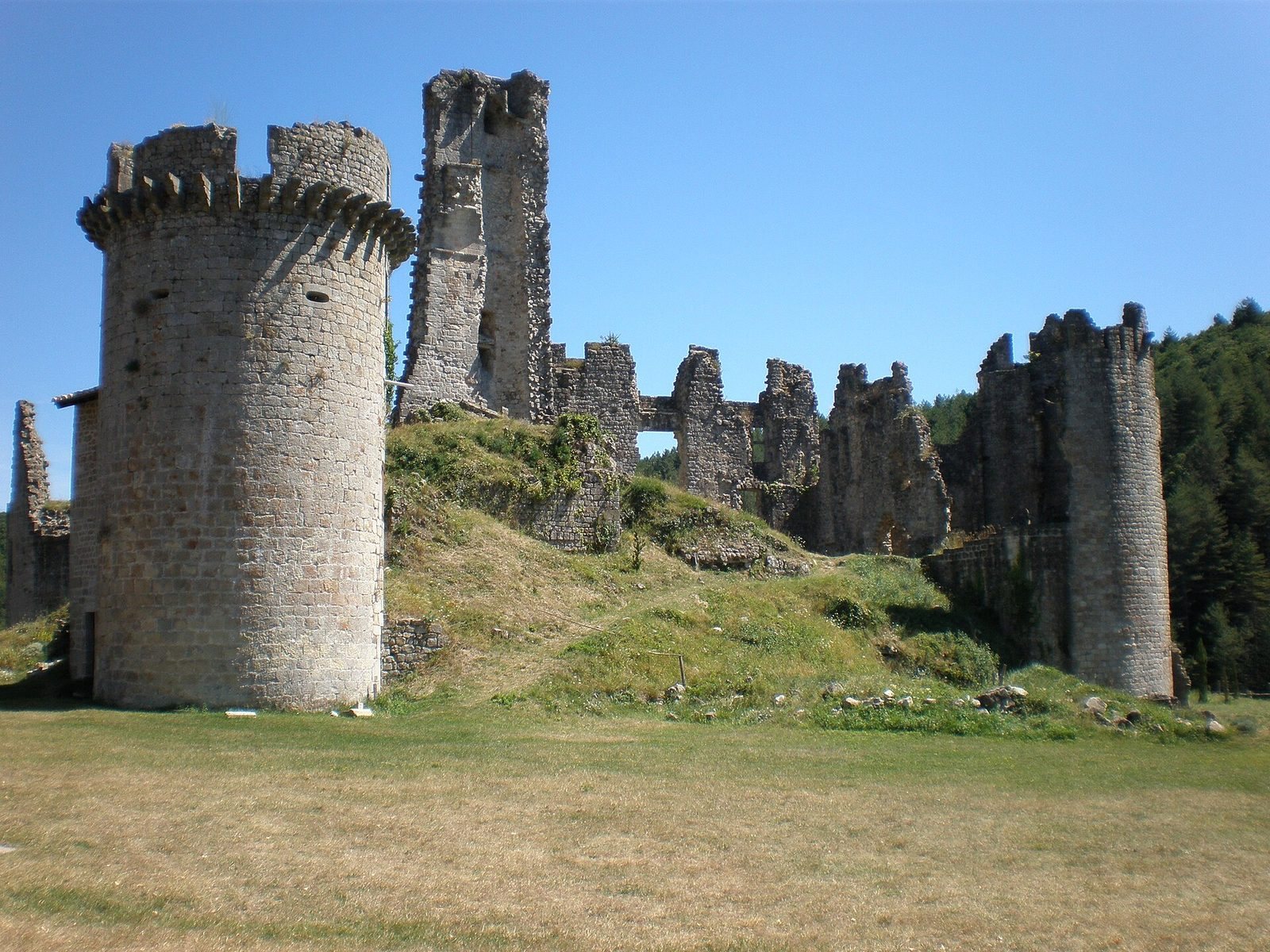
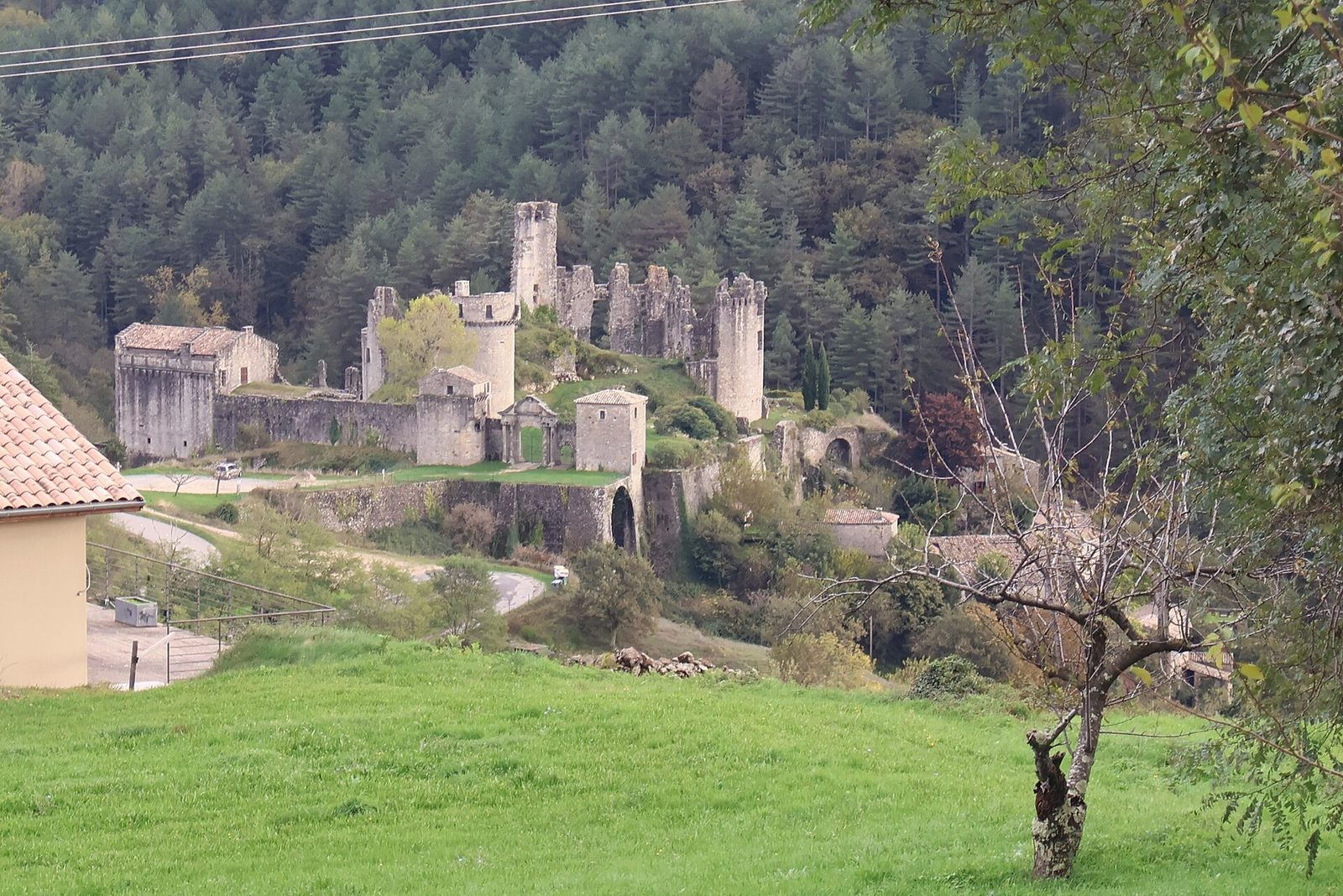
The remains occupy a rocky escarpment bordered by two small streams, with a moat protecting the eastern side. The earliest complex comprised a square keep and a chapel. The keep’s lower section has rusticated masonry, stonework with deliberately rough or projecting faces. In the 14th century, three large round towers and defensive walls linking the towers were added to strengthen the fortress.
Renaissance additions
Features from the conversion into a residence include the Guard Room, stables, a large entrance terrace bridge, and a small gatehouse, a fortified entrance building. The portal has a Renaissance pediment and twisted columns, with a sculpture of Marie de Langeac’s head as decoration. The castle survives as a well-preserved ruin, and its remains continue to be consolidated.