Manauli Fort: A Sikh-Mughal Fort in Punjab, India
Site at a Glance
- Popularity
- Medium
- Country
- India
- Primary era
- Early Modern
- Eras represented
- Early Modern
- Civilizations
- Mughal
- Site type
- Military
- Remains
- Fort
On this page8 sections
History
Manauli Fort stands in Manauli hamlet, in Punjab’s Mohali district, India. Local tradition attributes its construction to the Mughals, the dynasty that ruled much of South Asia from the 16th century into the 19th. Its architecture is described as combining Sikh and Mughal styles, but its construction date is uncertain. Mughal-era forts in the Chandigarh region are generally dated to the late 17th or 18th century.
Mughal origins and Sikh conquest
During a period of persecution of local Sikhs by Mughal administrators, forces led by Banda Singh Bahadur defeated Mughal troops and took the fort for the first time. Banda Singh Bahadur was a Sikh military leader who resisted Mughal authority in the early 18th century. The former battlefield later became known as Shaheed Bagh, or “Garden of Martyrs,” in memory of Sikh warriors killed there.
The fort’s capture from Mughal control is also associated with the Singhpuria Misl, one of the Sikh confederacies that developed in Punjab, under the leadership of Kapur Singh. The date is uncertain, with proposed dates of 1746–1756 or 1793. After the battle, participating Sikh soldiers received land and villages in conquered territories as jagirs, grants of land revenue commonly assigned in return for service. Kapur Singh received the fort and adjoining land. Mughal authorities later gave him the title Nawab, used for regional rulers and officials.
The estate and its later history
The fort and estate remained with Kapur Singh’s descendants for at least seven generations, although the family did not know how the fort had first come into its possession. Named family heads after Kapur Singh included Khushal Singh, Budh Singh, Gopal Singh, Jai Singh, and Avtar Singh. Umrao Singh, born in 1896, became the estate’s legal heir while still a minor, and court management administered the estate until 1921.
After India gained independence in 1947, the jagirdari system, organized around land-revenue grants, formally ended. Sita Inder Singh, the next titular head, nevertheless continued to receive from the Ropar administration an amount equivalent to the former jagir. He later sold much of the family’s land in Manauli while retaining control of the fort, and expressed interest in renovating it as a heritage site. Ownership subsequently passed to the Government of Punjab. The fort became a protected monument in 2001 and came under the state’s Directorate of Cultural Affairs, Archaeology and Archives Museum in 2009. Renovation work in 2016 included repairs to an internal walkway, and authorities assigned a caretaker.
Remains
Setting and construction
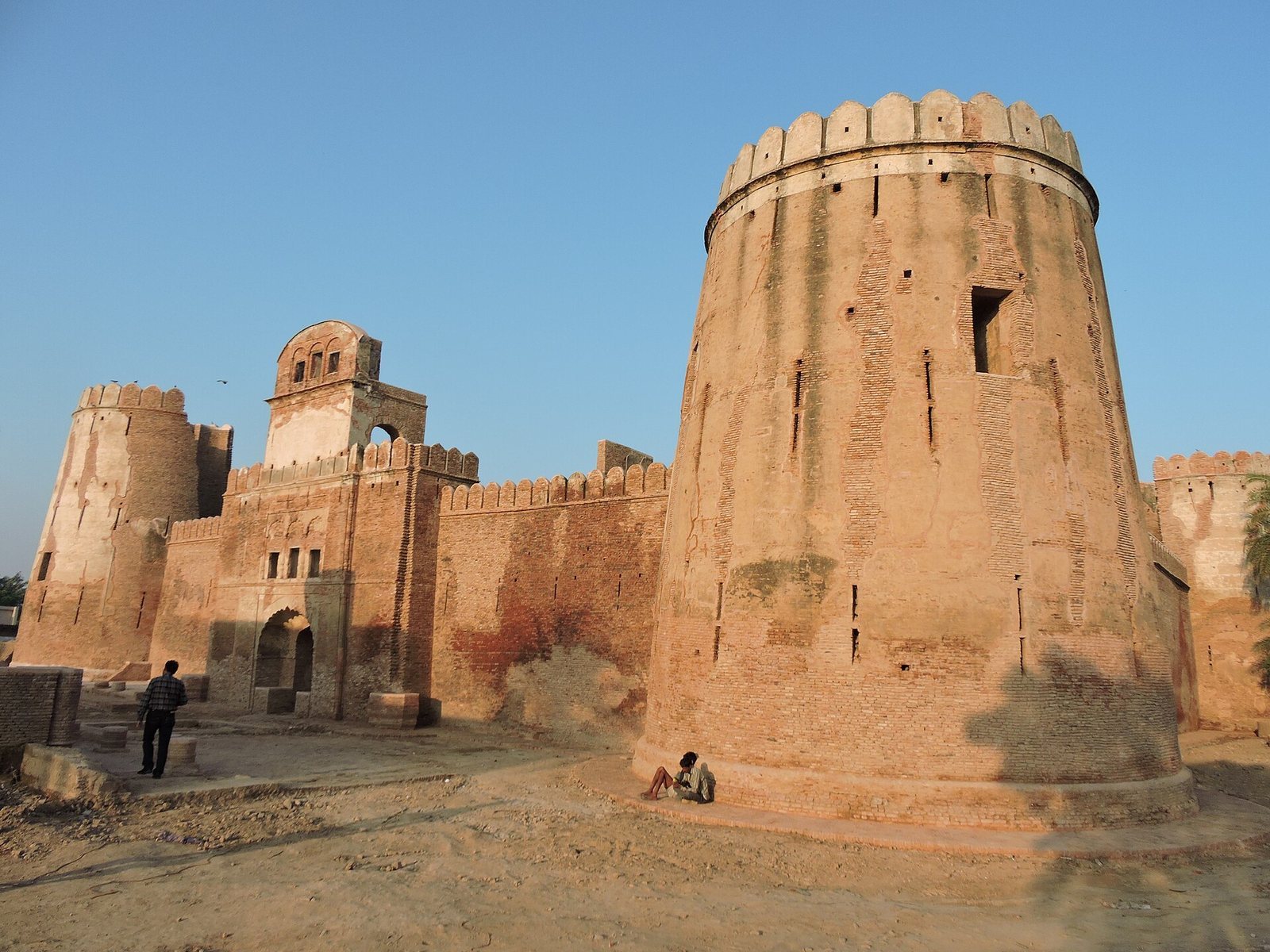
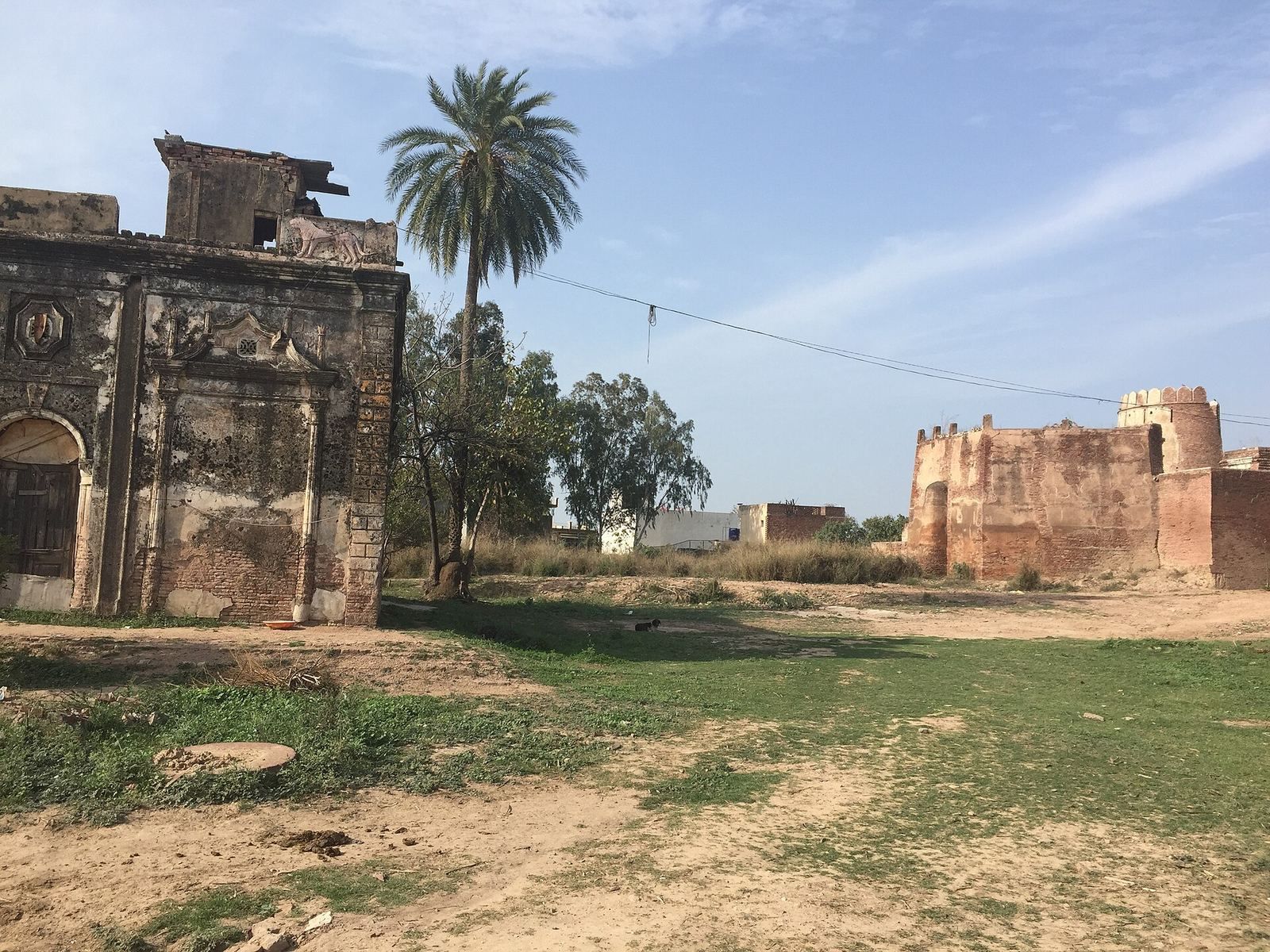
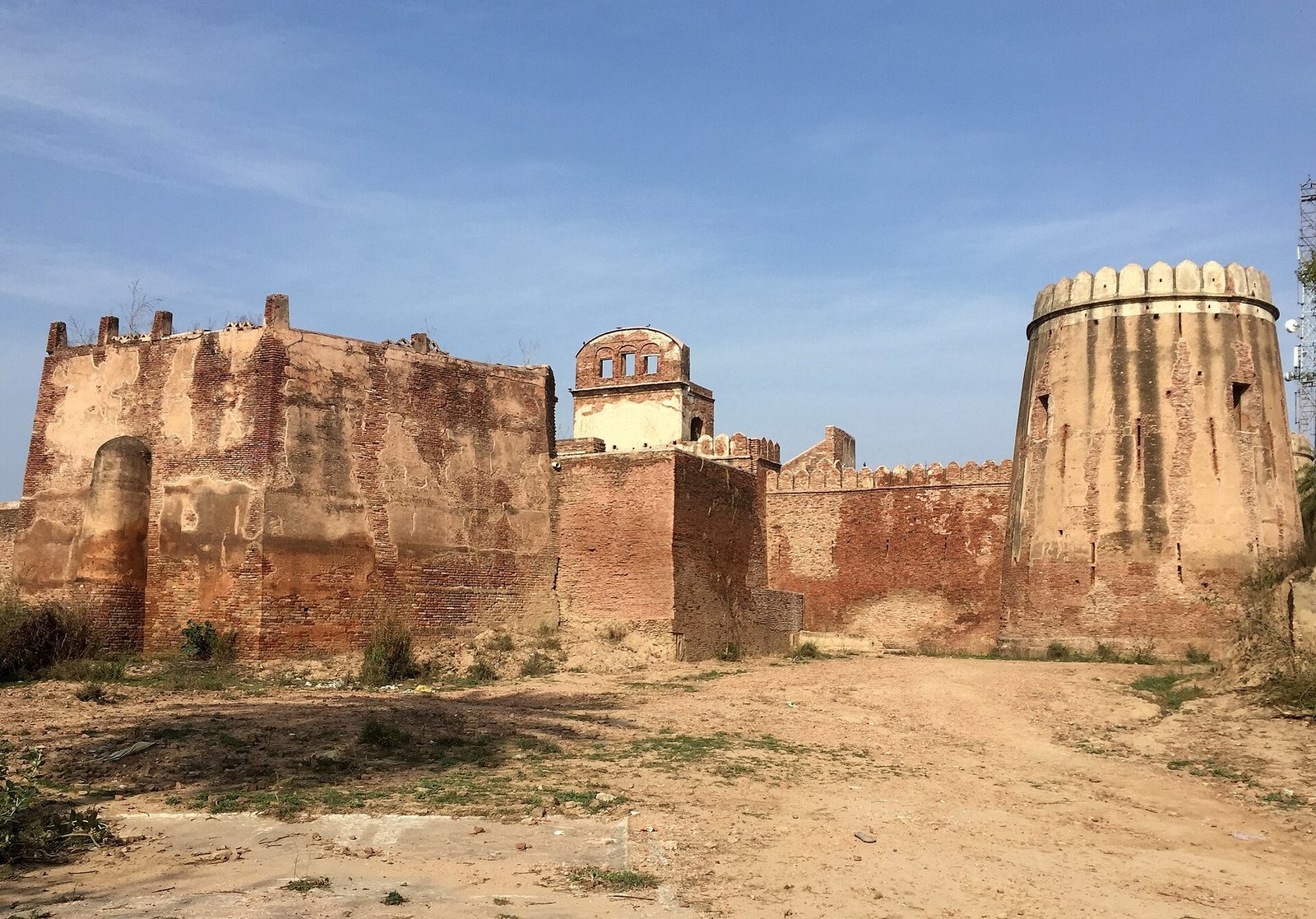
The three-storey fort occupies the middle of Manauli hamlet, rising about 6.1 metres above the village’s habitation level. Grassland and the surrounding settlement border the structure. Its walls were built with Sirhindi bricks and mortar.
Entrance and defenses
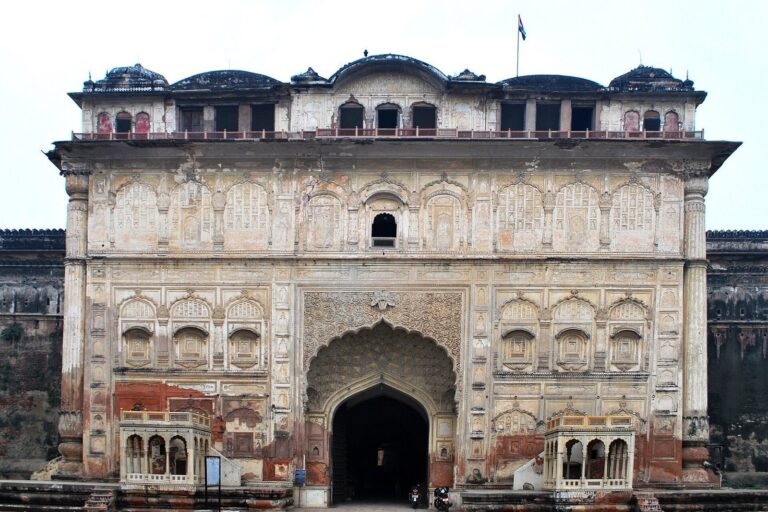
The main gateway is on the western side and is locally called Hathi Khana, meaning “Elephant House.” Round towers mark the four corners; they stand 30 to 35 feet high and have pointed barriers at their tops. The walls contain embrasures, openings through which weapons could be fired.
Interior structures and local use
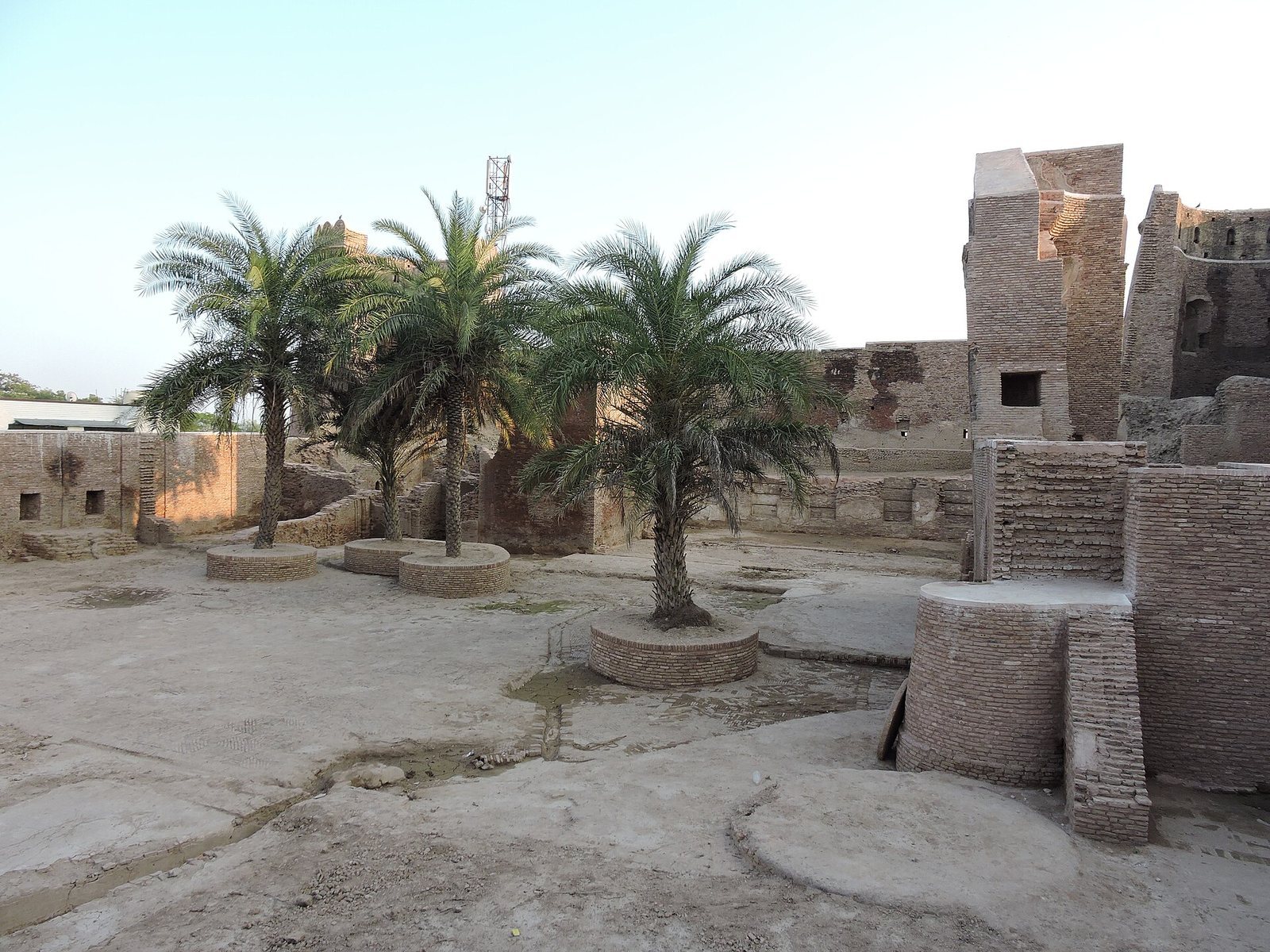
Ruins of a mosque occupy the western part of the fort, opposite the main gateway, and the fort also contains separate quarters for women. Locals use the southeast corner as a mazaar, a shrine associated with a revered person, and light candles there on Thursdays. A fountain within the fort is broken and dry.
Condition
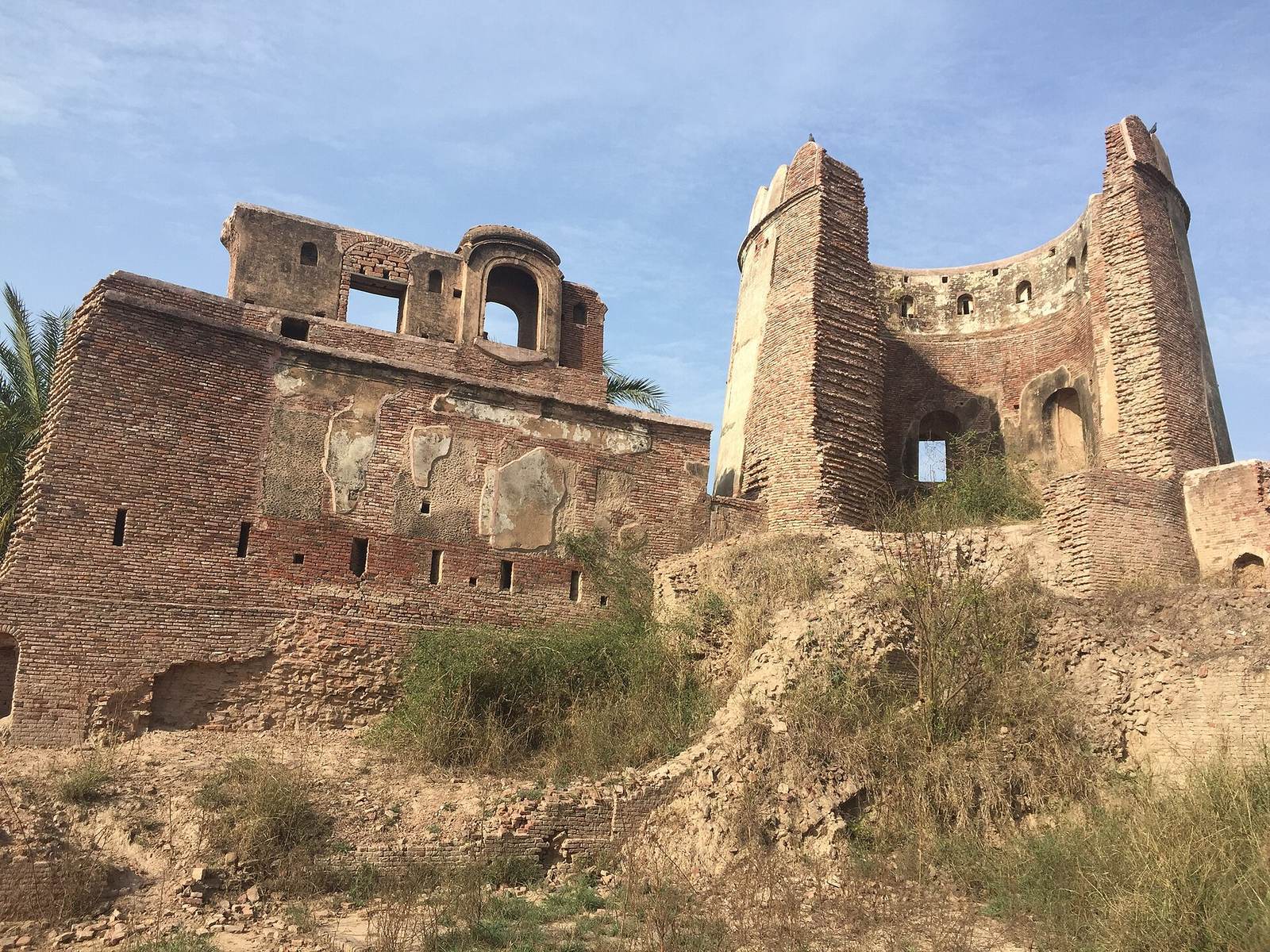
The fort is crumbling after years of neglect. Weather and vegetation have contributed to its deterioration: roots of banyan, palm, and neem trees have cracked the foundations, and algae has caused further damage. Tall grass makes parts of the structure difficult to access. One tower leans, tiles are broken, and bricks have fallen. Encroachment, vandalism, waste dumping, and the removal of bricks and other building materials for reuse have also affected the site. Poor conservation and repair materials have prompted concern about the fort’s eventual collapse.