Schloss Gutenberg: A Medieval Castle at the Raab Gorge
Site at a Glance
- Popularity
- Medium
- Country
- Austria
- Primary era
- Medieval
- Eras represented
- Medieval, Early Modern
- Civilizations
- Duchy of Styria, Habsburg, Habsburg Austria, Holy Roman Empire
- Site type
- Military
- Remains
- Castle
On this page9 sections
History
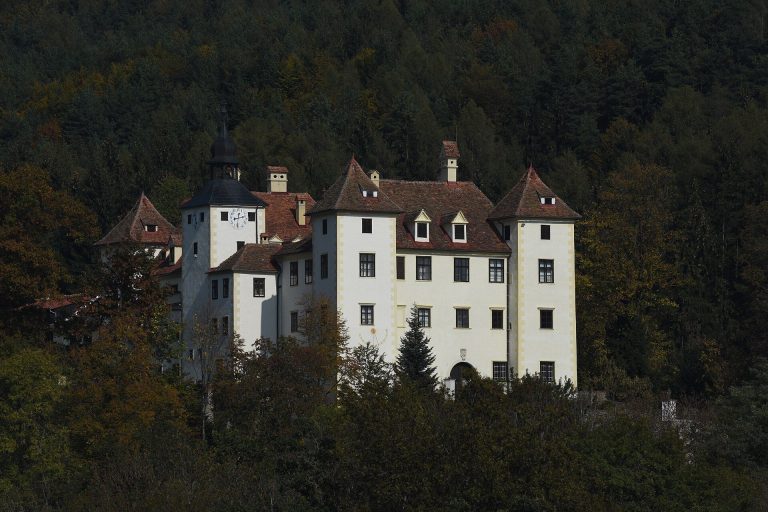
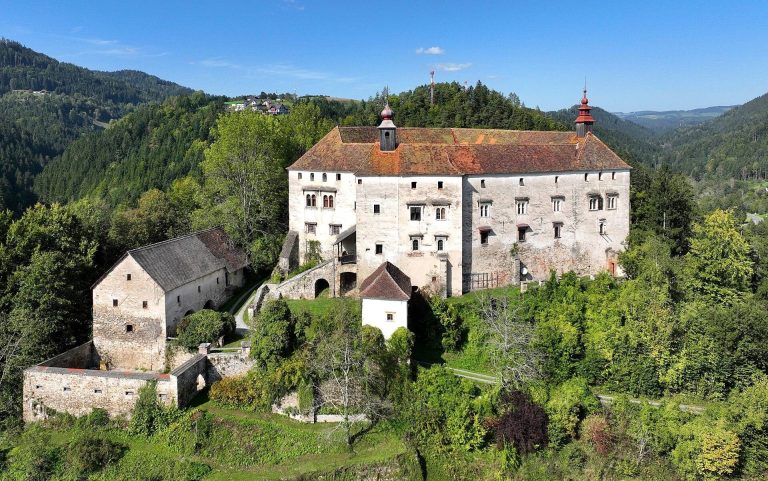
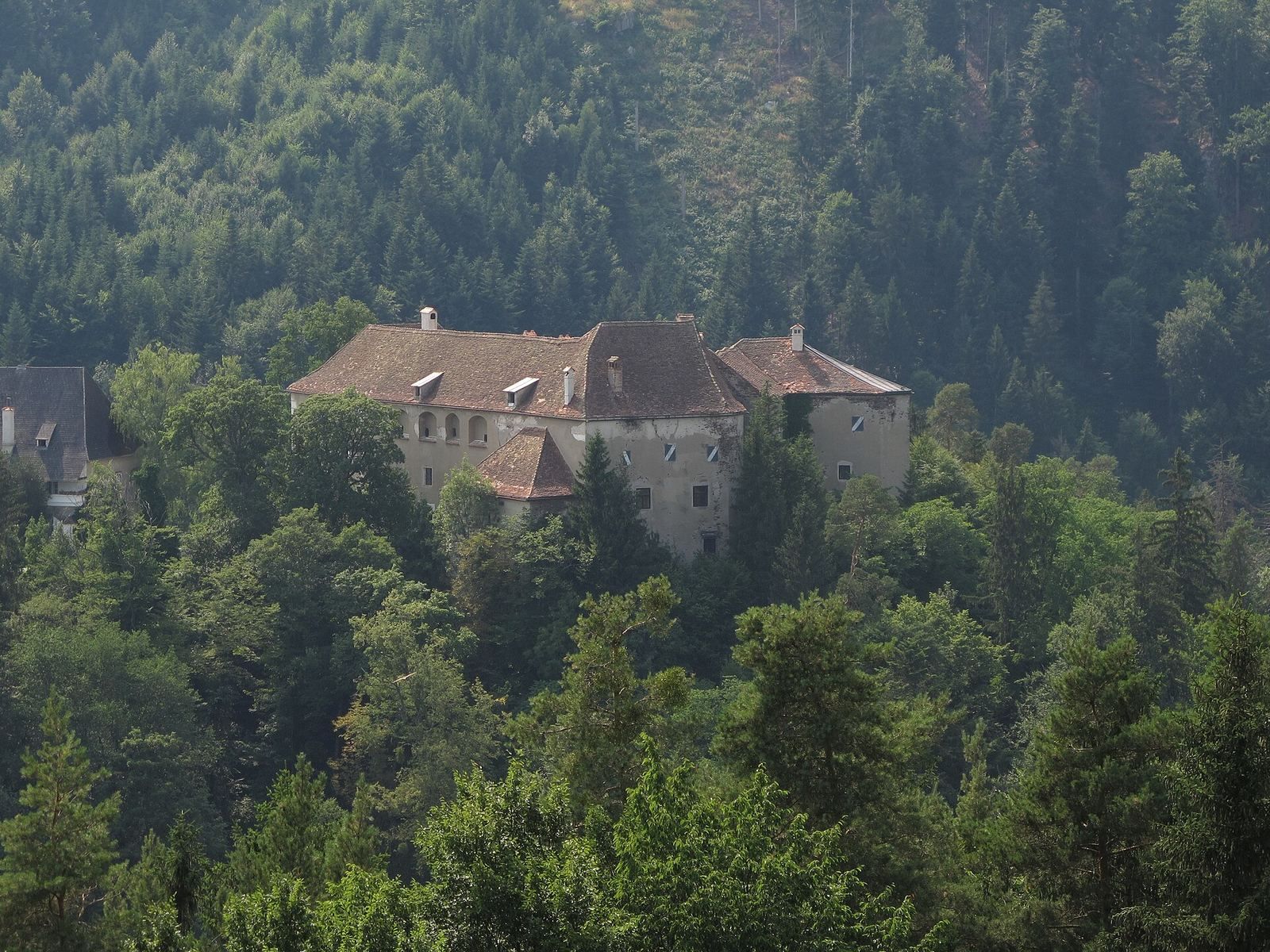
Schloss Gutenberg is a castle on a projecting rock at the Raab Gorge in Austria, founded in the 1180s by the medieval nobleman Luitold III of Waldstein. Luitold took up residence there in 1185. The castle and its lordship passed to the Stubenberg family in either 1286 or 1288. Stubenberg descendants continue to reside at the privately owned castle.
The Chapel of St Pancras was consecrated in 1365. A two-storey outer bailey was added in 1490, and remodelling and expansion of the castle began in 1567.
Remains
Castle complex
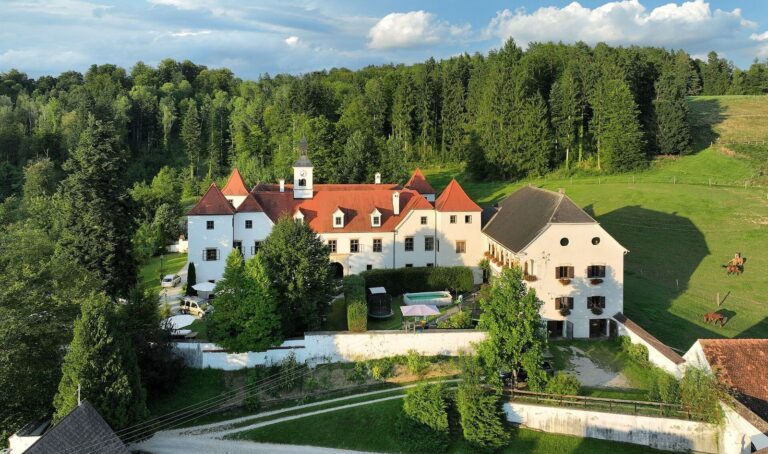
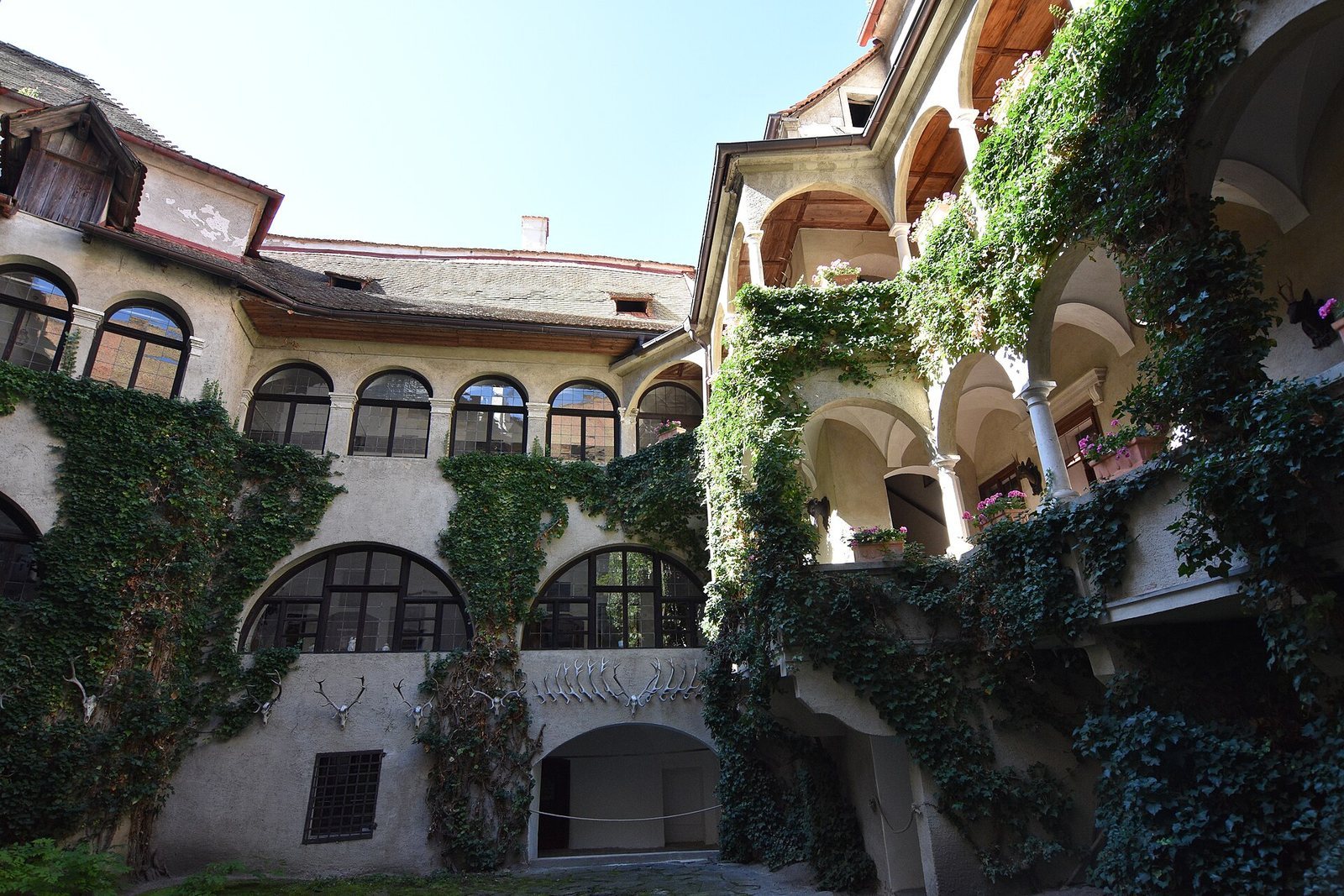
The irregular complex rises four storeys and has an almost pentagonal ground plan, echoed by the shape of its courtyard. Its surviving fabric combines medieval construction with Renaissance additions, which drew on classical forms.
Main castle
The oldest surviving fabric forms the southeast corner of the castle, where the Chapel of St Pancras is incorporated into the complex. On the south side, a portal is framed by rough-faced stonework. A Baroque sundial dated 1779 is set into the facade. Dates of 1659 and 1710 appear on ancillary buildings.
Outer bailey
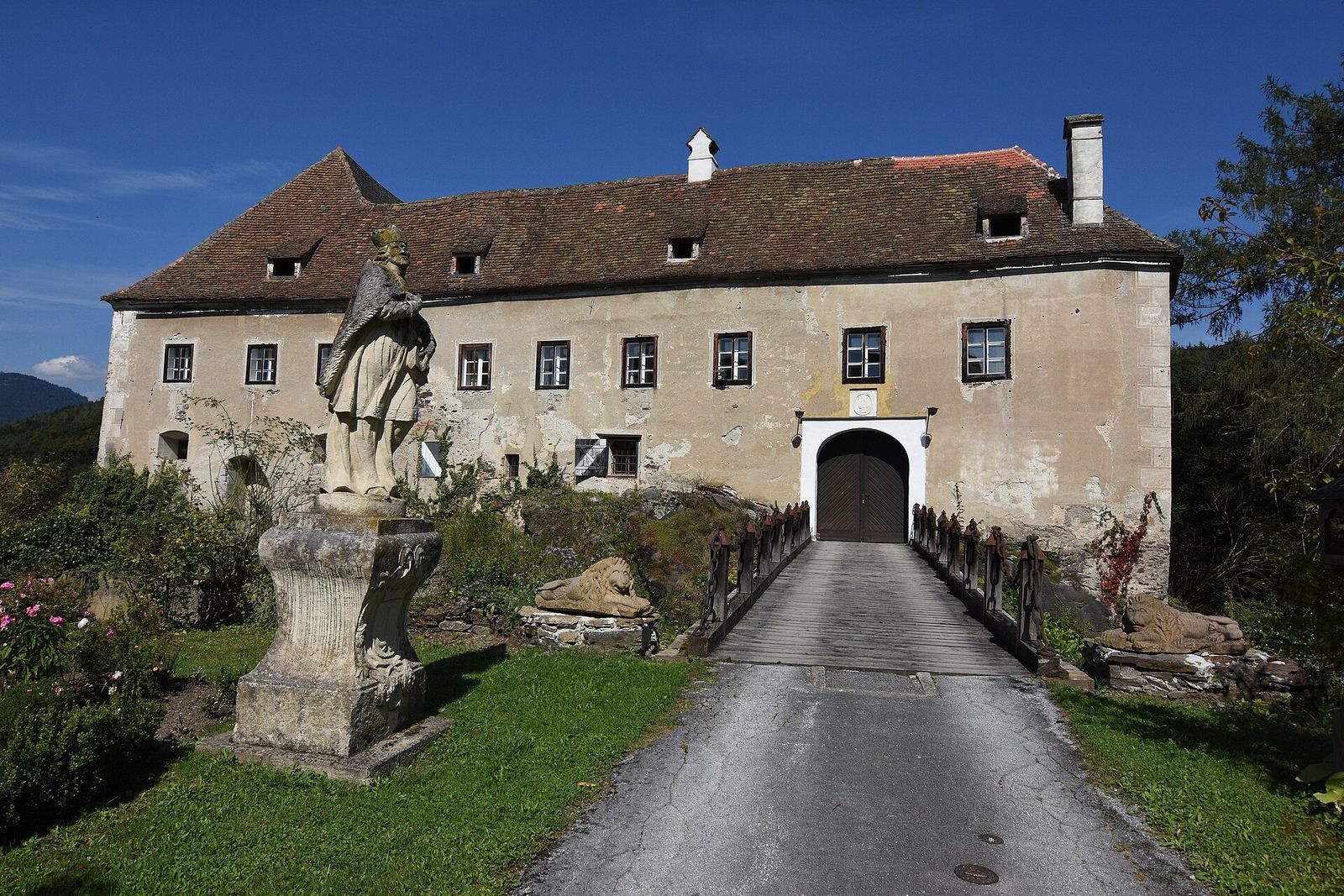
The two-storey outer bailey is protected by two neck ditches, defensive cuts across the narrow approach. The outer ditch is now bridged, while the inner ditch has been filled in.
Chapel of St Pancras
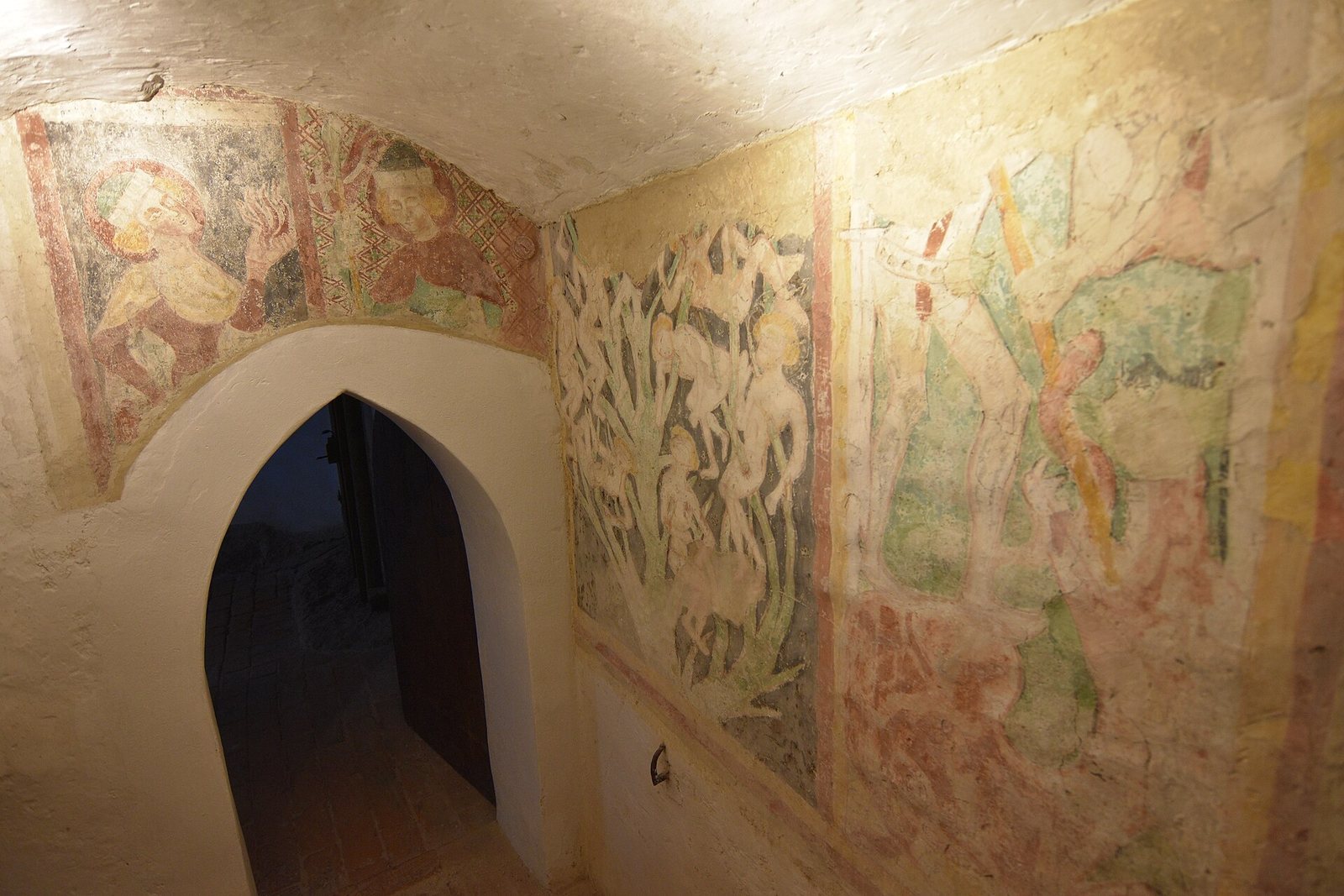
The chapel was originally a tower-like structure extending over three storeys, with galleries on the upper two. Its lowest level is Romanesque, a medieval style marked by rounded arches and heavy masonry, and has a barrel vault, a continuous arched ceiling. The first gallery contains frescoes dating to the second half of the 14th century. They depict St Alfa, the apostle James the Greater, the martyrdom of the Ten Thousand, St George and the Magi, or Three Kings. The upper parts of the paintings were cut off when a vault was inserted later. A Romanesque window behind the altar now has modern glazing.
Approach road
Chapels
Two chapels stand along the approach road. One dates to around 1721; the other was built in the third quarter of the 18th century.
Stone figures
Stone figures of St Anne, traditionally regarded as Mary’s mother, and St John of Nepomuk, a 14th-century Bohemian priest and martyr, stand on the approach. Austrian Baroque sculptor Veit Königer made both around 1770. They were originally from Schloss Wieden near Kapfenberg.