Château du Marais: A Historic Estate and Château in France
Site at a Glance
- Popularity
- High
- Country
- France
- Primary era
- Early Modern
- Eras represented
- Medieval, Early Modern, Modern
- Civilizations
- French
- Site type
- Domestic
- Remains
- Castle
On this page17 sections
History
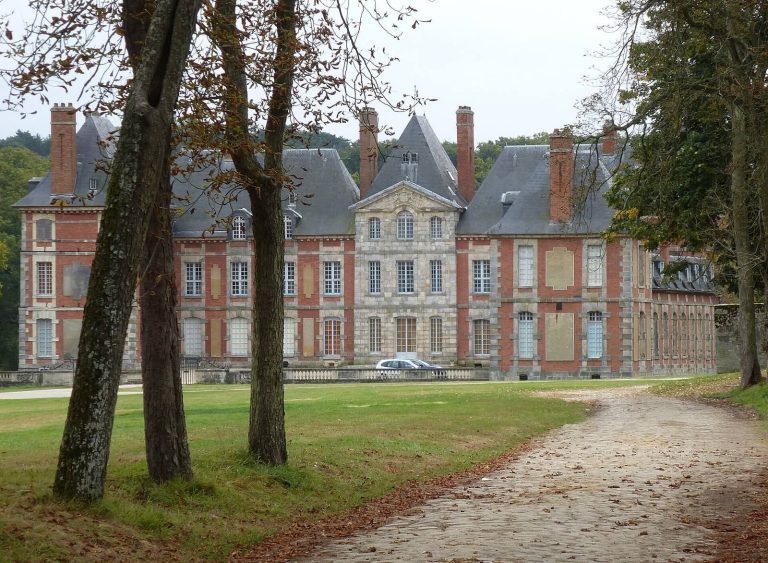
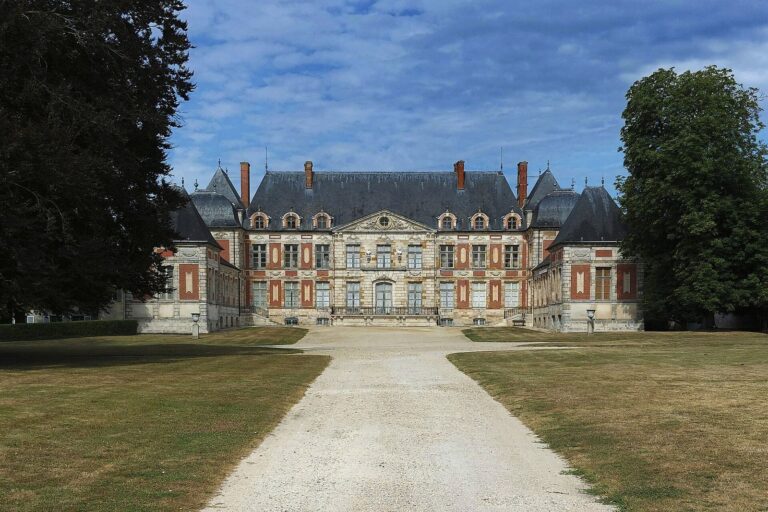
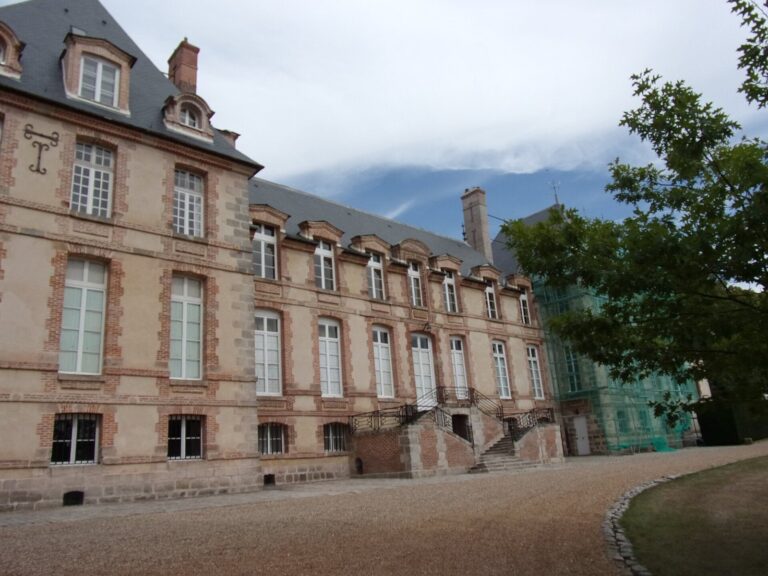
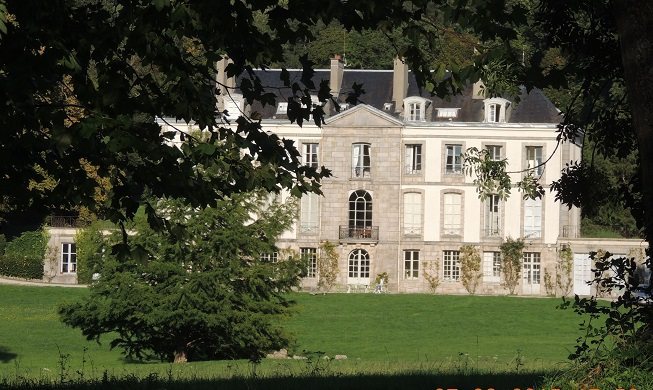
Château du Marais is a historic estate and château in France, on the bank of the Rémarde. The present residence was commissioned by Jean Le Maître de La Martinière and built from 1772 to 1779 to designs by French architect Jean-Benoît-Vincent Barré, in a classical style. Its successive rebuilding reflects a long history of changing ownership and use.
Medieval estate and early châteaux
In the twelfth century, monks from Vaux-de-Cernay Abbey cleared woodland and drained marshes in the area. Jean de Saint-Germain is identified as the first lord of the place in 1282, and his family was allied with the Saint-Yon family. A document from 1397 refers to a feudal manor.
In the fifteenth century, two local lordships belonged to one family. After inheriting from his father, Jean, Antoine de Vigeais found the houses in ruins and the tenant farmers gone. He restored the estate and built a second château. A fortified castle belonging to the Hurault family had also stood on the site.
Hurault ownership and later rebuilding
An inventory from 1507 describes a modest building. Jean Hurault, a judicial officer at the Parlement of Paris, acquired the property in 1516, enlarged it, and planted the park. The estate remained in the Hurault family until 1706. Around 1620, Louis Hurault, lord of Marais, built a third château.
In 1706, Pierre Henry Lemaître bought the estate and carried out extensive repairs, probably with the help of architect François Debias-Aubry. On 5 September 1767, Lemaître’s heirs sold it to Jean Le Maître de La Martinière for more than 600,000 livres. La Martinière had made his fortune through the cloth trade with Flanders and served as treasurer general of Artillery and Military Engineering from 1758 to 1774, a senior financial office for those military branches.
La Martinière’s château
Although the estate already had a substantial residence, La Martinière ordered it demolished in 1772 and commissioned Barré to design a replacement. Construction lasted from 1772 to 1779. It was reputed that the materials from the old building were deliberately destroyed so the new château would be entirely new.
The scale and expense drew notice. The French diplomat and diarist Marc-Marie de Bombelles wrote that the building could suit a prince of royal blood, and reported that its cost was said to exceed two million livres.
Adélaïde de La Briche and later owners
In 1785, La Martinière’s niece Adélaïde Prévost, later countess of La Briche, became the owner after reaching an agreement with the coheirs. She welcomed writers and political figures. The poet and playwright Jean-Pierre Claris de Florian regularly stayed at Marais in September from 1786 to 1793, and he and Adélaïde corresponded during those years. Other guests included diplomat and statesman Charles-Maurice de Talleyrand-Périgord, literary critic Charles Augustin Sainte-Beuve, writer and historic-monument inspector Prosper Mérimée, writer and statesman François-René de Chateaubriand, and British general and statesman Arthur Wellesley, Duke of Wellington.
After Adélaïde died in 1844, the estate passed to her daughter Caroline, who died the following year, and then to Caroline’s daughter Clotilde Molé, marquise de La Ferté-Meun. After Clotilde’s death in 1872 and her husband’s in 1884, the property passed to her niece Clotilde de La Ferté-Meun, who had married Jules Charles Victurnien de Noailles in 1851. He became the fourth duke of Ayen and later the seventh duke of Noailles. Clotilde subsequently put the château up for sale.
Twentieth-century ownership and protection
Count Boniface de Castellane bought the property in 1897 and commissioned landscape designer Achille Duchêne to create formal French gardens. After Boniface and Anna Gould divorced in 1906, Anna retained the estate and later married Hélie de Talleyrand-Périgord, prince of Sagan. Their daughter Violette inherited it. She married James de Pourtalès in 1937 and Gaston Palewski in March 1969. Palewski died at the château and established a museum in its outbuildings.
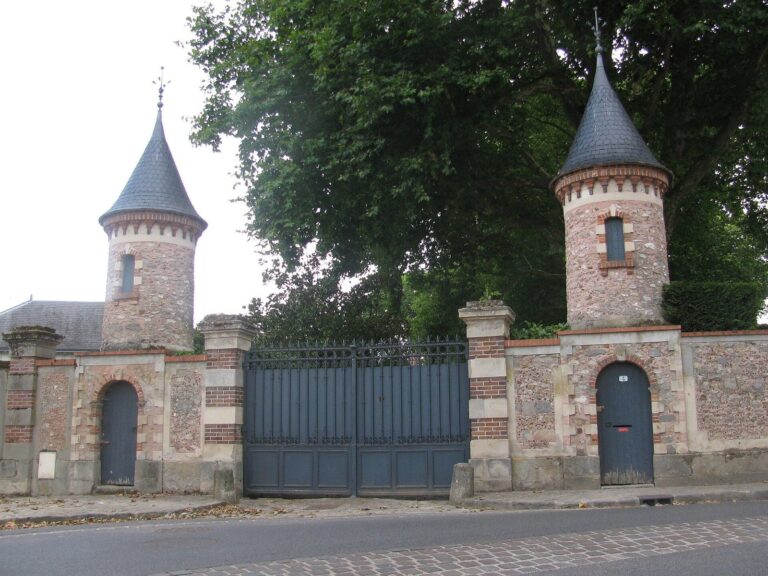
The estate received partial classification as a French historic monument, a formal heritage-protection designation, on 26 March 1965. The château, part of the wooded park, and all water features are classified. A supplementary registration dated 31 March 2026 covers the estate grounds and other features, including a medieval cellar, an icehouse for storing ice, a grotto, the ground beneath the large greenhouse, remains of the boundary wall, and the southwest portal.
After more than a century of ownership by the same extended family, the estate was sold in June 2022 to Czech businessmen Daniel Křetínský and Jiří Šmejc.
Remains
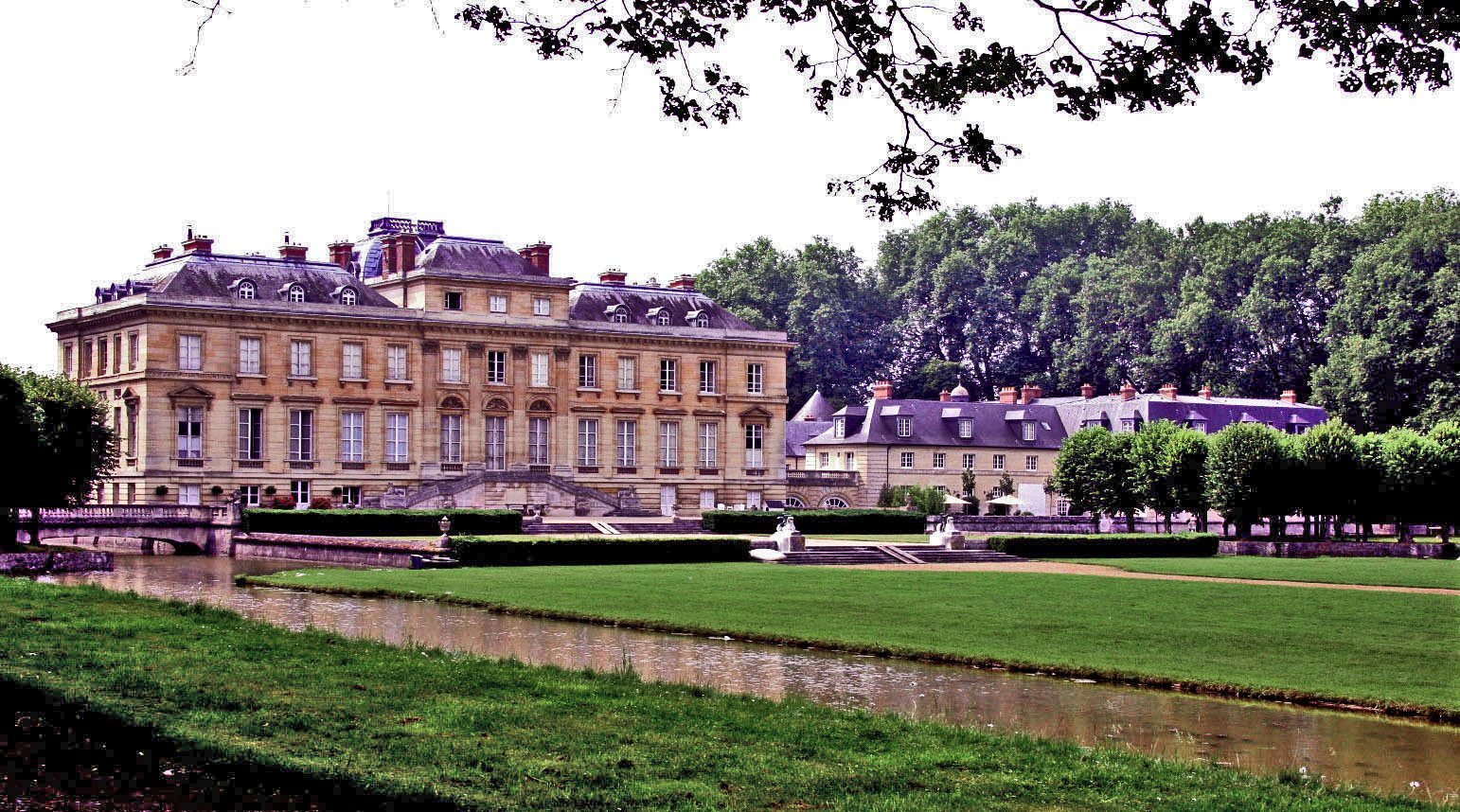
The estate includes a 40-hectare park and a château set at the eastern end of a platform surrounded by water-filled moats. Those moats formed the courtyard of an earlier château. The present building and surviving service structures stand within this inherited arrangement, while the park’s water system draws on the nearby Rémarde.
The château and service buildings
The present château
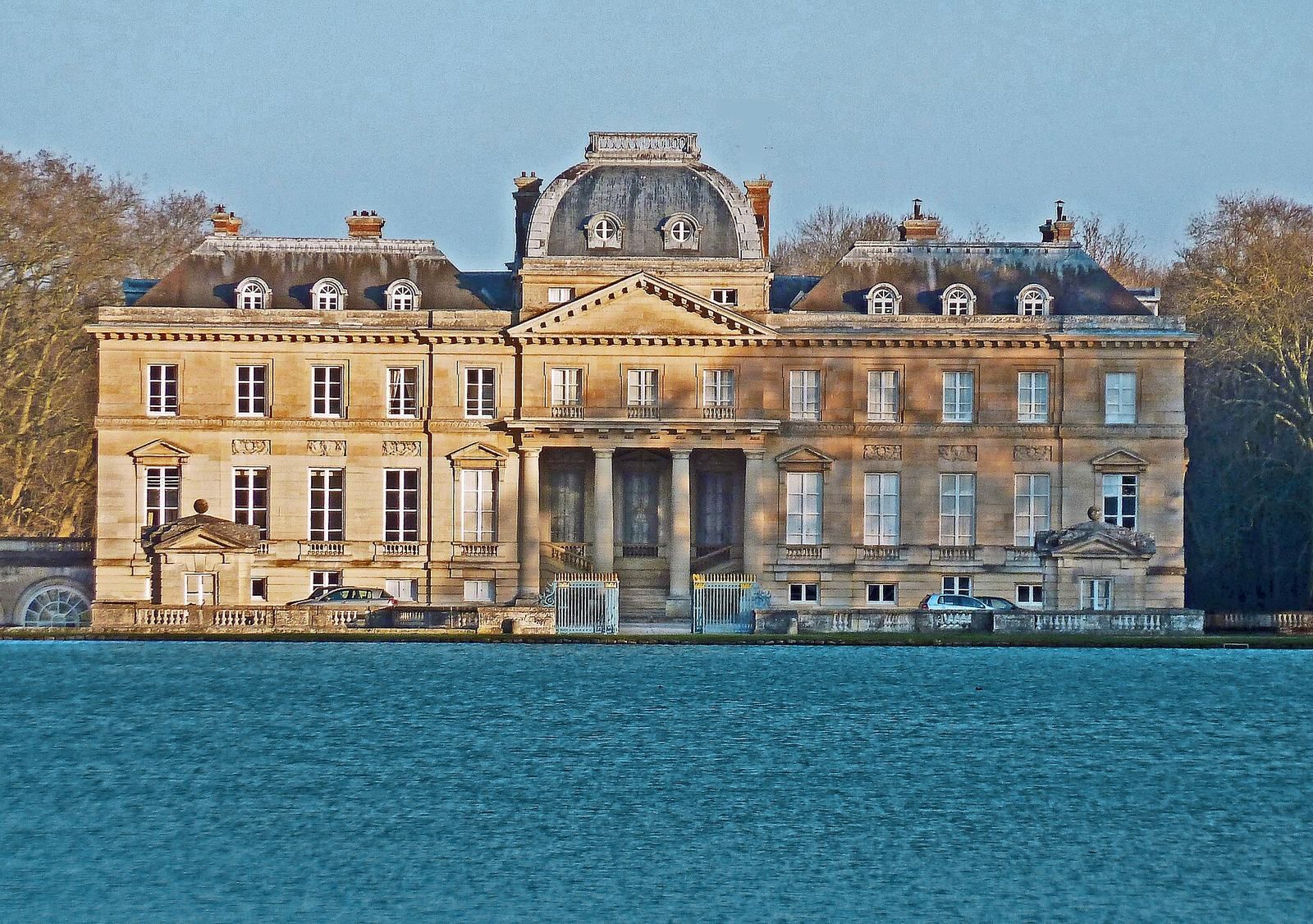
The main building has a rectangular plan, with rooms arranged in two depths. Its façade is divided into bays, or vertical sections, and its rooflines and shallow projections distinguish a central block of five bays from side projections of one bay each. On the courtyard side, four tall Doric columns, a classical column form, rise across more than one storey. Above them are an attic wall, a wall above the main cornice, a pediment, or triangular upper section, and a square dome. The dome’s design draws on the Clock Pavilion at the Louvre. The composition is noted for its proportions, although its separate elements had appeared in earlier buildings.
On the garden side, flat, wall-attached Composite pilasters replace the columns, and a flattened pavilion roof takes the place of the square dome. This façade has a more restrained classical appearance.
Service buildings
A separate platform north of the château supports the service buildings. Older structures there were retained, modernized, and brought into a more unified group. An old dovecote, a building for housing pigeons, survives at the northwest corner. A bridge across the moat connects the service buildings to the château.
The park and earlier château
Water and gardens
The Rémarde, a tributary of the Orge, supplies a large water basin in the park. The basin was made by widening an older canal. On the eastern side, formal garden beds occupy a platform surrounded by water-filled ditches. Duchêne laid out formal French gardens after Boniface de Castellane bought the estate in 1897. Clotilde Molé also established a flower garden in the park.
Earlier château and outbuildings
The château built around 1620 had a large main building, a broad courtyard, and two square entrance pavilions. A stone bridge crossed the water-filled moats to reach it. The small pavilions now at the northwest and southwest corners of the platform appear to occupy the sites of earlier pavilions that bounded the courtyard. Only the earlier château’s outbuildings survive; they were later converted into a museum. The estate also includes a Talleyrand Museum, a Chateaubriand Museum, and an orangery, a building for cultivating or sheltering citrus and other tender plants.
Interiors and furnishings
Bathroom
A bathroom installed in 1914 has walls faced with ceramics made by Gentil et Bourdet, a firm founded in 1901 in Boulogne-sur-Seine.
Furniture and portraits
The château’s furnishings included rare Louis XVI pieces, in the French late-eighteenth-century style inspired by classical forms, with original maker’s stamps. A commode with Chinese-inspired decoration bore the stamps of Roger Vandercruse, known as Lacroix, and Jean-Baptiste Leleu. It appears in La Martinière’s inventory after his death in April 1783, remained at the château until the following century, and sold in Paris on 17 June 1994 for 4,215,500 francs. Boniface de Castellane recalled that portraits he had brought from Rochecotte after his grandmother’s death furnished the château and gave it a lived-in appearance.
Sèvres porcelain
A set of 36 Sèvres porcelain plates with agate-patterned backgrounds depicted views of France. The plates had been presented in 1825 to the duke of Polignac, then French ambassador to Great Britain, and were shown at the Louvre’s exhibition of royal manufactures on 1 January 1826. Langlacé, Lebel, Achille, and Poupart painted the set. Twenty-two plates from it appeared in an auction of château furnishings in 2022.