Litschau Castle: A Medieval Stronghold and Aristocratic Estate
Site at a Glance
- Popularity
- Medium
- Country
- Austria
- Primary era
- Medieval
- Eras represented
- Medieval, Early Modern
- Civilizations
- Duchy of Austria, Habsburg, Habsburg Austria, Holy Roman Empire
- Site type
- Military
- Remains
- Castle
On this page9 sections
History
Litschau Castle is a medieval stronghold in Litschau, Austria. Its building fabric indicates that a stronghold stood here by the second quarter of the thirteenth century. Litschau lay on a medieval long-distance road to Bohemia, and the castle formed part of a lordship, a territorial estate with governing rights.
Medieval and early modern lordship
Litschau is first mentioned in a document in 1215. By 1260, a fortification stood there, probably in the hands of the Hirschbergers. The Kuenringer, an Austrian noble dynasty, are said to have held the lordship from 1237 to 1297. It later passed to Duke Albert I of Austria, a Habsburg, who pawned it.
The Lords of Puchheim acquired the castle in 1348. Ulrich von Grafenegg held it from 1470 but surrendered it to Emperor Frederick III in 1472. The estate passed to the Barons of Kraig in 1542, then to Baron Wenzel Morakschi von Noskau in 1587. Morakschi became known by the epithet peasant hunter.
Renaissance residence and wartime conflict
From around 1589, the castle was remodelled as a Renaissance residence. At the start of the Thirty Years’ War, the major European conflict of 1618 to 1648, the castle was in Bohemian hands and remained so until 1620. Swedish forces besieged it unsuccessfully in 1645.
Kuefstein ownership and estate succession
The Imperial Counts Kuefstein, a noble family of the Holy Roman Empire, held the castle and lordship from 1687 to 1763. On 12 May 1687, Hans Georg IV von Kuefstein bought the lordship from Isabella Maria Ottokolek von Augezd. The purchase included the dependent holdings of Reingers and Reitzenschlag, held from the territorial ruler. He also acquired the Grünau estate that year.
After Hans Georg’s death in 1699, his widow, Anna Franziska, née Baroness Hocher von Hohenkrän, inherited the lordship. Remembered for her charitable endowments, she established a confraternity, a lay religious association, and a hospital. Her son Johann Anton I succeeded her after her death at Litschau in 1722. He died there in 1740, and his widow, Maria Antonia, née Countess von Rottal, held the estate until transferring it to their son Johann Anton II in 1754.
Further alterations to the castle took place between 1722 and 1745. In the first half of the eighteenth century, a private chapel in the outer bailey had papal permission to celebrate Mass, although it did not always have its own chaplain. Johann Paul Krall served there from 1730 to 1760. The chapel had been closed by 1765 and was later converted into living quarters.
Johann Anton II died in 1757, leaving a three-and-a-half-year-old heir. The child’s stepfather, Johann Philipp von Diller, administered the estate, followed by Count Johann Franz von Fünfkirchen from 1761. Heavy debts led to the sale of the lordship in 1763 to Count Christian August von Seilern und Aspang.
Decline, rebuilding, and later use
The roofs of the main fortified section and its tower were in very poor condition by 1789 and were left unrepaired. The main castle began to decay around 1800 and appeared as a ruin in 1817. Parts at risk of collapse were demolished around 1850. From 1888 to about 1910, the surviving fabric was renovated and partly rebuilt; the outer bailey and the main castle’s tower were re-roofed in 1911 and 1912.
The castle has remained in the Seilern-Aspang family since 1763, and descendants of the family still own it. The estate is used for forestry and administration and is privately inhabited. A Seilern glassworks at Galthof operated from 1770 to 1874. At the end of the Second World War, Russian occupying troops looted the New Castle. After being expelled from Castle Lešná, the Seilern-Aspang family made it their main residence.
Remains
Layout and principal buildings
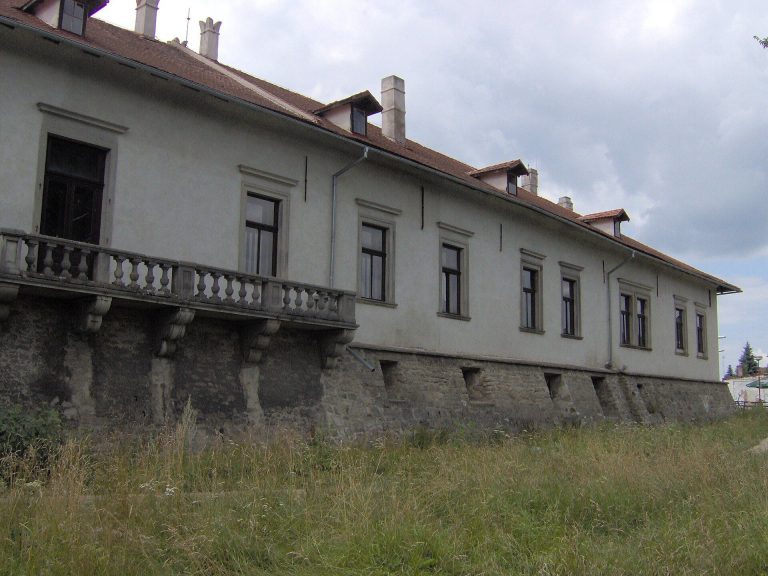
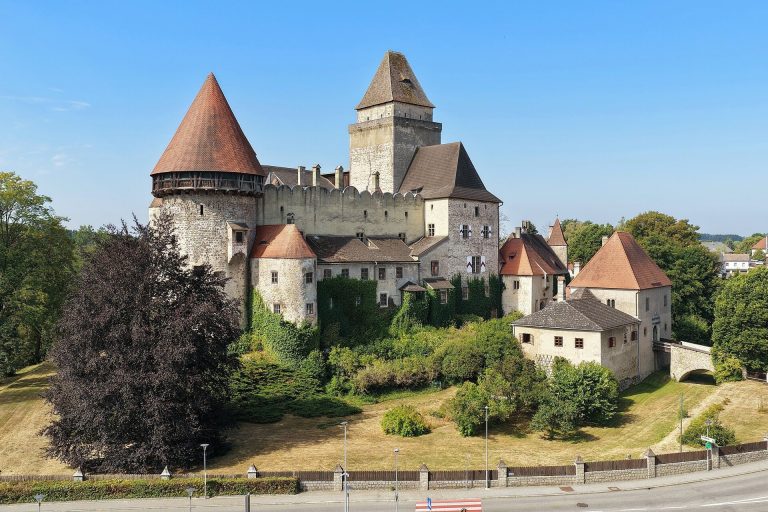
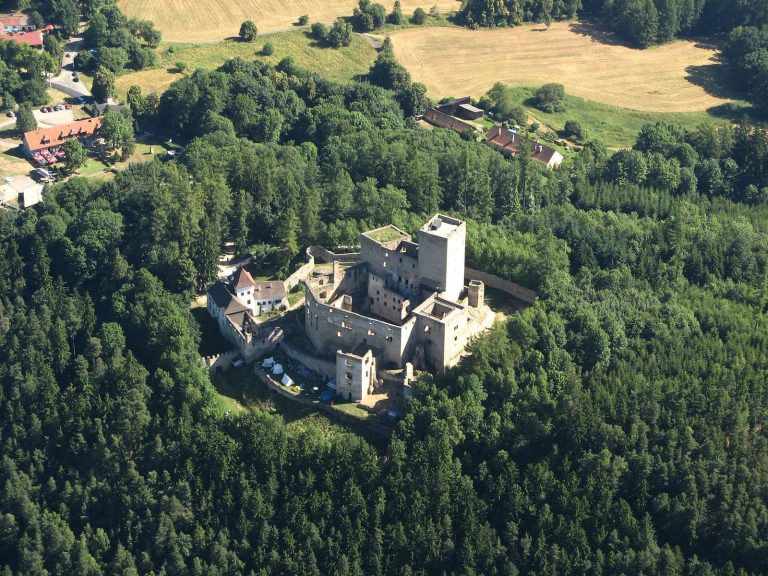
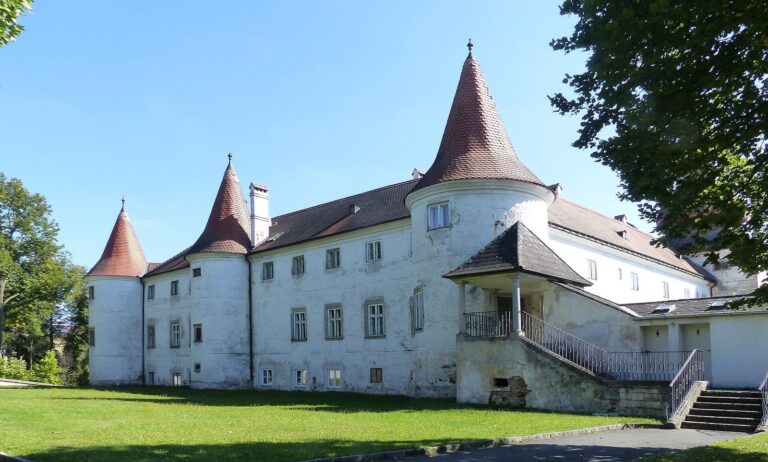
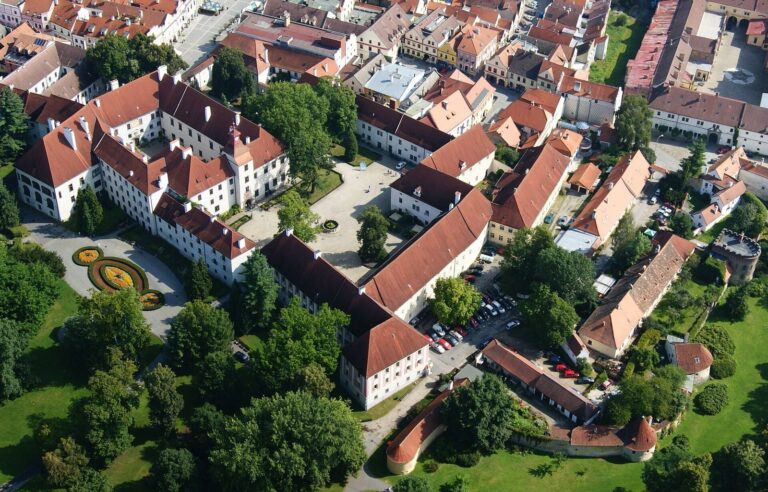
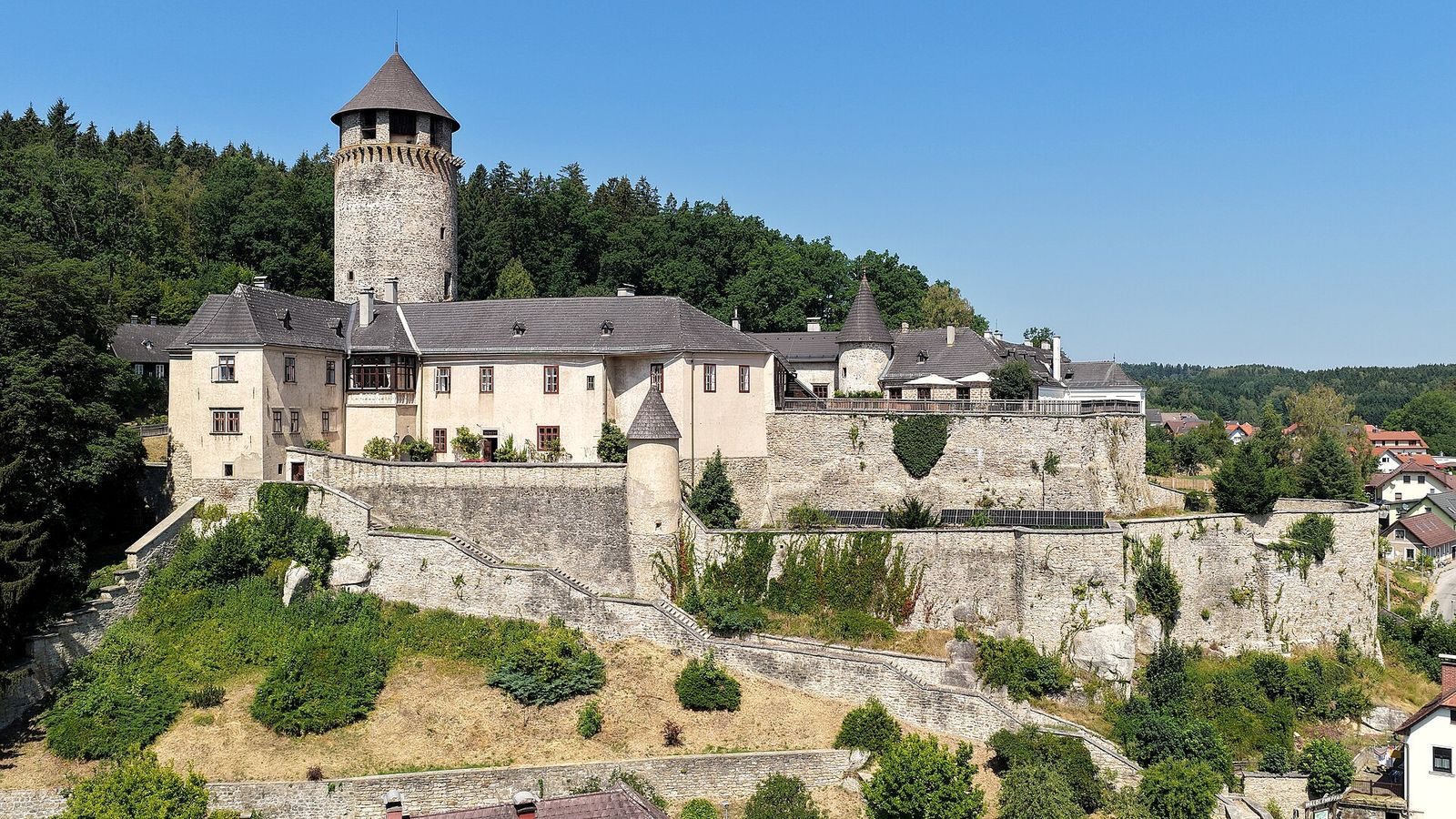
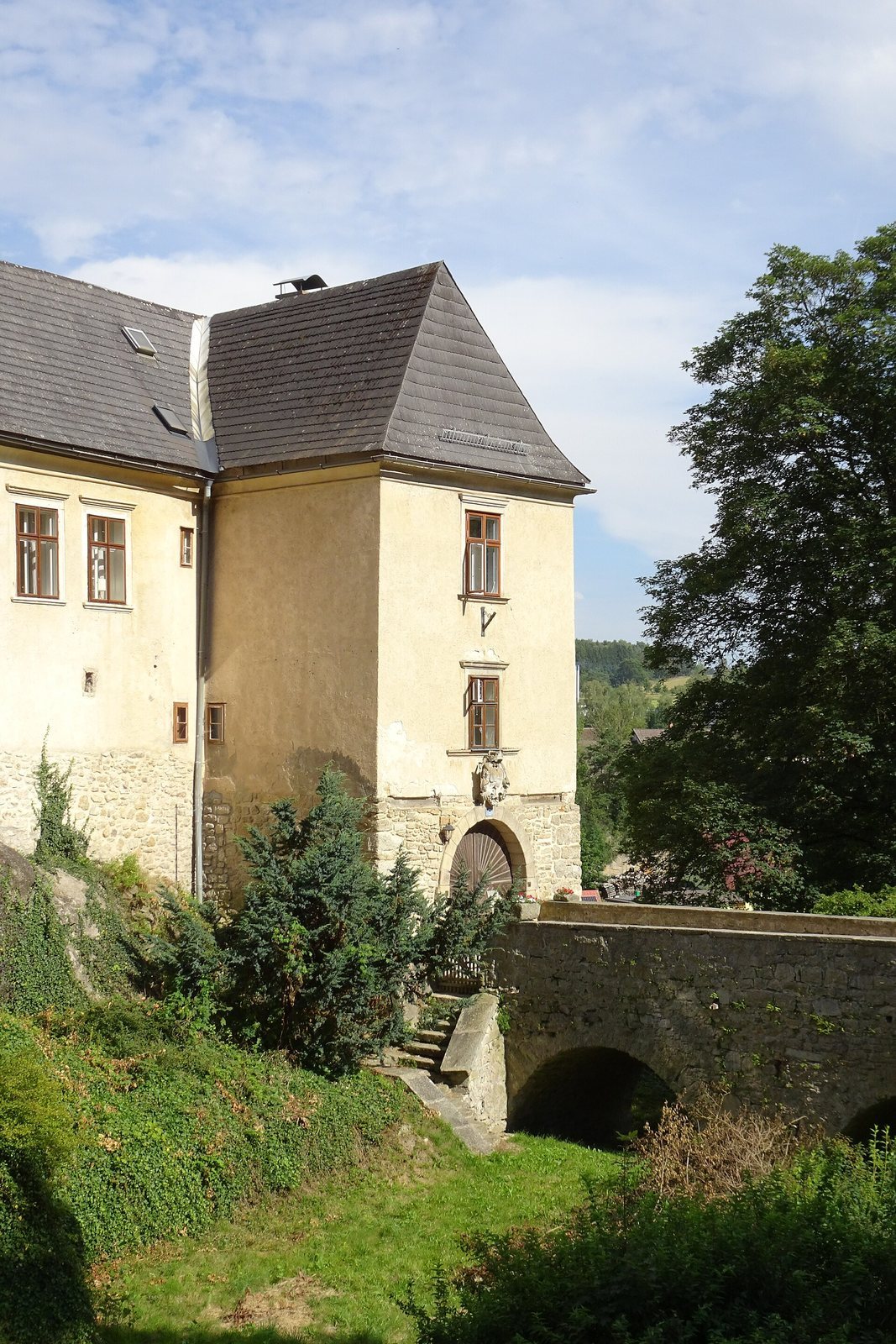
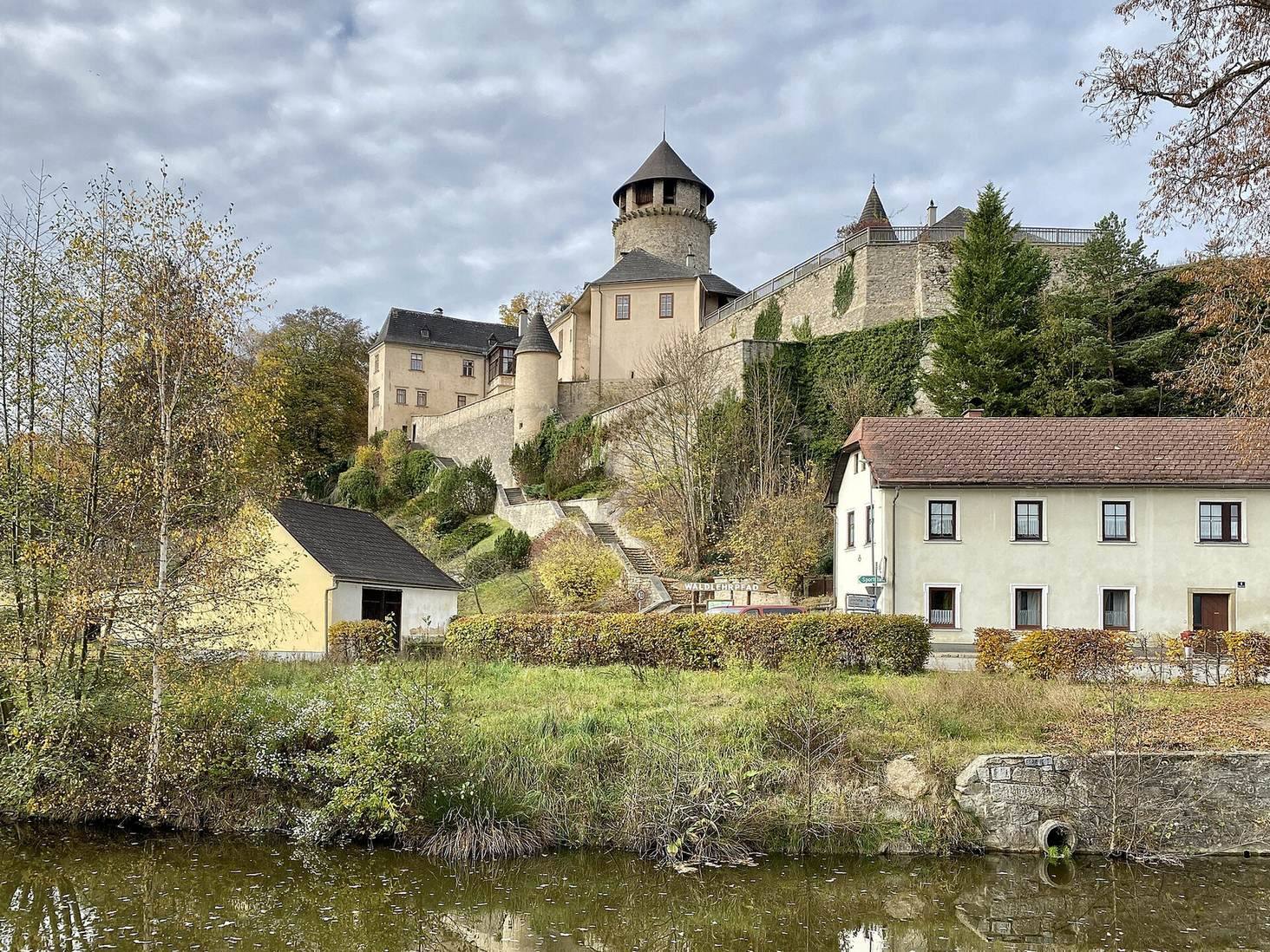
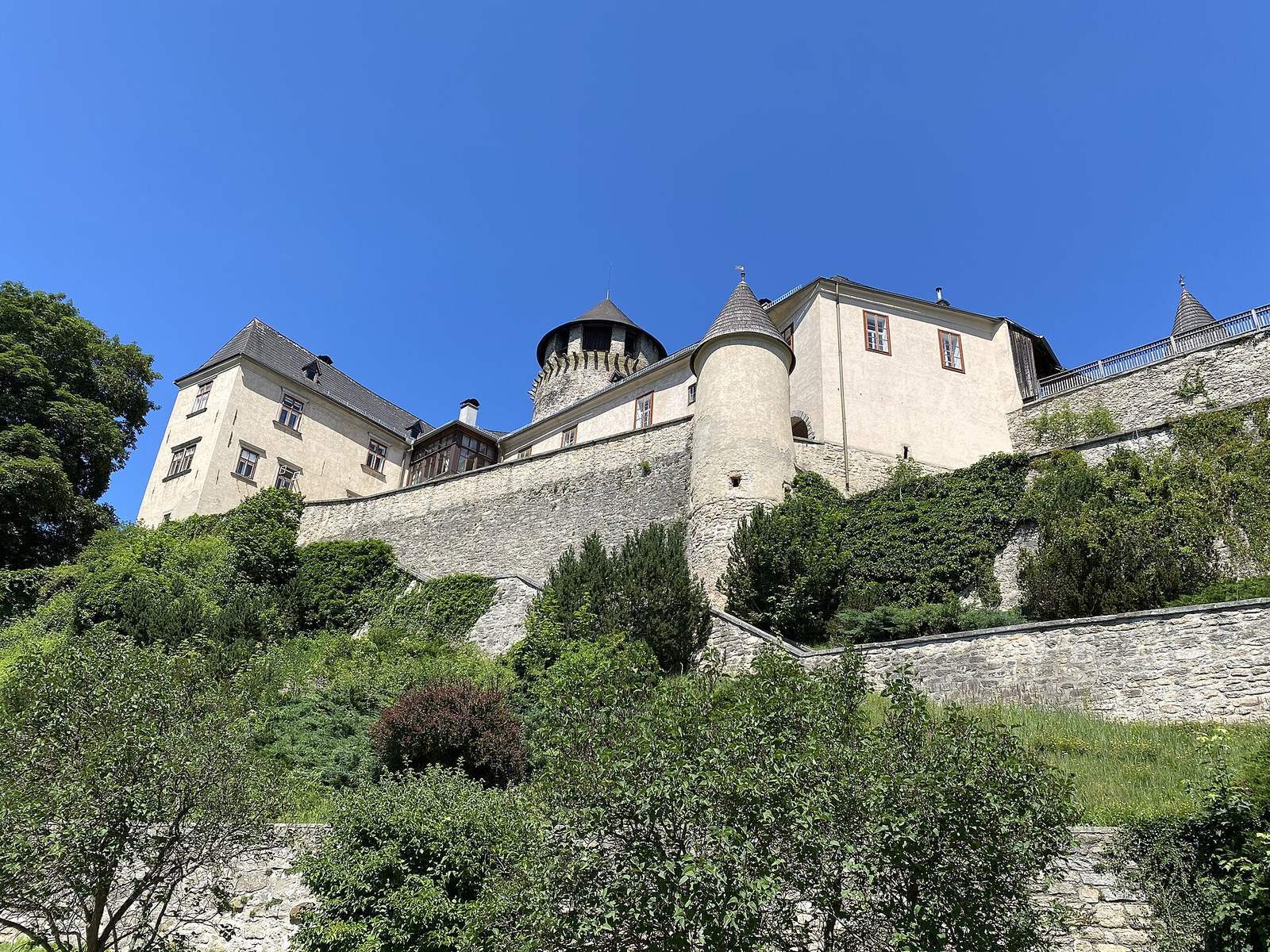
The irregular complex stands on a rock at the western end of Litschau’s town square. Its core castle occupies the highest point, while the New Castle lies across a moat. A manor farm sits at the foot of the rock, with several service buildings forming part of the wider group.
Old Castle
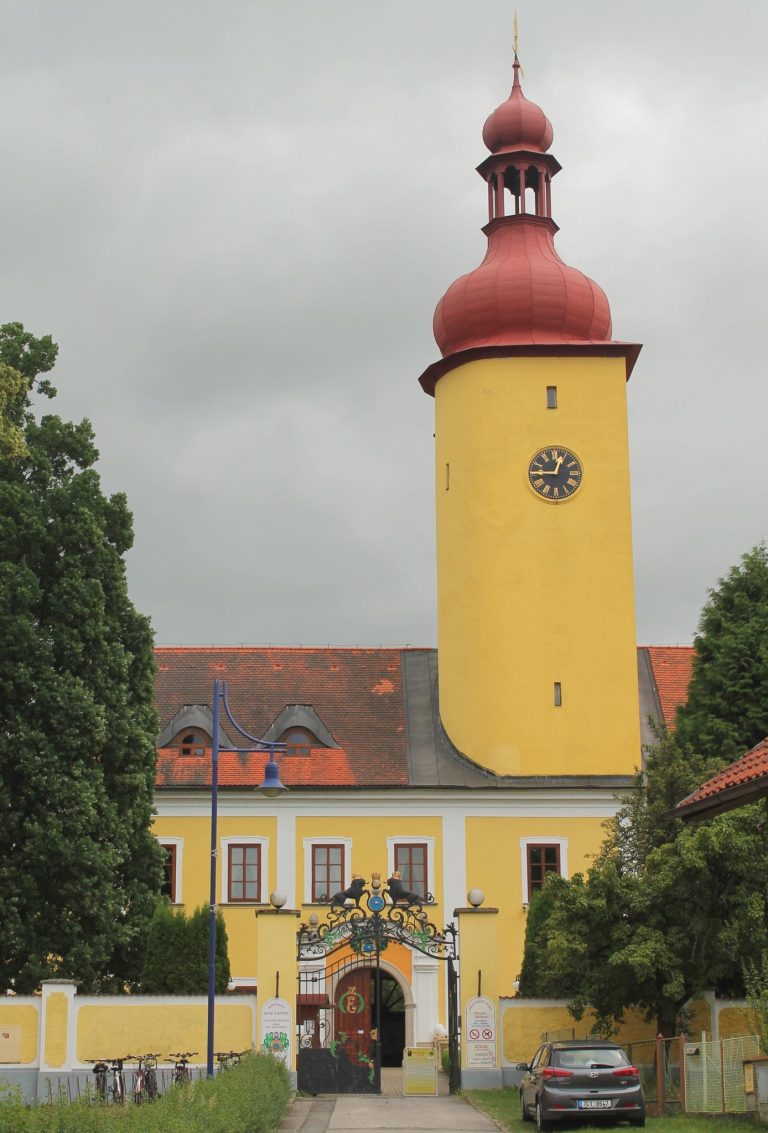
The medieval hill castle consisted of a high castle, the complex’s main fortified section, and an outer bailey, a subsidiary enclosed area. The bailey dates to the sixteenth or seventeenth century. The high castle’s large, round principal defensive tower and the outer bailey survive in their original form and are now known as the Old Castle. The early eighteenth-century ensemble also included a terrace facing the town and a tower with a Baroque onion dome.
New Castle
The New Castle is a Baroque building erected in the early eighteenth century on the far side of the moat. Its ground floor originally contained the lordship’s hospital and administrative office, while a granary occupied the upper floor. The building’s interior is partly destroyed.