Knockdrin Castle: A Neo-Gothic Country House in County Westmeath
Site at a Glance
- Popularity
- Medium
- Country
- Ireland
- Primary era
- Modern
- Eras represented
- Medieval, Early Modern, Modern
- Civilizations
- British, English
- Site type
- Domestic
- Remains
- Castle
On this page10 sections
History
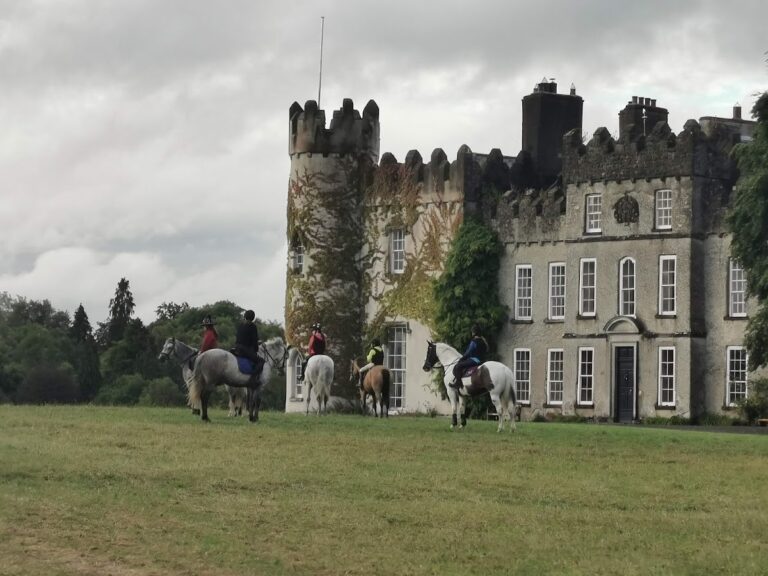
Knockdrin Castle is an early nineteenth-century country house in a neo-Gothic style inspired by medieval Gothic architecture, north of Mullingar in County Westmeath, Ireland. Sir Richard Levinge, 6th Baronet, a hereditary British rank below baron, commissioned the house, which was probably completed by 1820.
The Tuites and the Levinge estate
Before the early eighteenth century, a small Norman castle called King John’s Castle served as the estate’s principal residence. It was destroyed by fire. The estate belonged to the Tuites, a Norman-Irish family, before the Levinges acquired it.
The Levinges came to Ireland with Williamite supporters in the late seventeenth century. Williamites backed William of Orange in conflicts over the British and Irish crowns. Sir Richard Levinge, 1st Baronet (1656–1724), acquired the estate from the Tuites while serving as Chief Justice of the Common Pleas, the senior judge of a court for civil disputes under common law. He also served on a Crown-appointed commission handling land claims arising from Oliver Cromwell’s campaigns in Ireland, the restoration of the monarchy in 1660, and the Williamite conflicts. The estate then covered more than 12,000 acres.
High Park and the present castle
The first mansion on the castle site, known as High Park, was built mainly in the early eighteenth century for Sir Richard Levinge, 1st Baronet. The present house was commissioned by Sir Richard Levinge, 6th Baronet, and was probably finished by 1820.
War and later ownership
During the Irish War of Independence, the 1919 to 1921 conflict against British rule, Winston Churchill stayed at Knockdrin. In the Second World War, which the Irish government called the Emergency, a company of the Irish Army’s 6th Infantry used the castle for troop accommodation. The soldiers left in 1945, returning the house to the Levinges.
The Levinges owned the estate until 1946, although the last Sir Richard Levinge to live there had left earlier. Paddy Dunne-Cullinan bought it in 1946 and sold it to Hans von Prondzynski in 1961. The von Prondzynski family retained the castle until late 2020. In December of that year, Noel and Valerie Moran bought the castle and most of the estate, while Ferdinand von Prondzynski kept the remainder. The estate covered about 1,000 acres at the time.
Remains
The surviving property includes the main house, outbuildings, and estate land. Its principal building is a picturesque castellated country house, meaning it has castle-like features, in the neo-Gothic style.
The main house
Design and exterior
The house retains its early character, form, and fabric. Its design is credited to James Shiel, though it is uncertain whether he produced the final plan. Sir Richard Levinge, 6th Baronet, rejected two designs proposed by Richard Morrison, but parts of the front façade have also been attributed to Morrison.
Major repairs had been completed roughly fifty years before 2020. By that year, the castle was structurally sound but needed upgrading.
Interior
The house contains twelve bedrooms, five bathrooms, reception rooms, a dining room, a ballroom, and a library. A carved oak staircase receives light from above. In the gallery, columns with vertical grooves stand among wall niches with double-curved heads. One of the bedrooms is known as the Crown Bedroom.
Earlier structures
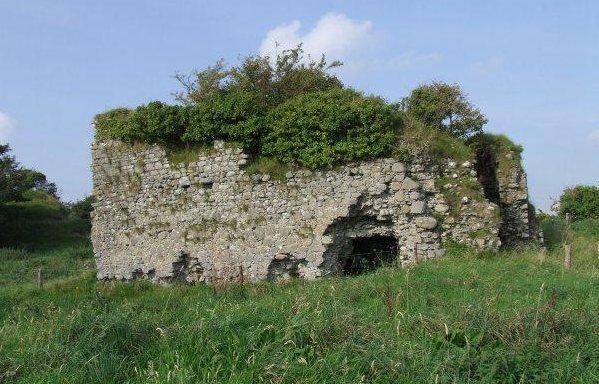
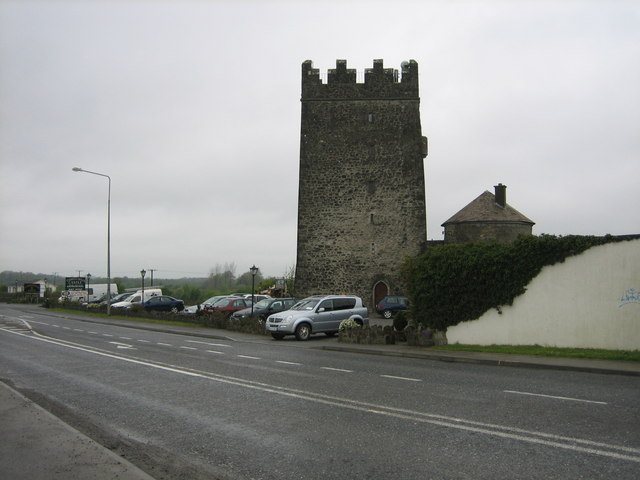
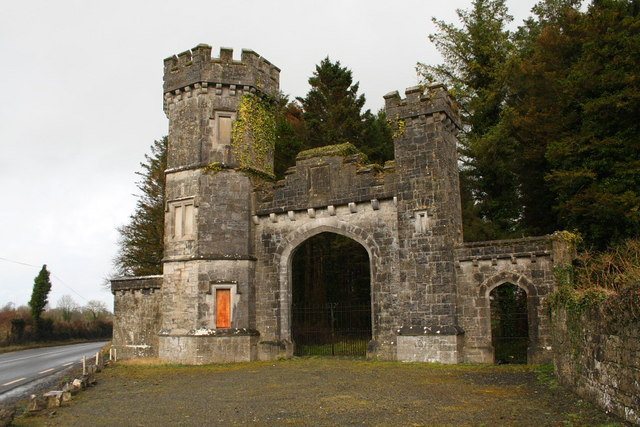
The outbuildings contain the remains of a tower house, a fortified residence centered on a tower, built around 1550. Parts of a surviving gate structure may date to the earlier High Park house.
Estate landscape
The estate includes arable land, commercial woodland, and a small lake called Lough Drin. Knockdrin’s name is reputedly connected with a hill on the estate and is interpreted as hill of Drin.