Manor in Lipków: A Classicist Residence in Poland
Site at a Glance
- Popularity
- Medium
- Country
- Poland
- Primary era
- Early Modern
- Eras represented
- Early Modern
- Civilizations
- Polish–Lithuanian Commonwealth
- Site type
- Domestic
- Remains
- Manor House
On this page5 sections
History
Construction and changing ownership
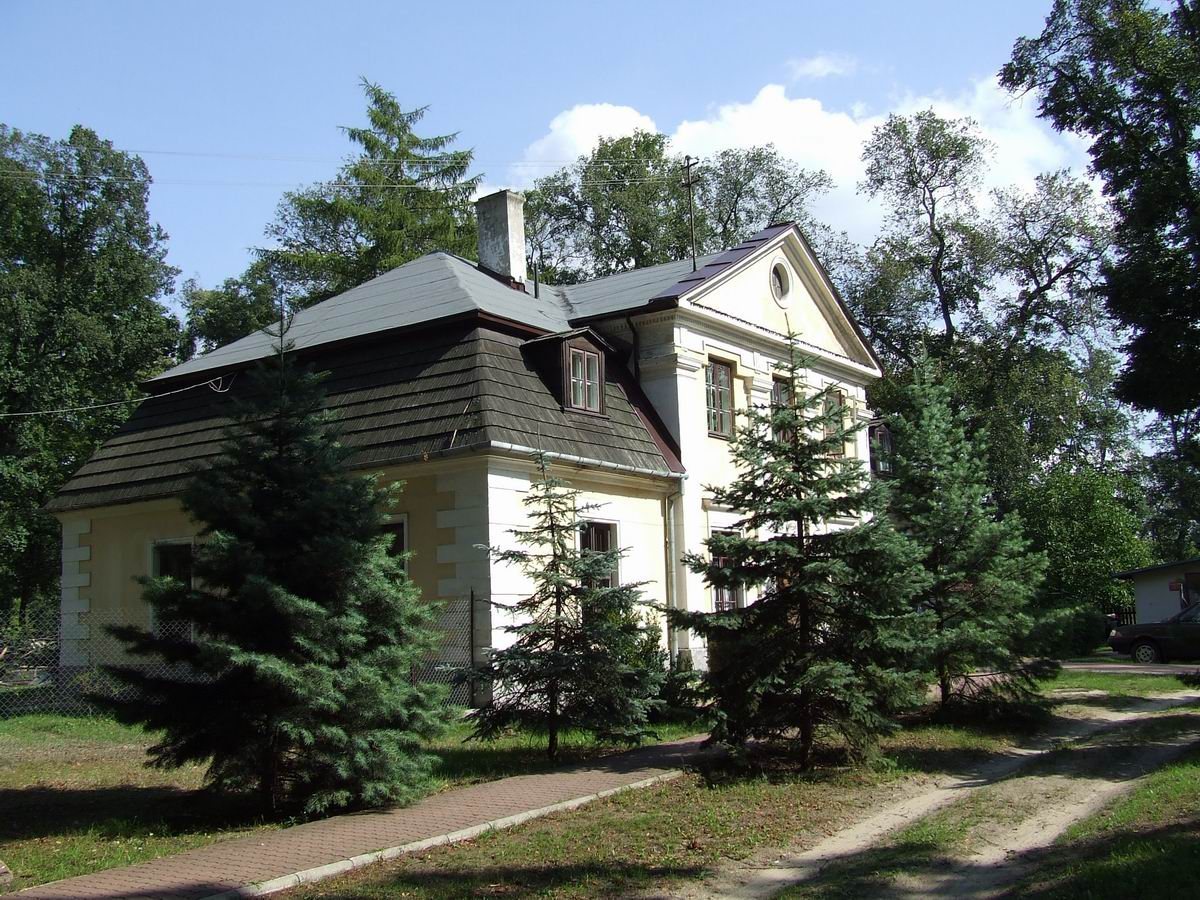
The Manor in Lipków is a Classicist residence in the Stare Babice commune of the Masovian Voivodeship, Poland, built in 1792 by Jakub Paschalis Jakubowicz. An Armenian who had moved to Poland from Tokat, in present-day Turkey, during the 1760s, Jakubowicz was ennobled by Stanislaus Augustus Poniatowski, the last king of the Polish-Lithuanian Commonwealth, for promoting useful crafts. Architect Hilary Szpilowski designed the manor. In the same year, Jakubowicz funded the adjacent Church of St Roch, also designed by Szpilowski.
In 1812 the manor passed to Jakubowicz’s eldest son, Józef. The estate later belonged to the Miecznikowski, Worowski, and Młodzianowski families. In 1880 it came into the possession of Kazimierz Szetkiewicz, who later became Henryk Sienkiewicz’s father-in-law.
Sienkiewicz and the estate
Sienkiewicz visited the manor repeatedly between 1881 and 1883. He portrayed its surroundings in his historical novel With Fire and Sword, reportedly at the request of his wife, Marynia. The novel places a duel between the fictional characters Jurek Bohun and Michał Wołodyjowski there.
War, destruction, and rebuilding
Gustaw Daszkiewicz owned the manor in 1909, and Ludwik Suwald succeeded him. The Lipków estate covered 198 hectares in the 1920s, when Jerzy Suwald was its last owner. German forces occupied the manor during the Second World War, after which it was nationalized and brought under state ownership.
In 1948 a fire destroyed the building. It was accidentally started by state-farm workers after pipes for coal stoves had been installed improperly. In 1956 the local Parish of St Roch sought to acquire the ruins for use as a rectory, and a petition was sent to Prime Minister Józef Cyrankiewicz. The following year, the government Office for Religious Affairs, which oversaw religious matters, authorized the regional monuments official to transfer the ruins to the parish. The manor was rebuilt in 1957 through the efforts of Stefan Kowalczyk, pastor of a Warsaw parish of the Blessed Virgin Mary, and Father Wacław Kurowski. Kurowski established a private museum about Lipków’s history and its connections with Sienkiewicz; the museum later suspended operations. The manor now serves as a rectory.
Remains
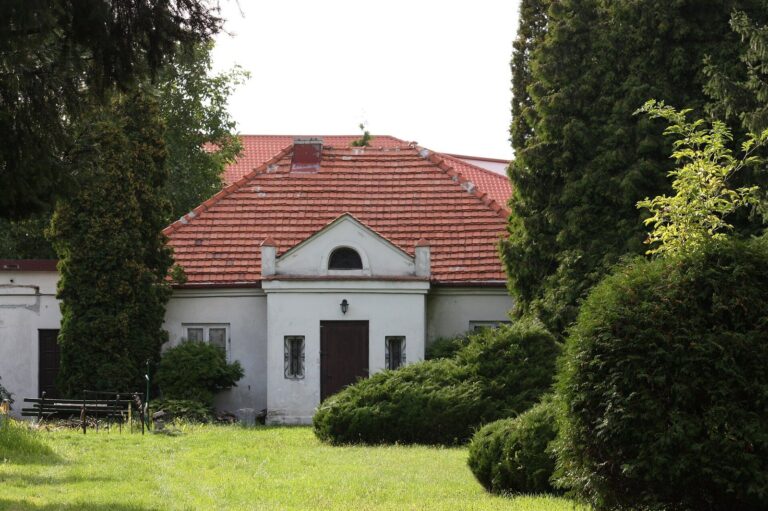
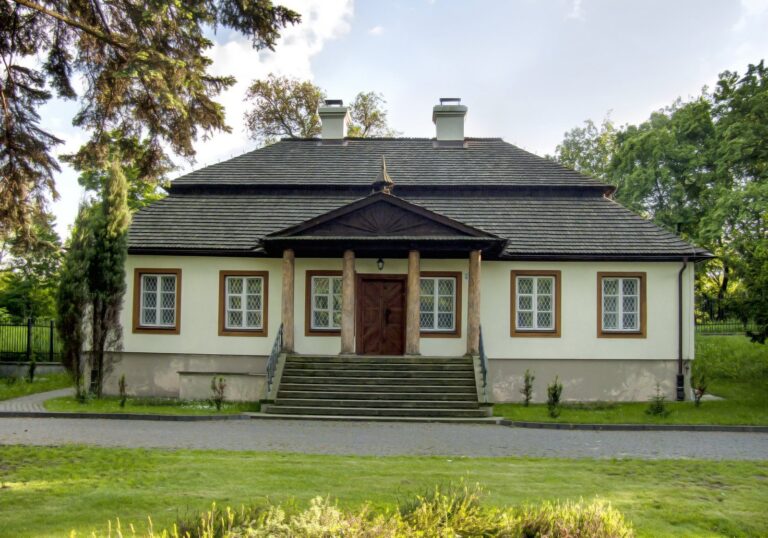
The manor is a single-storey Classicist building with a mansard roof, whose lower slope is steeper than its upper slope. Its broad central projection extends beyond the main wall and is topped by a triangular pediment. Shallow, column-like pilasters articulate this feature, while rusticated masonry emphasizes the individual blocks at the corners. A columned portico, an entrance porch supported by columns, was added between the world wars and removed during postwar rebuilding. The former manor park and the Church of St Roch are beside the building, near Kampinos Forest.