Lerés Castle: A Fortified Courtyard House in Spain
Site at a Glance
- Popularity
- Medium
- Country
- Spain
- Primary era
- Medieval
- Eras represented
- Medieval, Early Modern
- Civilizations
- Crown of Aragon, Spanish
- Site type
- Military
- Remains
- Castle
On this page8 sections
History
Early records and lordship
Lerés Castle is a fortified courtyard-house complex in Lerés, a locality in Sabiñánigo, Huesca province, Spain. The settlement is first mentioned in 1064, when Galindo Badilanis held the office of tenente, a medieval position responsible for a territory or stronghold.
Around 1577, the Sancliment family acquired Layés from the Garasa family, while the Gómez family acquired Lerés. By 1610, Pedro Garasa was recorded as lord of Lerés. In 1835, Úrbez Otín held the lordship. The Otín family appears to have become related to the Garasa family through marriage and probably inherited the property because there was no male heir.
Municipal changes and the Spanish Civil War
Lerés belonged to the municipality of Layés and Lerés in 1842 and later became part of Jabarrella. Agriculture and livestock raising were the locality’s main economic activities in the mid-19th century. In 1885, French count and Pyrenean explorer Aymar de Saint-Saud visited while travelling from Campo de Jaca toward Laguarta and remarked on the settlement’s medieval appearance.
During the Spanish Civil War, the 1936–1939 conflict fought in Spain, militiamen who had been quartered in the castle for six months set it on fire.
Remains
Setting and fortified layout
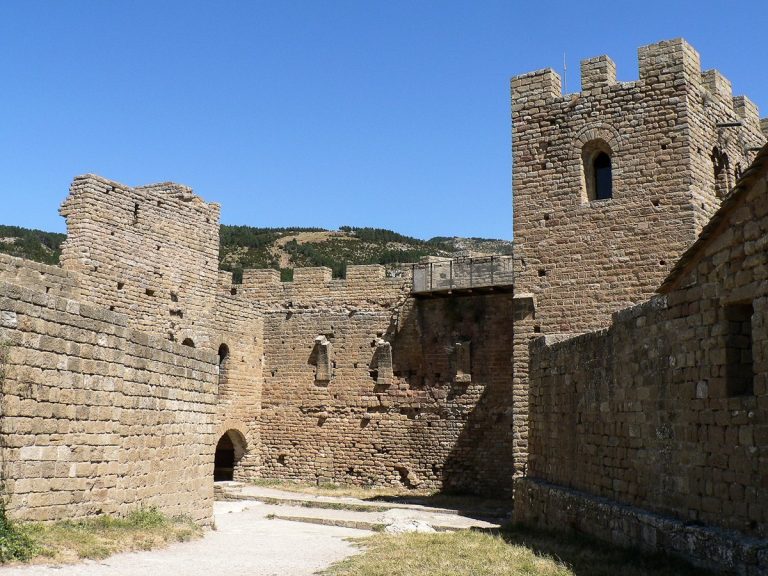
The locality occupies a promontory above the Guarga River at roughly 700 metres above sea level, with views toward the Sierra de Guara, Peña Oroel, Collarada, Telera, Teñera, and surrounding heights. The castle is arranged as a courtyard house with a fortified tower pierced by narrow openings for weapons. Its form has parallels with buildings in Yéspola, Sobás, Gillué, and Osán.
Entrance and courtyard buildings
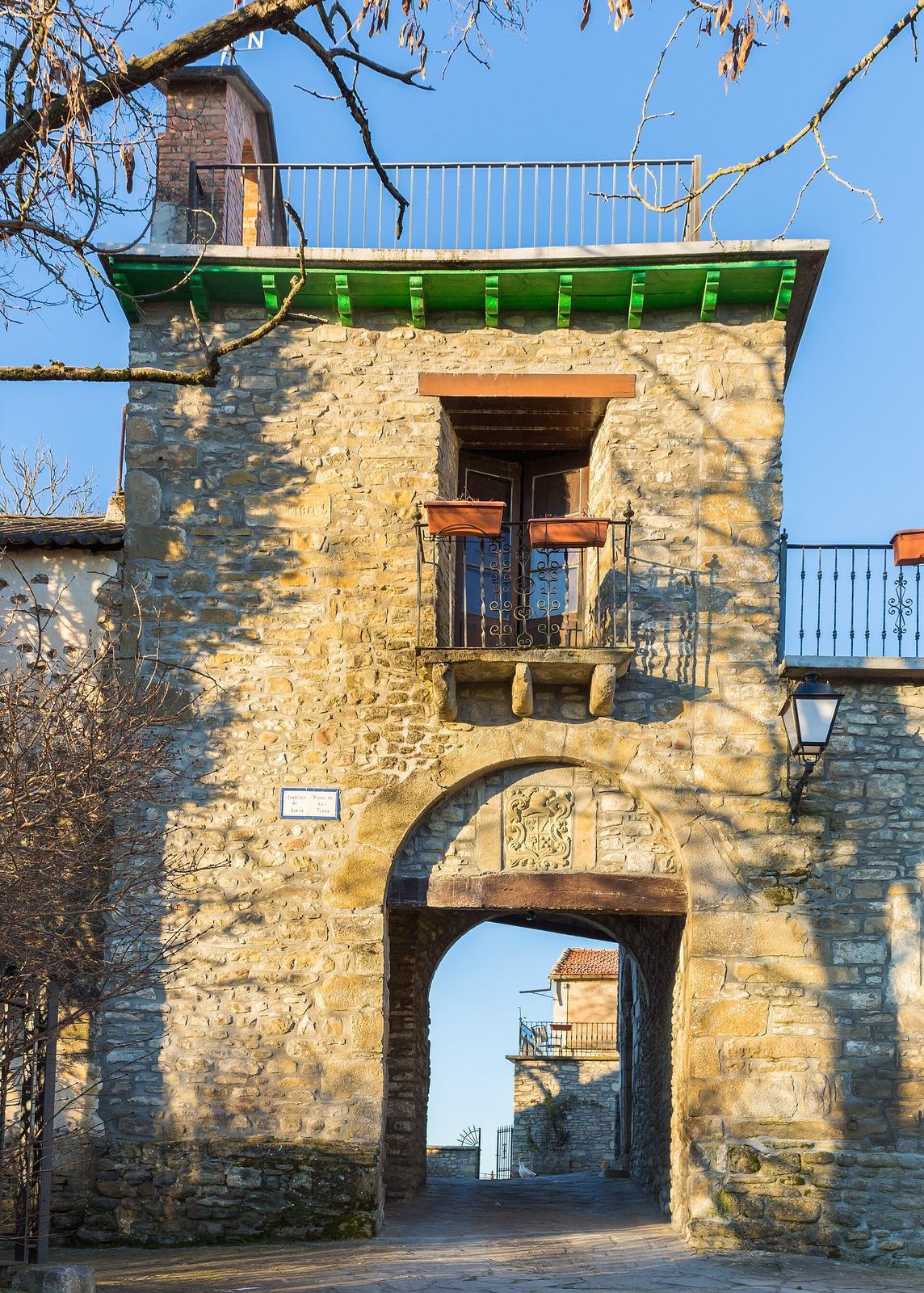
A portal provides entry to the complex. Above it is a stone coat of arms belonging to the Garasa family, made in 1720. Within the courtyard are facilities for agriculture and livestock, as well as a disused washhouse.
Chapel and former tower
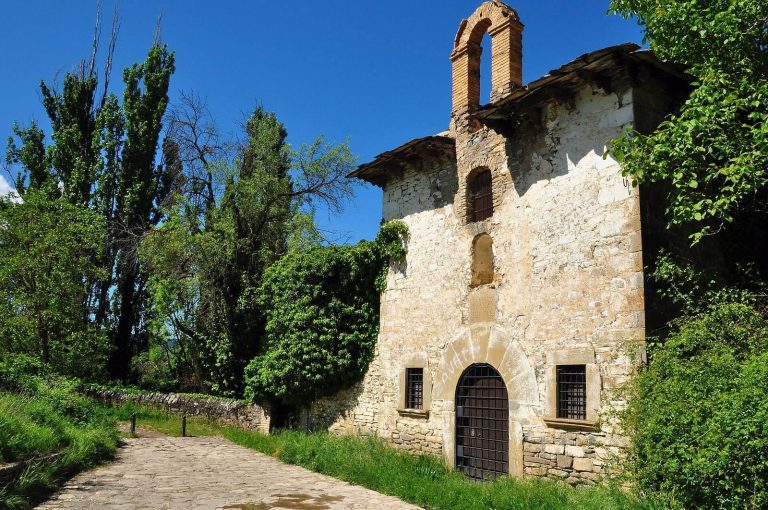
The courtyard also contains a chapel dedicated to Saint Thyrsus, an early Christian martyr and patron of the locality. Saint Orosia, a Christian saint particularly associated with Aragon, and Saint Lucy, an early Christian martyr, are also linked with the chapel. The chapel once had a tower. A grotto beneath it, formerly used as a large sheep shelter, collapsed; the tower fell soon afterward.
Surviving walls
After the Civil War fire, the castle’s walls were the only parts to survive. Marks left by machine-gun fire can still be seen on them.