Haus Hammerstein: A Historic Inn and Educational Centre in Hückeswagen
Site at a Glance
- Popularity
- Medium
- Country
- Germany
- Primary era
- Modern
- Eras represented
- Modern
- Civilizations
- German
- Site type
- Domestic
- Remains
- House
On this page6 sections
History
Construction and early uses
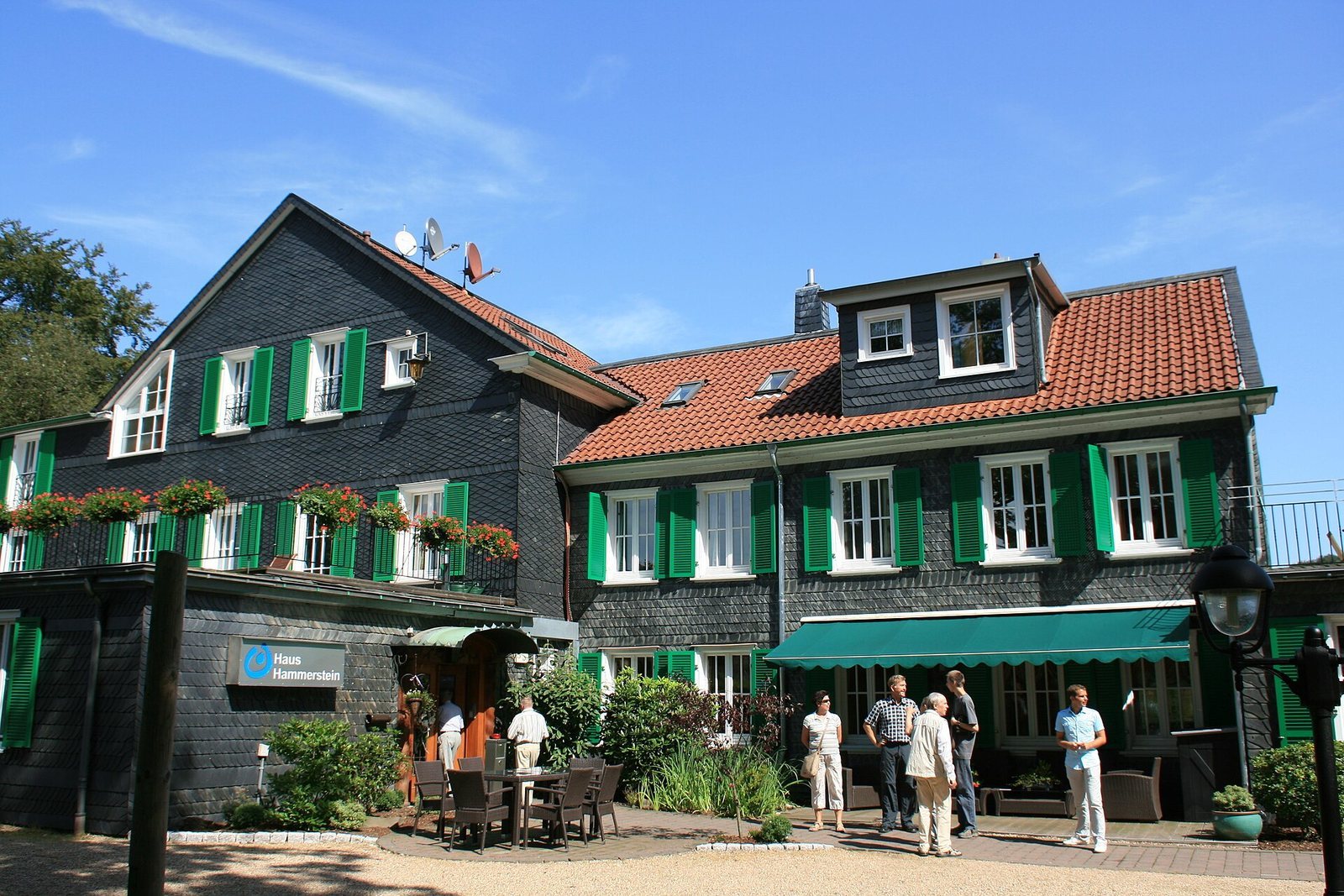
Haus Hammerstein is a house in Hückeswagen, Germany, built in 1874 by Hubert Grafer for his large family. Before the Wuppertal Reservoir was impounded, it formed part of the settlement of Hammerstein, which has since disappeared. Before the Second World War, the house also operated as a workers’ pub. During the war, it provided meals to Russian forced laborers who were housed nearby and compelled to work in local factories.
Hotel years
From the 1950s through the 1970s, Haus Hammerstein flourished as a well-regarded hotel and excursion inn known across Germany. Its guestbook was signed by actresses Inge Meysel and Antje Weisgerber, opera singers Lisa della Casa and Anneliese Rothenberger, and entertainer and television presenter Peter Frankenfeld. Actor Gustaf Gründgens lived at the hotel for two years. Other guests included Konrad Adenauer, West Germany’s first chancellor, and later chancellor Helmut Kohl. Economics Minister Ludwig Erhard, Finance Minister Franz Etzel, World Bank president Eugene Black, and Karl Blessing of the Bundesbank, Germany’s central bank, also stayed there together.
Lebenshilfe’s ownership
In 1985, Herta Horn, Grafer’s granddaughter, sold the house on the condition that it pass to a nonprofit organization. That December, the North Rhine-Westphalia regional association of Lebenshilfe, a nonprofit supporting people with intellectual disabilities, bought it for 1.5 million Deutsche Marks, Germany’s currency before the euro. The association used the property as an educational and recreation centre for training courses, seminars, conferences and other events. It sought to retain the building’s historic character while accommodating necessary changes. By mid-2006, the house had received various fire-safety upgrades. A bistro and café returned to the basement in mid-2008, and civil wedding ceremonies were held there from 2014.
Closure and proposed sale
Government restrictions during the COVID-19 pandemic led to the house’s closure in March 2020, and it did not reopen. On 1 July 2020, Lebenshilfe announced plans to sell the property, explaining that the cost of further fire-safety work exceeded the nonprofit’s means. It intended to find another nonprofit buyer.
Remains
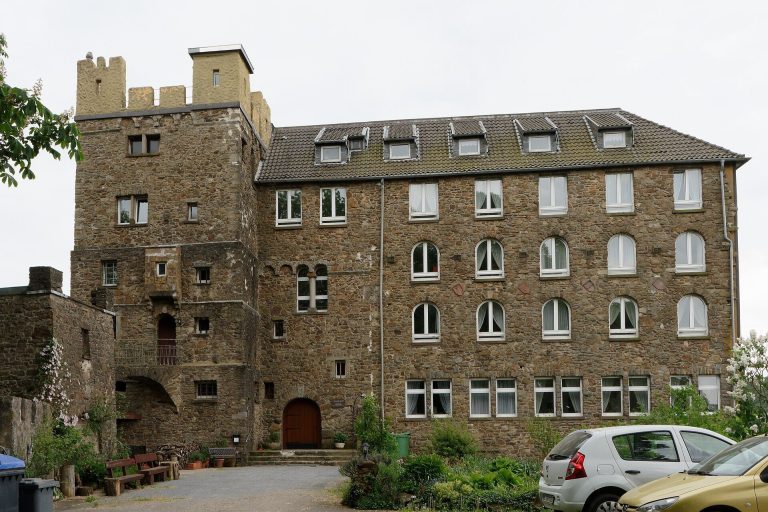
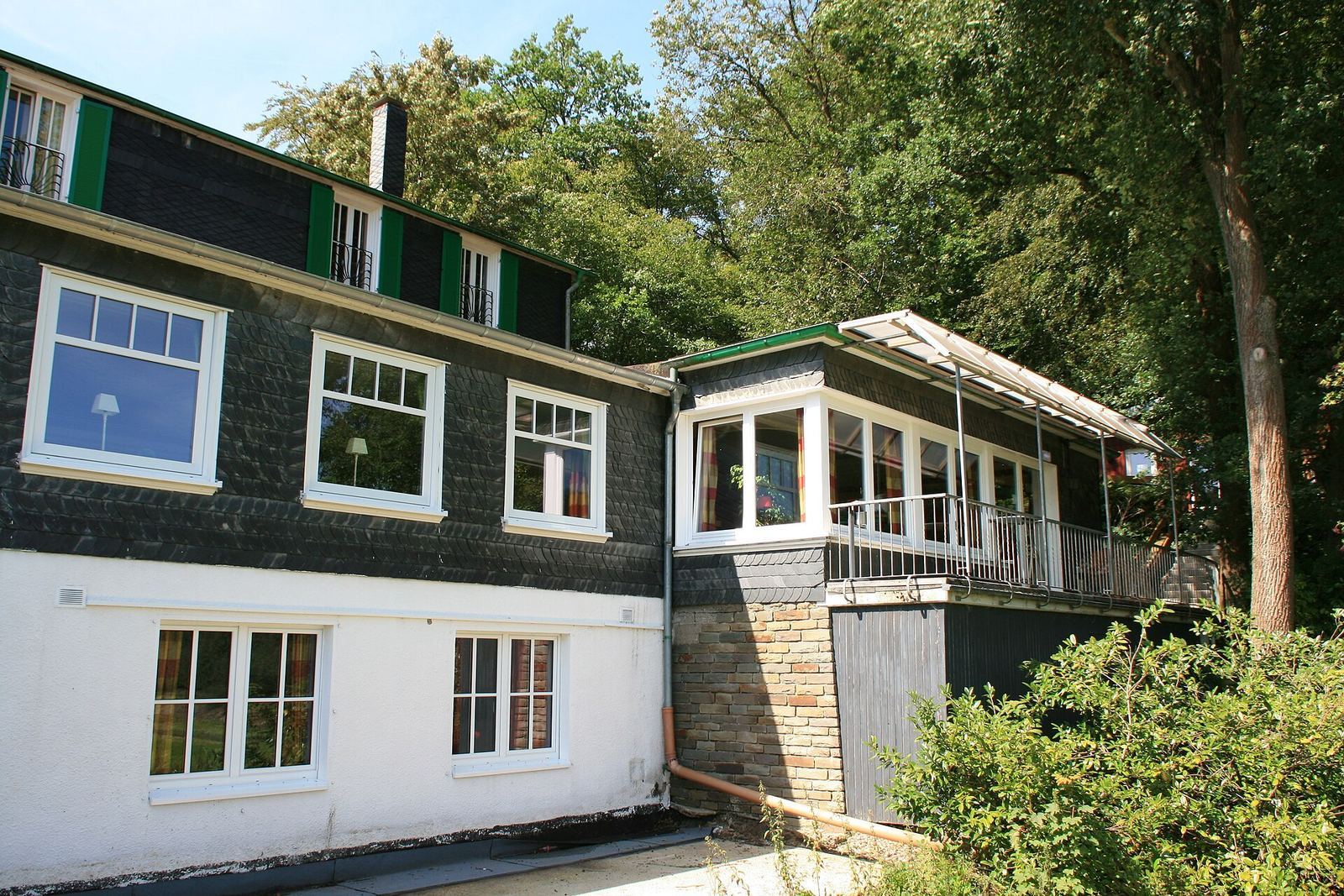
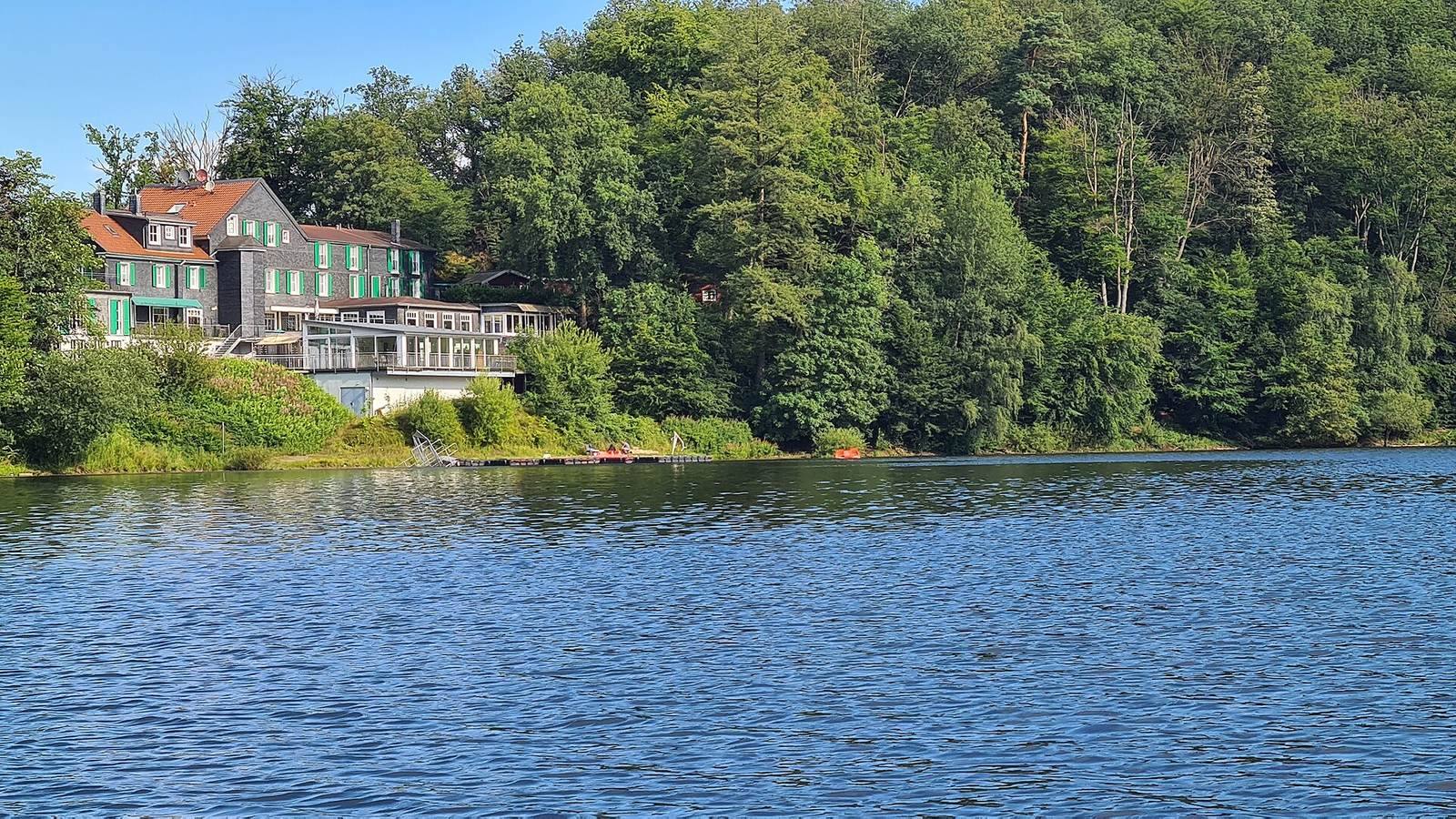
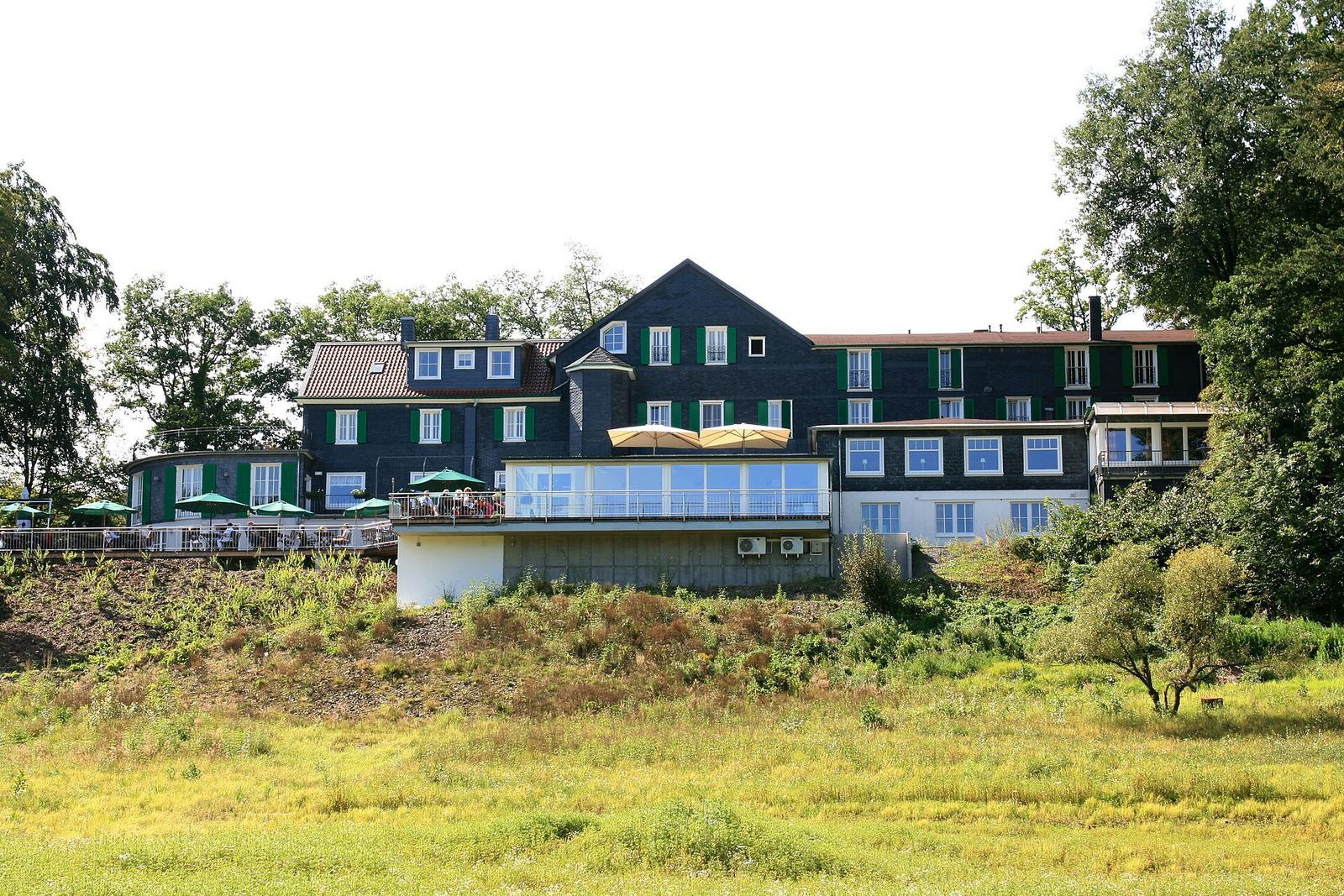
The house stands below Dürhagen in Hückeswagen, beside the Wuppertal Reservoir. Its upper-floor guest-room wing has dormer windows and had been enlarged and fitted out by mid-2006. An elevator was installed to make the first floor above ground level accessible to people with limited mobility. Much of the hotel’s furniture was retained and incorporated into the building.
The house also had a small indoor swimming pool and a wellness area accessible to people with limited mobility. The basement bistro and café has a terrace, and a boat pier on the reservoir in front of the house is accessible to people with limited mobility.