Dhayah Fort: A Hilltop Defensive Stronghold in the United Arab Emirates
Site at a Glance
- Popularity
- Medium
- Country
- United Arab Emirates
- Primary era
- Unclassified
- Eras represented
- Unclassified
- Civilizations
- Unclassified
- Site type
- Military
- Remains
- Fort
On this page6 sections
History
Dhayah Fort is a hilltop defensive fort in Ras Al Khaimah, United Arab Emirates. Its original construction date is uncertain, but it is attributed to Sheikh Hassan bin Ali and formed part of defenses for Dhayah and nearby areas.
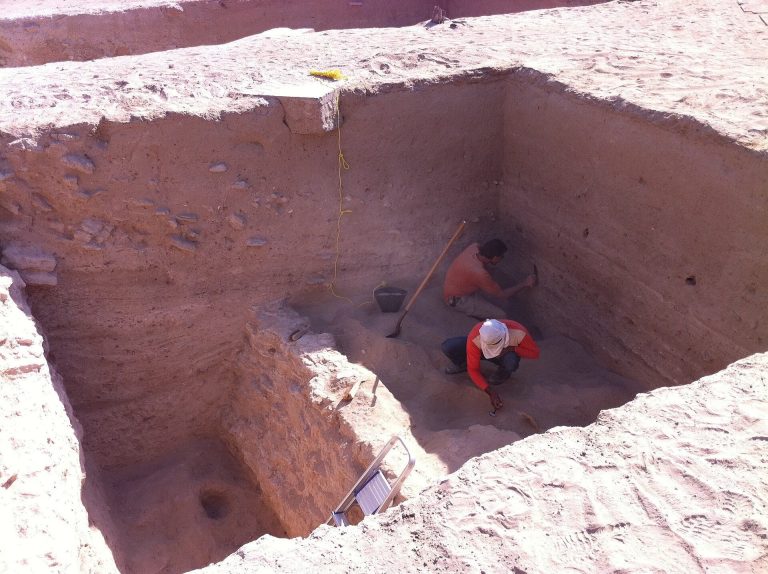
People have inhabited Dhayah and its surroundings for about 5,000 years. Remains at the hill’s base indicate occupation during the Wadi Suq period, a Bronze Age phase in southeastern Arabia.
The 1819 siege
In 1819, a British punitive expedition from Bombay targeted the Qawasim, a maritime Arab power in the Persian Gulf, whom Britain accused of piracy and plunder. After British forces captured Ras Al Khaimah on 9 December, three ships blockaded Rams to the north. British troops landed there on 18 December, fought inland through date plantations, and reached Dhayah Fort the next day.
About 400 people held out at the fort for three days. Many were herders and farmers from the date groves, and most belonged to the Tunaij, an Arab tribe, having fled to the fort as British troops approached. The defenders endured heavy artillery fire with little protection from the sun and no water or sanitation. Of the 400 who surrendered, 177 were identified as men of fighting age.
The British brought two 24-pound guns from HMS Liverpool, naming the guns for the weight of the shot they fired. Each weighed more than two tonnes, and the troops hauled them about four miles across the plain from the coast at Rams. After two hours of sustained fire breached the walls, the last members of the ruling Al Qasimi family surrendered at 10:30 a.m. on 22 December. The British briefly raised their flag, then demolished the fort. Their losses at Dhayah were one officer and three men killed, and 16 wounded.
Treaty and later rebuilding
Dhayah was the last Qawasim outpost to resist in the campaign. Its fall helped pave the way for the General Maritime Treaty of 1820, the first in a series of agreements between Britain and the rulers of the Trucial Coast, the sheikhdoms that later formed the United Arab Emirates. The treaty established peace after the fighting. Sheikh Hassan bin Ali, ruler of Rams and Al Dhaya, co-signed it under the title “Sheikh of Zyah.” The agreements contributed to the eventual establishment of the United Arab Emirates.
The fort was rebuilt after its destruction in 1819 and restored in the 1990s. By the time of a 1906 survey, the Dhayah area was uninhabited.
Remains
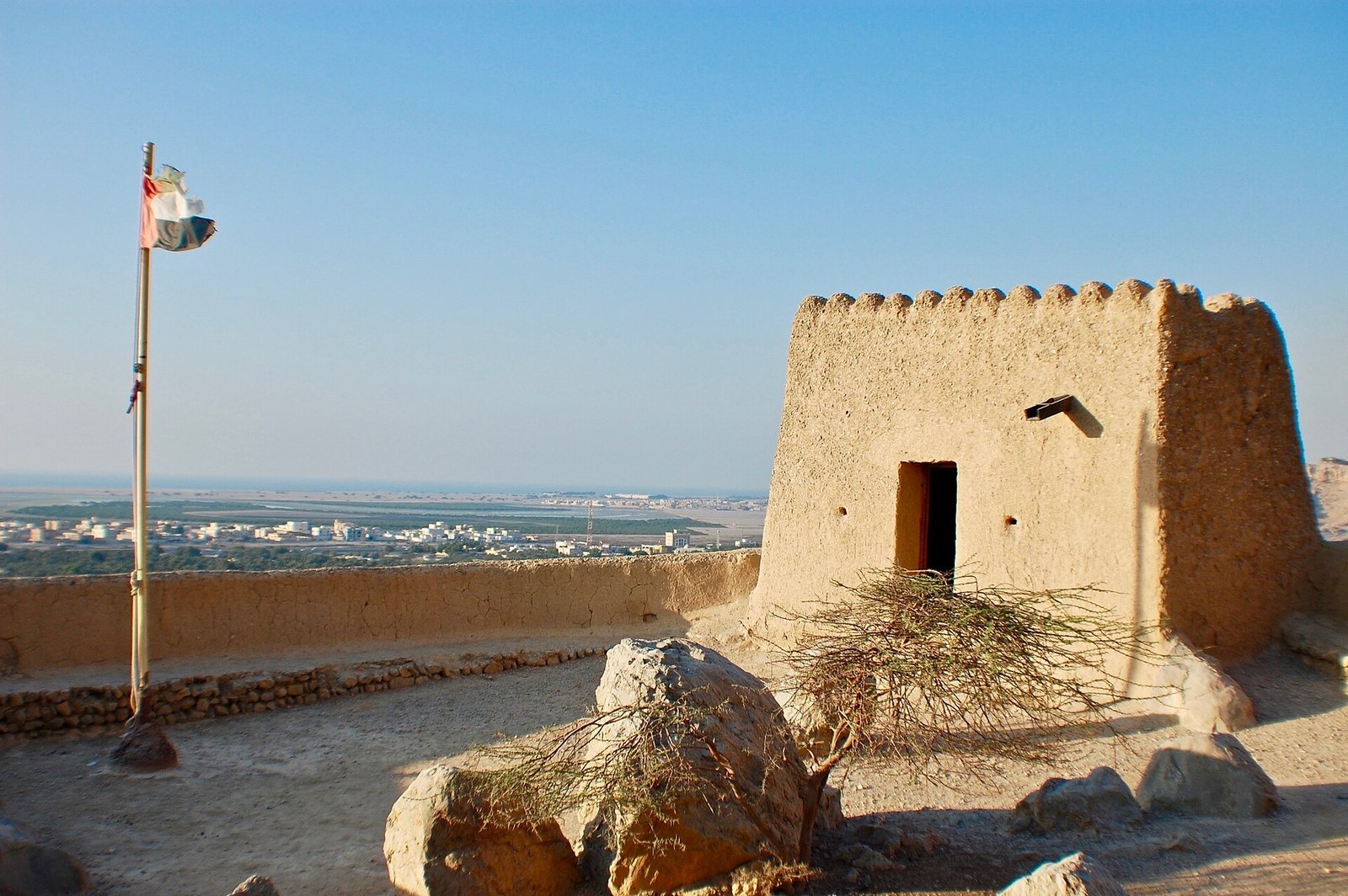
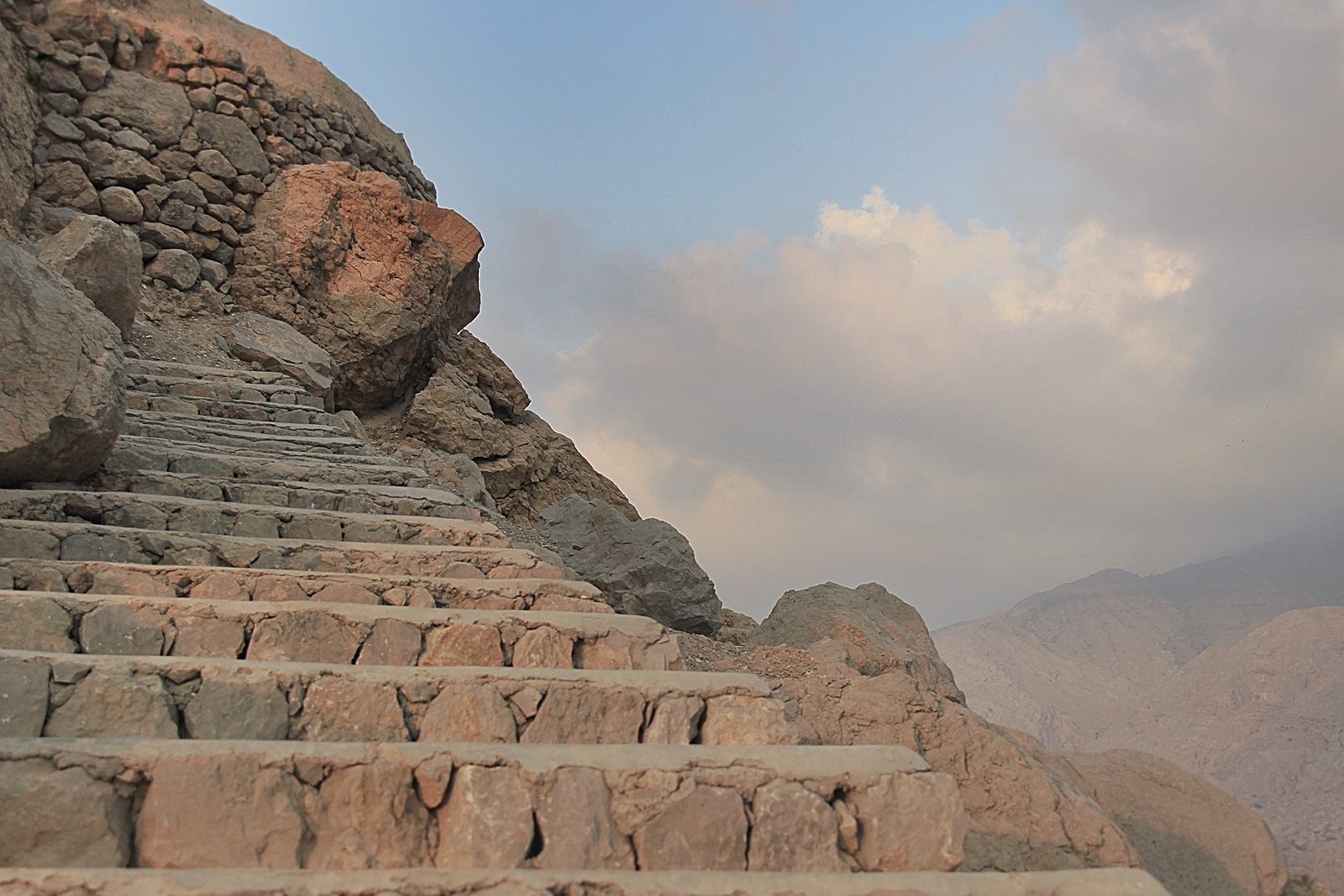
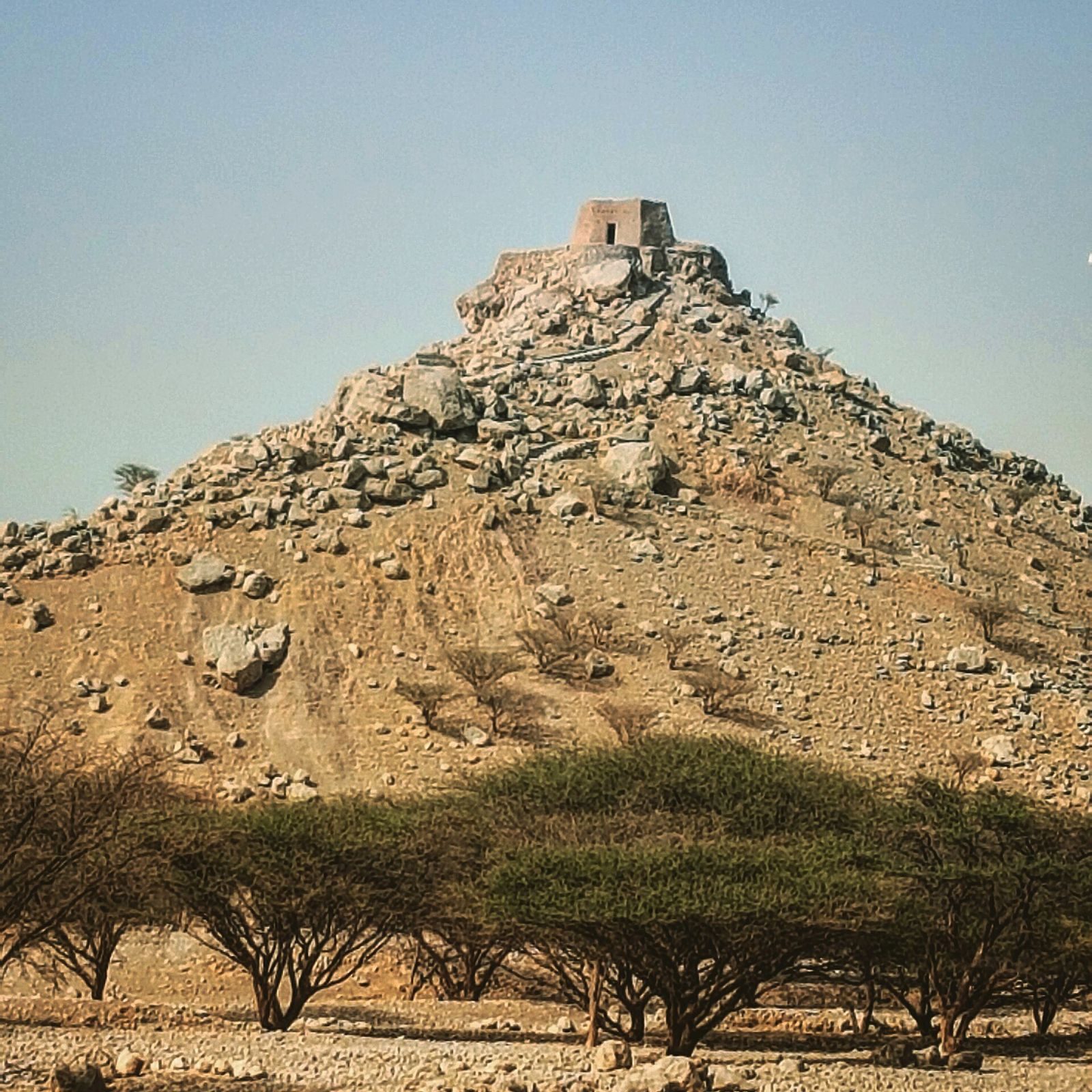
The fort stands on a high hill at the northern edge of Ras Al Khaimah, north of Rams and facing the Gulf. It overlooks fertile plains and date-palm gardens, while wadis, hill passages, and the coastal road form part of the surrounding landscape. The hilltop fort and its associated lower defenses make up a layered arrangement of stone and mud-brick structures.
Hilltop fort
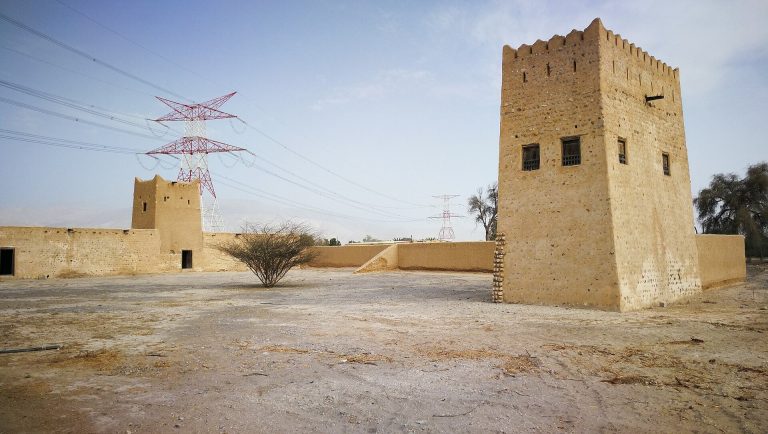
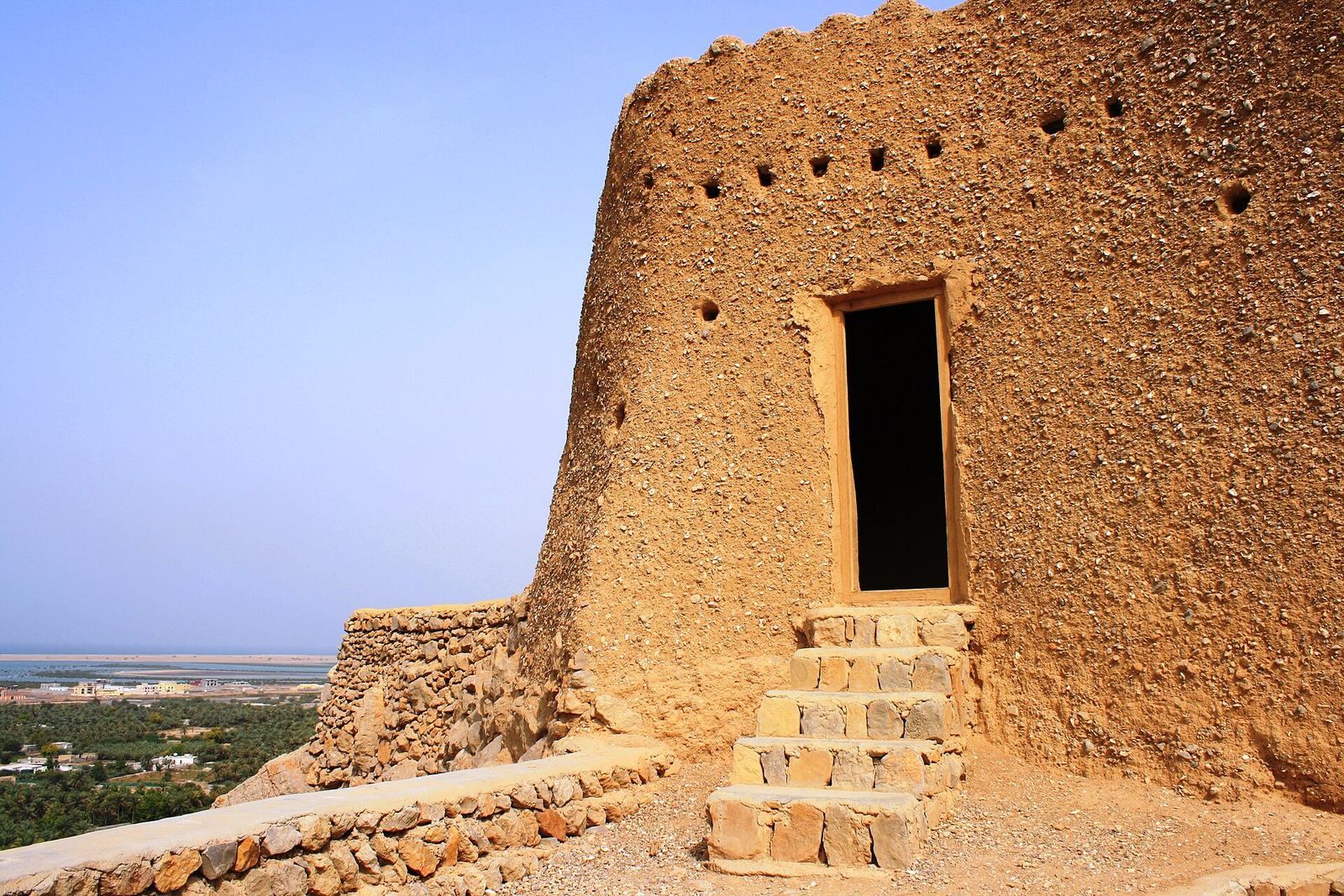
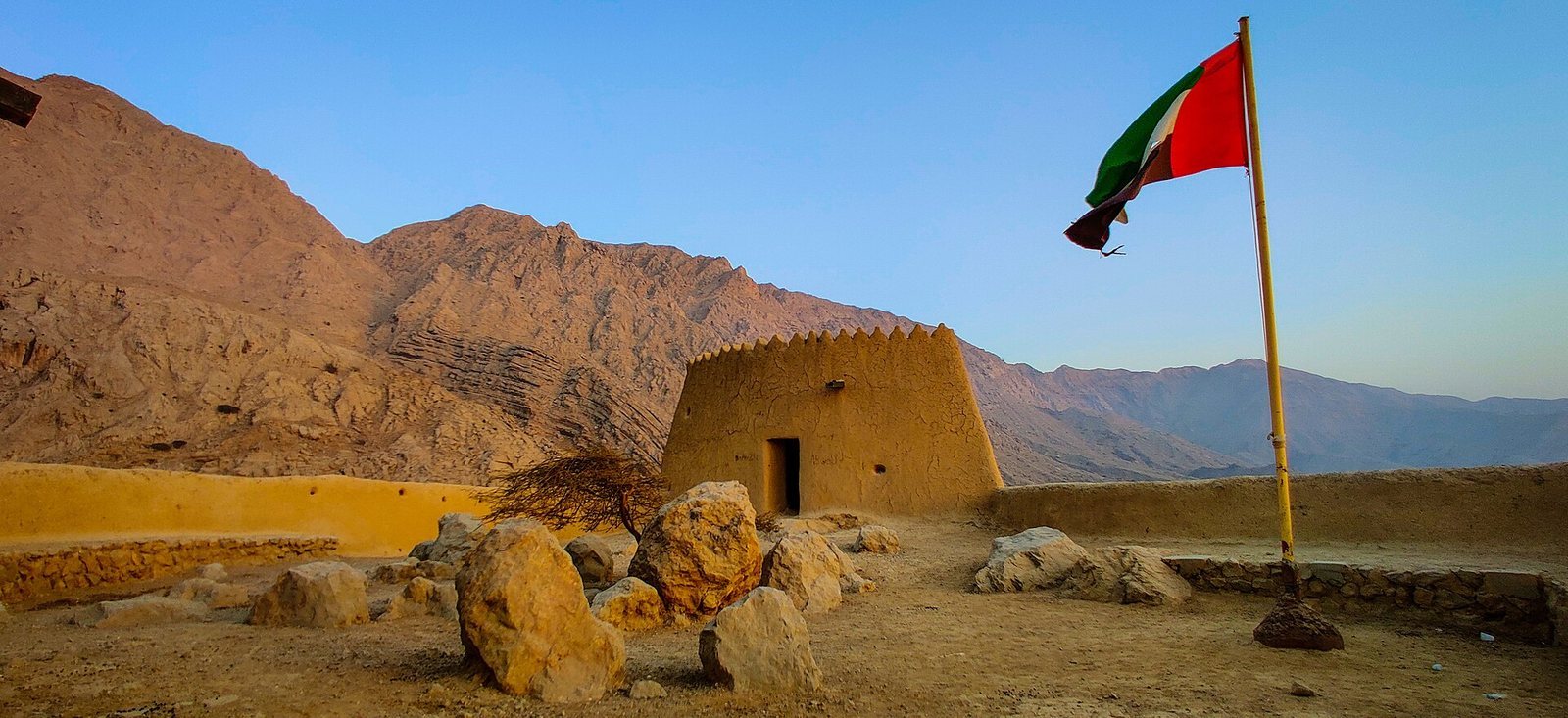
A stone wall, packed with pebbles to create a level surface, enclosed the hilltop. Two mud-brick towers stood within the wall, and rocks at the center indicate that semi-permanent huts were associated with the towers. Dhayah is described as the UAE’s highest hilltop fort and the country’s only surviving fort on a plateau.
Lower defenses
At the foot of the hill stood a larger mud-brick sur (defensive enclosure), which served as a refuge for local people. Watchtowers among the palm groves formed another part of the defensive arrangement. Together, these structures linked the hilltop fort with the settlement and surrounding gardens.