Al Fulayyah: An Eighteenth-Century Fort and Al Qasimi Summer Residence


Site at a Glance
- Rating
- 4.4
- Popularity
- Very Low
- Country
- United Arab Emirates
- Primary era
- Early Modern
- External website
- Open
- Eras represented
- Early Modern
- Civilizations
- Unclassified
- Site type
- Military
- Remains
- Fort
On this page5 sections
History
An Al Qasimi Summer Residence
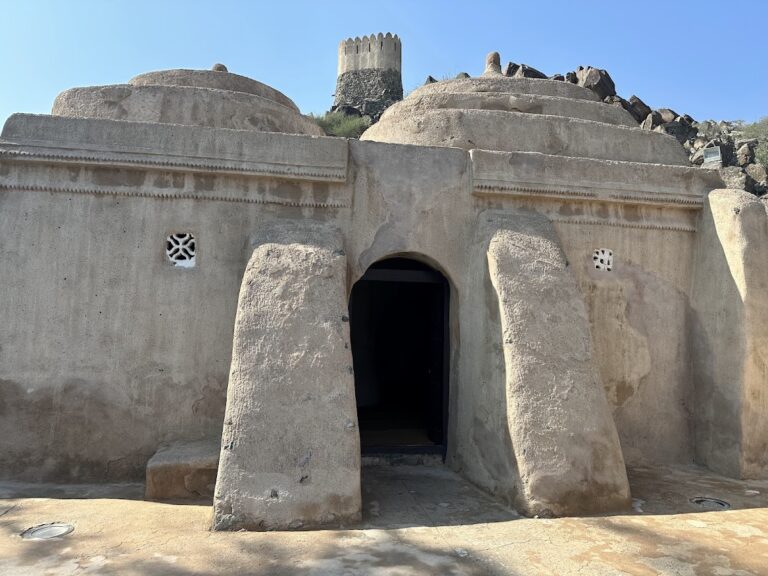
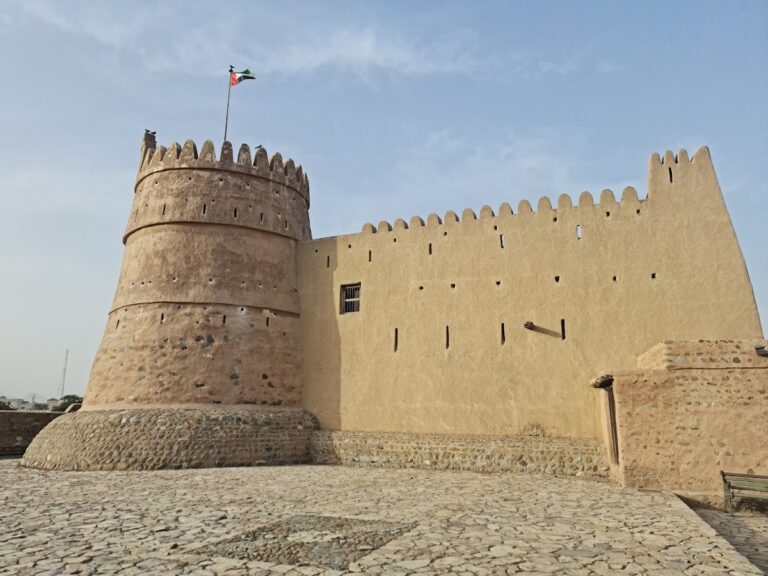
Al Fulayyah is an eighteenth-century fort in the United Arab Emirates, inland from Ras Al Khaimah. It traditionally served as the summer residence and rest house of the ruling Al Qasimi family, combining a residential retreat with a fortified site. The Al Qasimi family belonged to the Qawasim, a powerful maritime Arab tribal and ruling polity centered in the lower Gulf, including Ras Al Khaimah and Sharjah.
The Treaty Process of 1820
Al Fulayyah became associated with the General Maritime Treaty of 1820 after a British naval expedition against the Qawasim in late 1819 destroyed much of Ras Al Khaimah town. The inland Al Qasimi summer seat was then selected as the venue for principal treaty-related signings.
The General Treaty for the Cessation of Plunder and Piracy by Land and Sea, dated 5 February 1820, was signed at Al Fulayyah Fort on 8 January by Hassan bin Rahmah Al Qasimi, identified as Sheikh of Khatt and Falayah, and Qadhib bin Ahmad of Jazirat Al Hamra. Hassan bin Rahmah had relinquished his title as ruler of Ras Al Khaimah when he signed the preliminary agreement. Sultan bin Saqr Al Qasimi had signed an associated preliminary agreement on 6 January. On 8 January, Major-General William Keir Grant, a British military commander, signed with Hassan bin Rahmah and Rajib bin Ahmed Al-Zaabi at Ras Al Khaimah. Captain J. P. Thompson prepared the translation.
Additional signatures followed during the treaty process. The Sheikh of Dubai signed on 9 January, and on 11 January Sheikh Shakhbut bin Dhiyab Al Nahyan signed for his son, Sheikh Tahnun bin Shakhbut, of Abu Dhabi. Hussein bin Ali of Rams and Dhayah signed on 15 January. Zaid bin Saif signed for Dubai’s ruler on 28 January, while Sultan bin Saqr Al Qasimi of Sharjah signed on 4 February. On 5 February, the treaty was also signed in Sharjah on behalf of the sheikhs of Bahrain, who ratified it in Bahrain later that month.
On 15 March 1820, Rashid bin Humaid, ruler of Ajman, and Abdullah bin Rashid Al Mualla, ruler of Umm Al Quwain, signed the treaty at Al Fulayyah. The agreement was intended to end plunder and piracy by land and sea and became the first in a sequence of British treaties with the Gulf sheikhdoms.
From the Trucial Agreements to the United Arab Emirates
The treaty process brought British recognition of the Trucial States, the Gulf sheikhdoms that entered a series of agreements with Britain during the nineteenth century. Further treaties formalized the British Protectorate over these states. This sequence ultimately contributed to the process that resulted in the formation of the modern United Arab Emirates on 2 December 1971.
Remains
Al Fulayyah survives as an eighteenth-century fort inland from Ras Al Khaimah. Its physical character is defined by its fortified form and by its historical use as an Al Qasimi summer residence and rest house. The site therefore represents both a defensive structure and a residential retreat associated with the ruling family. Its role in the treaty events of 1820 also gives the surviving fort a direct connection with the political history of the Gulf sheikhdoms.