Tell Abraq: An Ancient Settlement in the United Arab Emirates
Site at a Glance
- Rating
- 4.3
- Popularity
- Very Low
- Country
- United Arab Emirates
- Primary era
- Bronze Age
- External website
- Open
- Eras represented
- Bronze Age, Iron Age
- Civilizations
- Umm an-Nar
- Site type
- City
On this page12 sections
History
Tell Abraq is an ancient settlement in E55, Hamriya East, Sharjah, United Arab Emirates, occupied from about 2200 BC to AD 200 through the Umm Al Nar, Wadi Suq, and Iron Age periods. Its earliest monumental construction belonged to the Umm Al Nar culture, a Bronze Age society of southeastern Arabia known for substantial settlements, towers, and communal stone-built tombs. Once on the Persian Gulf coast, the settlement now lies inland because changing sea levels altered the shoreline. The mound is divided by the Sharjah–Umm Al Quwain border.
Umm Al Nar and Wadi Suq occupation
Tell Abraq has been associated with Magan, the region named in ancient Mesopotamian texts in connection with southeastern Arabia and the circulation or production of copper and other goods. The settlement was described as one of the best-preserved and largest prehistoric settlements in the Lower Gulf. A circular fortification was built around 2200 BC, and a charcoal sample from the base of its tower produced a calibrated radiocarbon date of 2461–2199 BC.
Occupation continued from the Umm Al Nar period into the Wadi Suq period, which followed it during the second millennium BC. The fortification remained in use during this transition, while the inhabitants’ way of life changed and their dependence on seafood increased. The settlement included sheep, goats, and cattle, alongside hunting of gazelle and oryx. Fish, shellfish, turtles, and dugongs were also consumed extensively.
Iron Age and long-distance exchange
Tell Abraq later remained occupied through the Iron Age, the period when iron became increasingly important while bronze and other materials continued to be used. Pottery resembles material from Shimal and Seih Al Harf in Ras Al Khaimah, suggesting connections between these communities, probably through Ed-Dur. Finds from Tell Abraq helped define the UAE’s Iron Age I, II, and III phases, dated approximately to 1200–1000 BC, 1000–500 BC, and 500–300 BC.
The settlement participated in exchange networks reaching Mesopotamia, Iran, the Indus Valley, Bactria, Bahrain, and Afghanistan. Harappan refers to the urban civilization of the Indus Valley, while Dilmun was a Gulf trading polity centred on Bahrain and surrounding regions. About 600 red-ridged Barbar pottery sherds connect Tell Abraq with Umm Al Nar Island and Dilmun. Bronze was refined and cast at the settlement, and imported materials included tin and ivory from Afghanistan. Other objects connect the site with Harappan, Bactrian, Mesopotamian, Elamite, and Dilmun networks.
Excavation and interpretation
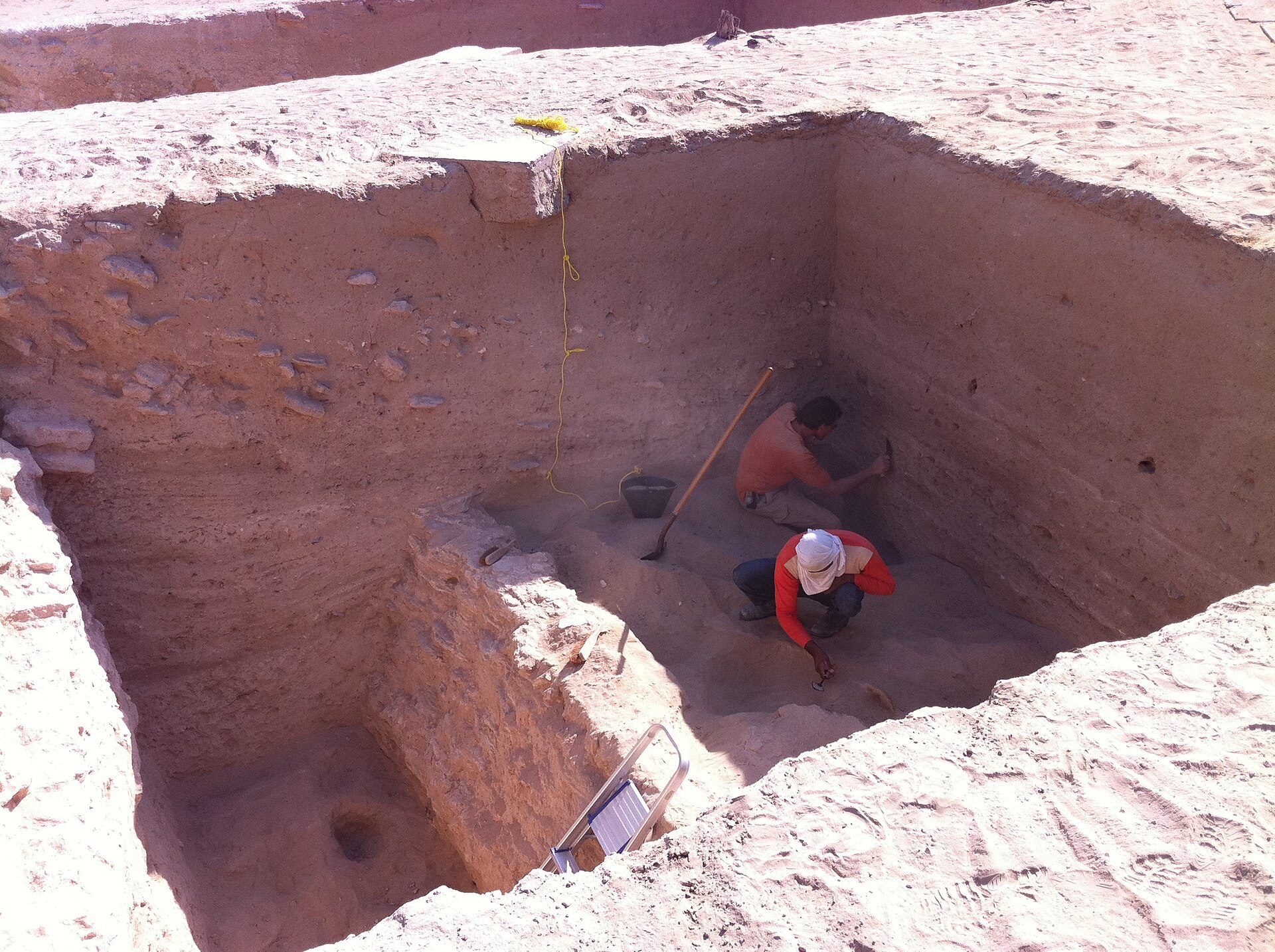
The University of Copenhagen first investigated Tell Abraq while studying Ed-Dur, several kilometres to the north, to clarify the settlement sequence before Ed-Dur became prominent around 1000 BC. Instead, the excavators identified much earlier occupation, including the monumental third-millennium-BC fortification. Limited trenching took place in 1973 under the Iraqi archaeologist Sayid Rabi’ al-Qaisi. The University of Copenhagen, led by Daniel Potts, excavated the site during five seasons between 1989 and 1998.
Work resumed in 2007 through a joint Bryn Mawr College and University of Tübingen project led by Peter Magee. After initial cataloguing, large-scale excavation began in 2010. From 2019, the Italian Archaeological Mission in Umm Al Quwain, led by M. Degli Esposti, continued work focused on occupation from the later Bronze Age through Iron Age III. Excavations in the eastern and western parts of the mound have generally been conducted independently because of the modern border.
Remains
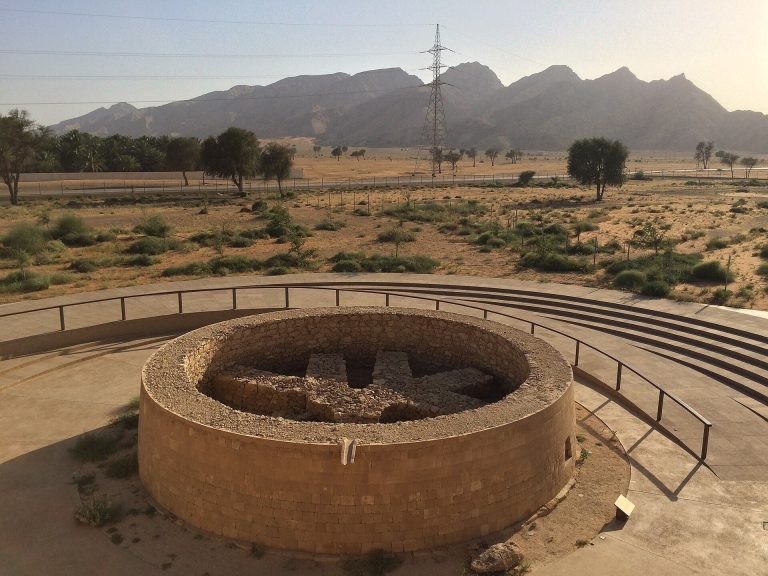
The archaeological mound covers about four hectares and rises roughly ten metres above the surrounding sabkha, a coastal salt-flat environment formed by evaporation and saline sediment. At its centre stands a circular fortification about 40 metres across and eight metres high. Other remains include Umm Al Nar buildings and fireplaces, mud-brick buildings from the second and early first millennia BC, and a communal tomb west of the tower. More than 100,000 animal bones have been recovered, forming the largest faunal assemblage reported from an archaeological site in the Arabian Peninsula.
Central fortification and water supply
Umm Al Nar tower
The central fortification was constructed around 2200 BC from mud brick faced with stone. It is the largest excavated example in the United Arab Emirates of the distinctive Umm Al Nar fortress towers. A later mud-brick platform covered and preserved the fortification. A stone-lined well at its centre descended to the water table, providing a built water source within the fortified structure.
Communal burial monument
Umm Al Nar tomb
The Umm Al Nar tomb lies about ten metres west of the tower. It is approximately six metres in diameter and contains two internal chambers reached through a removable flat-stone doorway. Its walls were built from limestone ashlar, meaning regularly cut and dressed stone blocks, together with beach stones. Charcoal from the tomb produced a calibrated radiocarbon date of 2197–2036 BC.
The tomb held the mixed, mostly disarticulated remains of about 410 people, including 276 adults. The younger individuals included pre-term infants, newborns, and infants under two years old. Analysis indicates that people with illnesses and limited mobility received care. One woman in her twenties had poliomyelitis, possibly the earliest dated example of the disease in human history. Objects placed with the dead included ceramic and stone vessels, copper and bronze rings, spearheads, ostrich-eggshell fragments, beads, and shells used for infant feeding.
Buildings, craft, and exchange finds
Settlement buildings and production
Umm Al Nar buildings and fireplaces survive alongside mud-brick structures dating to the second and early first millennia BC. Craft activity included the refining and casting of bronze. The settlement’s animal remains reflect herding, hunting, and intensive use of Gulf resources, including fish, shellfish, turtles, and dugongs.
Imported objects and seals
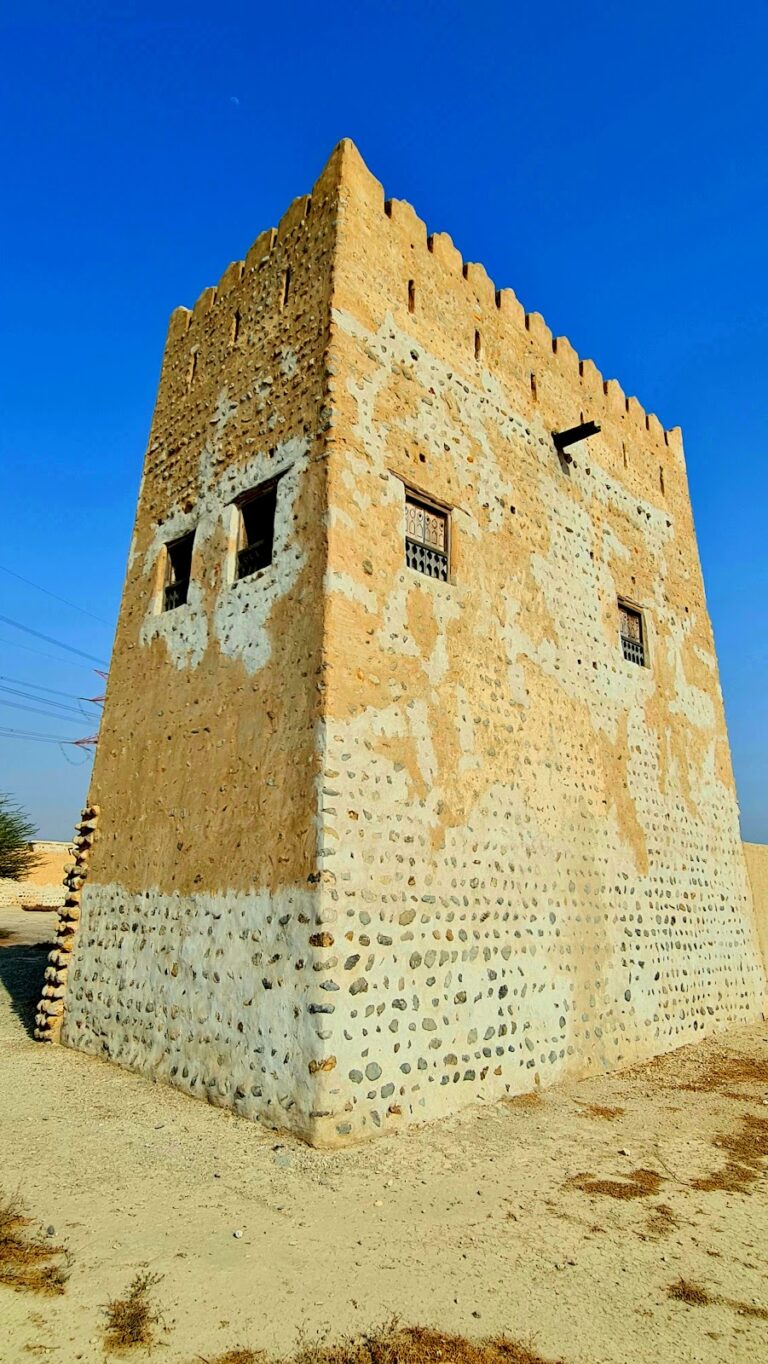
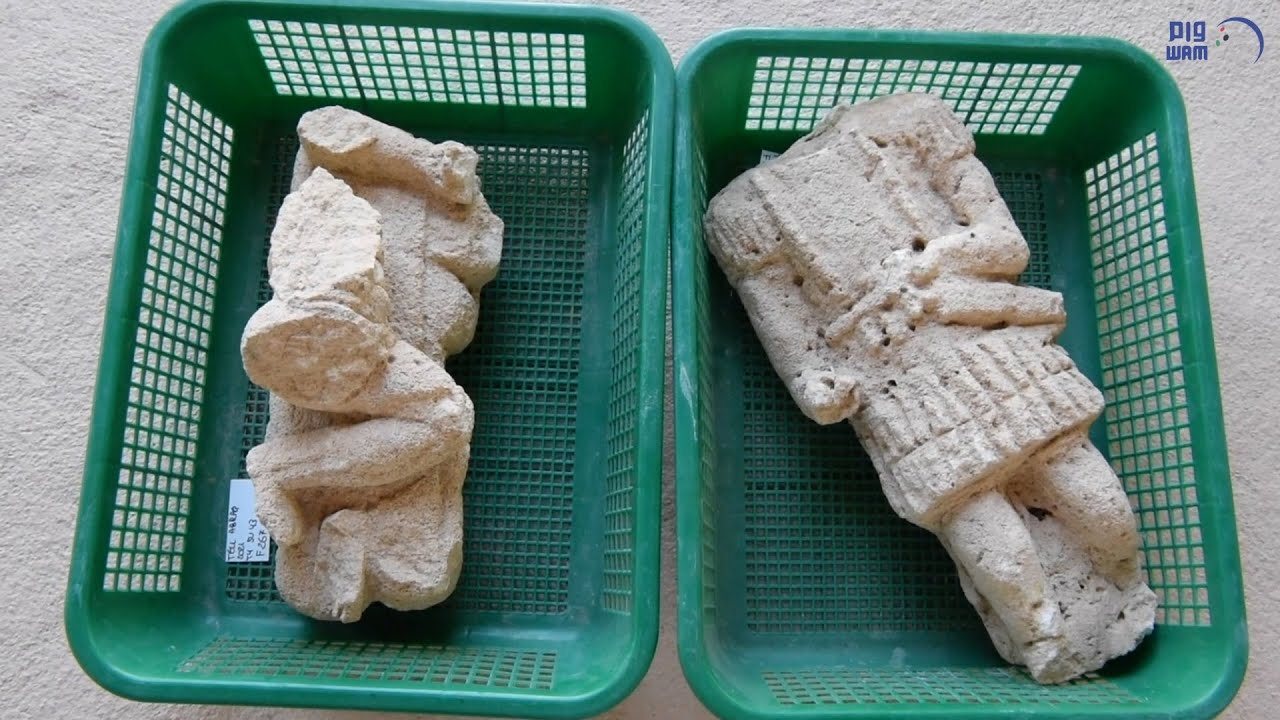
Long-distance exchange is represented by two Harappan cubical weights, Harappan-style carnelian and agate jewellery, an ivory duck figurine, and tin and ivory from Afghanistan. An ivory comb and pottery have decorative forms linked with Bactria. Four complete or fragmentary copper-alloy figurines date between 300 BC and AD 300, including one showing a naked man with anatomically detailed features.
Several cylinder seals were recovered. Two were heavily damaged, while others include a copper-alloy seal showing a zebu, a stone seal with geometric patterns, and another stone seal bearing an apparent sacred-tree image. Two pottery objects also carried seals. Twenty-one second-millennium-BC bitumen samples, including material attached to Mesopotamian and local pottery, came from Elamite lands. This contrasts with the Mesopotamian-origin bitumen found at most other regional sites.