Poppenburg Castle: A Royal and Episcopal Stronghold
Site at a Glance
- Popularity
- Medium
- Country
- Germany
- Primary era
- Medieval
- Eras represented
- Medieval, Early Modern, Modern
- Civilizations
- German, Holy Roman Empire, Kingdom of Prussia
- Site type
- Military
- Remains
- Castle
On this page14 sections
History
Poppenburg Castle, at Burgstemmen in Germany, was one of the old royal fortresses intended to protect the Leine valley, the route to Hildesheim, and the lands of the Prince-Bishopric of Hildesheim, a territory ruled by a bishop with both religious and secular authority. Its construction date is uncertain.
Royal lands and episcopal control
In 1049, Emperor Henry III gave the Bishop of Hildesheim an estate near the castle after Duke Bernhard II of Saxony had transferred it to the emperor. In 1051, Henry transferred county rights in six districts, including Valen, and eleven public parishes to the bishopric, bringing the castle into its possession. A Hildesheim memorial record also says that half the castle was given to provide a prebend, income supporting a member of a religious community.
A noble family named Poppenburg appears in written records from the 1130s and seems to have held the castle under the bishop’s authority. By 1217, one branch had moved to Castle Spiegelberg. The castle returned to episcopal ownership in 1241, after which the bishops granted it only temporarily as a pledge.
Thirteenth- and fourteenth-century stronghold
Major building work took place in the thirteenth century, as the Poppenburg family died out and the bishopric regained the castle. Bishop Konrad II of Riesenberg strengthened its defenses and granted it in 1226 to Count Hermann of Wohldenberg. In 1241, Konrad acquired the Spiegelberg share and appointed Bodo von Ilten to administer the bishop’s portion. His duties included preventing unjust tolls on the Leine bridge and ensuring that merchants’ wagons could cross without obstruction.
Konrad and, later, Bishop Otto I of Brunswick-Lüneburg often stayed at Poppenburg and issued documents there. Konrad also commissioned a new residential wing. In the fourteenth century, Bishop Otto II of Woldenberg ordered the residential building and a small tower roofed with stone slabs as a measure against fire. During his feud with Magnus I, Duke of Brunswick-Lüneburg, Bishop Gerhard of Berg built a substantial tower-like residence, or palas, in the castle’s southern part in 1367.
Territorial change and religious use
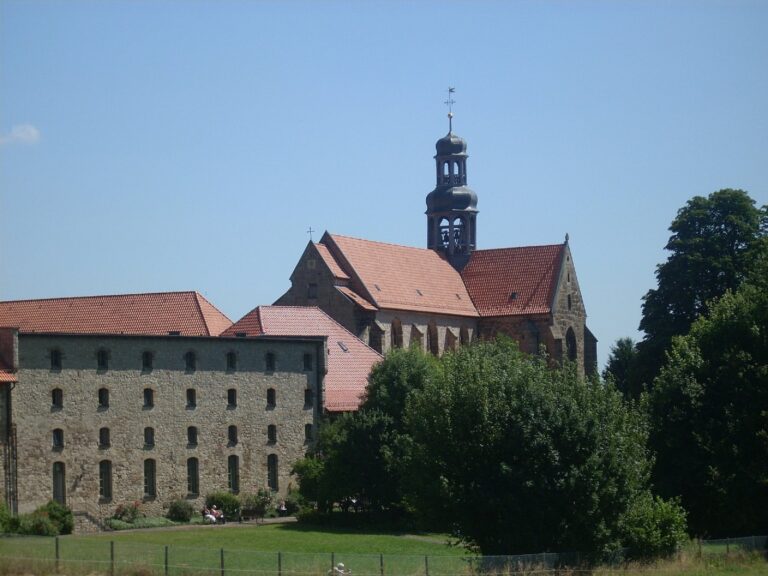
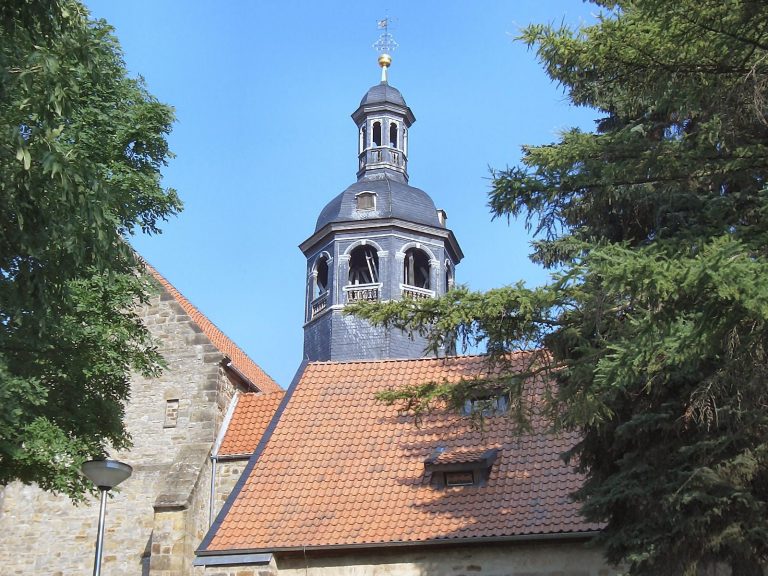
After the Hildesheim Diocesan Feud, an early-sixteenth-century territorial conflict involving the bishopric, Poppenburg passed to the Principality of Calenberg in 1523 and lost its strategic importance. The Hildesheim Main Recess of 1643, an agreement restoring territory to the bishopric, returned the castle along with much of the surrounding land. Extensive renewal work followed, and the castle church returned to Catholic worship. It served nearby villages as a parish church until a new church dedicated to St Michael, the archangel, was built in Nordstemmen in 1971.
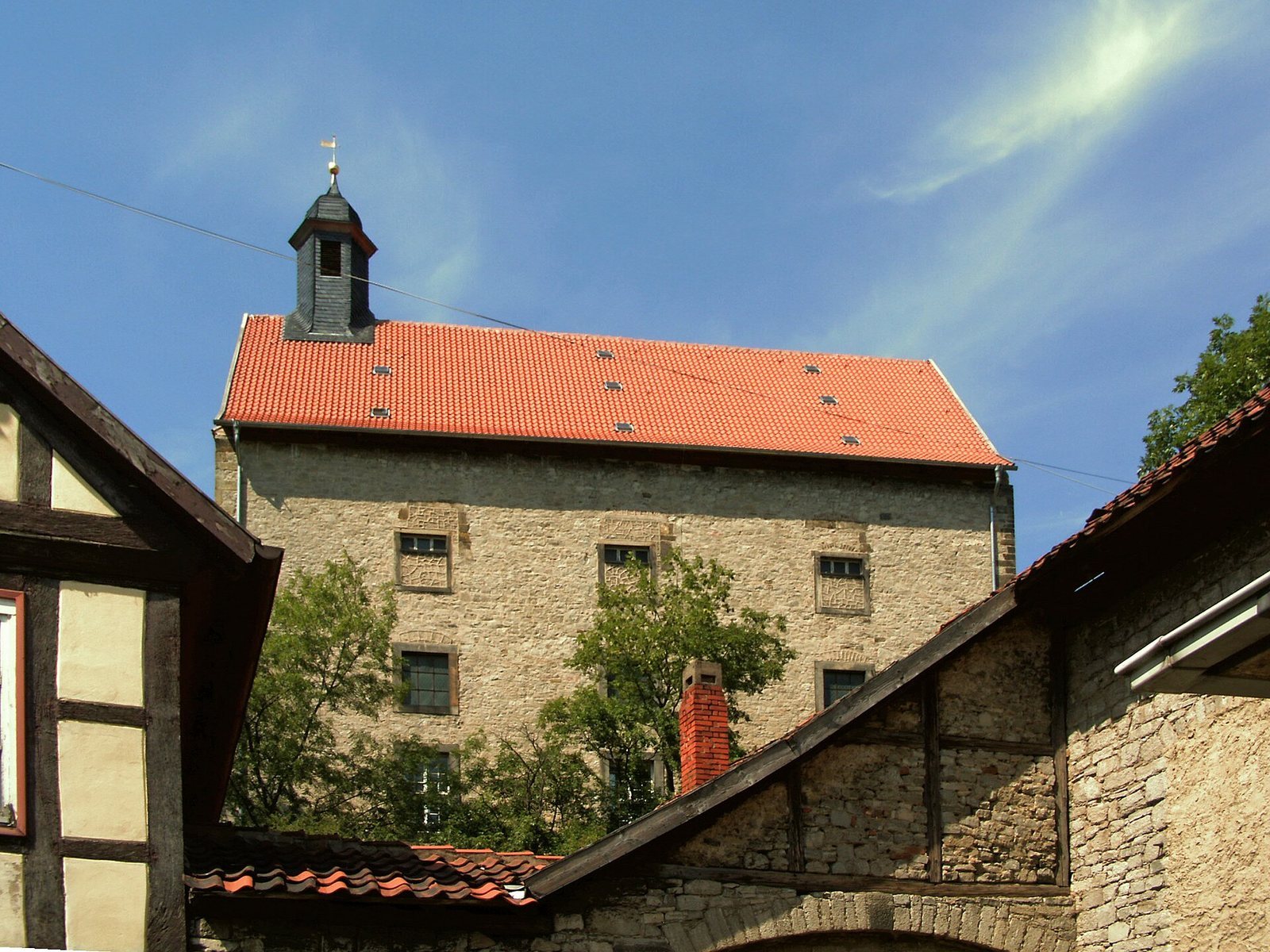
In the late eighteenth century, Prince-Bishop Friedrich Wilhelm von Westphalen converted the palace, then used as a brewery, into a Catholic church. The work involved demolishing the southern gatehouse, the keep, or principal fortified tower, and part of the old castle wall. Their rubble was used for a new brewery and for the boundary wall of a newly established vegetable-growing operation. Dedicated to St Joseph of Nazareth, traditionally regarded in Christianity as Mary’s husband and Jesus’s earthly father, the church was consecrated on 6 August 1786.
A long half-timbered building was erected around 1790 on the foundations of the demolished wall. Its southern ground floor contained a magistrate’s room and a prison, while the upper floor served as the Catholic priest’s residence. The northern part, which extended into the courtyard, was used for economic purposes.
Modern alterations and uses
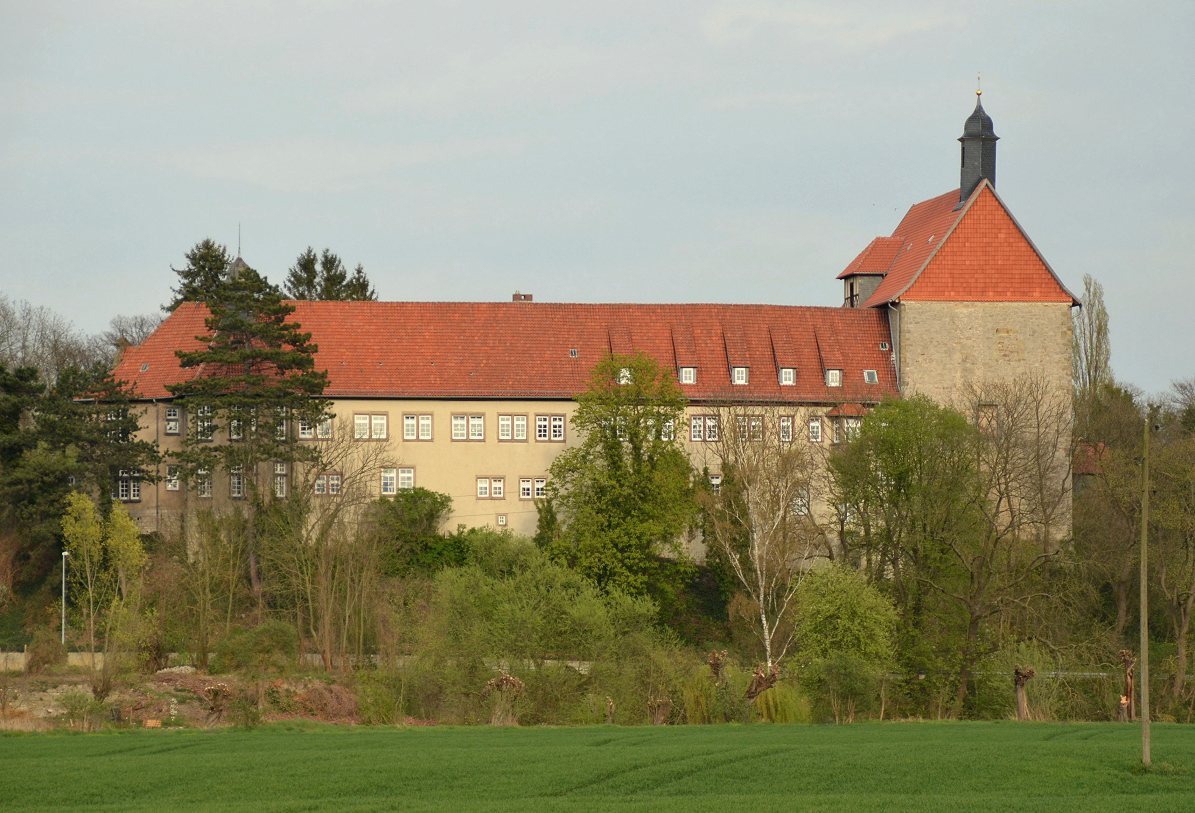
In 1903, administrative official Rudolf Koch enlarged the residential wing, changed its axis, and added a tower-like extension. The Diaconal Works of Hildesheim acquired the wing and its grounds, including the courtyard and park, in 1964. After extensive renovation, the building began housing communal homes for people with mild to moderate intellectual disabilities in 1967. Since 2010, the church of St Joseph has belonged to the Catholic parish in Sarstedt.
Remains
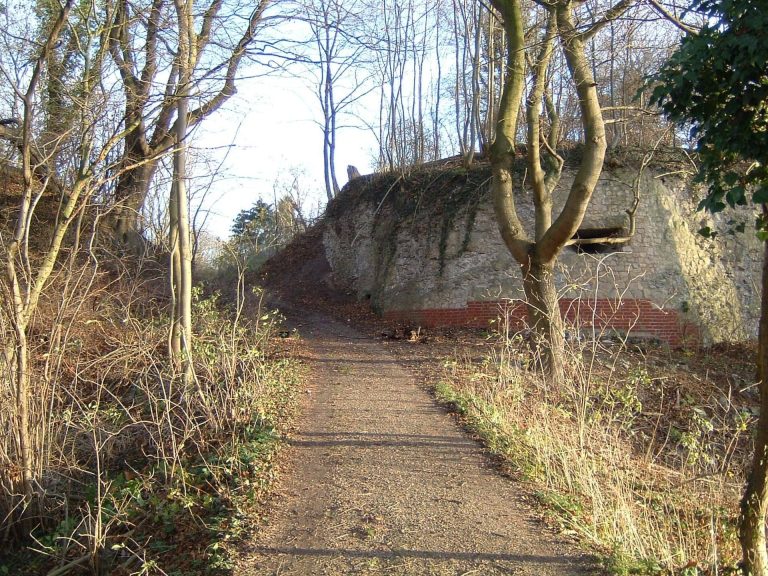
The castle stands on a rise above the Leine, overlooking a river crossing and the route across the river. Its position also commanded the old Hellweg, a historic long-distance road running between Minden and Hildesheim and forming part of a route from the Rhineland toward central Germany. A plan from 1774 depicts a closed complex enclosed by a wall, with a keep.
Residential buildings
Residential wing
The residential wing is a narrow, two-storey building. Its basement contains barrel vaults, curved ceilings shaped like a barrel, and cross-rib vaults, ceilings supported by intersecting masonry ribs. Differences in the roof structure and cornice indicate that the wing was built in stages. A former half-timbered addition on the stair tower also reflects this phased construction. Renovations after the Thirty Years’ War, the major European conflict of 1618–1648, brought the building into a more unified form. The 1903 enlargement altered its axis and added a tower-like extension.
The palas
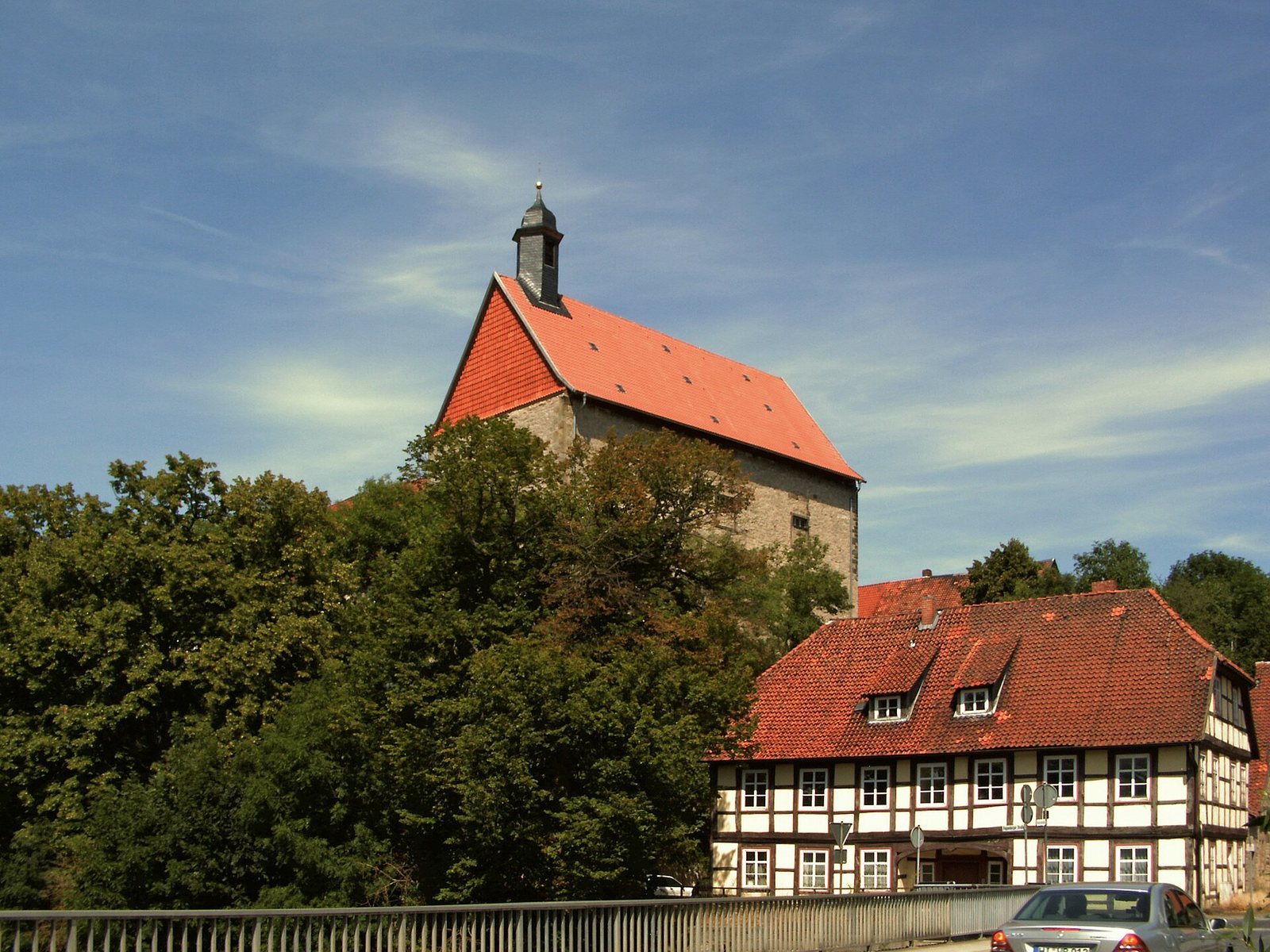
The palas, the castle’s principal residential building, was a large, tower-like structure in the southern part of the complex. The church occupies the former palace building.
Smaller tower
The castle also had a smaller tower, which was roofed with stone slabs in the fourteenth century.
Church and courtyard buildings
Church of St Joseph
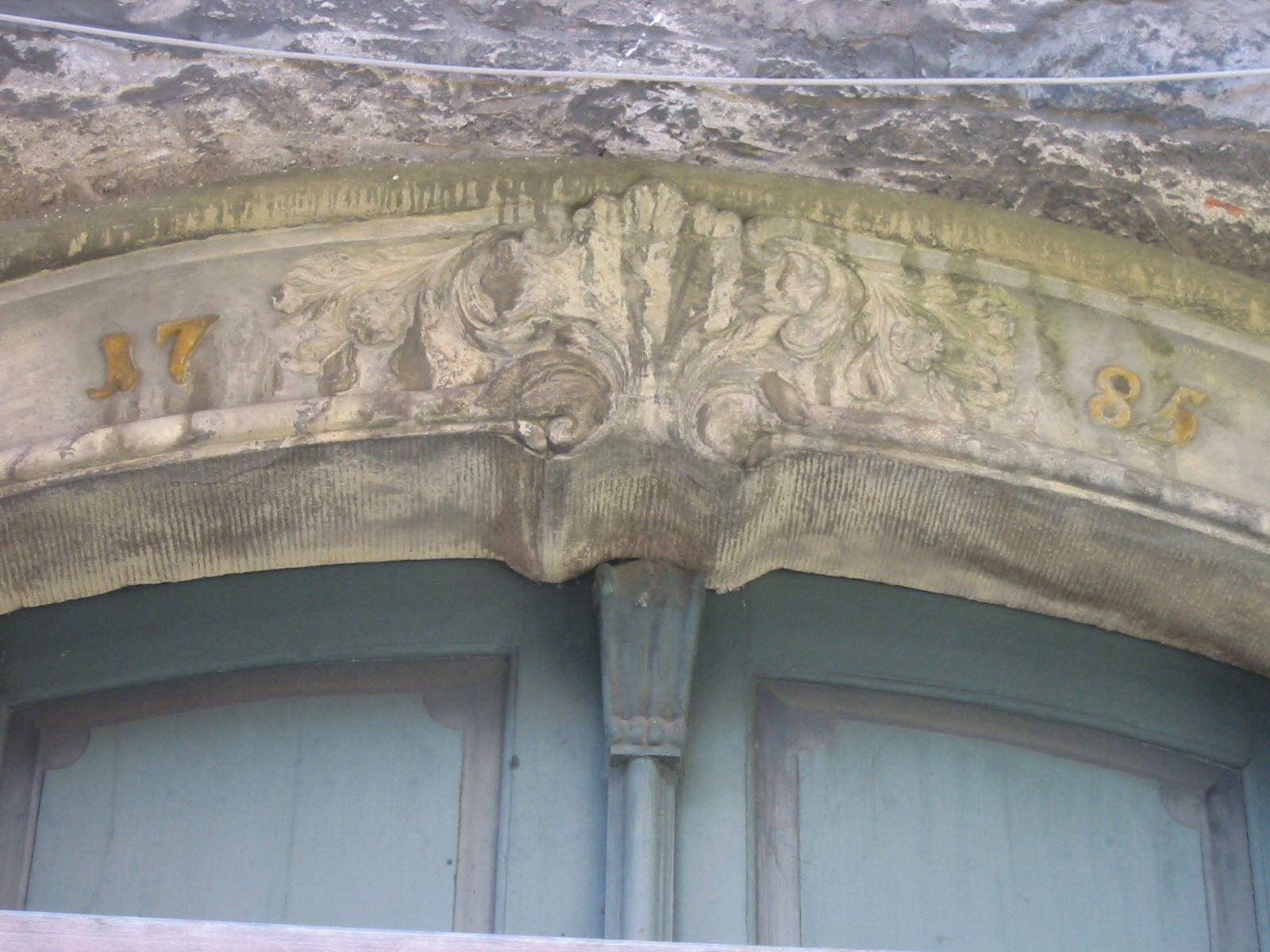
The church occupies the former palace building. Its shallow-arched doorways bear the date 1785, the year of its conversion to a church.
Half-timbered building
The long half-timbered building erected around 1790 follows the foundations of a demolished section of castle wall. Its northern end projects into the courtyard.
Courtyard entrance and plaque
A Baroque entrance to the courtyard bears the coat of arms of Elector Maximilian Henry of Bavaria. A plaque dated 1679 also survives.