Cheylard Castle: A Medieval Fortress in France
Site at a Glance
- Popularity
- Medium
- Country
- France
- Primary era
- Medieval
- Eras represented
- Medieval
- Civilizations
- County of Toulouse
- Site type
- Military
- Remains
- Castle
On this page9 sections
History
Prehistoric and ancient occupation
Cheylard Castle is a medieval fortress in France, built at the turn of the twelfth and thirteenth centuries by the bishop of Uzès and Bernard d’Anduze. People occupied the rock shelter at the site about 22,000 years ago, during the Solutrean, an Upper Paleolithic archaeological culture. Later, the site became a fortified settlement of the Volcae Arecomici, an ancient Gallic people. Numerous artefacts belong to a further period of occupation shaped by Roman rule in Gaul, known as the Gallo-Roman period.
Foundation and medieval fortunes
A record from 1211 describes the castle as a new fortified settlement called Caslar. Its government rested on a paréage, or shared lordship, between ecclesiastical and secular authorities. A bishop’s staff represented the church’s authority, while a sword stood for secular power. The castle controlled a north–south medieval communications route through the Cèze valley.
The Albigensian Crusade, a military campaign against Cathar communities, accompanied the extension of royal power in southern France and contributed to the castle’s decline. Between 1254 and 1308, it lost control of the route and its political influence. In the fourteenth century, the castle was sold to local lords, the Cubières.
Later ownership and preservation
The castle recovered temporary importance during the Wars of Religion, conflicts between Catholics and Protestants in France. In 1609, it was raised to a barony, a lordship governed by a baron, in recognition of services to the French king. In 1794, the Rigal family, then tenant farmers, bought the property. The family has lived there ever since.
Paleontologist Eugène Dumortier drew attention to Jurassic deposits around the castle in work on the Rhône basin published between 1864 and 1874. The castle was listed as a historic monument in 1949. Restoration campaigns from 1998 to 2003 aimed to safeguard its residential keep and hamlet.
Remains
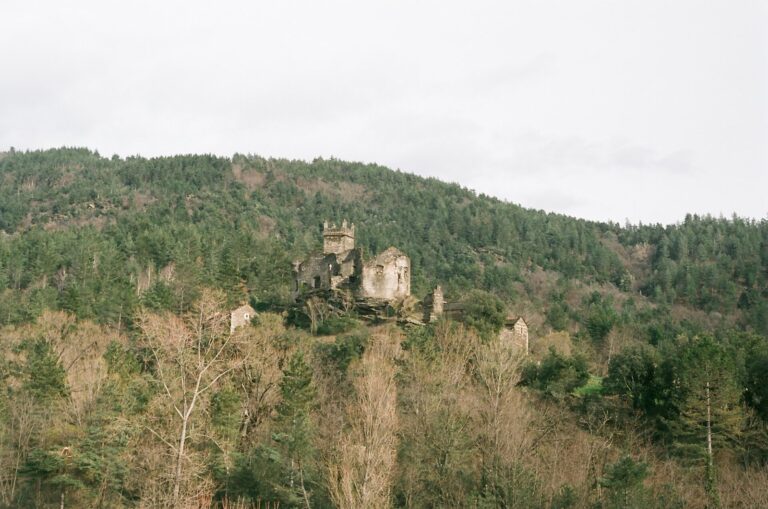
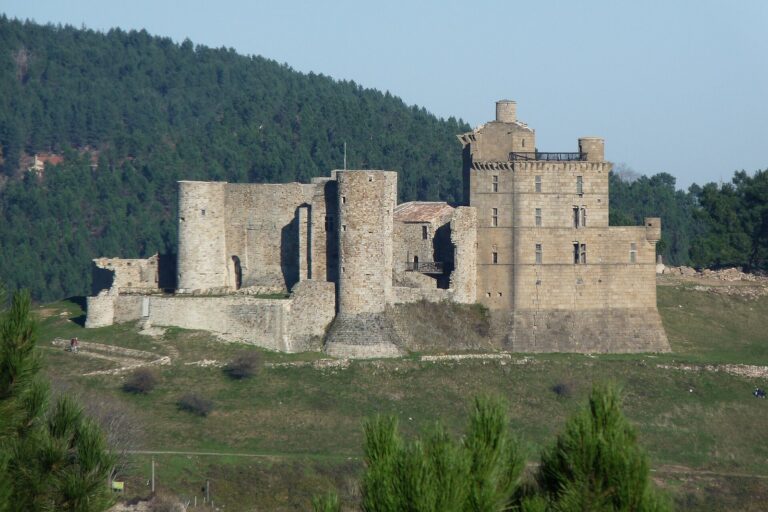
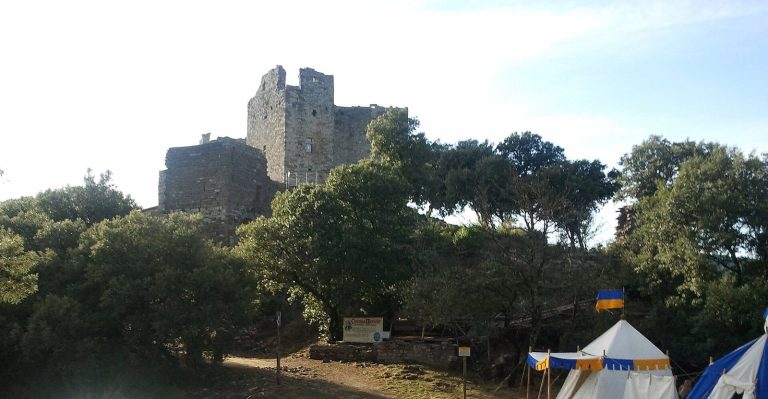
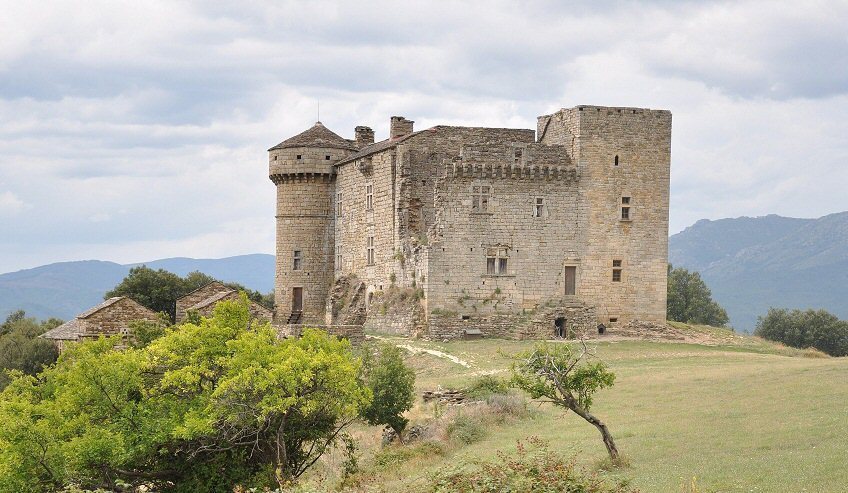
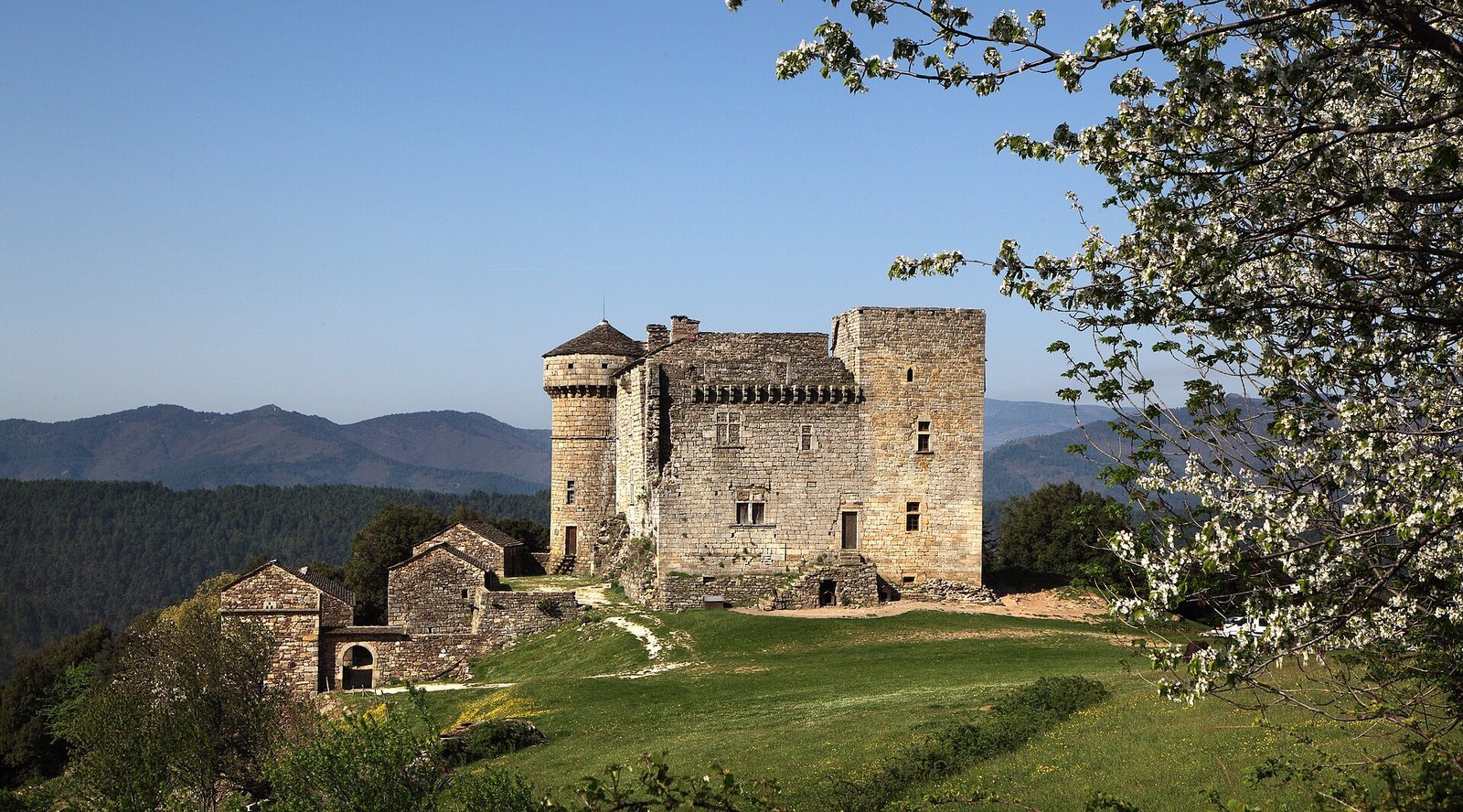
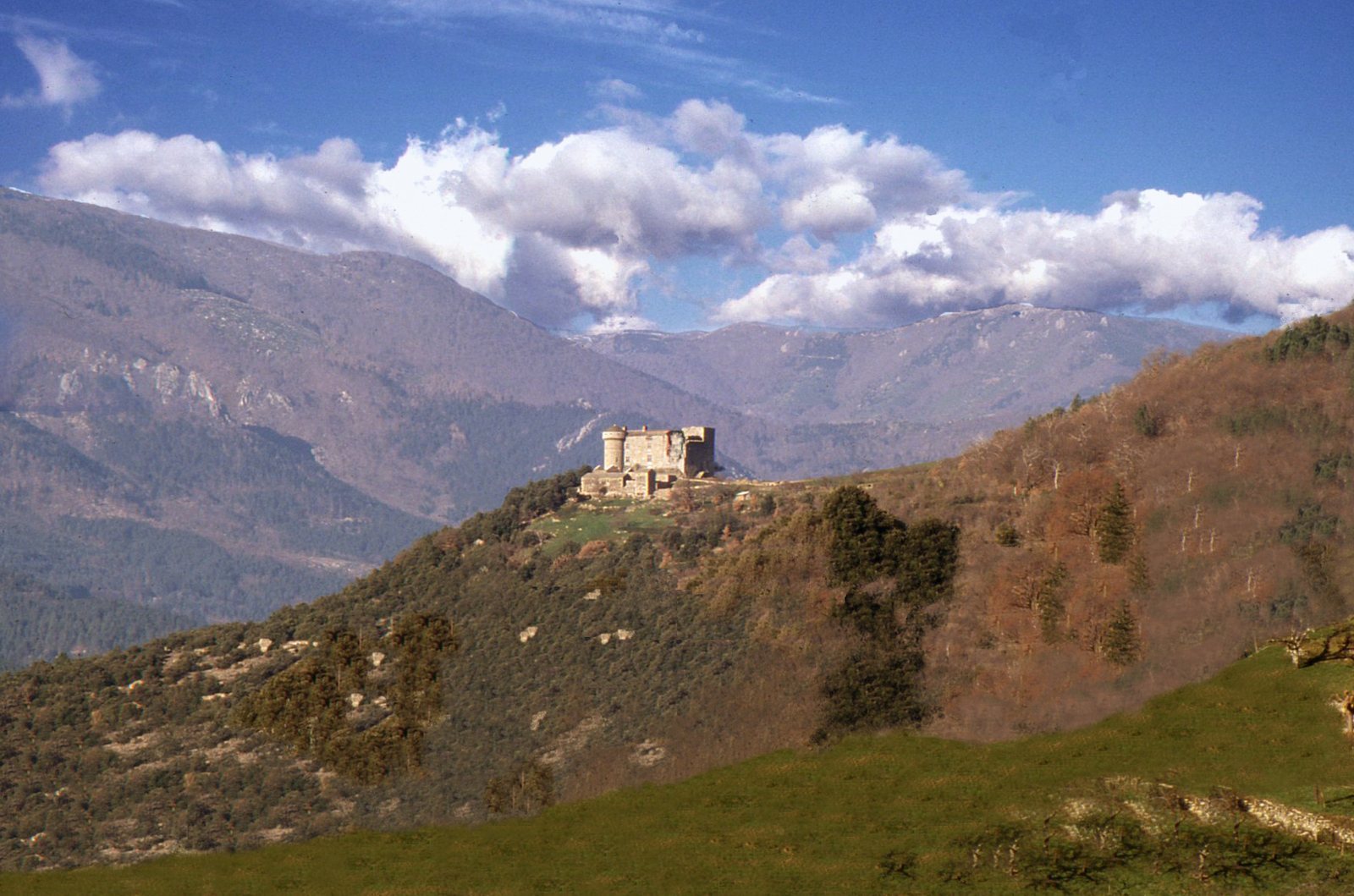
The castle stands on a rocky promontory spur overlooking the D51, which passes through Ardèche and connects Saint-Ambroix in Gard with Villefort in Lozère. At 600 metres above sea level, the site is the highest point of the Haute Vallée de la Cèze. The castle complex includes a lower courtyard at the foot of the ramparts and an adjoining hamlet.
Castle and settlement
Promontory castle
The residential keep, a fortified living tower, forms part of the castle. The castle occupies the rocky spur above the surrounding road and valley.
Hamlet buildings
The lower courtyard contains the hamlet’s chapel, dovecote (a pigeon house), chestnut-drying shed, farm and fountain. These buildings remain in use.
Early traces and fossil deposits
The site’s earlier rock shelter and worked-stone traces provide physical evidence of prehistoric occupation. Fossil deposits also occur around the castle, in the Jurassic geological layers that drew Dumortier’s attention.