Château d’Hérouville: Historic Estate and Recording Studio
Site at a Glance
- Popularity
- Very High
- Country
- France
- Primary era
- Early Modern
- Eras represented
- Early Modern
- Civilizations
- French
- Site type
- Domestic
- Remains
- Castle
On this page9 sections
History
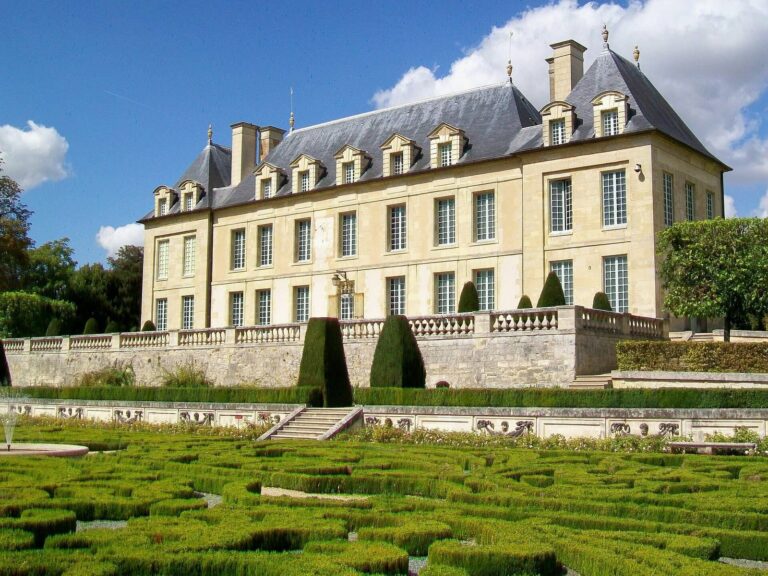
The Château d’Hérouville is an eighteenth-century estate and recording studio in France. Built in 1740 on the remains of an earlier residence, it later became an internationally known residential studio where musicians could record, stay, and eat. Its earlier history is tied to the fief of Hérouville-Auvers-Isles Adam, land held under feudal obligations.
From noble estate to eighteenth-century château
Jean de Berbisy, a Burgundian nobleman, began an earlier château after marrying Claude de Sansac on 17 May 1544. She was an heiress to the fiefs of Hérouville and Auvers. The lordship passed in 1680 to Louis Armand I de Bourbon, Prince of Conti. The present château replaced the earlier residence in 1740, following plans by Gaudot, an architect associated with the School of Rome, a tradition of training linked to the Académie de France in Rome.
During the nineteenth century, the estate served as a posting station on the route between Versailles and Beauvais. At the initiative of Achille Louis de Brisay, its stables, probably housed in the estate barn, held about 100 horses. After de Brisay died, his possessions began to be sold in 1855. The château itself was sold in 1861 and partly demolished.
The estate also entered literary and artistic history. It provided the setting for a hunting scene in 1829, and Honoré de Balzac recounted its history in Modeste Mignon. Frédéric Chopin and the writer George Sand are said to have stayed there, a visit later associated with a romantic relationship. Vincent van Gogh painted the château.
Magne and the recording studio
Composer Michel Magne bought the château in 1962 with his friend Jean-Claude Dragomir, intending to make it a family home and establish a private music studio. After Dragomir died in a car accident in 1965, Magne bought his shares from the family and became the sole owner. He first arranged a music room for his own work, with instruments and space for assistants including Jean-Claude Vannier, Jean-Claude Petit, Karl-Heinz Schäfer, Éric Demarsan, and Michel Colombier. An accidental fire damaged part of the room on 26 May 1969. Magne then converted an attic in the south wing into a recording studio and established the commercial company Société d’enregistrement Michel Magne, or SEMM, on 18 November 1969 to help meet the costs.
The studio combined recording with accommodation and meals. It was the first residential recording studio in France and the second in the world; at the time, it was also the only French studio regularly hosting overseas artists, particularly English-speaking musicians. It operated under names including Strawberry Studios, Michel Magne Studios, Studio Hérouville, and Château d’Hérouville. Elton John called it Honky Château. Rex Foster later claimed that he coined the nickname during sessions for Roads of Tomorrow, recorded there in 1969–70 and released in 1971.
Commercial activity was difficult at first but increased from 1971. Portuguese singer-songwriter José Afonso recorded Cantigas do Maio with Francisco Fanhais, José Mário Branco, and guitarist Carlos Correia. The album included “Grândola, Vila Morena,” which became associated with the 1974 Carnation Revolution, the Portuguese revolution that ended the country’s authoritarian regime. Branco also recorded his debut album at the château, while Sérgio Godinho made Os Sobreviventes in 1971 and Pré-Histórias in 1972.
Between 1971 and 1973, sessions ran for as long as 20 hours a day, six days a week. Clients included Elton John, Pink Floyd, T. Rex, Jethro Tull, Cat Stevens, David Bowie, the Bee Gees, Gong, Uriah Heep, and French artists. Elton John recorded Honky Château, Don’t Shoot Me I’m Only the Piano Player, and Goodbye Yellow Brick Road there. Pink Floyd recorded Obscured by Clouds in February 1972. Jethro Tull abandoned an attempted album session in late 1972 because they were dissatisfied with the studio, though tracks from the sessions later appeared on War Child and Nightcap. Uriah Heep recorded Sweet Freedom in June and July 1973.
Other sessions included David Bowie’s Pin Ups and Low, Iggy Pop’s The Idiot, work by the Bee Gees for Saturday Night Fever, Sweet’s Level Headed, Fleetwood Mac’s Mirage, Rainbow’s Long Live Rock ’n’ Roll, and recordings by Jacques Higelin and Magma. Engineers included Gérard Delassus and Dominique Blanc-Francard, alongside Andy Scott, Gilles Sallé, Christian Gence, and André Harwood. Magne also had a Ford truck converted into the Strawberry Mobile, a 16-track mobile recording studio.
On 21 June 1971, Magne invited the Grateful Dead to perform at the château after rain made the Auvers-sur-Oise festival site unusable. The band played outdoors through the evening and late into the night for about 200 people, including local residents. Magne arranged for firefighters to be present for safety and did not want police or gendarmes on the property. Television news filmed the gathering.
New management, closure, and later uses
In mid-1972, Magne gave up management to return to composing film music. On 30 June he transferred SEMM to Yves Chamberland for one symbolic franc but retained ownership of the building. SEMM had a deficit of 600,000 francs. Chamberland reorganized the business, then left after about six months with his equipment; the deficit had risen to 1.2 million francs, and legal proceedings followed. Recording continued on a reduced scale through the winter of 1973–74.
Laurent Thibault became tenant-manager on 24 June 1974. After extensive cleaning and refurbishment of premises that had been neglected for nearly a year, the studio resumed work late in 1974, using the south-attic room as its only active recording space. New equipment followed in 1975, including Westlake acoustics, making it the first European studio with that system, and later an MCI JH528 console and MCI tape recorders.
After Magne’s personal bankruptcy, the château’s walls were sold at auction in 1979 to Service Terrains, which allowed the studio to continue under Thibault’s lease. Over eight years, Thibault had paid a large part of SEMM’s 300,000-franc debt. Magne died by suicide on 19 December 1984 after losing the château and amid legal and financial difficulties. The studio closed on 25 July 1985, when the liquidator of Magne’s estate required Thibault and his team to leave.
Service Terrains proposed housing on the 17,000-square-metre park and an equestrian center in the courtyard and barn area. Heritage protections affecting the estate’s octagonal drinking trough and a nearby protected church blocked the proposals, and the municipality refused building permits. After closure, the first floor of the former Chopin studio’s barn became a horse-supplies shop. The north wing and annex were divided into apartments, while the south wing and annex remained unused. Arkamys rented the south wing from 2001, and other organizations also occupied parts of the château. By late 2005 it was again largely empty, apart from a few months when Jean-Louis Aubert worked there on Idéal Standard. The property was offered for sale in 2013.
A group including sound engineers Jean Taxis and Thierry Garacino and audiovisual-industry financier Stéphane Marchi bought the château in January 2015. About 40 villagers helped clear the park that June, and the Sup HD Audio training center opened in the former Chopin studio in November. The historic south-attic studio was refurbished, and another studio was established in former apartments used by Magne. The château reopened as a recording studio from 2016, recording activity resumed from 2018, and the site reopened after renovations in September 2020. It is included in France’s General Inventory of Cultural Heritage, a national program for identifying and documenting heritage that does not itself provide legal protection. In 2024, a heritage initiative selected the château among endangered built heritage.
Remains
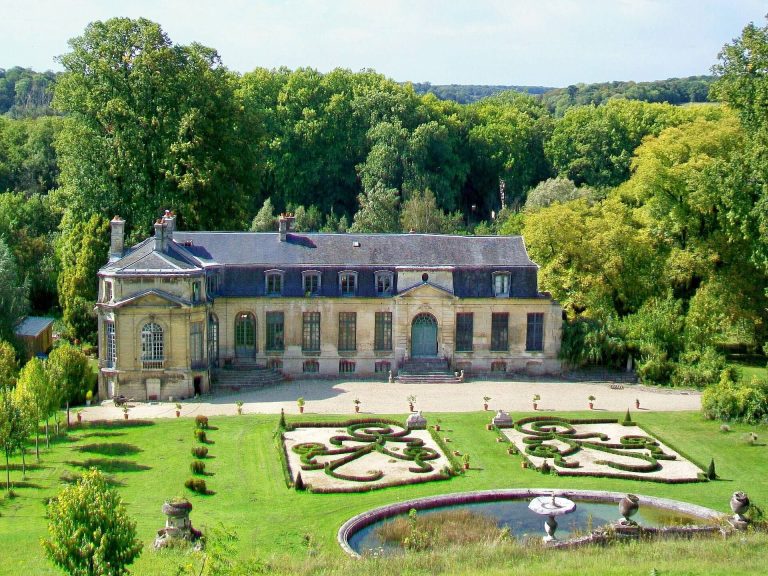
The estate brings together a principal château, a paved courtyard, and several outbuildings. Its recording spaces occupied rooms in the main wings as well as a separate building at the front of the property.
Main building and grounds
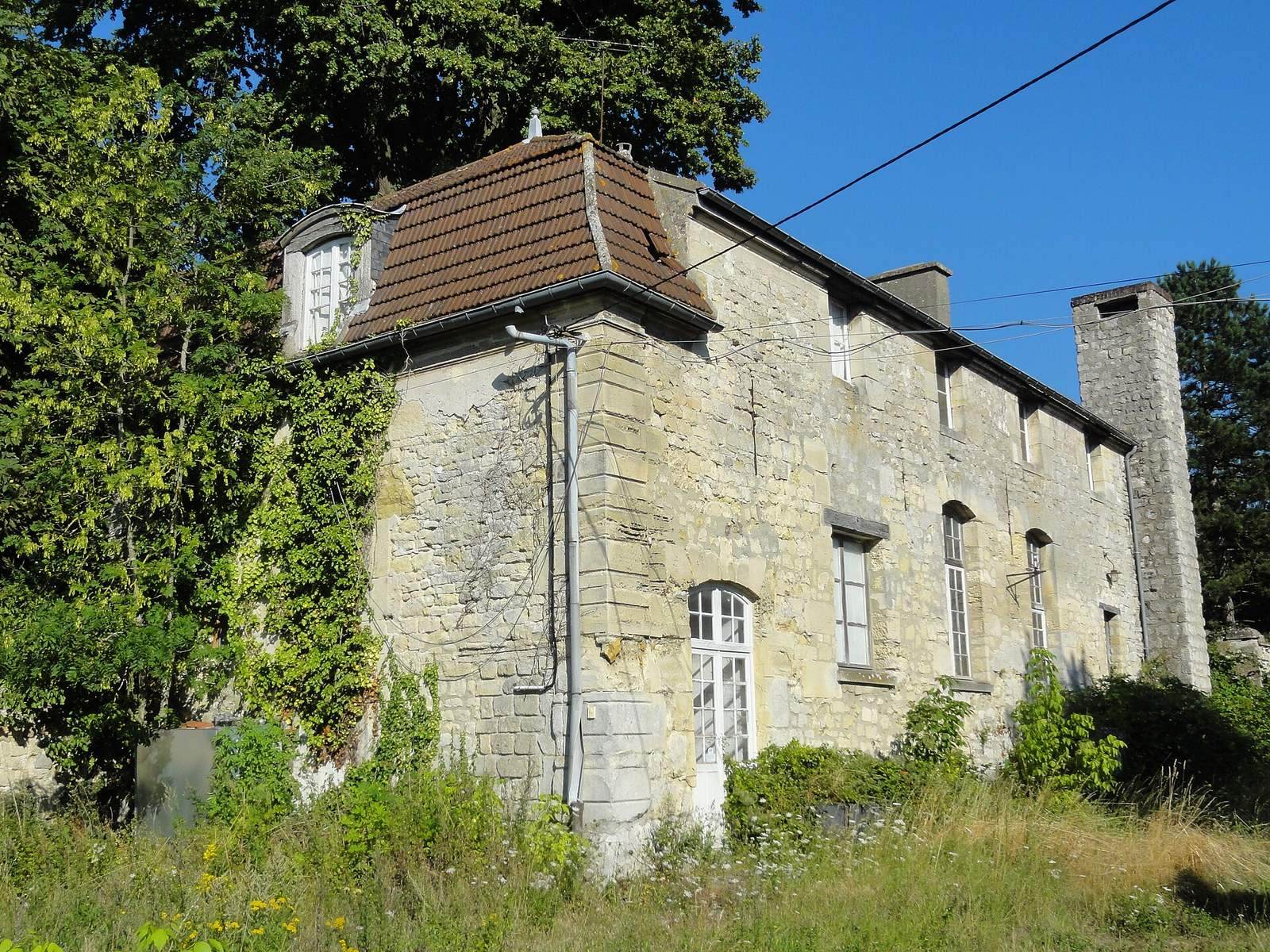
The château has north and south wings, each with an upper floor and attic, and two lower side annexes with ground floors and attics extending west. A high wall of rough stone, now covered with ivy, links the wings; a wooden gate stands at its center. When Magne acquired the property in 1962, it had 57 rooms, some little used or partly abandoned. The courtyard is paved and contains an octagonal stone drinking trough. The estate also includes a park of about 1.7 hectares, a swimming pool, a tennis court, a barn, and other outbuildings.
Recording spaces
South-wing attic studio
The principal recording studio occupied the south-wing attic. It covered 100 square metres and had a ceiling six metres high. Three tall windows facing east, south, and west brought daylight into the room. The historic studio was refurbished during the château’s later restoration.
Chopin studio and outbuilding
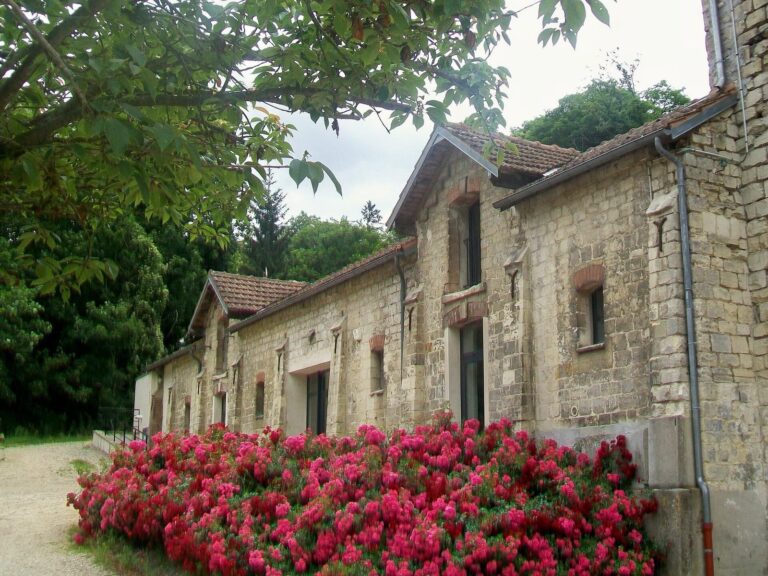
The studio known as the Chopin studio occupied the ground floor of an outbuilding at the front of the estate, beside the road through the village. Its entrance opened onto the large paved courtyard. The concrete floor lay below the surrounding level, with platforms for musicians and a glazed gallery for photographers. A staircase led to offices and accommodation on the first floor. The associated barn is among the estate’s other outbuildings.