Brand Castle: A Medieval Noble Residence in Germany
Site at a Glance
- Popularity
- Medium
- Country
- Germany
- Primary era
- Medieval
- Eras represented
- Medieval, Early Modern, Modern
- Civilizations
- German, Holy Roman Empire
- Site type
- Domestic
- Remains
- Castle
On this page8 sections
History
Medieval origins and lordship
Brand Castle stands at the northern edge of Brand, a locality in Marktredwitz, Germany, and is associated with the Brand family from 1221. In that year, Meino de brande witnessed a charter from Waldsassen, providing the earliest reference to both the settlement and the noble family. During the Middle Ages, the castle served as a residence for ministeriales, service nobles who held administrative offices and owed military service to a lord. The Brand family probably first depended on the Lords of Liebenstein.
After the Lords of Liebenstein died out in 1291, the estate passed to the Notthafft and Paulsdorfer families, who again granted it to the Brand family as a fief, or property held under a lord’s authority. Brand appeared in the Egerland, a historic region, land-tax register of 1392. In 1414, Burgrave Johann III of Nuremberg, a Hohenzollern territorial ruler, removed Brand and other properties from the Egerland. Although he promised to return them, Brand remained in Hohenzollern territory and became part of the Arzberg judicial district.
A complaint from 1414 refers to several noble residences within the castle estate, perhaps including the three listed in 1499. Erhard Brantner and his uncle Berthold Brantner lived there; Berthold apparently placed himself under Johann III’s authority in the early 15th century. In 1441, Berthold’s sons Nickel and Hans put their Brand holdings under Margrave Johann Alchymista, a Hohenzollern nobleman whose title was historically associated with frontier territories. This claim led to a dispute with the Notthafft family of Weißenstein that lasted for generations. In 1625, an arbitration court ruled that the whole estate was a fief of the Notthafft.
The composer Jobst von Brandt lived at the castle and took part in the dispute, composing his late works there. The Brand family kept its ancestral residence until after the Thirty Years’ War, the European conflict fought from 1618 to 1648.
Fire, rebuilding, and changing ownership
In 1662, the widow of Hans Wilhelm von Brand sold her property to Georg Christoph Renner. Hans Wolff von Brand sold the remaining shares in 1682 to Wolf Adolph Marschall. A fire on 19 April 1690 destroyed the castle buildings. Reconstruction had progressed enough for a topping-out ceremony the following year.
Ownership changed frequently during the 18th century, while the Notthafft family’s feudal authority over the estate continued into the next century. It ended on 29 May 1801, at the request of the then owner, Baron Christian von Lindenfels.
Nineteenth and twentieth centuries
Manufacturer Hans Max Philipp von Beust owned the castle from 1864 to 1884. His daughter, Johanna von Voß, née Baroness von Beust, sold the estate in 1890 to Albert von Seckendorff. In 1921, he left it to his stepdaughter, Liane von Plänckner, who had long served as a court attendant to Princess Irene of Prussia, a member of the German imperial family.
After Liane von Plänckner died in 1937, the Bavarian State Forest Administration took ownership. From 1938 to 1943, the district farmers’ association of the Reich Food Estate, a Nazi organization that controlled agricultural production and food distribution, extensively altered the interior. During the Second World War, the castle housed a secret laboratory run by the Working Group for Nuclear Physics, a wartime research group. The chemist Otto Hahn, known for his work on nuclear fission, also stayed there frequently.
The Bischofshofbräu brewery of Regensburg owned the castle from 1969 to 2007. Since 2007, it has belonged to Markgräfliches Collegium Historiae e. V., a historical association that has pursued restoration of the building.
Remains
Plan and surviving buildings
Overall arrangement and tower
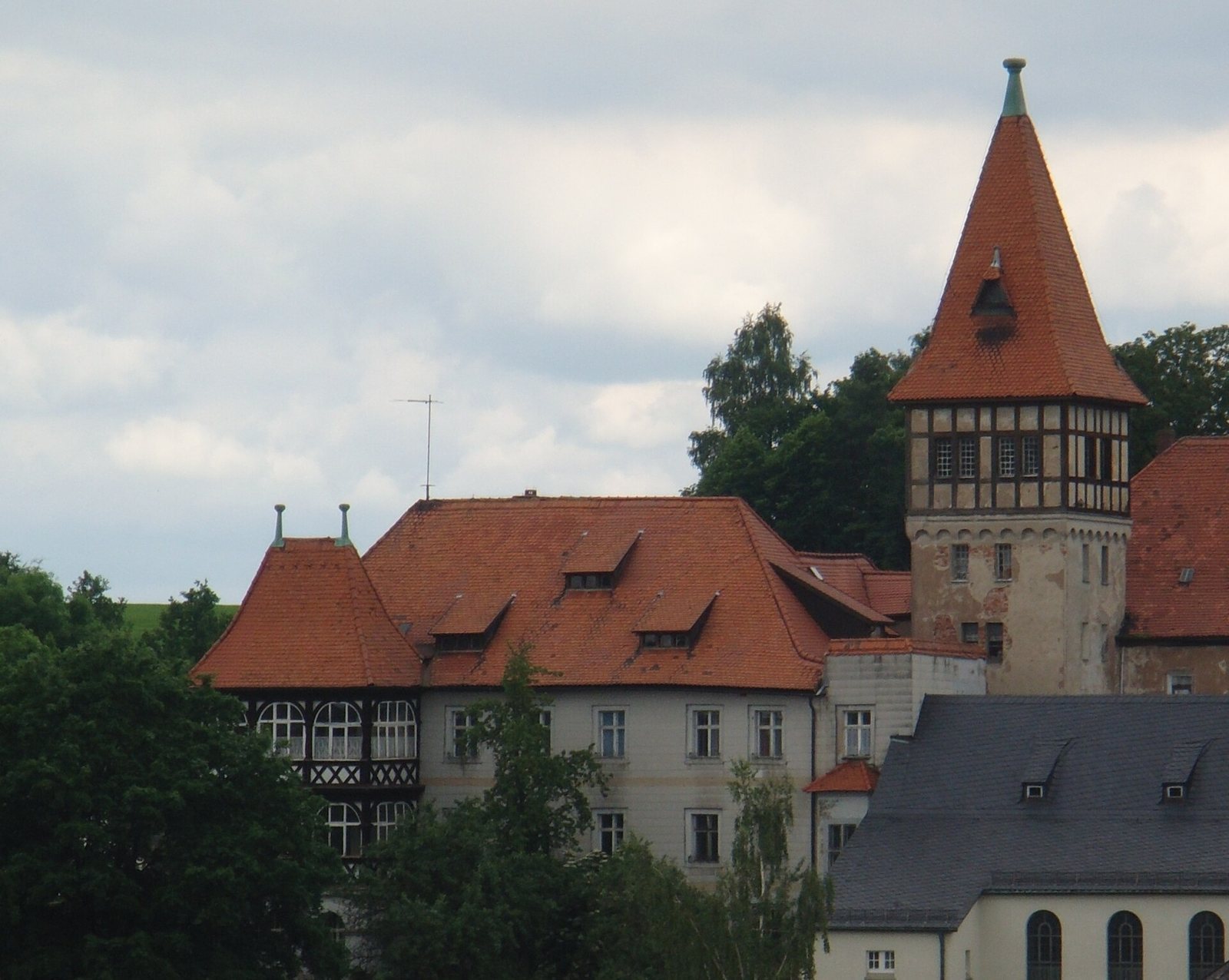
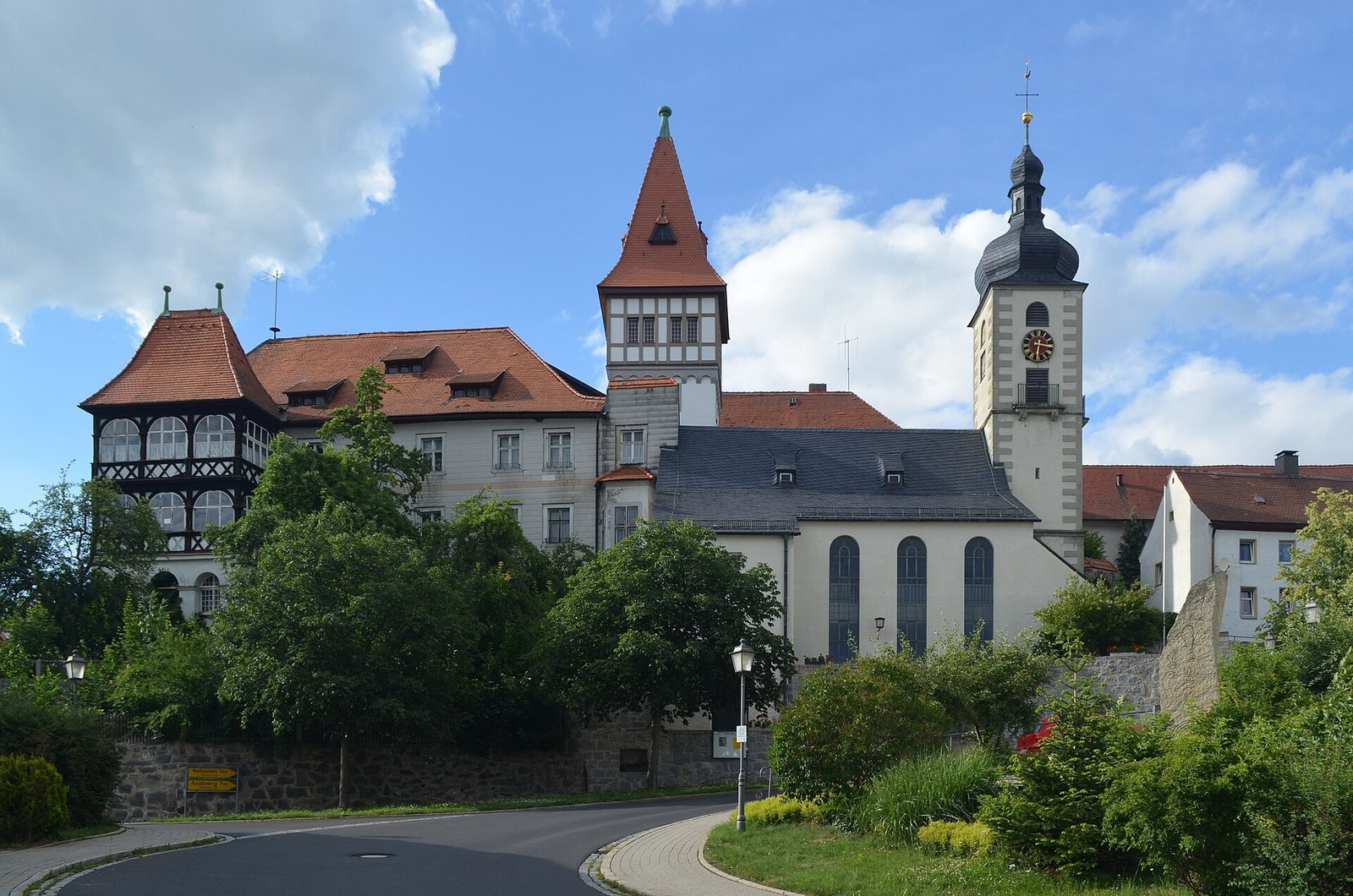
The complex is formed chiefly by two separate castle buildings connected by a tower with a rectangular footprint. The tower now serves as a staircase. Most of the surviving building fabric probably dates from rebuilding after the 1690 fire, though the structure underwent substantial alterations in the 19th century and especially in the 20th.
Northeastern building and additions
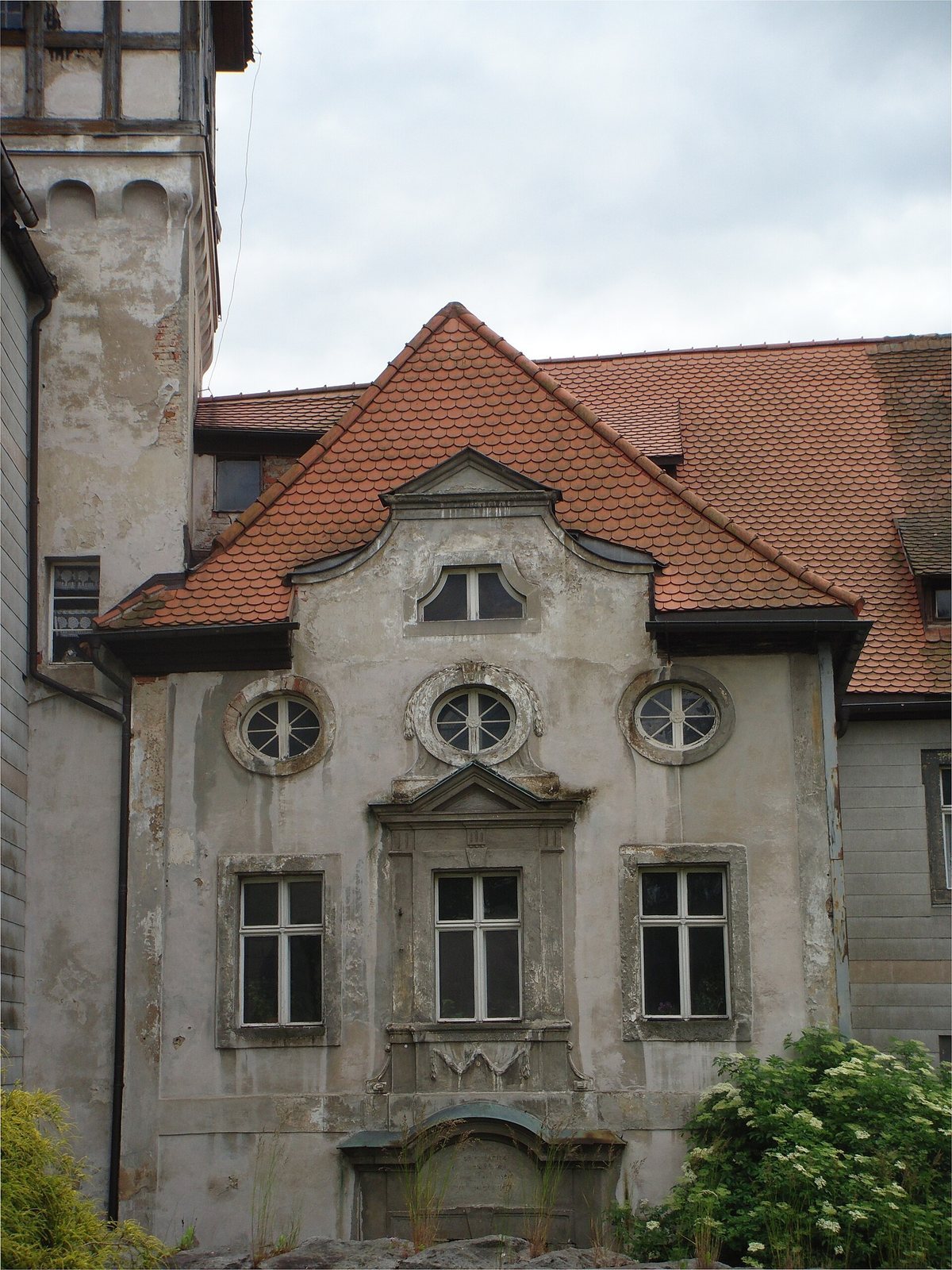
Unusually thick walls at ground-floor level in the northeastern building suggest that it incorporates a medieval core. An entrance building attached to its north side probably dates to the 18th century, and its design marks a transition from late Baroque to Classicism. A former brewery production building, added to the eastern side of the northeastern wing, dates to the 19th century.