Isenghien Castle: A Historic Estate in Lomme, France
Site at a Glance
- Popularity
- Medium
- Country
- France
- Primary era
- Modern
- Eras represented
- Medieval, Early Modern, Modern
- Civilizations
- French, Habsburg
- Site type
- Domestic
- Remains
- Elite Residence
On this page13 sections
History
The noble house and the lordship
Isenghien Castle is a historic estate in Lomme, France, with origins in the fifteenth century. It belonged to the noble house of Isenghien in the County of Flanders, a medieval and early-modern territory in the Low Countries that included parts of present-day Belgium and northern France. The family name probably derives from Issegem, a hamlet near Balegem south of Ghent, and survives in a street name. The family was known by its French name because Maximilien Vilain de Gand had an ancestral castle at Lomme, in French-speaking Flanders.
A manuscript from 1496 identifies the property as the Manor of Lomme and names its owner as Marie de Cuinghien, also known as Marie de Coyeghem. Marie, who died on 27 April 1538, first married Adrien de Gand-Vilain and later Philippe de Herzelles; her marriage contract with Philippe is dated 27 January 1497. A keep was built at the estate in 1545. Marie’s grandson Maximilien Vilain de Gand was the son of Adrien de Gand and Marguerite de Stavele. Adrien served as vice-admiral of Flanders in 1532.
Maximilien held the lordship of Isenghien, a territory governed by a lord, as well as other holdings. He became governor of French Flanders and captain-general of the towns and castle districts associated with Lille, Orchies, and Douai. By a royal letter dated 19 May 1582, Philip III, king of Spain, established the lordship in Maximilien’s favor. Maximilien died at Tournai in 1583.
Military capture and attachment to France
In 1581, soldiers from the garrison at Menin pillaged Lomme and seized its fortified castle on 15 August. The lord of Lomme drove them out the next morning.
In 1646, the Dutch Republic, then allied with France, threatened to take Antwerp from Spain, leaving the Spanish western flank exposed. France made military gains in Flanders along the Lys. On 12 September, Marshal Jean de Gassion, a senior rank-holder in the French royal forces, took the castle on behalf of King Louis XIV. The Isenghien family, which had lived there for nearly two centuries, was now attached to France and left for Versailles.
Demolition and later reuse
In 1746, Louis de Gand de Mérode de Montmorency ordered part of the castle demolished. During the French Revolution, the property was requisitioned as national property and left abandoned. The farm on the estate was demolished in 1840.
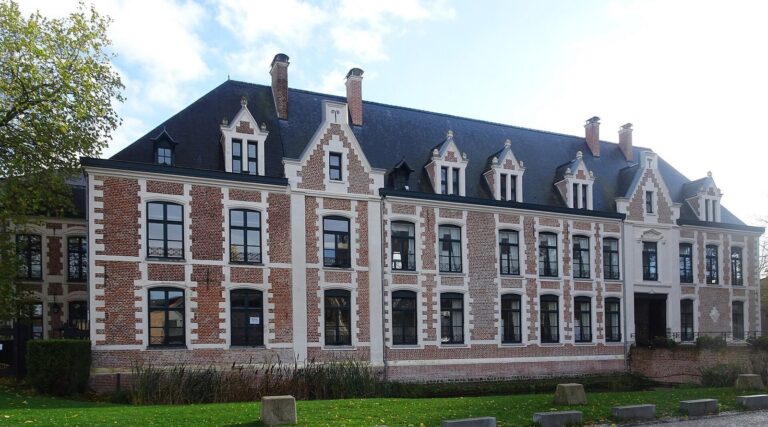
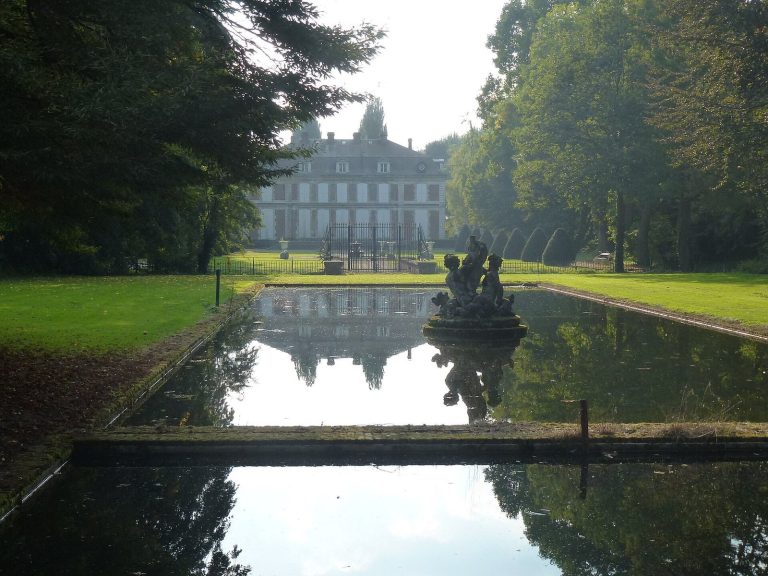
Alexandre Tripier, a Lille member of the urban propertied class, bought the grounds in 1850 and built a country house within the old moats, keeping the name Château d’Isenghien. The house was damaged during the First World War and partly rebuilt afterward.
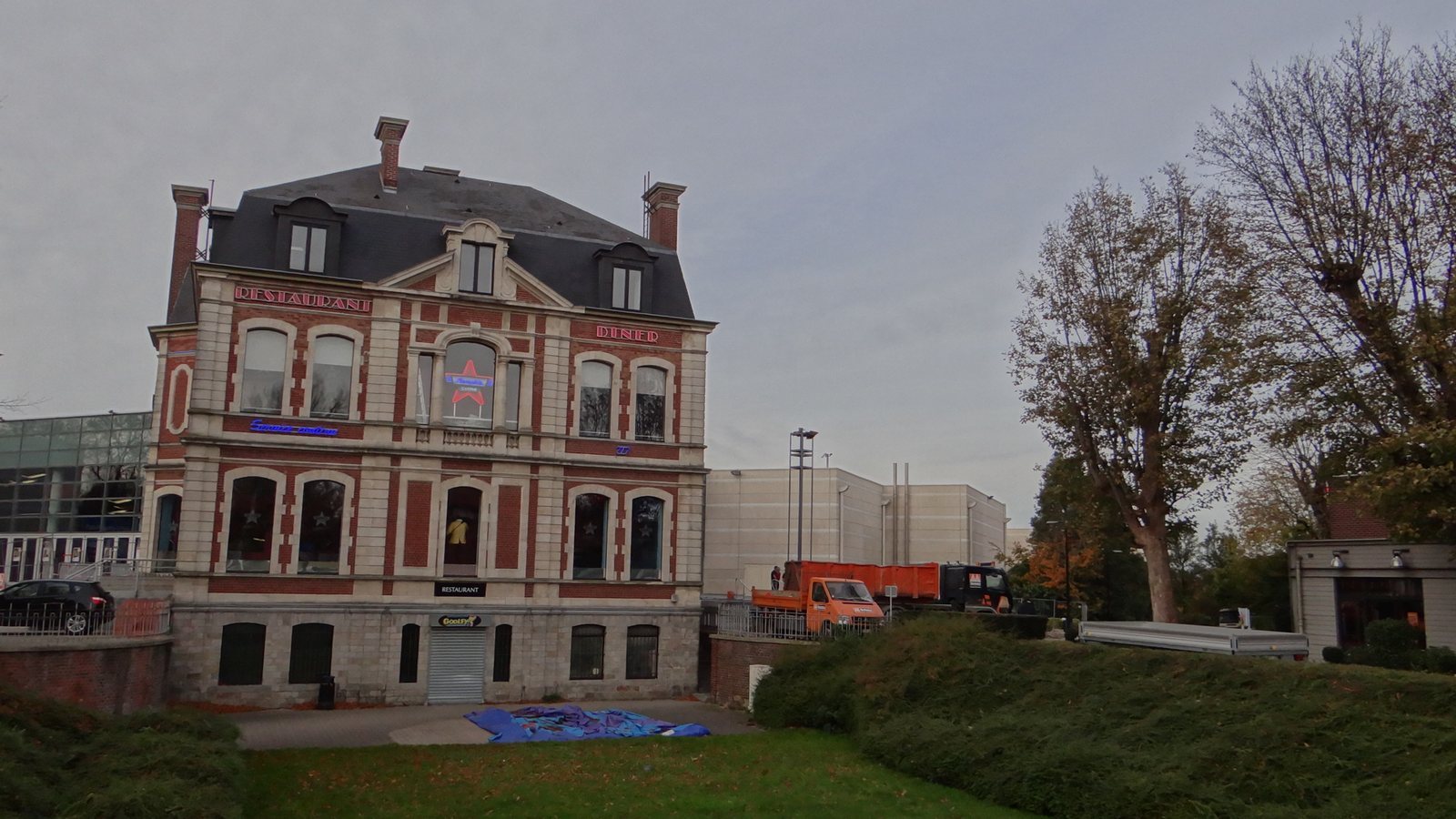
The commune of Lomme later acquired the privately owned château to create a leisure park. The Lillom theme park opened on 10 June 1985 and closed in 1987. The grounds were subsequently incorporated into a cinema-complex project. The Kinepolis multiplex opened in 1996, using the château as its entrance façade. The Centre régional des arts du cirque de Lomme is located in the Château d’Isenghien urban park.
Remains
The estate’s physical history centers on a moated enclosure around a turreted keep, followed by a country house built within the old moats. The château now forms the entrance façade of a cinema complex.
Fortified grounds and approach
Keep, enclosing wall, and moats
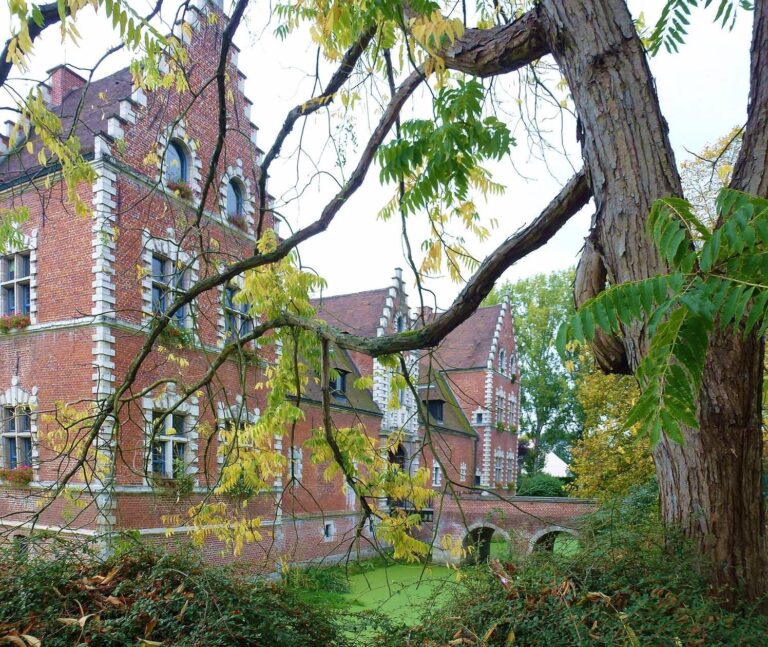
An illustrated view in the Album de Croÿ, a collection of topographical views of towns and estates in the Low Countries, shows the château from Mitterie around 1600. It depicts a keep with five turrets, enclosed by a wall and two water-filled moats.
Path to the church
Maps from the French Consulate period and from 1820 also show the moats. They depict a direct approach leading toward the church, along the route of present-day Rue de la Drève.
Later buildings and uses
Hunting pavilion and farm
One wing of the reduced castle remained in use as a hunting pavilion. A farm also formed part of the estate.
Country house
Tripier’s nineteenth-century country house stood inside the old moats and served as a private residence. Mr. Tripier is identified as its architect. The house was partly rebuilt after First World War damage.
Lillom park
Lillom was arranged around a small lake and divided into four main zones. Its theme followed human history from prehistory into the future.
Cinema façade and arts centre
The former château serves as the entrance façade of the Kinepolis multiplex and is also associated with the cinema’s restaurant. The Centre régional des arts du cirque de Lomme is situated in the Château d’Isenghien urban park.