Abbey of Saint Mary of Maniace: A Sicilian Monastery and Nelson Estate
Site at a Glance
- Popularity
- Medium
- Country
- Italy
- Primary era
- Medieval
- Eras represented
- Medieval, Early Modern
- Civilizations
- Habsburg, Habsburg Spain, Kingdom of Sicily, Norman, Spanish
- Site type
- Religious
- Remains
- Monastery
On this page15 sections
History
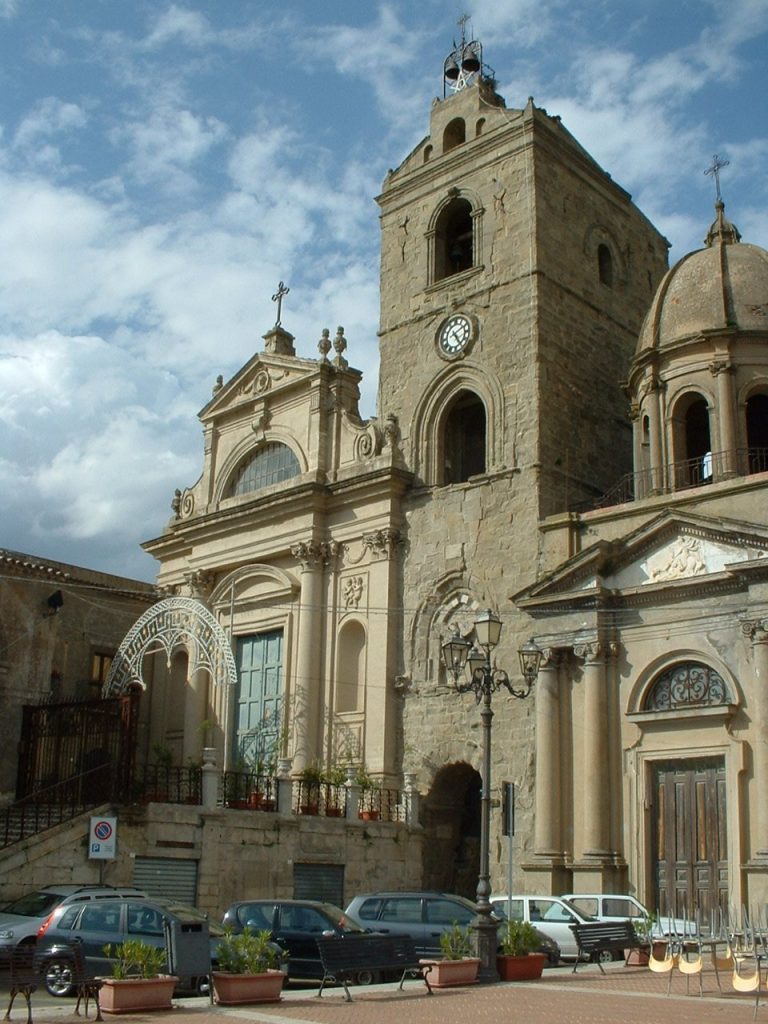
The Abbey of Saint Mary of Maniace is a Romanesque monastic complex in the territories of Bronte and Maniace, Sicily, Italy. Queen Margaret of Navarre founded it in 1172 as a Benedictine abbey dedicated to Saint Mary. Its religious history and extensive agricultural estate later became closely connected with the Nelson family, after the property was granted to British admiral Horatio Nelson in 1799.
Traditions and early references
Tradition links an earlier religious community at Maniace to the Byzantine general Georgios Maniakes. Emperor Michael IV sent Maniakes to Sicily in 1038, and he is said to have fought Muslim forces here in 1040 with Byzantine, Lombard, and Norman troops. One account credits him with founding a small community in gratitude to the Madonna after the victory. Another says he established a settlement to guard the royal road. A related legend tells that the nearby Saracena River ran red with blood after the battle.
The earliest historical reference to the place comes from the geographer al-Idrisi, who in 1150 called it Giran ad-Daqiq, meaning Flour Cave. The earlier religious community later declined and was abandoned, possibly following the earthquake of 1169.
The abbey and its changing leadership
In 1172 Margaret of Navarre established a Benedictine abbey and endowed it with an extensive fief, land granted with associated rights and obligations. William of Blois became its first abbot, a senior monastic leader. Margaret is said to have spent her later years there and to have enlarged the complex. Income from its agricultural holdings helped the abbey prosper.
The community’s affiliations shifted over the centuries. It was governed by the Cistercian order in 1296. In 1585 the Benedictines gave way to the Basilians, followed later by Augustinian hermits and then Franciscans. The church is dedicated to the Madonna and is associated with the Archdiocese of Catania.
Records refer to a fortified monastery in 1373 and to a tower in 1422. The name castle was probably adopted after the later reference. From 1471 to 1491, the abbey’s commendatory abbots included Rodrigo Borgia, who held the title and revenues of the office and later became Pope Alexander VI.
On 12 April 1491, Pope Innocent VIII, acting with Ferdinand II of Aragon, granted the abbey to Palermo’s Great and New Hospital. The abbey’s documentary register passed to the hospital and eventually to the State Archive of Palermo. The 1693 Val di Noto earthquake severely damaged the buildings, and rebuilding afterward changed part of the earlier layout.
The Nelson estate
On 3 September 1799, Ferdinand IV of Naples granted the complex and its 15,000-hectare fief in perpetuity to Nelson, making him Duke of Bronte. The grant rewarded Nelson for helping suppress the Neapolitan Republic, a short-lived revolutionary government, and restore the Bourbon monarchy. The estate became known as the Nelson Duchy. Nelson used his new title in official documents but probably never visited the property.
Nelson’s title and the name Bronte attracted attention in Britain. Patrick Prunty, also known as Brunty, admired Nelson and changed his surname to Brontë. His daughters Charlotte and Emily became novelists. Nelson’s heirs, the Nelson-Hoods, Viscounts of Bridport, continued to manage the estate, often through trustees, into the twentieth century.
The large estate relied on the labor of many agricultural workers. Its impact from the 1848 Sicilian revolts, the revolutionary government led by Ruggero Settimo in 1849, the late nineteenth-century Fasci Siciliani workers’ and peasants’ movement, and the 1860 events at Bronte was generally limited. In August 1860, however, expectations of land redistribution from large owners, including the Nelson heirs, contributed to an uprising in the nearby town. Garibaldi sent his officer Nino Bixio to suppress it. The English-owned estate probably played a decisive part in the intervention, and Bixio’s forces summarily executed participants.
The estate’s agricultural village, Borgo Caracciolo, was named for Neapolitan admiral Francesco Caracciolo. Nelson had imprisoned Caracciolo aboard his ship and executed him after the fall of the Neapolitan Republic. In 1940 the Italian government began an unfinished scheme to break up Sicily’s very large landed estates and establish rural villages. Borgo Caracciolo was built opposite the estate’s main entrance, and agricultural laborers received its houses.
War, land division, and municipal ownership
During the Second World War, the estate served as an Italian-German military command. After the Allied landing in Sicily in 1943, Borgo Caracciolo was dismantled, the estate returned to the Nelson-Bridport heirs, and the castle was damaged during the campaign. In the following decades the heirs reduced and eventually sold the property. Concern over the announced, only partly implemented land reform of the 1950s led them to require workers to buy plots, reportedly at usurious rates. The estate contracted to about 200 hectares.
Scottish poet William Sharp lived at the estate in the late nineteenth and early twentieth centuries and died there. In 1981 the Municipality of Bronte acquired the deteriorated complex with support from the Sicilian Region. Alexander III, the last Duke of Bronte, retained the title for his heir, Peregrine Alexander. In 1984 thieves took about twenty valuable items, including paintings and furniture; they have not been recovered. Restoration in the 1990s adapted the castle for use as a museum.
Saint Sebastian, the patron saint of Maniace, is celebrated on 20 January. Crowds gather at the complex following the saint’s processional float.
Remains
The surviving complex brings together the abbey church, traces of an earlier Norman building, and parts of the medieval castle, alongside rooms adapted for residential and agricultural use. A large English-style park and the ruined houses of Borgo Caracciolo form part of the wider estate setting.
Religious remains
Abbey church
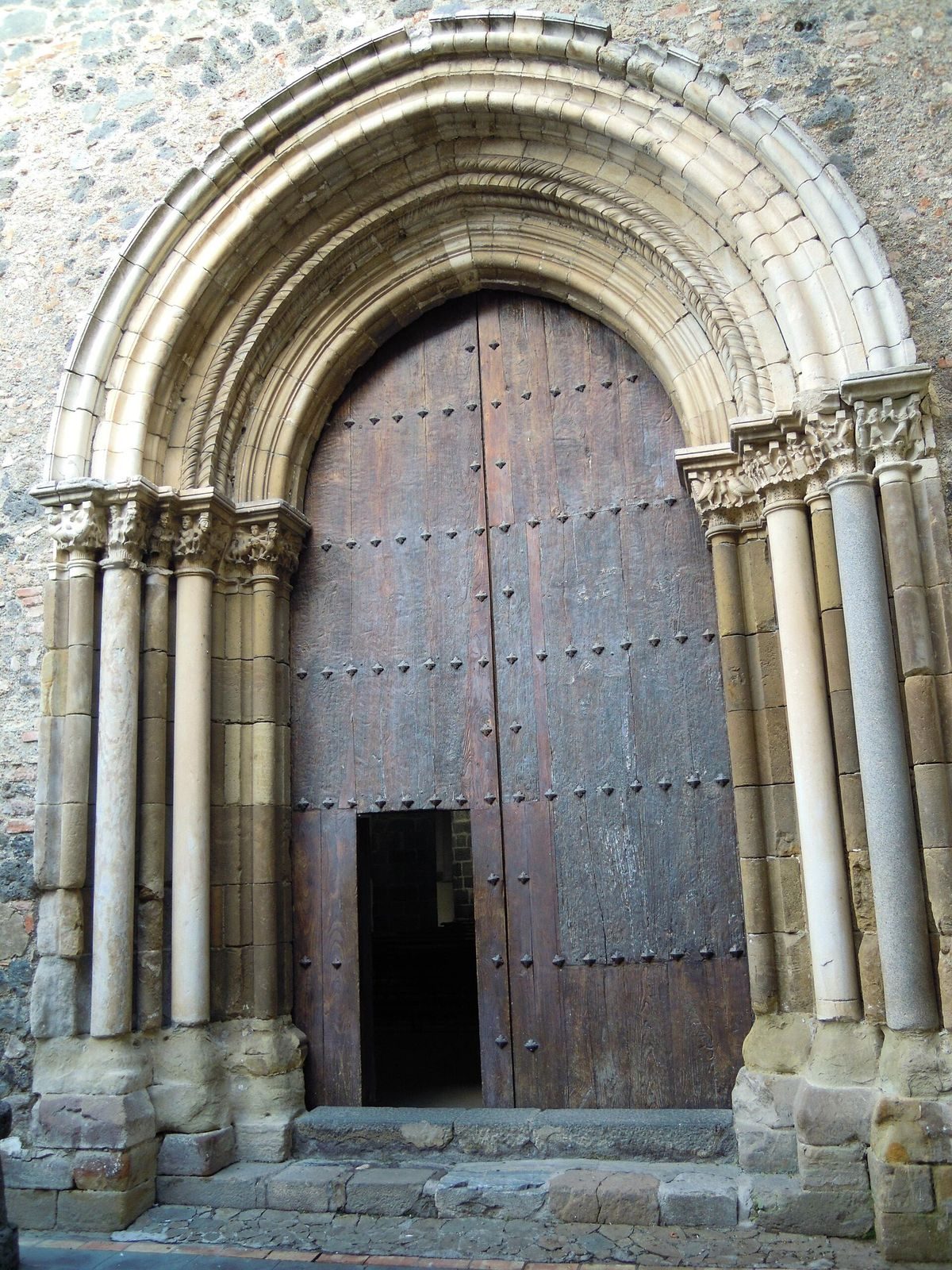
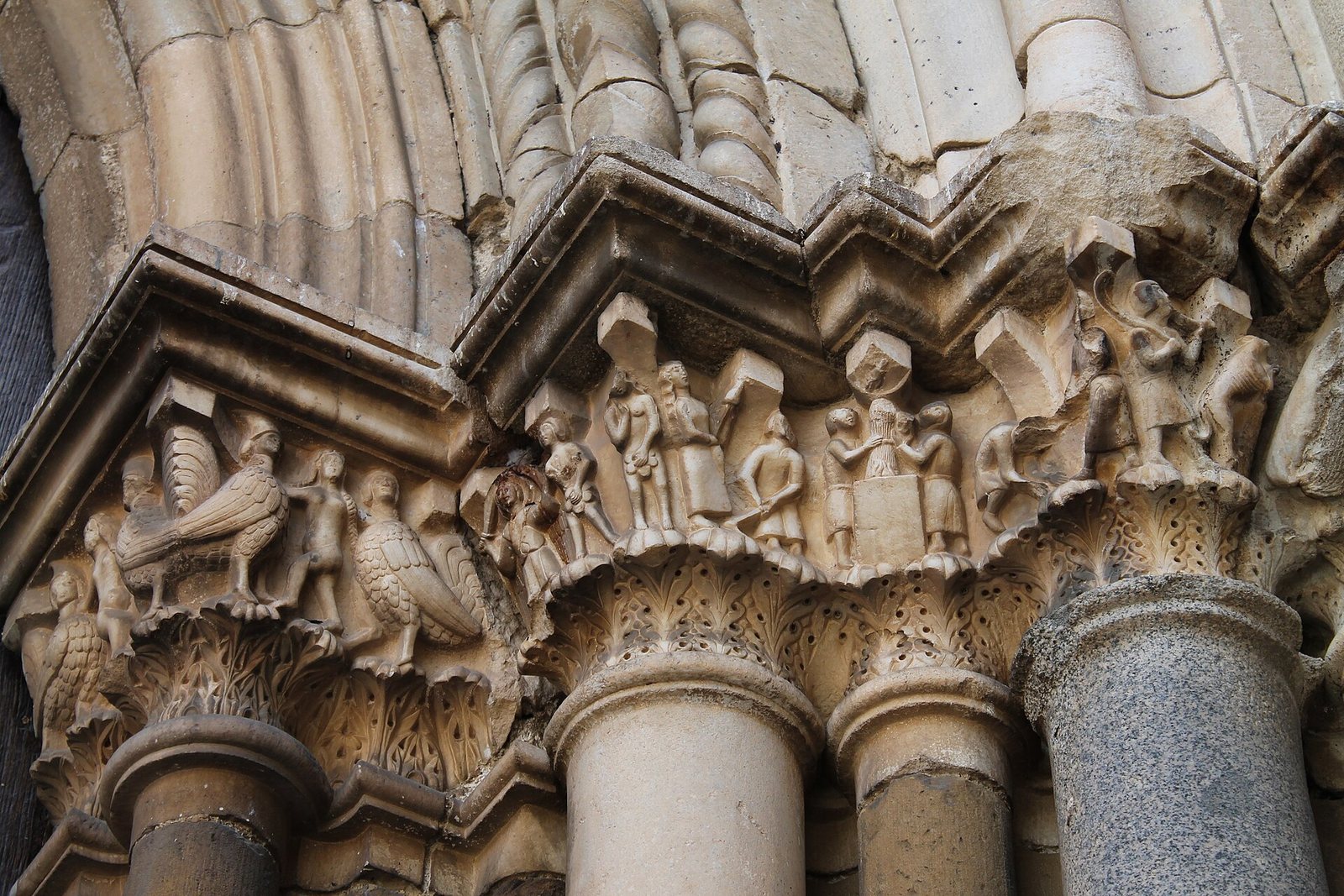
The surviving church has a Romanesque design, with its naves, or long internal spaces, and a Gothic-Norman portico, a covered entrance structure. Its fabric preserves the principal church remains of Margaret’s abbey.
Earlier Norman building and icon
Behind the church, excavations in former warehouses uncovered the apse, the curved end of a building, of an earlier Norman structure. The complex also preserves a Byzantine icon of the Madonna known as an Odighitria, in which the Virgin points toward Christ. Tradition holds that it reproduces an older image painted by Saint Luke.
Castle and estate remains
Medieval fortifications
Two medieval turrets and part of the castle’s enclosing wall survive. They are among the limited remains of its original fortified fabric.
Adapted rooms
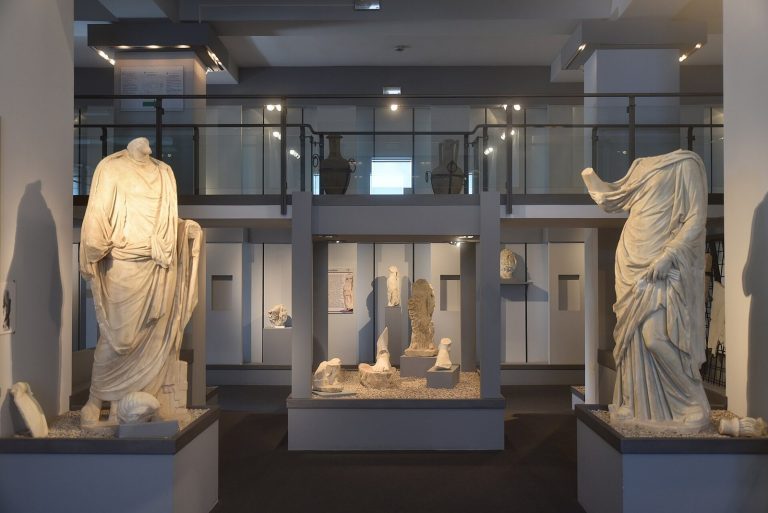
Other spaces were altered by Nelson’s heirs for residential use or agricultural storage. The rooms now form part of the museum and contain memorabilia that belonged to Nelson.
Park and cemetery
The estate includes a large English-style park. A swimming pool stands beside the garden, while an area with centuries-old trees was cleared for an asphalt tennis court. A small cemetery in the park holds graves of Nelson family members, Dukes of Bronte, members of the ducal household, and William Sharp. A Celtic cross made of black Etna stone marks Sharp’s grave.
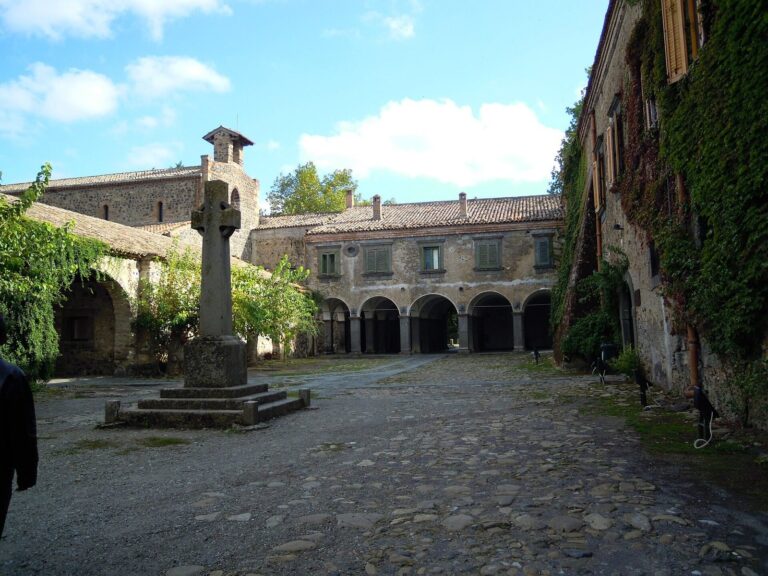
Courtyard cross
A separate Celtic cross dedicated to Nelson stands in the inner courtyard.
Borgo Caracciolo
Opposite the estate’s main entrance, the ruined remains of Borgo Caracciolo preserve the footprint of a group of houses built for agricultural laborers.