Littlehampton Redoubt: A Nineteenth-Century Coastal Fort
Site at a Glance
- Popularity
- Medium
- Country
- United Kingdom
- Primary era
- Modern
- Eras represented
- Modern
- Civilizations
- British
- Site type
- Military
- Remains
- Fort
On this page10 sections
History
Early river defences
Littlehampton Redoubt, also known as Littlehampton Fort, is a coastal fort on the west bank of the River Arun at Littlehampton, United Kingdom. Completed in September 1854, it was built to help defend the river approach and the south coast during a period of concern about possible conflict with France.
A battery was proposed on the river’s east bank around 1587, although it is uncertain whether it was built. A separate battery with five guns stood at Littlehampton in the early eighteenth century. In 1760, during the Seven Years’ War, an international conflict fought from 1756 to 1763 that included Britain and France, a new battery was built on the east bank. Its seven guns covered the river mouth and seafront.
Coastal defence concerns
During the 1840s, calls grew for stronger defences along England’s south coast. In 1846, the Duke of Wellington, a British military commander and statesman, warned Sir John Burgoyne, the Inspector General of Fortifications, about the coast’s weak defences. Burgoyne reinforced that warning in a paper the same year. Wellington repeated his concerns in a letter to Burgoyne in January 1847. A friend of Burgoyne’s wife passed the letter to the press, and the Morning Chronicle published it in 1848. The disclosure caused public alarm and debate in the House of Commons. Newspaper coverage continued, and Parliament voted additional money for naval and military spending. Concern about the intentions of Emperor Napoleon III of France further increased in 1852–53.
The Board of Ordnance, the British government body responsible for military supplies, artillery and fortifications, decided to build a fort at Littlehampton. Officials feared an enemy might seize Littlehampton and Shoreham and use their quays to supply troops landed for an attack on Portsmouth from the rear, before advancing on London.
Construction and military use
Plans for a fort on the west bank began in the early 1850s, and work was completed in September 1854 at a cost of £7,615. The Royal Engineers, the British Army’s military engineering corps, supervised construction. The London firm Locke and Nesham carried out the main building work, while local builder Robert Bushby formed the sloping outer earthwork. The fort was the first of its kind in the United Kingdom and predated the Palmerston forts, a series of coastal defences built after a 1860 commission.
A second barrack block was later added to house more troops. The 1861 census recorded a garrison of 70, including a gunner, surgeon, drummer, officers, non-commissioned officers and privates. Changes in armaments limited the fort’s active use to about 20 years.
Decline
In 1873, the Committee on Coast Defences judged the fort inadequate and recommended remodelling it, with some or all of its guns replaced by heavy weapons. The proposed work was not undertaken. The guns were removed in 1891, and the fort was partly dismantled.
Remains
Plan and defensive works
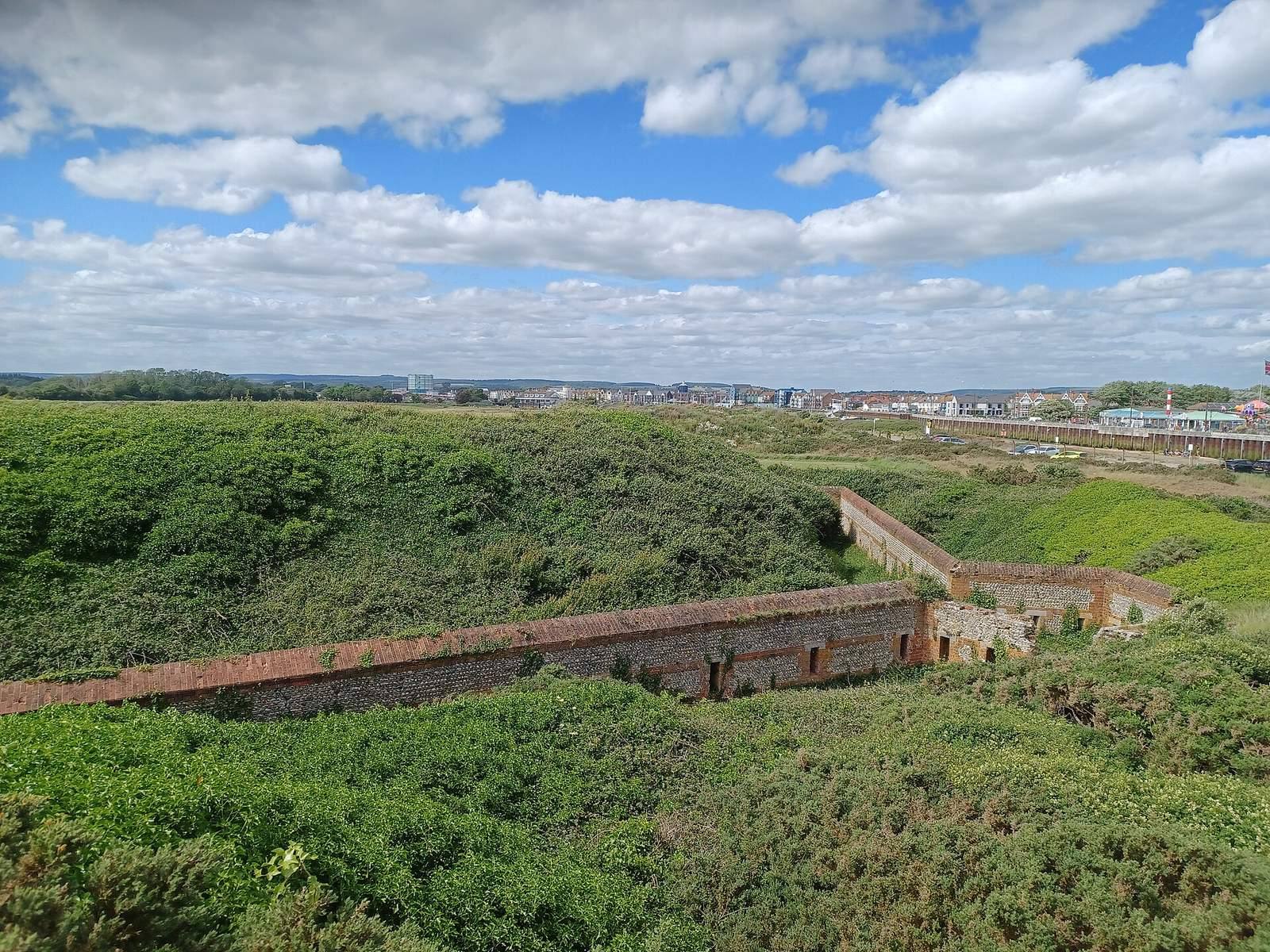
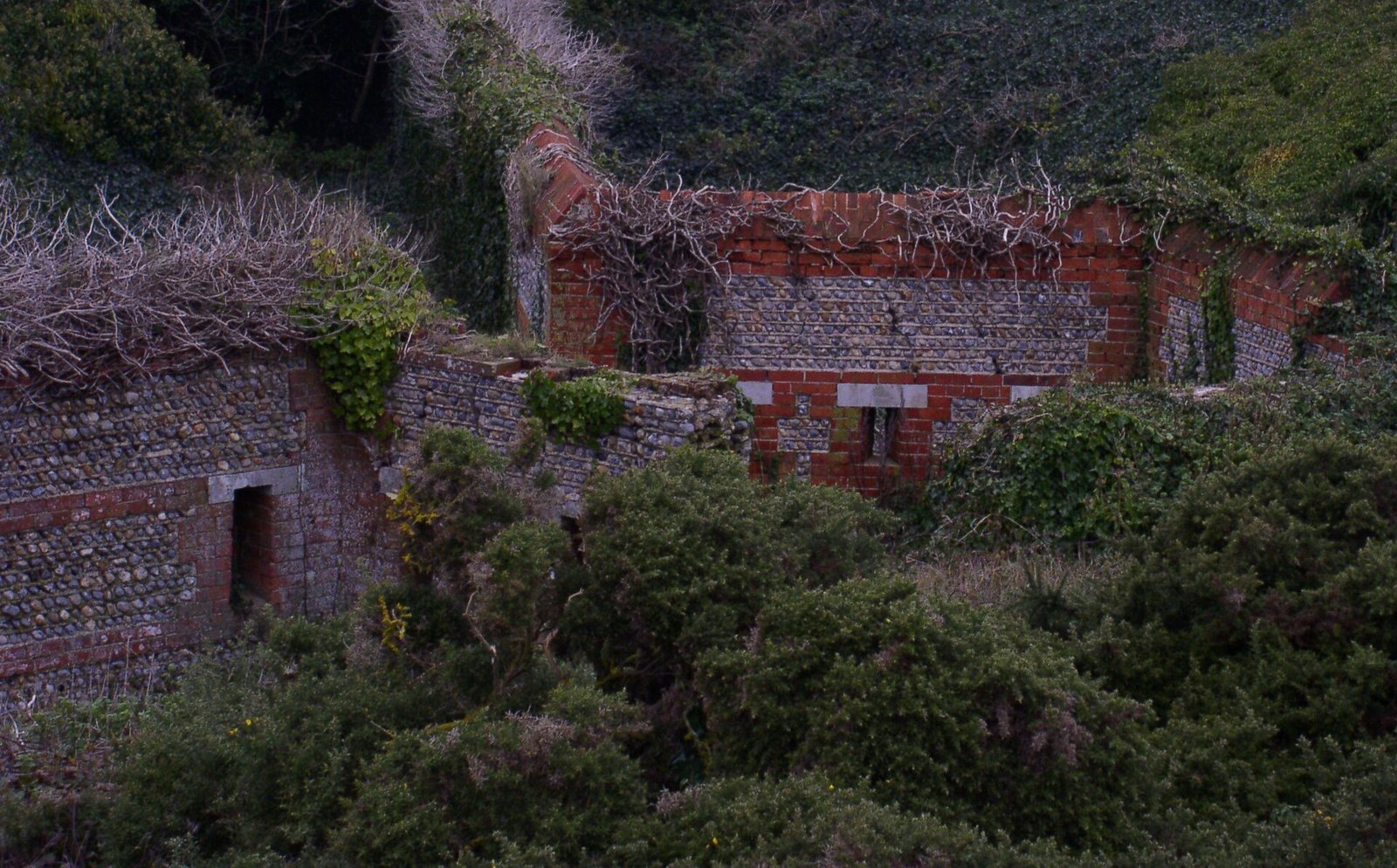
The 1854 fort had a straight-sided crescent plan, with a gun platform and raised defensive earthworks. The platform allowed guns to cover the harbour entrance. A ditch nine yards (eight metres) wide surrounded the earthworks. Along the ditch’s centre ran a Carnot wall, a defensive wall pierced with loopholes for firing. Three open projections at the fort’s corners allowed defenders to fire along the wall. A glacis, a sloping earthwork used in fortifications, formed part of the defences.
Guns and barracks
The fort’s guns comprised three 68-pounders and two 32-pounders, transported by sea from Woolwich Arsenal, a major government site for producing and supplying military equipment. Their barrels were smooth-bore, meaning they had no rifling. A fortified barrack block stood behind the gun platform, while the later additional block was outside the fort.
West-bank remains
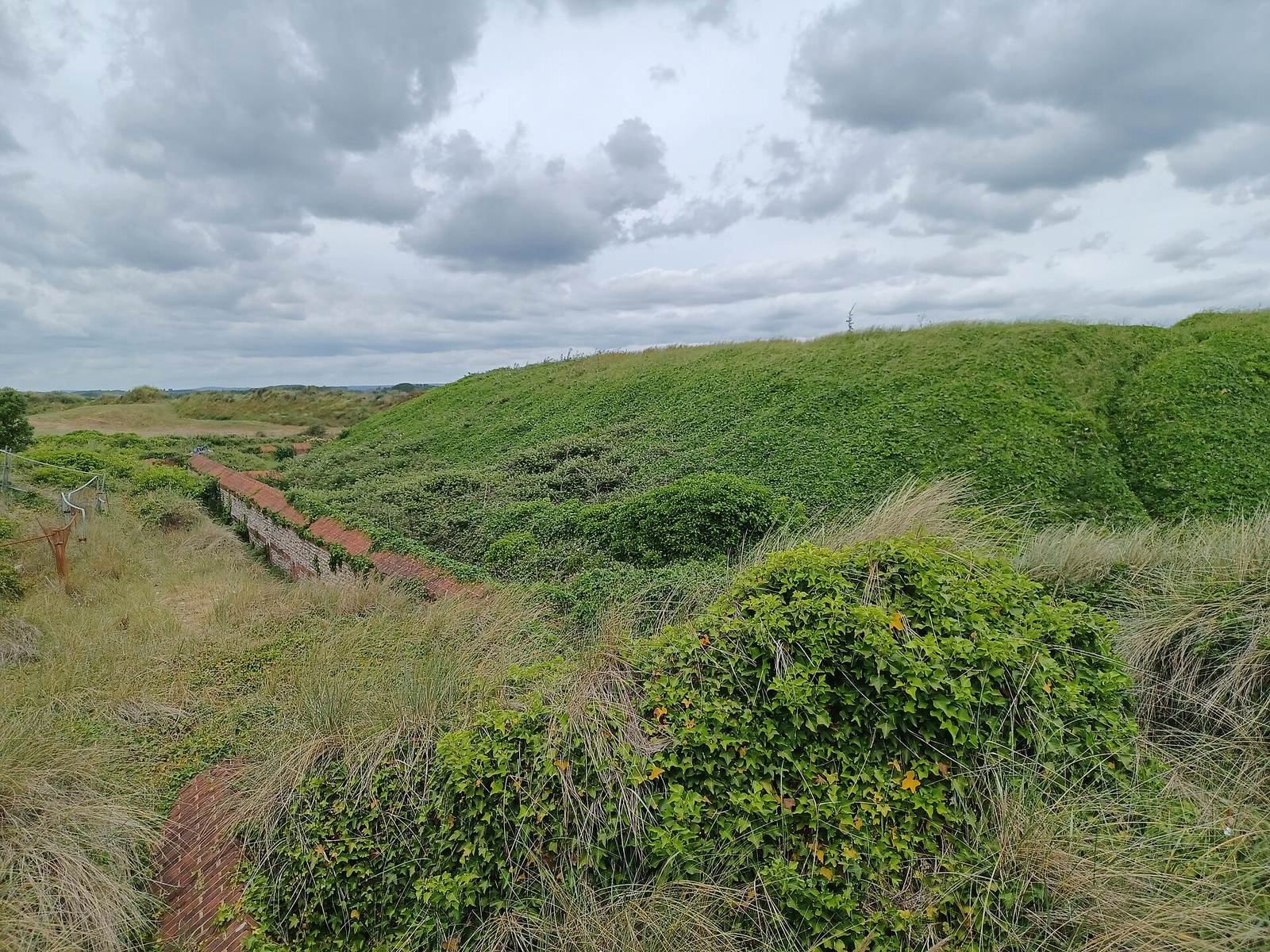
By 2011, the fort was ruinous and overgrown. Visible remains included the surrounding ditch, one of the three open projections, part of the Carnot wall and the earthworks behind it.
East-bank battery
The raised earthwork of the 1760 battery survives on the east bank, incorporated into Harbour Park.