Château de Madaillan: A Medieval Castle in Lot-et-Garonne, France
Site at a Glance
- Popularity
- Medium
- Country
- France
- Primary era
- Medieval
- Eras represented
- Medieval, Early Modern
- Civilizations
- English, French
- Site type
- Military
- Remains
- Castle
On this page9 sections
History
Origins and the du Fossat lordship
Château de Madaillan is a medieval castle in Madaillan, in the Lot-et-Garonne department of France. The du Fossat family, a noble house of the Agenais, built its principal structures around 1285–1289 under Amanieu II du Fossat. A military post probably occupied the site around 1250, and in 1248 Arnaud-Garcie I du Fossat paid homage to Raymond VII, Count of Toulouse, for the castle. Set within the territory of Agen, Madaillan became a focus of disputes over the rights of local lords, the city, and successive rulers.
The Agenais, a historical region in southwestern France, came under French sovereignty after Alphonse of Poitiers and his wife died in 1271. In 1279 the region passed to the king of England. Amid these changes, Amanieu II claimed royal powers of high and low justice at Madaillan, covering serious crimes and lesser offenses and civil matters. In 1301 he also seized the parishes of Fraysses, Cardounet, Saint-Denis, and Doulougnac. He failed to keep Saint-Denis and Doulougnac and died in 1307.
Amanieu III and the conflicts of the fourteenth century
Amanieu III, whose kinship to Amanieu II is described as either brother or nephew, succeeded him in 1307. He also held part of the Fossat fief at Aiguillon and later served as mayor of Bordeaux in 1311 and as seneschal, a senior territorial administrator, first of the Agenais in 1313 and then of Aquitaine in 1317. He is also associated with the seneschalship of Guyenne in 1319. An inquiry in 1311 rejected his claims to Fraysses and Cardounet. Agen’s attempt to recover its rights in 1318 produced a charter that year, while a royal charter identified Madaillan as one of the Agenais’s principal baronies, a lordship carrying territorial rights. Amanieu strengthened the castle’s defenses.
A 1327 peace agreement between England and France required the destruction of castles belonging to eleven excluded barons. Amanieu worked to save Madaillan, and Robert Bertrand, lord of Bricquebec and marshal of France, camped before it to ensure the treaty clause was observed. In 1331 Philip VI of Valois agreed that the castle should remain standing. Amanieu renewed his claims to the disputed parishes, but proceedings at Langon in 1334 restored Agen’s jurisdiction over Saint-Denis and Doulougnac while leaving Fraysses and Cardounet unresolved. The renewed war between the French and English crowns in 1337, known as the Hundred Years’ War, prevented that decision from taking effect.
In early 1338, French commanders Simon de Provigny, lord of Erquery, and Étienne de La Baume, known as “le Galois,” besieged Madaillan. The castle surrendered in the latter half of March. The commanders were around Marmande at the time and later moved against Penne-d’Agenais. Amanieu remained a prisoner for four years. An amnesty freed him and returned his castles and the disputed parishes, prompting protests from Agen’s governing representatives. A royal inquiry did not resolve the dispute. After Amanieu later joined the English side, the French king withdrew his concessions in March 1350.
The French king returned Madaillan to Amanieu in 1342, and Amanieu was still alive in 1350. The castle faced two further sieges: one by Craon, a lieutenant of the French king, in July 1352, which it resisted, and another by Jean, Count of Armagnac, in June 1354. The following month, forces of the count and the English king fought near Madaillan.
Changing rulers and the Montpezat barony
The Treaty of Brétigny returned the Agenais to English rule in 1360. Three years later, the region’s lords, parishes, and representatives of Agen swore mutual fidelity and protection to the English king, represented by Edward, Prince of Wales, later known as the Black Prince. Amanieu IV du Fossat, recorded between 1355 and 1373, remained aligned with the English, while his sons supported the French. Antoine, the bastard of Terride, captured him in November 1371. In 1372 Bertrand du Fossat aided the Count of Armagnac; after Bertrand helped recover the planned settlement of Laparade, Charles V entrusted him with its government and revenues.
Disputes over the lords’ claims continued. The Prince of Wales ordered inquiries in 1364 and 1365. A proposed settlement in 1369 would have granted the baron of Madaillan Fraysses, Saint-Denis, and part of Cardounet in exchange for relinquishing claims to Pauliac and Saint-Julien, but the barons did not carry it out. Bertrand and his brother Jacques, sons of Amanieu IV, shared lordship from 1373 to 1384. The du Fossat family held Madaillan until the end of the fourteenth century. Jeanne du Fossat, the family heiress, married Simon de Béarn; their daughter Jeanne de Béarn married Amanieu II de Montpezat in 1399.
The Montpezat family held the barony until 1520, through Raymond-Bernard, Charles, who died in 1484, and Guy, who lived around 1470–1520. Charles’s dispute with Agen over parish rights and jurisdictional limits led to proceedings beginning in 1462. An agreement defining the boundaries of the city’s jurisdiction and the barony followed on 31 July 1470. Amanieu II de Montpezat had been appointed seneschal of the Agenais by Charles VII on 5 January 1425/26.
Foix, Savoy, and the Wars of Religion
Marriage brought Madaillan into the house of Foix through Alain de Foix-Candale and Françoise de Montpezat. Their daughter Jeanne Françoise de Foix married Honorat II of Savoy in 1540, bringing him the baronies of Montpezat, Aiguillon, Madaillan, and Sainte-Livrade. During the Wars of Religion, the sixteenth-century conflicts between Catholics and Protestants in France, Honorat allowed Protestant forces under the Viscount of Sérignac to take the castle in 1570. They used it as a fortified base for raids into the Agen countryside.
In 1573 Guyenne was divided between two lieutenancies: Jean de Losse governed the Agenais and the right bank of the Garonne, while the Baron of La Valette governed the left bank. Henry III appointed Blaise de Monluc marshal of France on 26 September 1574. Monluc began a siege of Madaillan on 7 January 1575 with about 3,000 troops. Over 24 days, three artillery pieces fired 275 cannonballs and breached the western defenses. The defenders, led by Carbon de Montpezat, built a secondary defensive position that blocked an assault. Short of equipment, Monluc ended the siege on 31 January, before the arrival of Guy de Montferrand, lord of Langoiran, who was coming to relieve the castle. Monluc then had two forts built to keep watch over it.
After peace between Catholics and Protestants, Henry of Navarre, the future King Henry IV of France, issued an edict on 4 August 1576 requiring castles to be returned to their lords. Madaillan went back to Honorat of Savoy, marquis of Villars. Honorat’s daughter Henriette married Charles of Lorraine, Duke of Mayenne, in 1576, bringing the castle into the Lorraine family; it later passed to their son Henri de Mayenne. Successive lords ceased to live there.
Later ownership and restoration
Madaillan remained with the Lorraine family until Ferdinand de Mayenne. In 1637 Cardinal Richelieu bought the lordship together with the Duchy of Aiguillon and gave it to his niece, Marie-Madeleine de Vignerot, widow of the Marquis of Combalet. The dukes of Aiguillon held the lordship until the French Revolution. After a long period of abandonment, restoration began in the nineteenth century. The castle was registered as a French historic monument in 1950. Chantal and Jacques Aurin bought it in 1990 and restored it.
Remains
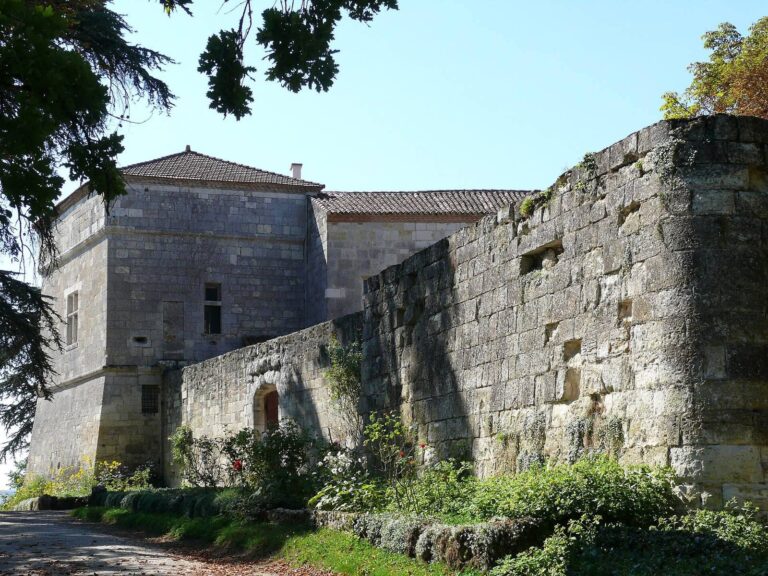
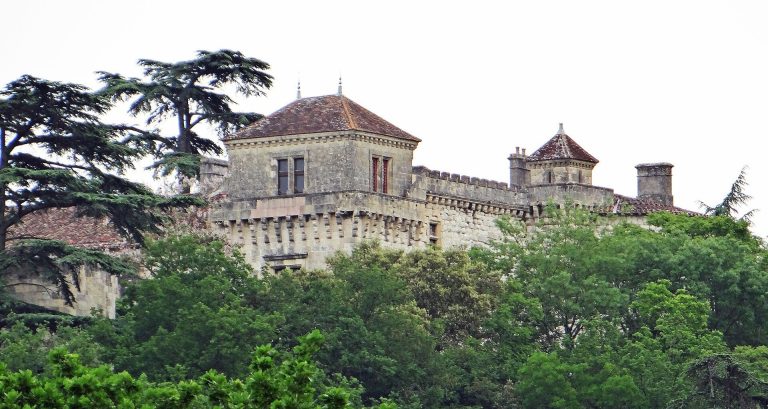
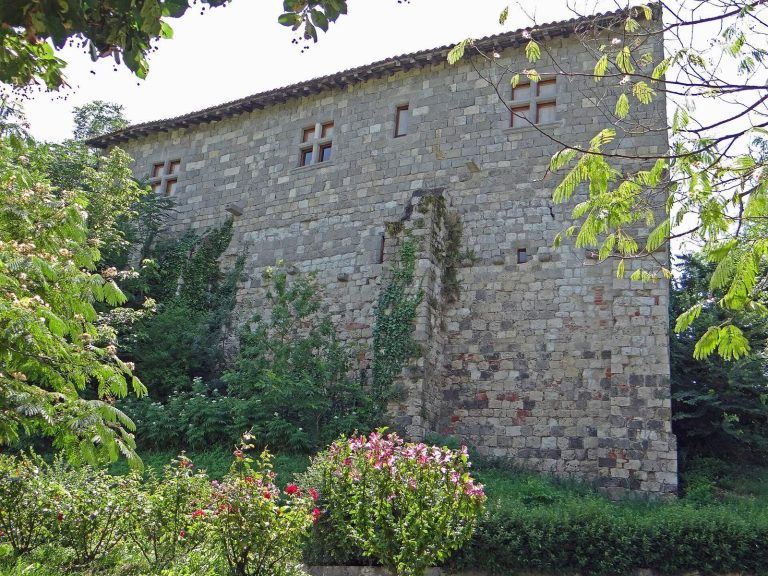
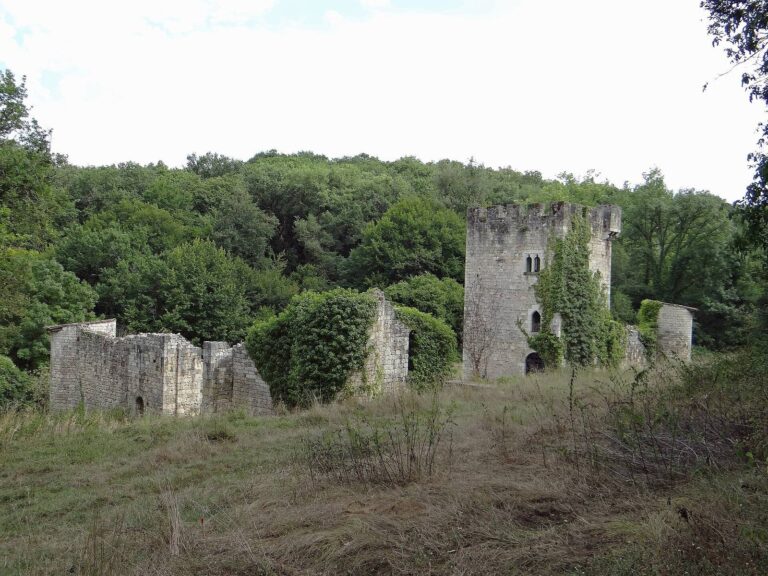
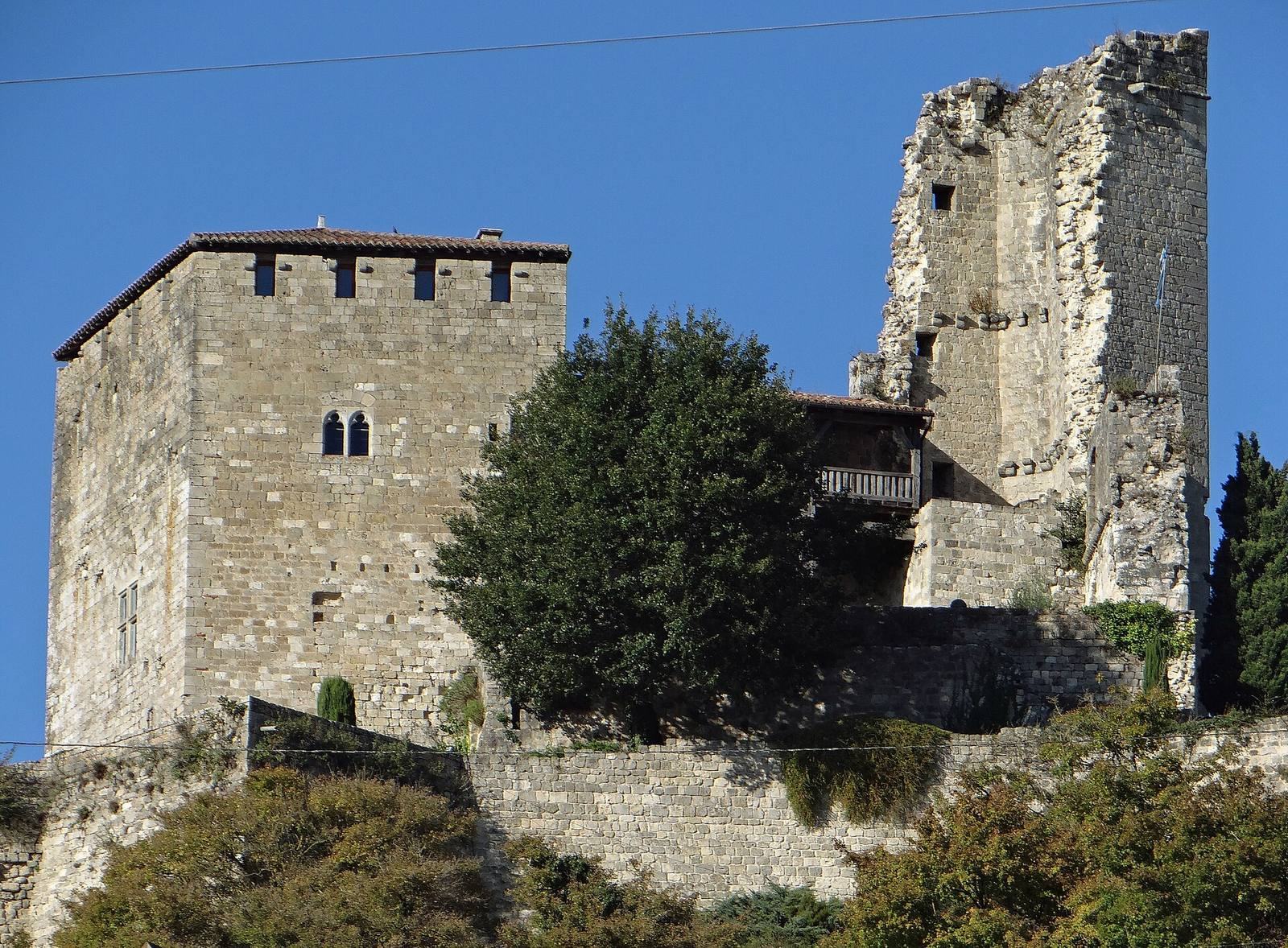
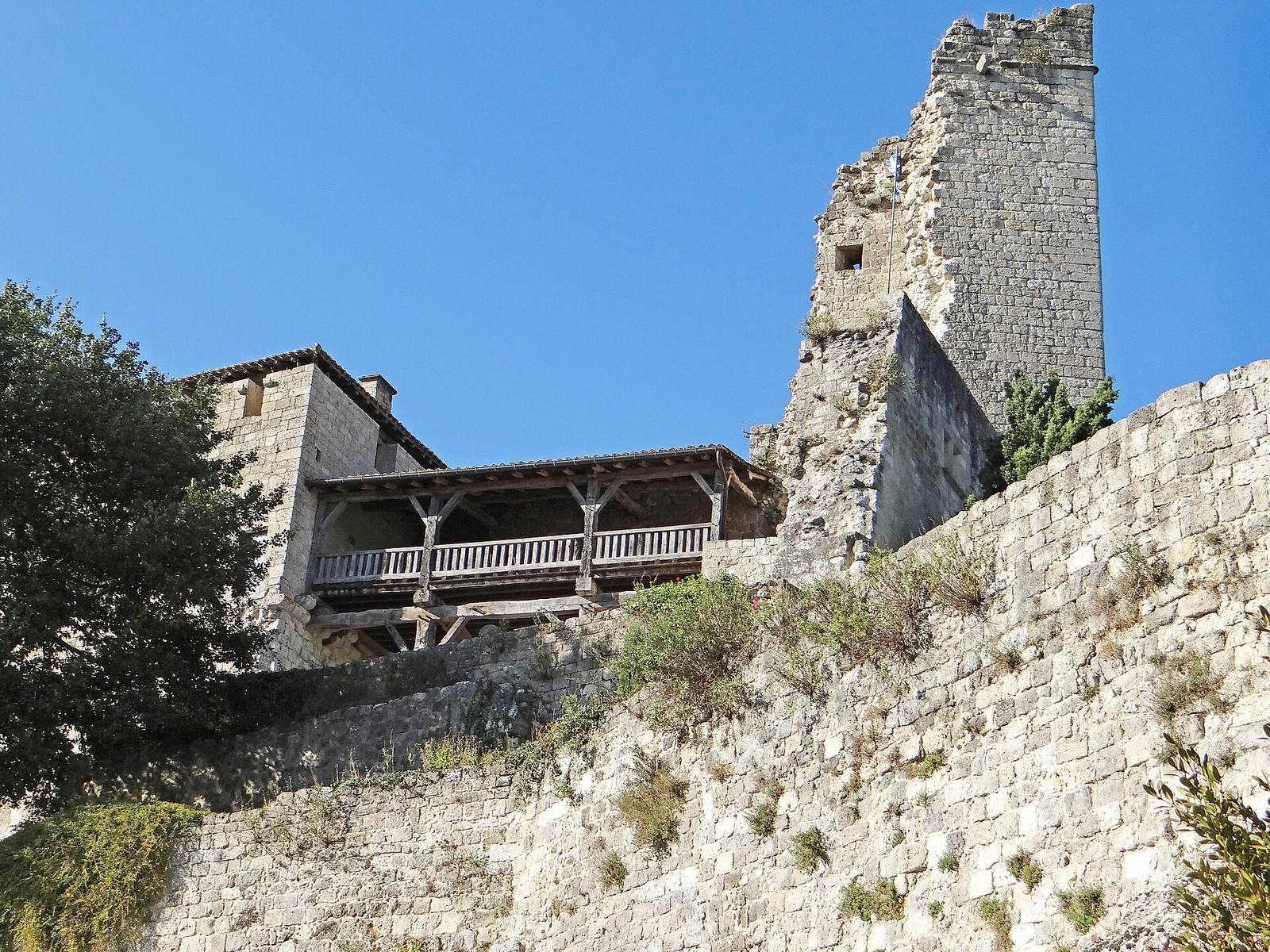
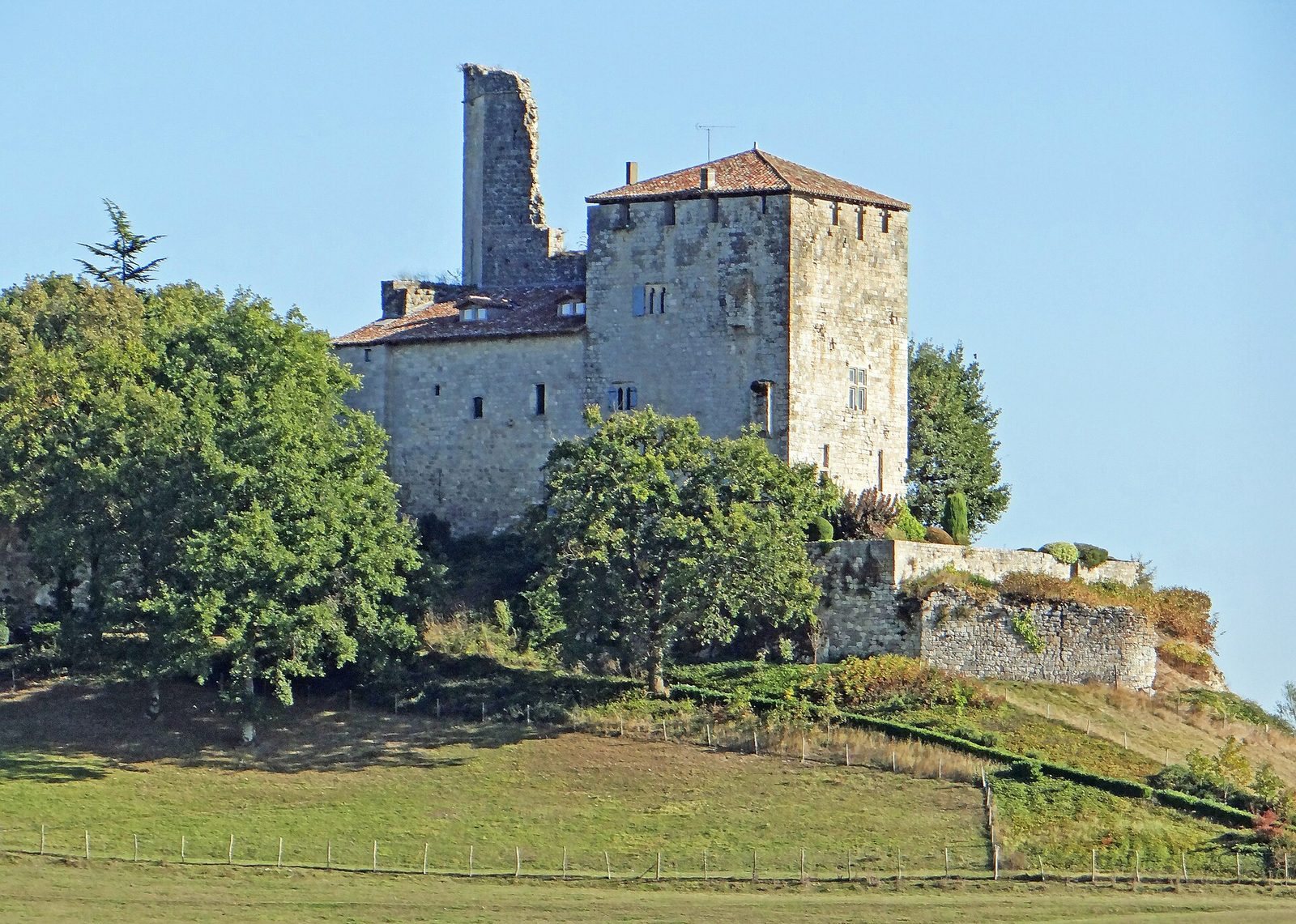
The castle overlooks the small valleys of the Bourbon and Saysset streams, with a broad moat separating it from the plateau to the east. Its construction extended from the thirteenth to the sixteenth century. The complex includes an enclosure, a principal tower, a residential range, a lower defensive enclosure, a keep, and a Great Tower.
Enclosures and defenses
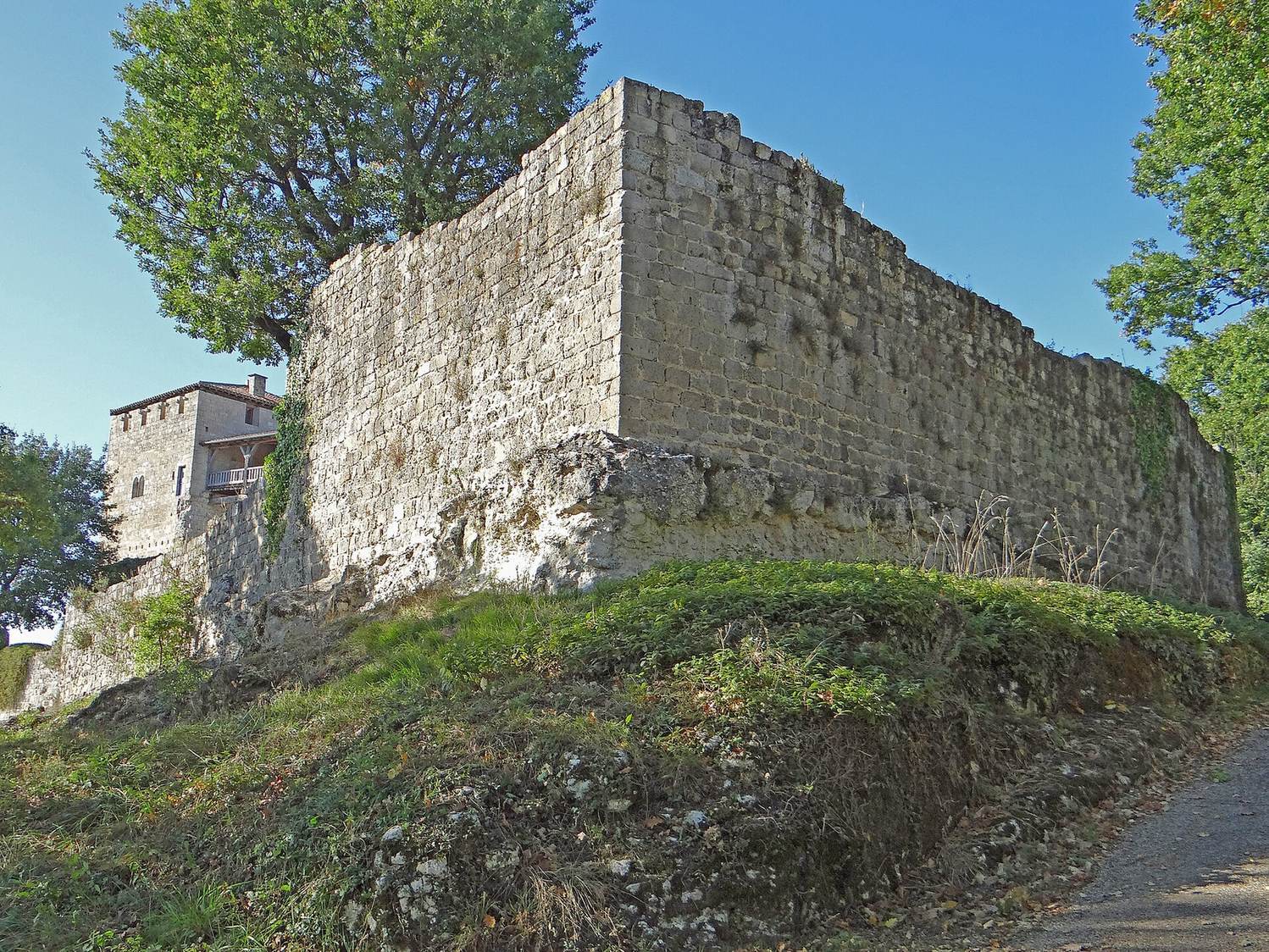
The lower defensive enclosure dates to the fourteenth century and was strengthened before the siege of 1575. On the west, a section collapsed during that siege. The southern side of the lower enclosure forms part of the surviving complex. The moat along the eastern approach and the walled defensive areas together define the castle’s layout.
Towers and residential buildings
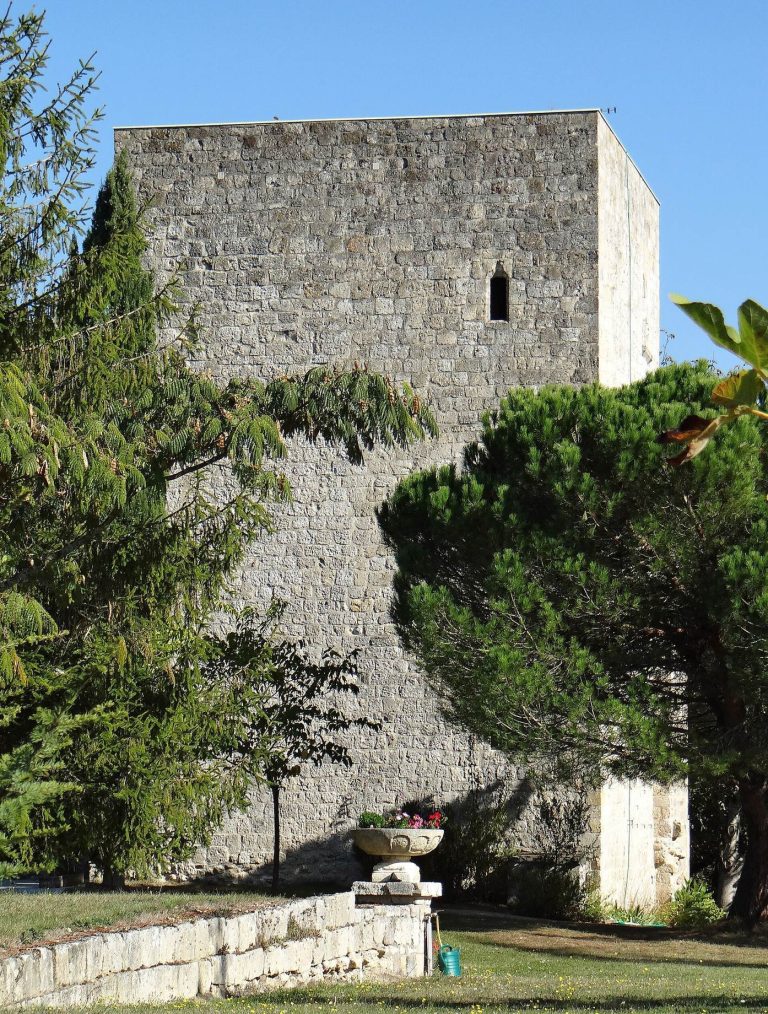
Amanieu III du Fossat was responsible for parts of the enclosure, the principal tower, and part of the residential range, a block of living quarters. A keep, the castle’s fortified tower, is also among the complex’s components; its eastern wall has a solid, pointed section that was probably undermined around 1576. The ground-floor fireplace of the Great Tower bears the carved arms of the du Fossat family. Numerous stone cannonballs have been found at the castle.