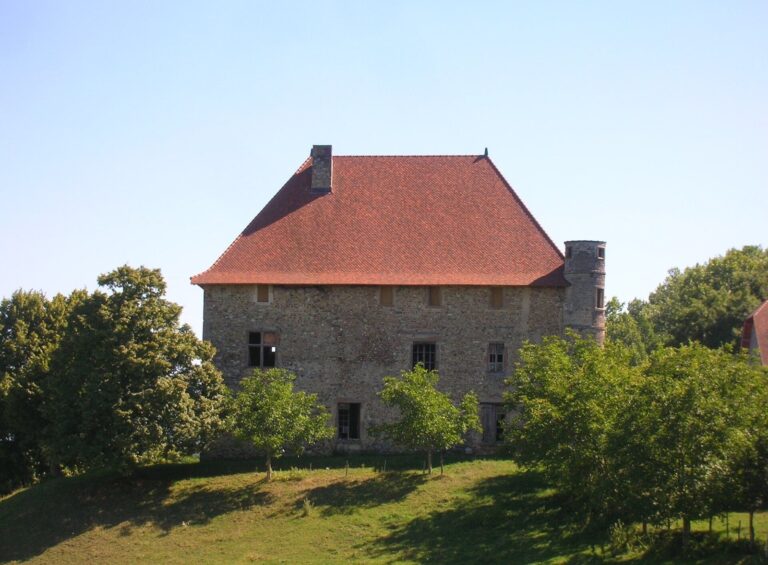
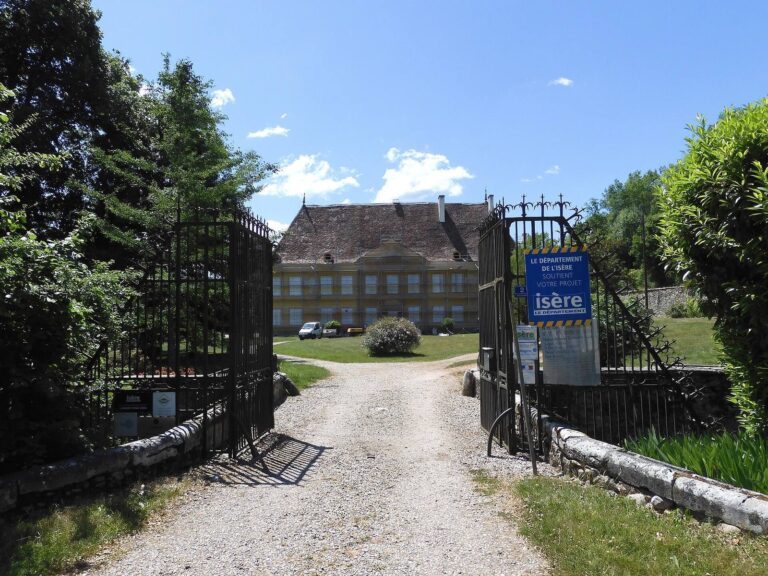
Clermont Castle in Isère: Ancestral Seat of the Clermont Family
Site at a Glance
- Popularity
- Medium
- Country
- France
- Primary era
- Medieval
- Eras represented
- Medieval
- Civilizations
- Holy Roman Empire
- Site type
- Military
- Remains
- Castle
On this page9 sections
History
Clermont Castle is a medieval stronghold on Clermont Hill near Chirens in Isère, France. Its earliest settlement dates to the second half of the 11th century, and the castle later became the ancestral seat of the Clermont family and the administrative center of the lordship of Clermont-en-Viennois.
Origins and early castle
Chirens is said to have belonged to the Clermont-Tonnerre family from the 10th century. The Clermont family appears in written records by the late 11th century. Excavations in 1991 established that the first settlement on the hill dates to the second half of that century, though its early layout remains unknown. In 1107, the castle and the lord-governed district of Chirens were first referred to during the division of the County of Sermorens, a medieval county in the region of present-day Isère.
The castle served as the administrative center of the district and the seat of the lordship. A stone tower stood there in the 12th century, and the chapel of Notre-Dame dates at least to that period, with a possible origin in the 11th century. During the 13th century, earlier structures were razed and the castle was rebuilt.
Lordship and regional authority
In 1203, Guillaume de Clermont represented the previously independent lords of Clermont in an agreement with the archbishop of Vienne. The lords received the castles of Clermont and Saint-Geoirs as fiefs, meaning lands held within a feudal relationship. In 1317, the lord of Clermont paid homage to Jean II of Viennois, the Dauphin of Viennois. The castle then stood near the frontier of the States of Savoy, territories ruled by the House of Savoy, which held an enclave southward toward Voiron.
The lordship became the first barony of the Dauphiné, a historical principality in southeastern France, and the Clermont family’s lands were raised to a viscounty, a noble title and its associated territory, during the 14th century. The lords also founded a new town, first mentioned in 1330, and reduced its taxes to encourage economic activity. In 1547, Antoine III de Clermont received the title of Count of Clermont-en-Viennois from King Henry II of France.
Abandonment and later history
The castle appears to have been abandoned in the early 16th century. In 1626, a royal order prompted by Cardinal Richelieu required its dismantling, as the Crown considered castles no longer needed for France’s defence unnecessary.
In 1814, Colonel Lubière, who commanded a unit of the Napoleonic army, tried unsuccessfully to halt the Austrian advance by shutting himself inside the surviving castle. The tower ruins and remaining castle and enclosure structures were listed as historic monuments on 18 October 1983.
A local legend says that Montclair Castle, opposite Clermont, was linked to it by an underground passage with exits in some houses. The same legend places buried treasure beneath the rubble.
Remains
Castle layout and surviving structures
Setting and defenses
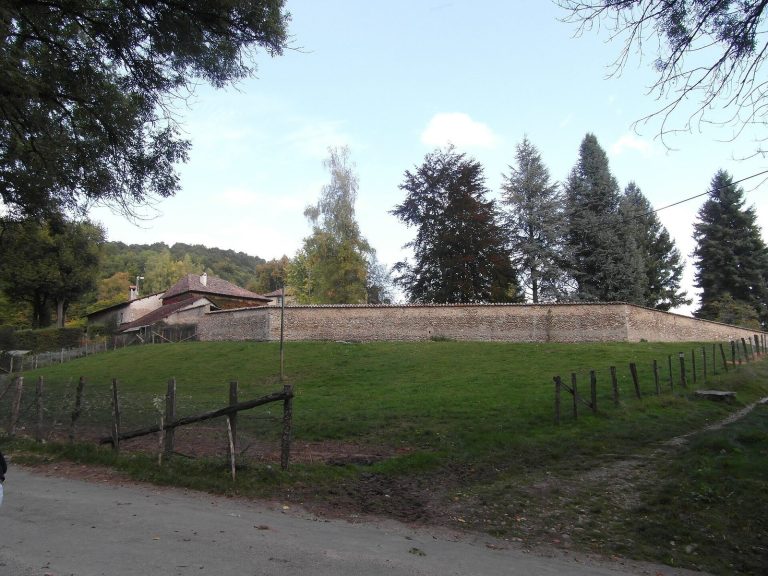
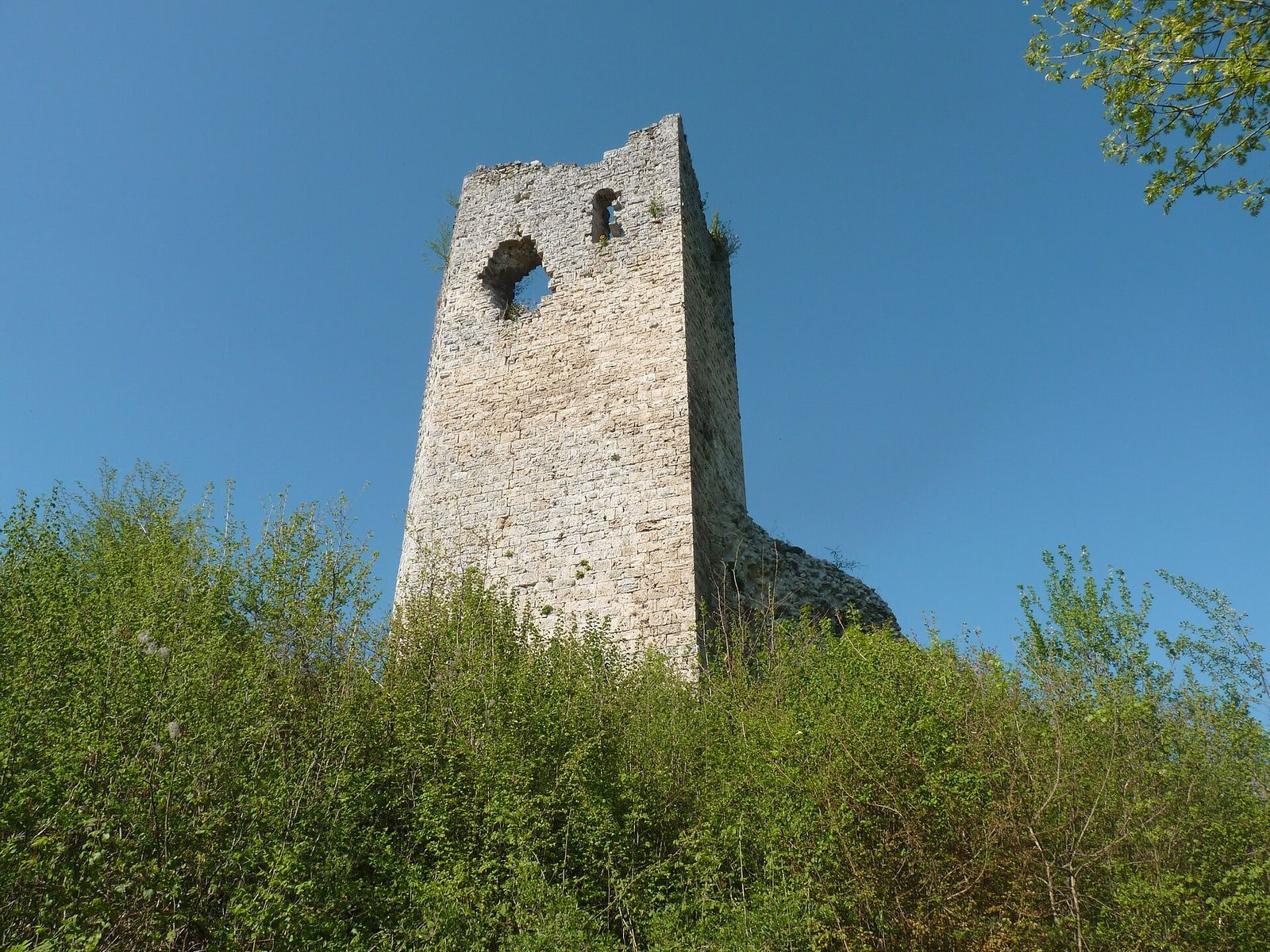
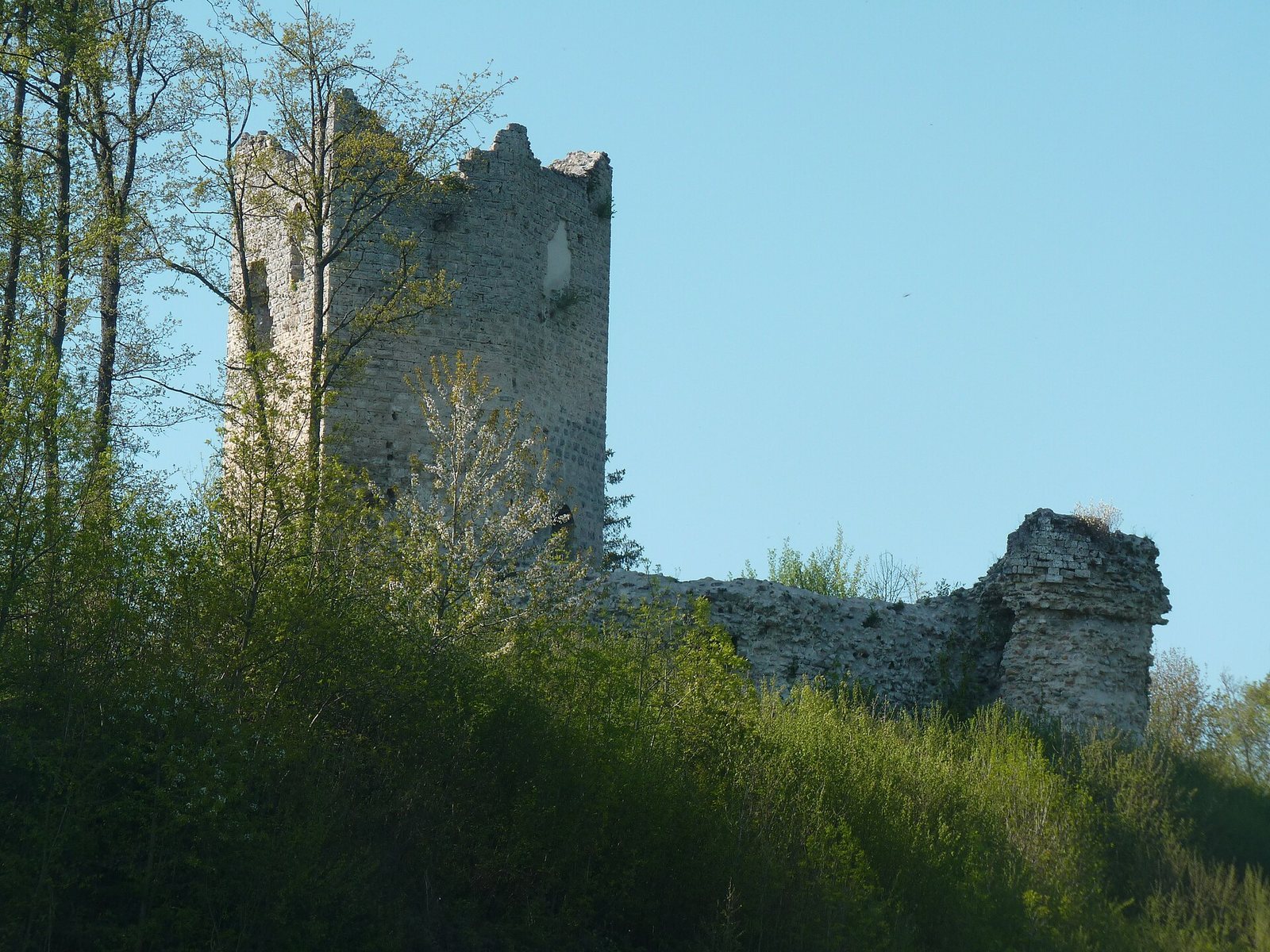
The ruins occupy an exposed knoll on Clermont Hill, 637 metres above sea level and 1.5 kilometres west of Chirens. The hill overlooks the hamlet of Clermont to the south and the Chirens Valley. Views extend toward the Ainan Valley to the east, the Fure Valley to the west, and the Voiron and Isère valley to the south. The castle was arranged in three concentric enclosures; the surviving remains include the keep, other castle ruins, and two enclosures. A masonry curtain wall, the defensive wall between towers, and a round tower protected the keep.
The keep
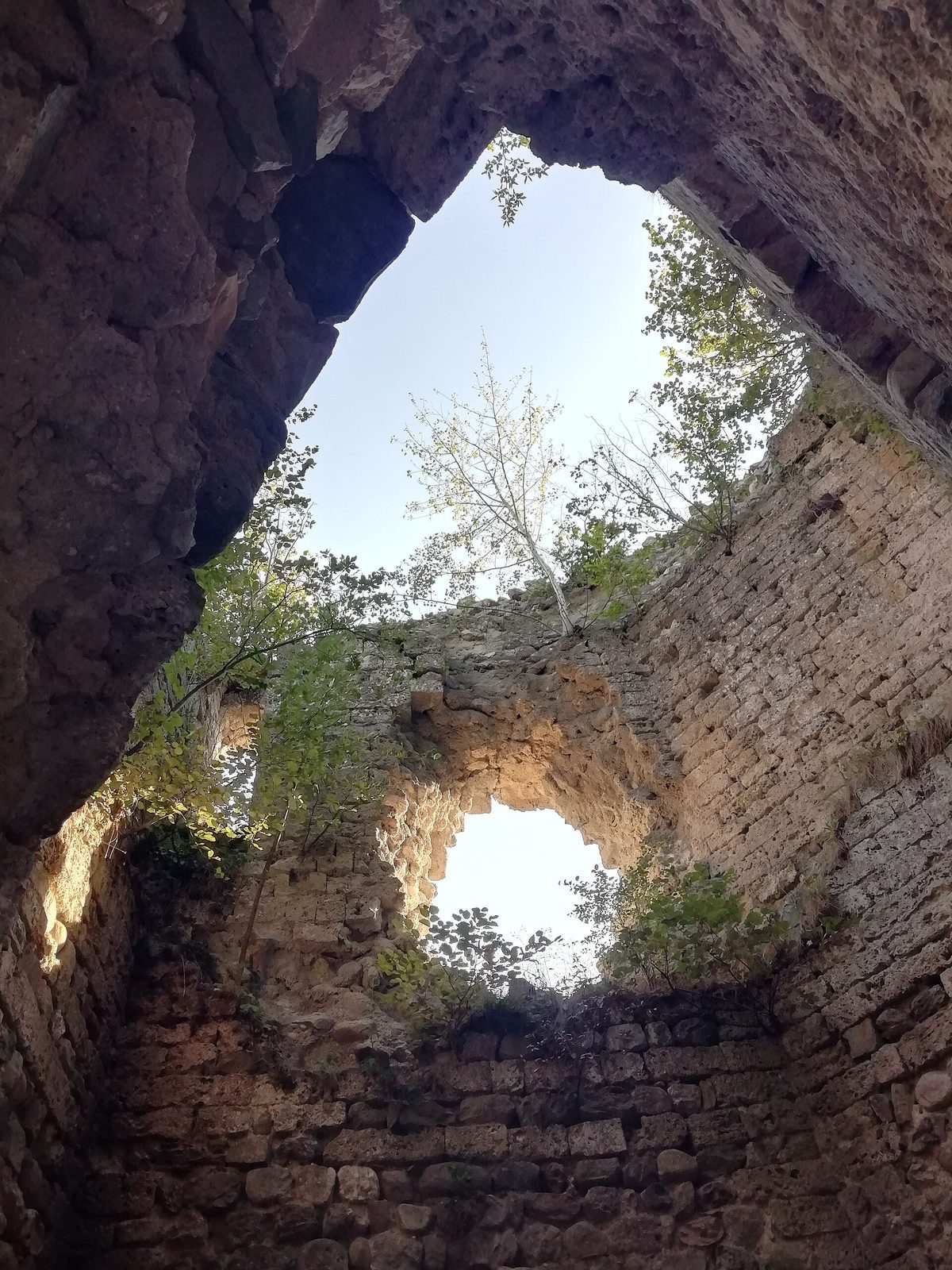
The 13th-century keep stands on a motte, a raised earth mound supporting a fortified structure. Its irregular pentagonal plan and four storeys above ground level define the principal tower. Stone and tuff, a rock formed from compacted volcanic ash, were used in its construction. An opening on the south side of the third storey was probably a latrine, while the north side preserves the trace of a large fireplace at the same level. The oldest parts of the surviving ruins are attributed to the 12th century.
Chapel of Notre-Dame
Excavations revealed remains of the castle chapel of Notre-Dame. The surviving traces form part of the evidence for the castle’s religious buildings.