Longpra Castle: A Medieval Fortified House and Eighteenth-Century Pleasure Residence


Site at a Glance
- Rating
- 4.4
- Popularity
- Low
- Country
- France
- Primary era
- Early Modern
- Eras represented
- Medieval, Early Modern
- Civilizations
- French
- Site type
- Domestic
- Remains
- Castle
On this page7 sections
History
Longpra Castle is a medieval fortified house in Saint-Geoire-en-Valdaine, France, rebuilt in 1770 as an eighteenth-century pleasure residence in the architectural style of its period. Its exact original construction date is uncertain, but it began as a seigneurial or noble home within the historic province of Dauphiné, a region whose former territory largely corresponds to the modern departments of Isère, Drôme, and Hautes-Alpes.
From fortified residence to noble estate
The original residence combined domestic purposes with defensive features, including enclosing walls, moats, and a drawbridge. From 1536, Longpra Castle belonged to the Franclieu family. In the eighteenth century, Pierre-Antoine de Longpra, a councillor of the Parliament of Dauphiné, demolished the earlier fortified house and commissioned its reconstruction as a pleasure residence. The present character of the castle comes chiefly from this transformation.
Local craftsmen from Saint-Geoire carried out the eighteenth-century work. The Hache family, associated with cabinetmaking in Grenoble, had a particularly important part in the interiors and signed the residence’s parquet flooring. Their contribution helped shape the decorative character that survives inside the rebuilt house.
Protection and present use
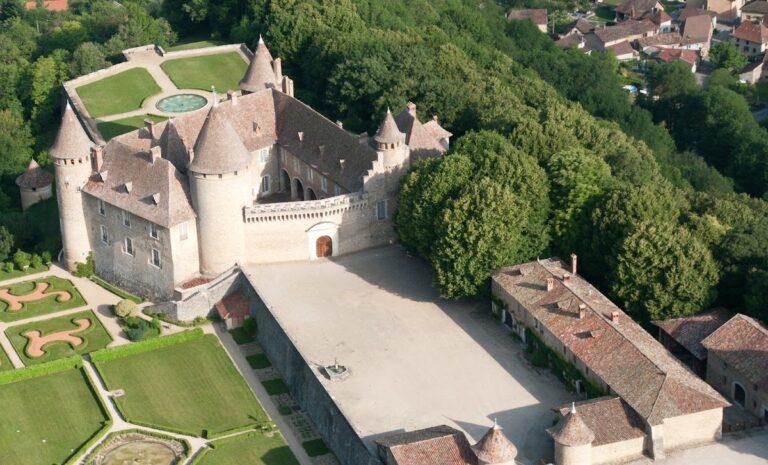
In 1997, the castle and associated estate features were classified as historic monuments, while part of the park received registration as a historic monument in the same year. The protected group includes the castle, terraces, southern parterre, pavilions, moats, honor courtyard, gates, enclosure walls, the façades and roofs of the outbuildings, and the main avenue. The estate now operates as a historic house, museum, park, and arboretum open to the public.
Remains
Castle, moats, and grounds
Longpra Castle stands in the Dauphiné landscape of Saint-Geoire-en-Valdaine, near the Ainan River and the lakes of Aiguebelette and Paladru. The earlier fortified residence was encircled by moats measuring 378 metres in length. Parts of the former drawbridge remain, while the bridge now used at the castle dates from the seventeenth century.
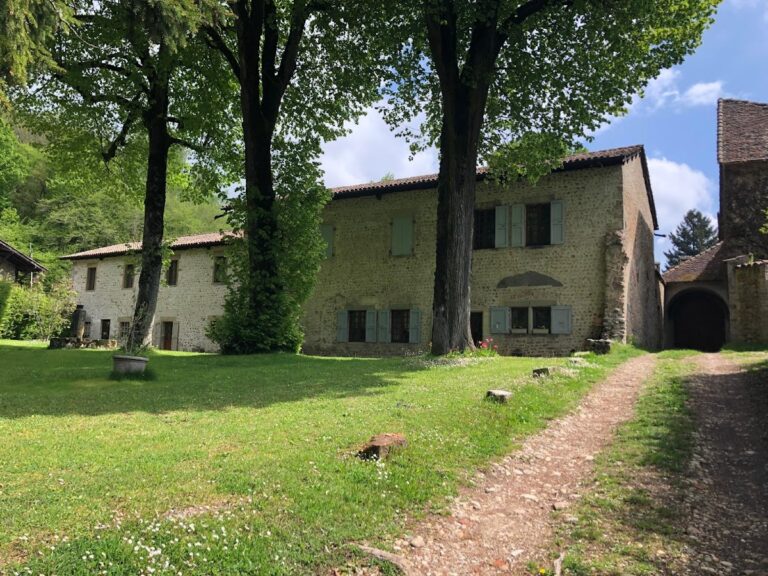
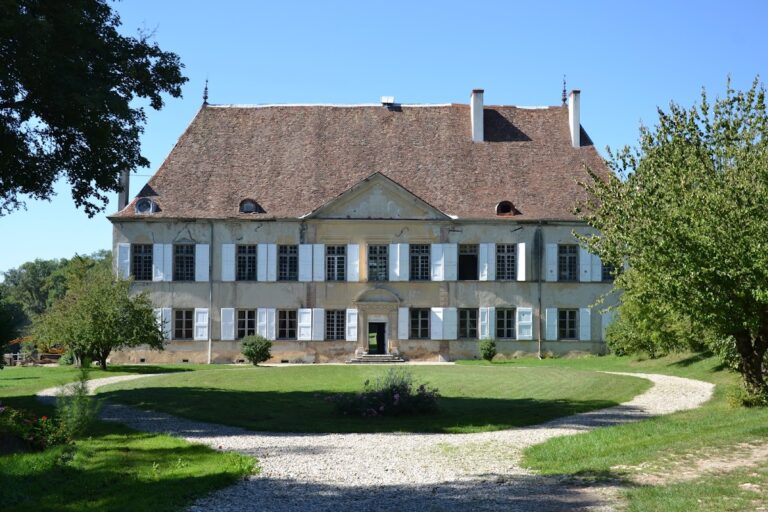
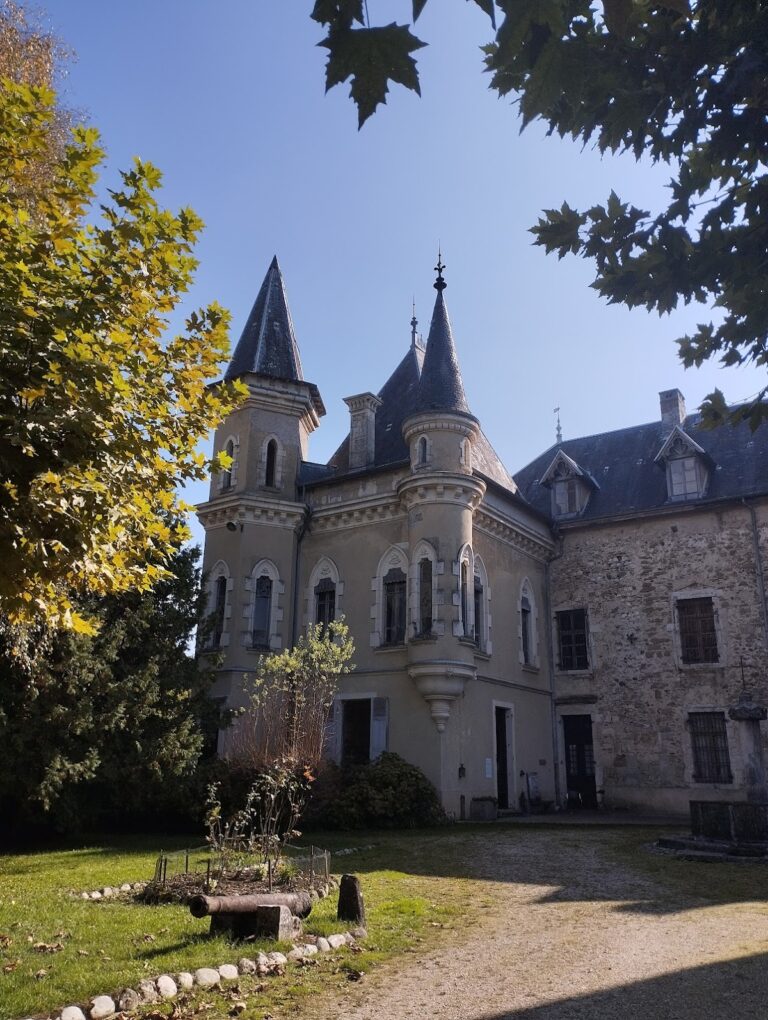
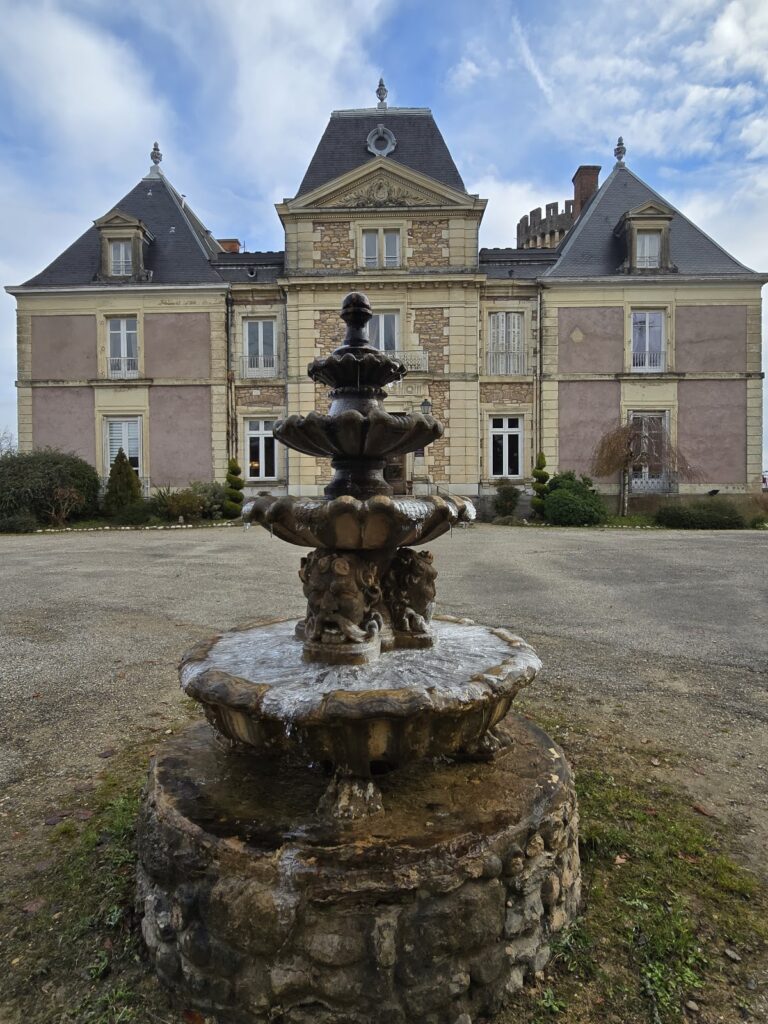
The eighteenth-century rebuilding presents a form of Dauphiné domestic architecture with symmetrical façades and restrained decoration focused on the pediments. Around the building are terraces, a southern parterre, pavilions, and an honor courtyard entered through gates and enclosure walls. The estate also includes outbuildings whose façades and roofs form part of the protected group, together with the main avenue leading to the castle.
Interiors and woodworking museum
A series of interior rooms retains its original decoration, including preserved furniture, ornamental objects, doors, and parquet floors connected with the work of the Hache family and Grenoble cabinetmakers. The woodworking-tool museum displays eighteenth- and nineteenth-century carpentry and cabinetmaking tools, including gouges and wood chisels used chiefly to create the building’s interior decoration. Its educational film includes a demonstration of a guilloche lathe, a specialized machine for producing repeated ornamental patterns on woodwork and furniture, by a former student of the École Boulle, a Parisian school for cabinetmakers and decorative-arts specialists.
Arboretum and garden
A private, 10-hectare arboretum surrounds the castle. It contains more than 350 species of trees and shrubs from temperate ecosystems around the world, with particular emphasis on trees valued for their autumn foliage, including oaks and members of the pine family. The estate also contains a flower garden and facilities for exhibitions and documentary films.
Nearby sites