Waischenfeld Castle: A Medieval Hill Castle in Germany
Site at a Glance
- Popularity
- Medium
- Country
- Germany
- Primary era
- Medieval
- Eras represented
- Medieval
- Civilizations
- Holy Roman Empire
- Site type
- Military
- Remains
- Castle
On this page4 sections
History
Waischenfeld Castle was a medieval hill-and-rock castle in Waischenfeld, Germany, with its earliest indication dating to 1079 and a surviving Romanesque tower. The 1079 reference names Wirint of Waischenfeld, a member of an influential noble family in the middle Wiesent area. The Waischenfeld family was related to the Lords of Aufseß. In 1122, the castle was recorded as an urbs, a Latin word for a town or city, and was associated with the free nobility.
Early lords and succession
When Ulrich of Waischenfeld, the last member of his family line, died in 1216, the castle and its lordship passed to Eberhard III of Greifenstein. Eberhard built a new fortress, Schlüsselberg Castle, south of Waischenfeld.
Bamberg rule and decline
After Conrad II of Schlüsselberg died, the castle and town passed to the Bishopric of Bamberg in 1348. The bishopric was an ecclesiastical principality whose bishops also governed territory. The castle was badly damaged in 1430 during the Hussite Wars, conflicts associated with the religious movement of Jan Hus. From 1438 onward, the bishopric repeatedly pledged the castle to nobles.
During the Second Margrave War of 1552–1553, a conflict in Franconia, Margrave Albert Alcibiades of Brandenburg-Kulmbach fought chiefly against the Catholic bishoprics in an effort to gain supremacy in the region. His troops captured Waischenfeld Castle three times, looted it, and burned it on 7 June 1553.
From about 1600, the old castle served as a grain store and gradually fell into disrepair. Its ruins were demolished in 1876–77 and again in 1889.
Remains
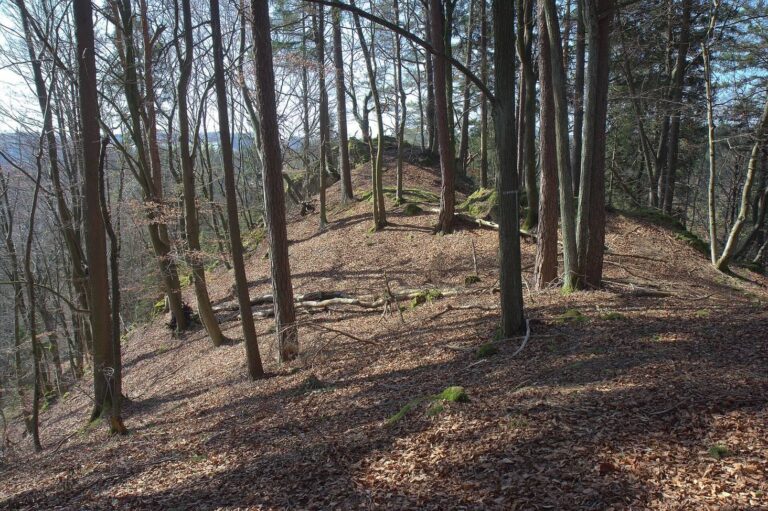
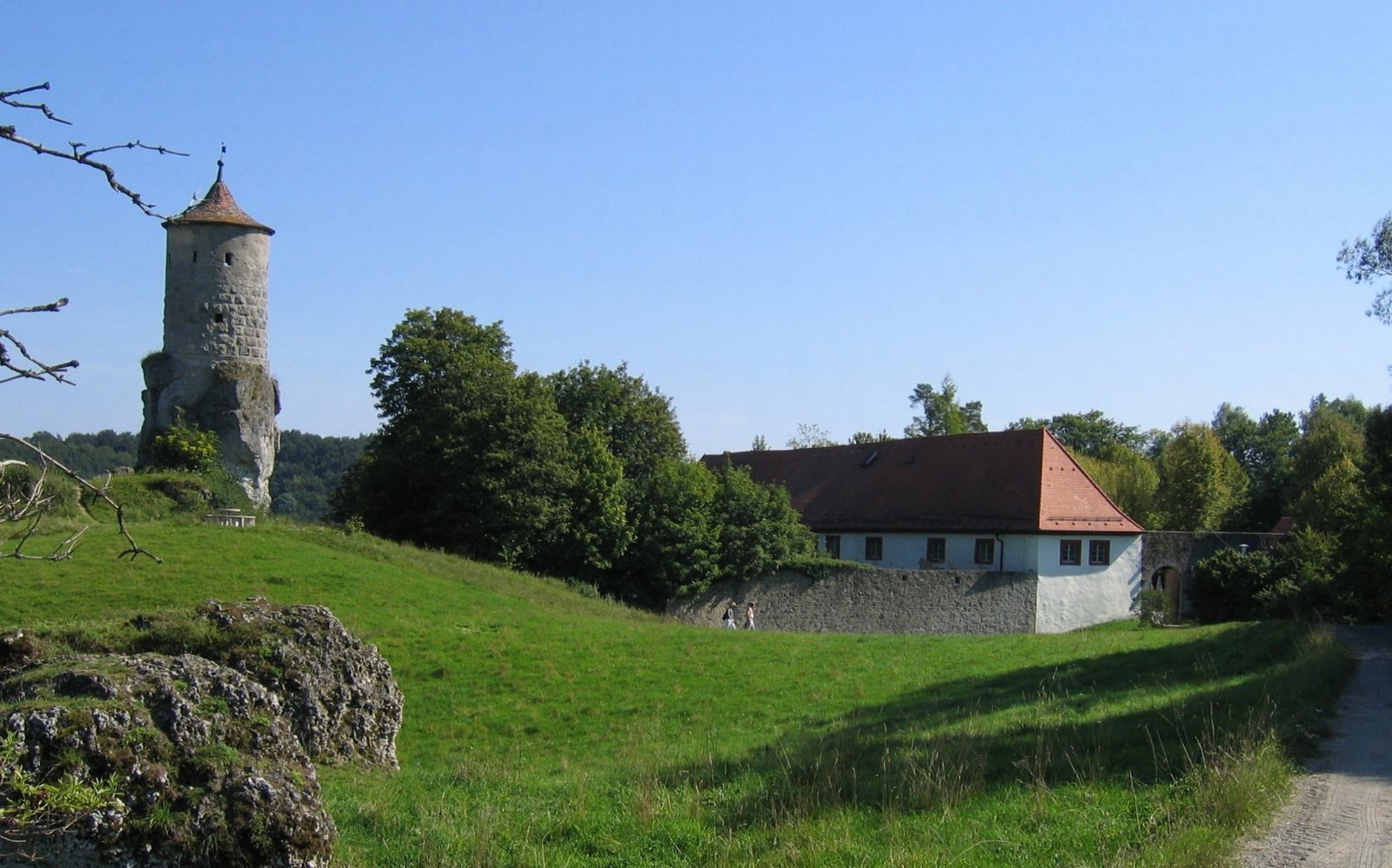
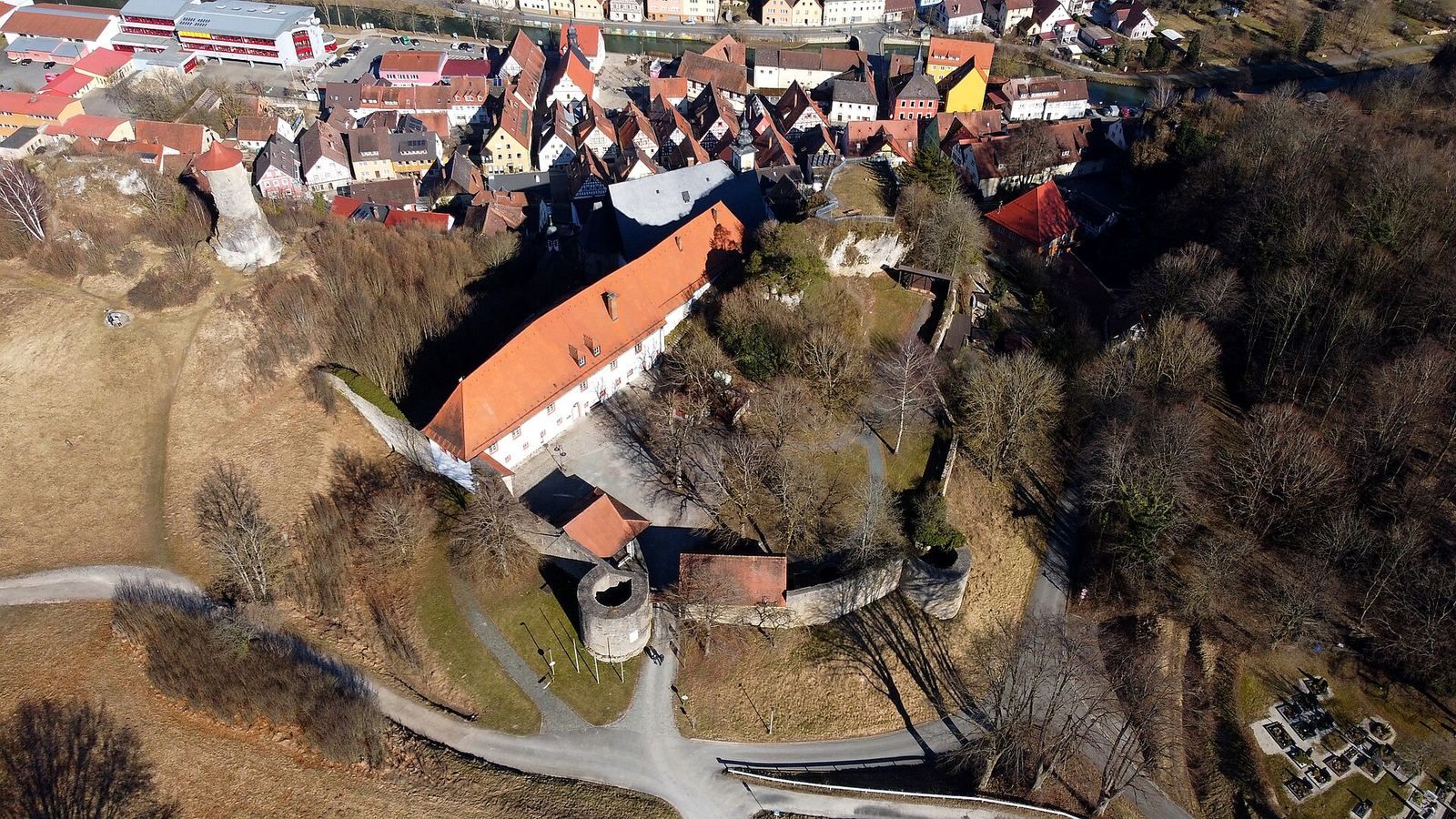
The castle occupied a rocky plateau a few metres west of Waischenfeld, at the town’s western edge. It was a hill-and-rock stronghold, and its northernmost section was the Rüssenbach castle estate. The surviving Steinerner Beutel, whose name means “Stone Bag,” formed part of this section.
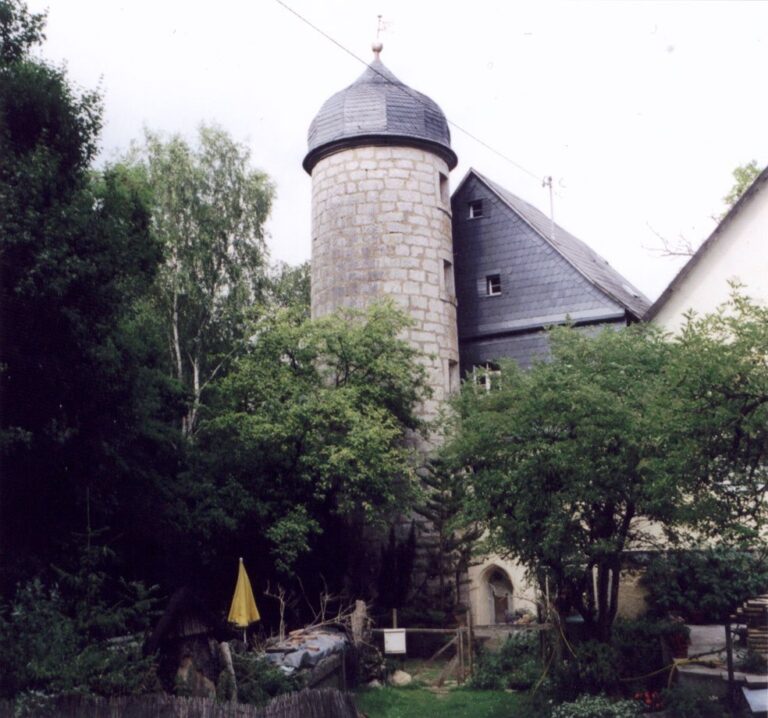
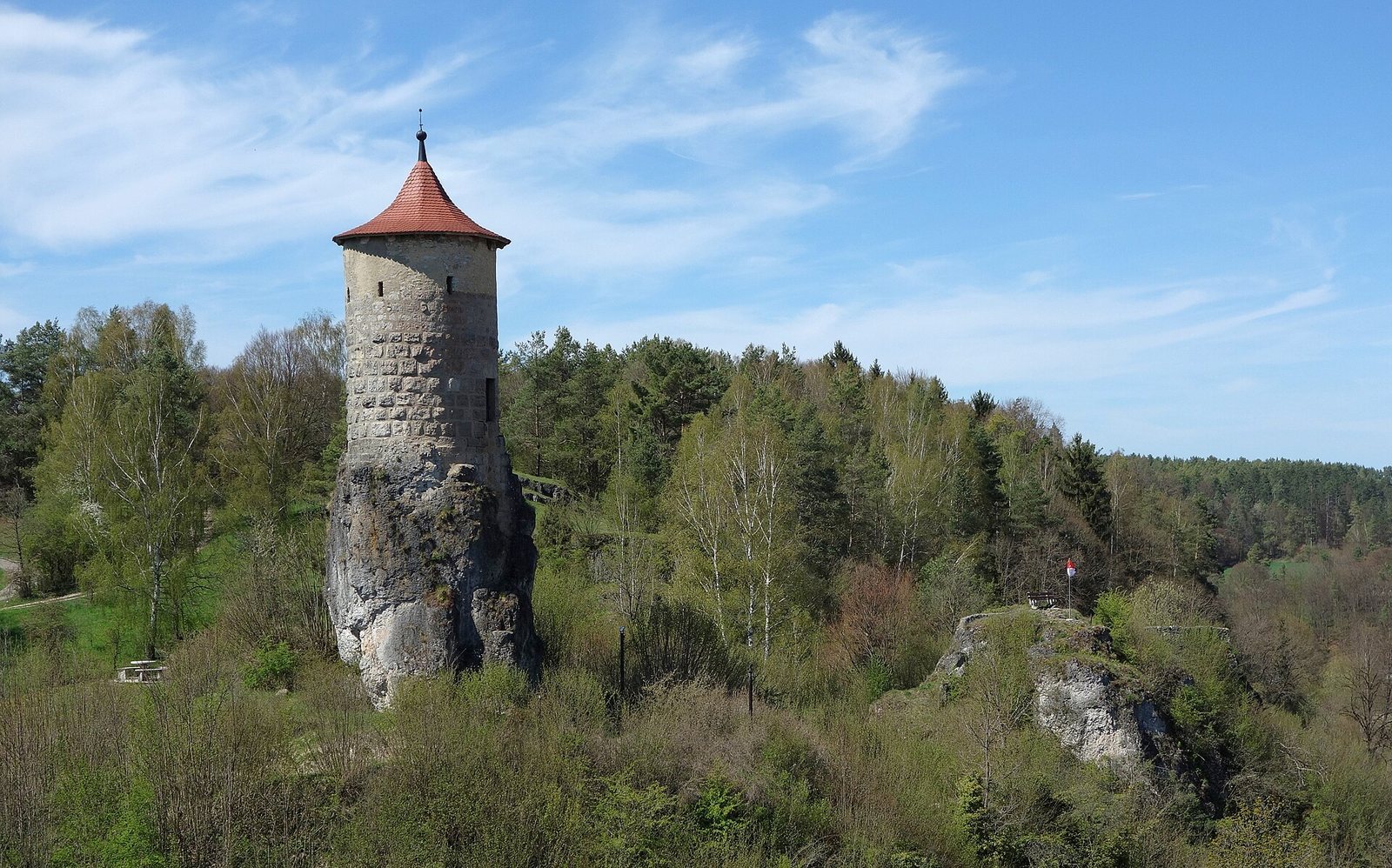
The Steinerner Beutel is a Romanesque round tower, in a medieval style associated with rounded arches and substantial masonry. It stands about 13 metres high on a limestone crag. The tower originally served as a principal defensive tower, a castle tower used for defence and refuge rather than as a residence, or as a similar kind of watchtower. Its entrance was elevated, and the tower is a symbol of Waischenfeld.