The Barony of Kersland: A Scottish Territorial Estate
Site at a Glance
- Popularity
- Medium
- Country
- United Kingdom
- Primary era
- Medieval
- Eras represented
- Medieval, Early Modern
- Civilizations
- Kingdom of Scotland
- Site type
- Military
- Remains
- Castle
On this page14 sections
History
The Barony of Kersland was a lord-held territorial estate with local jurisdiction near Dalry in North Ayrshire, United Kingdom. Its principal residence included a tower house, a fortified dwelling, built in the 15th century and used until the 18th. The Ker family, later known as Kerr, held the barony for more than 500 years.
Medieval family and estate
William de Ker held land in the Dalry area in 1205. His son William inherited in 1292 and was among the Scottish barons who submitted to Edward I, king of England. Later successions included Finlaio de Kerr in 1362 and Willielmi Ker in 1421.
In the 15th century, Kersland was among the baronies in the parish, alongside Kelburne, Blair, Lynn and Pitcon. Its lands included Kersehead, Coalheugh-glen, Tod-hills, Brown-hills, Davids-hills and Auchengree, with about 700 acres of arable ground.
A local tradition says that two sons of Kersland were implicated in the killing of a Laird of Blair. They supposedly fled first to England and later settled on the Scottish Border. The tradition identifies one as Ralph Ker, founder of the Kers of Ferniehirst, and the other as the founder of the Kers of Cessford.
Sixteenth-century succession
Robert Ker of Kersland was killed at the Battle of Flodden in 1513, a clash between Scotland and England. His son John inherited Kersland, while his other son Robert took Auchengree, whose descendants became known as the Kers of Auchengree.
A later Robert Ker of Kersland had three daughters and no sons. His daughter Janet married Captain Thomas Crawford of Jordanhill, who captured Dumbarton Castle from supporters of Mary, Queen of Scots, during the minority of her son James VI. Janet and Thomas’s son Daniel Crawfurd took the Ker name and arms and inherited Kersland. His son Hugh Crawfurd Ker succeeded him in 1613, and the estate passed through later generations of the family.
Covenanter conflict and family change
Robert Ker, a leading Covenanter, supported the National Covenant, a Scottish religious and political movement opposing royal religious policies. In 1666, he joined the Laird of Caldwell and others who planned to join Colonel Wallace and people who had renewed the Covenant at Lanark. The deployment of government troops under General Dalziel forced them to abandon the plan. After being betrayed, Ker fled with his family to Holland. He later returned to Scotland, was imprisoned in several places, and went back to Utrecht in 1678. He died in Holland in 1680.
The family’s estates were forfeited in the 1680s and granted to Lieutenant-General William Drummond of Cromlix, but the forfeiture was later rescinded and the lands restored. Robert Ker is associated with the forfeiture, although Daniel Ker is also identified as the estate-holder at that time.
A later Daniel Crawfurd, who also adopted the Ker name and arms, served as a major in the Earl of Angus’s Cameronian regiment, a military unit associated with the Covenanter tradition. He was killed at the Battle of Steinkirk in 1692, during the Nine Years’ War between France and the Grand Alliance. Unmarried, he left Kersland to his sister Jean. In 1697, she and her husband, Major William Borthwick, sold it to her sister Anna and Anna’s husband, John Crawfurd of Fergushill. John took the name and title John Ker of Kersland and died in a London debtor’s prison in 1726.
Later ownership and working landscape
John’s daughters Anna and Jean sold the barony and property to William Scot of Bavelaw in 1736 to meet their father’s debts. Their sister Elizabeth was the last to use the title Lady Kersland. Scot’s son Lawrence divided Kersland Mains, the estate’s principal farm, into Easter and Wester farms. Lawrence’s son Charles’s debts led to the sale of the barony in 1801, after which John Smith of Swineridgemuir acquired the mid-superiority, an intermediate tier of feudal rights over land.
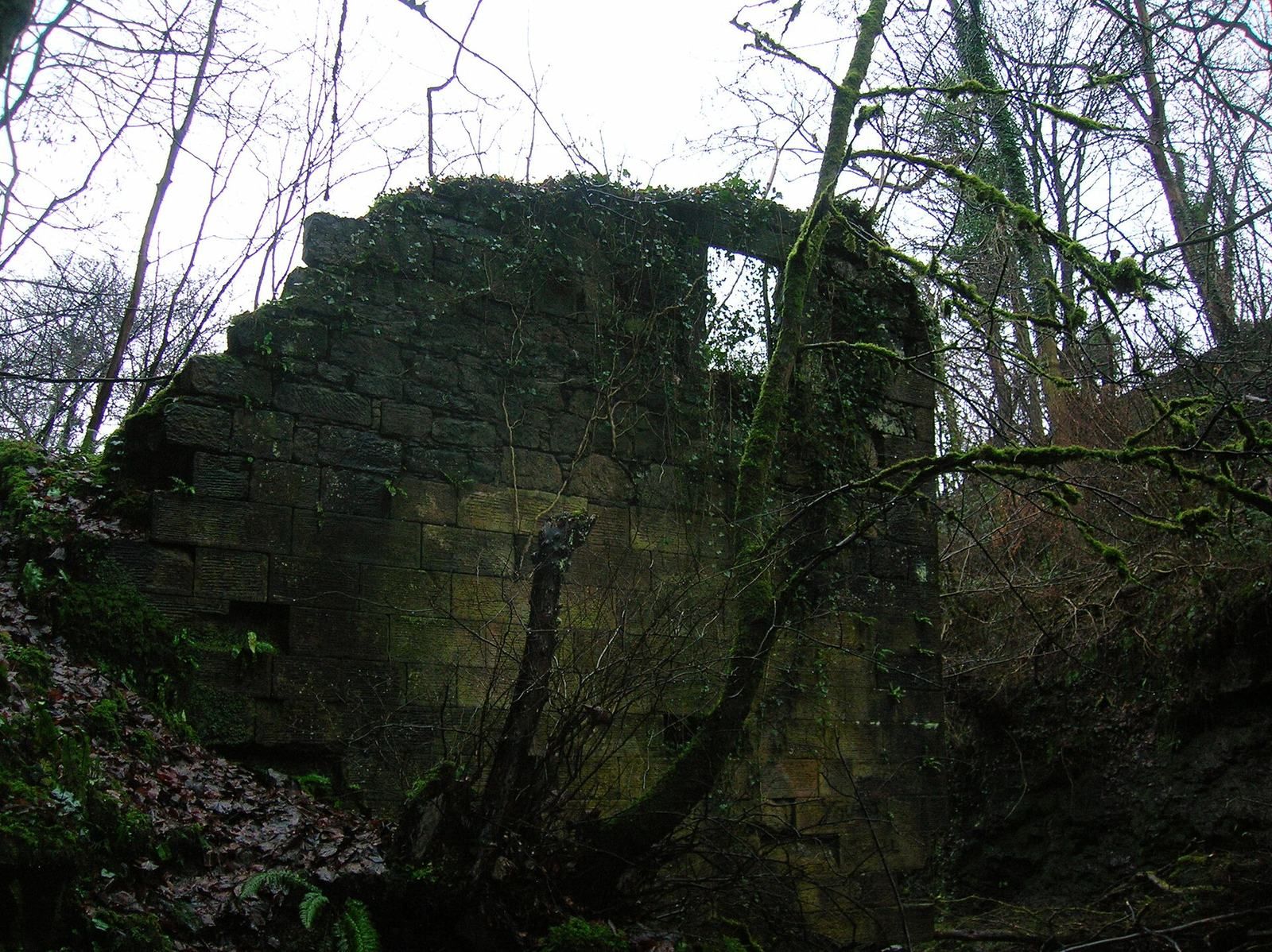
Kersland Mill served the customary obligation of thirlage, which required tenants to grind grain at a particular mill and pay a share of it. The mill appears on Timothy Pont’s map of about 1604. Thirlage ended in the late 18th century, and competition in the market led to the abandonment of some mills. Captain John Russell of Maulside acquired Kersland Mill and its lands in 1852.
The district also had ironstone pits, sandstone quarries, brickworks and coal mines. Kersland Pit had a rail connection, Kersland Colliery stood above Highfield, and a miners’ row was built near the pit at West Kersland. The Church of Scotland school at Barkip, also called The Den and named for the old barony, had an average attendance of 137 pupils in 1891.
Remains
The former barony occupied sloping ground leading toward the nearby River Garnock. Its surviving features include the manor complex at Easter Kersland Farm and water-powered sites associated with the Powgree Burn and East Kersland.
Estate setting
Trees surrounded the manor property, which also had a large orchard. Kersland Mains stood on the entrance lane from Dalry; after the manor house was demolished, it became Wester Kersland Farm.
Manor complex
Tower house and enclosure
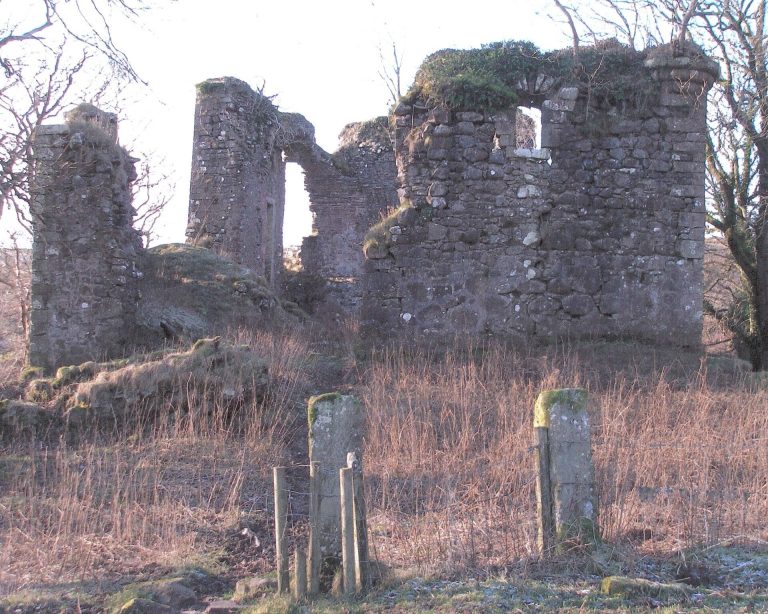
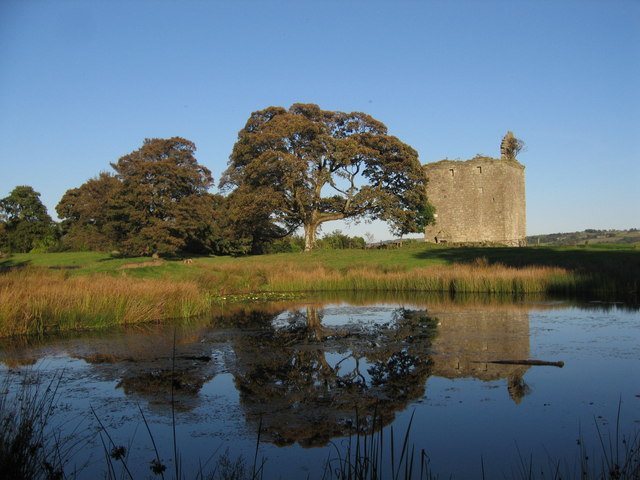
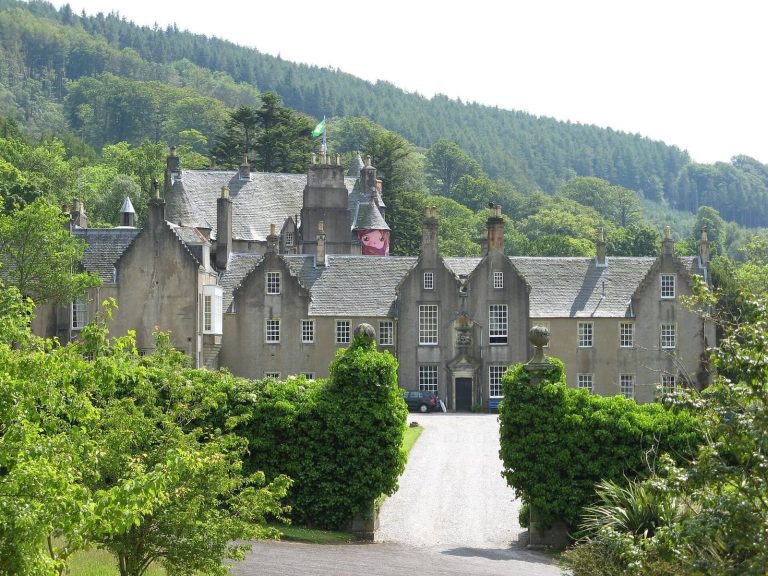
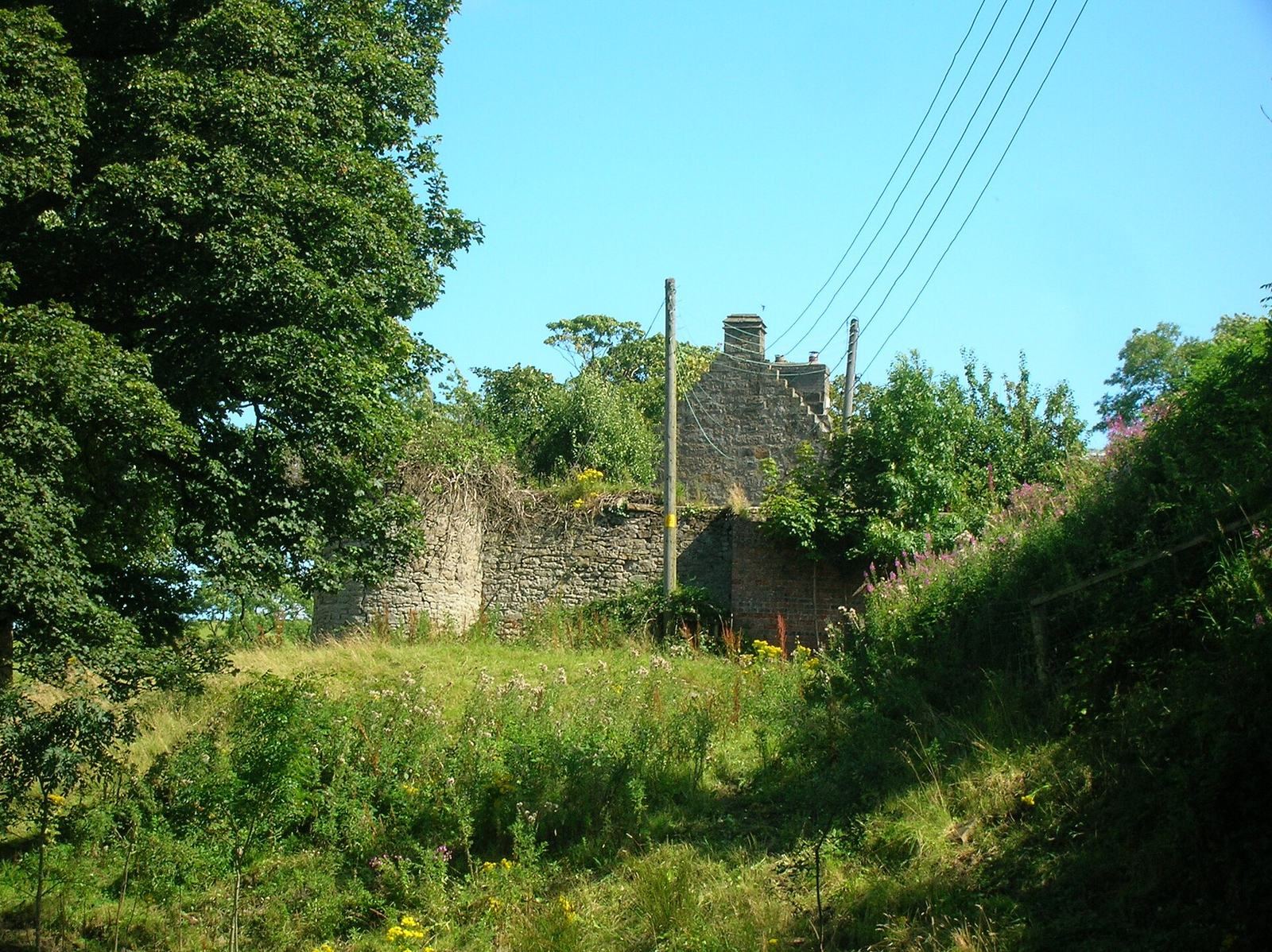
The L-shaped tower-house remains are incorporated into the farmhouse at Easter Kersland Farm. The surrounding barmkin, an enclosure wall around a residence and its associated buildings, also survives, including a substantial defensive corner tower. Robert Ker, who held the land under a feudal grant, was responsible for the manor house’s near-total demolition.
Vaulted chambers
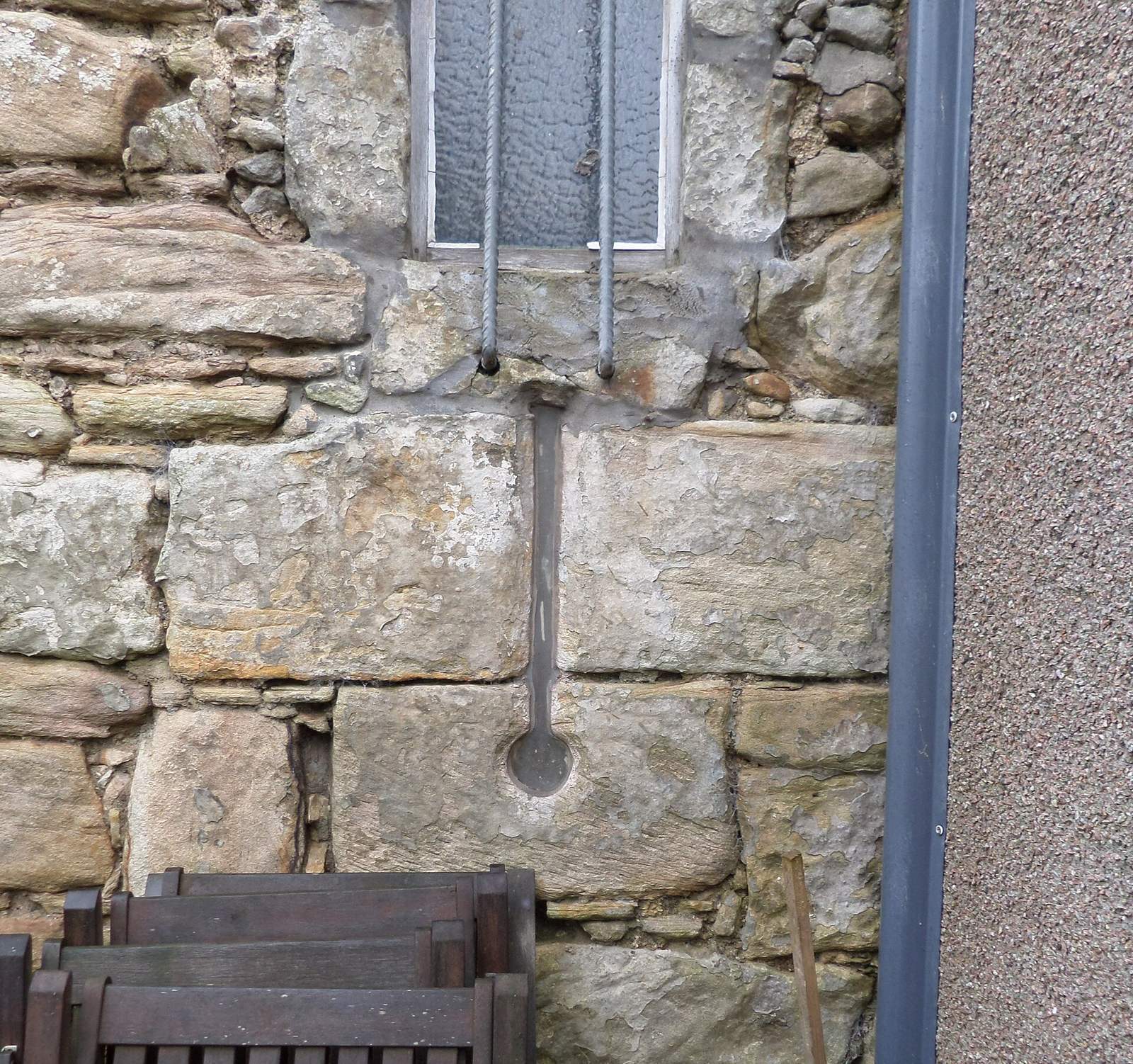
Two surviving chambers have barrel-vaulted ceilings, meaning continuous, tunnel-shaped ceilings, and walls about eight feet thick. They were later used as a dairy and stable and, until recently, formed part of the offices at East Kersland.
Carved stone
A carved stone from the manor is set above the entrance to a dwelling house. It bears the Ker arms and the inscription “Daniel Ker Kersland – 1604,” whose date has been retouched with paint. The arms show a chevron with three mullets, or heraldic star shapes; the family’s motto was “Praise God.” The arms were also displayed at Dalry church.
Water-powered sites
Kersland Mill
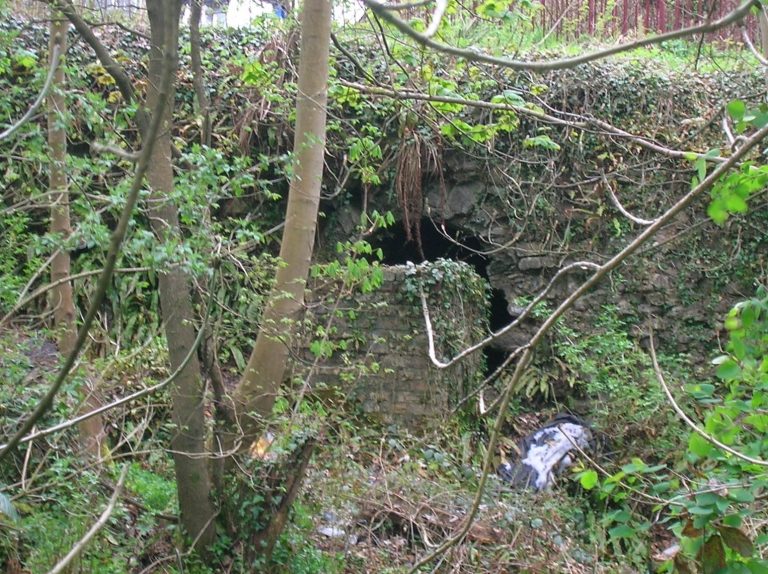
Kersland Mill stands on the Powgree Burn, just downstream of Tianna Falls in Kersland Glen.
East Kersland sawmill
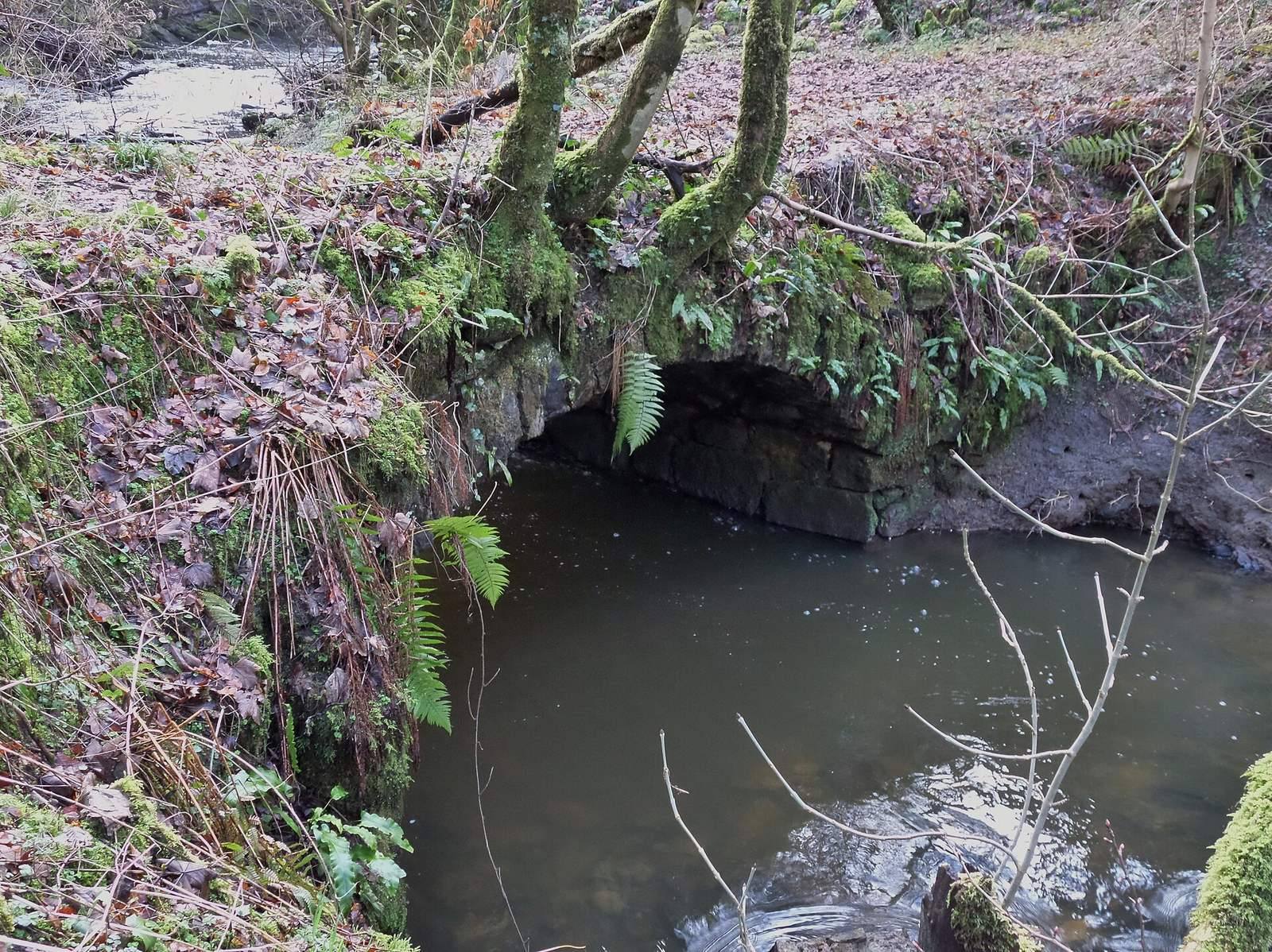
The sawmill had a mill pond, settling ponds and sluices. Its initial water supply came from the old Kersloch near Kerselochmuir through an underground culvert; later, it relied on the moorland alone. Several dams served three mill ponds, which have since been filled in.