Alunda Church: A Medieval Parish Church in Sweden
Site at a Glance
- Popularity
- Low
- Country
- Sweden
- Primary era
- Early Modern
- Eras represented
- Medieval, Early Modern, Modern
- Civilizations
- Swedish
- Site type
- Religious
- Remains
- Church
On this page10 sections
History
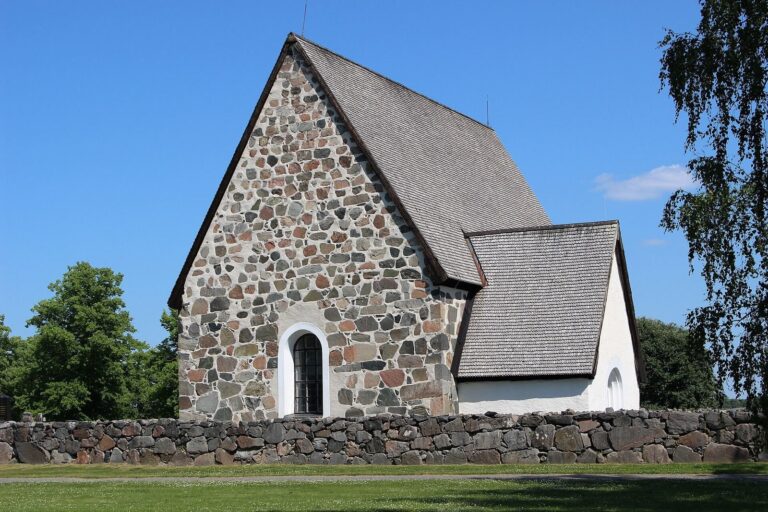
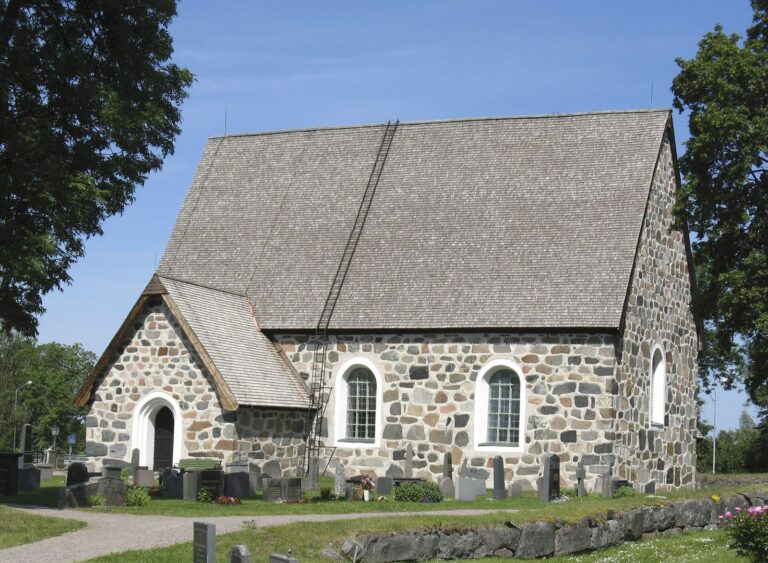
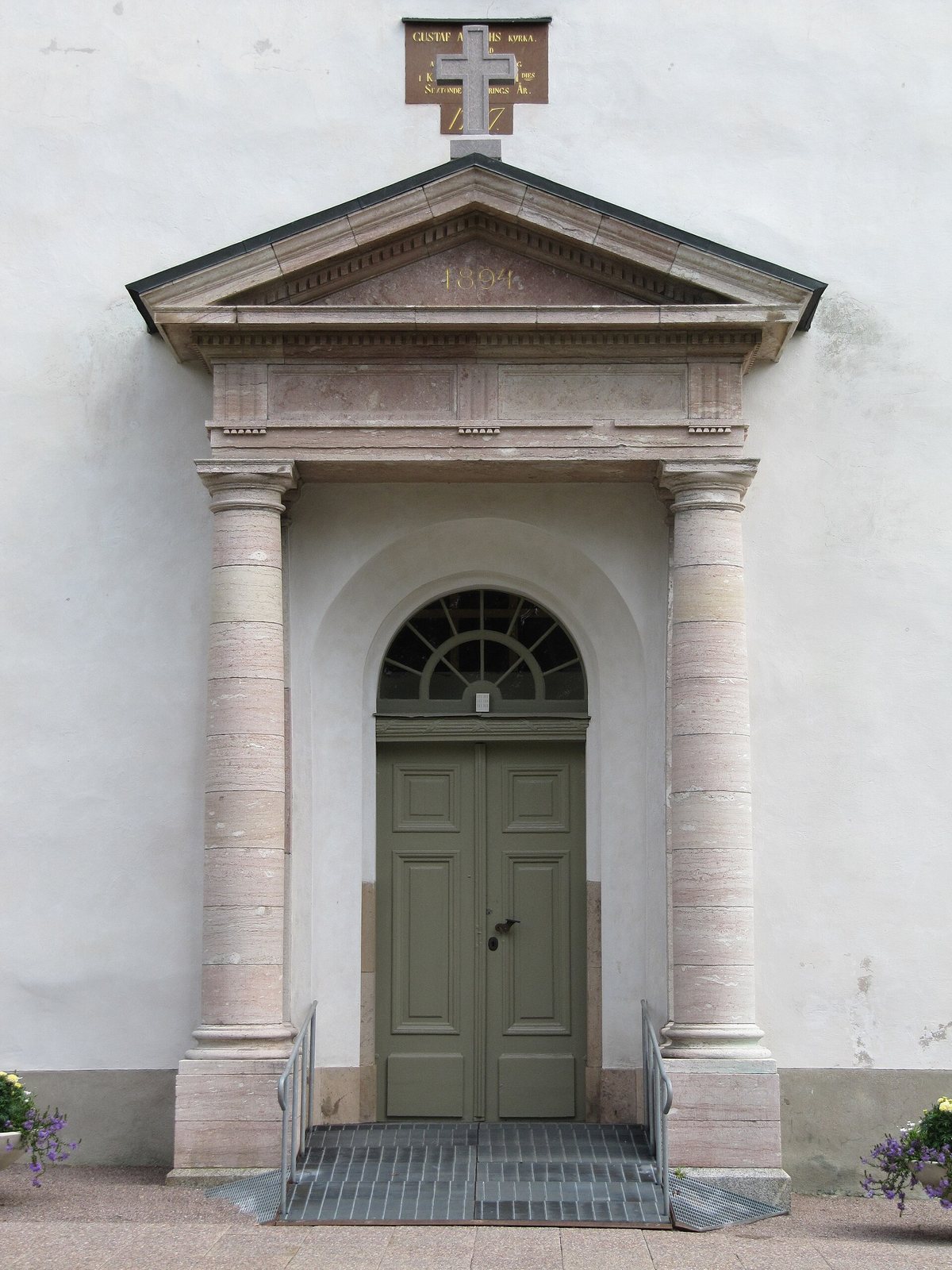
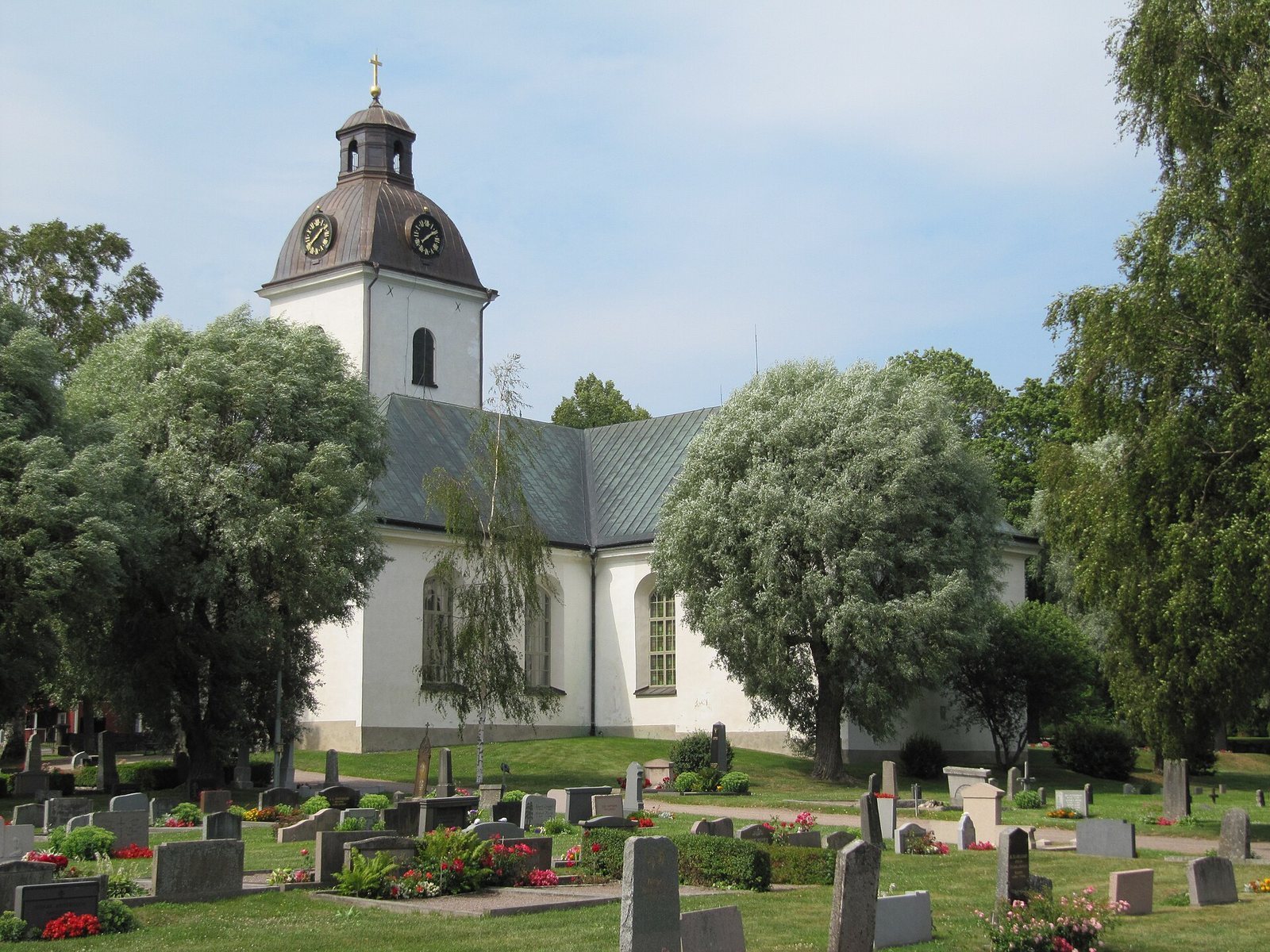
Alunda Church, on the southern edge of Alunda in Östhammar Municipality, Sweden, is a neoclassical church consecrated in the thirteenth century, when its oldest stonework was built. It serves as the parish church of Alunda parish in the Church of Sweden, a Lutheran church, within the Archdiocese of Uppsala.
Medieval construction and expansion
The church underwent a major expansion in the mid-fifteenth century. In 1465, wall paintings were added, including work by Johannes Iwan of Vendel, a medieval painter.
Fires and rebuilding
Fires in 1542 and 1715 caused extensive damage. After a long period in poor condition, the church was repaired and remodeled between 1780 and 1787. This work covered the medieval paintings with whitewash. Another fire struck in 1859. Renovations followed in 1898–1899, and a restoration in 1937 uncovered the paintings.
Remains
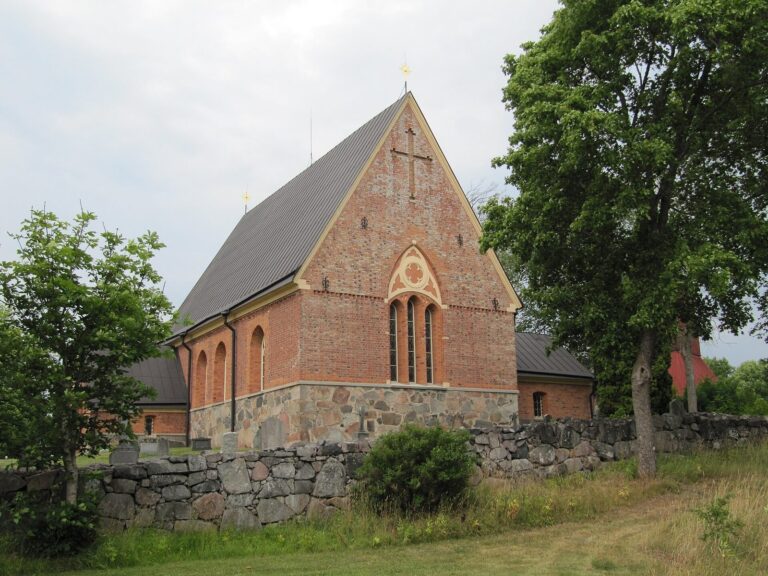
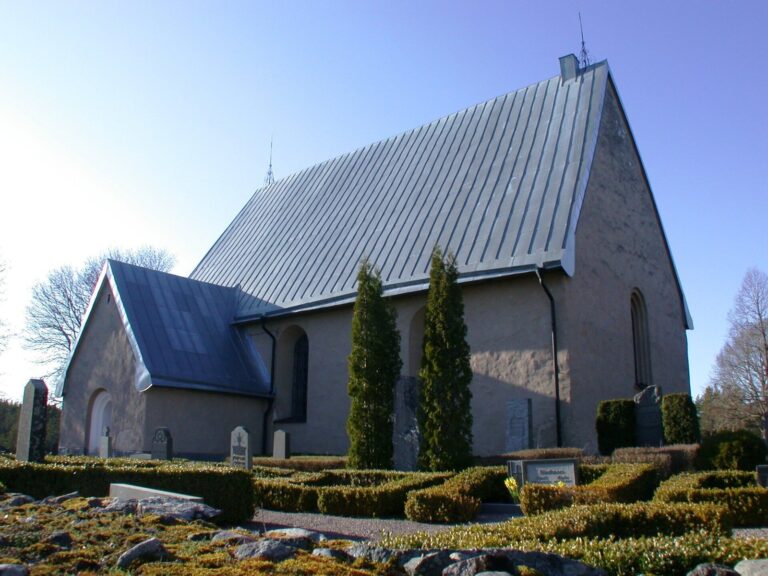
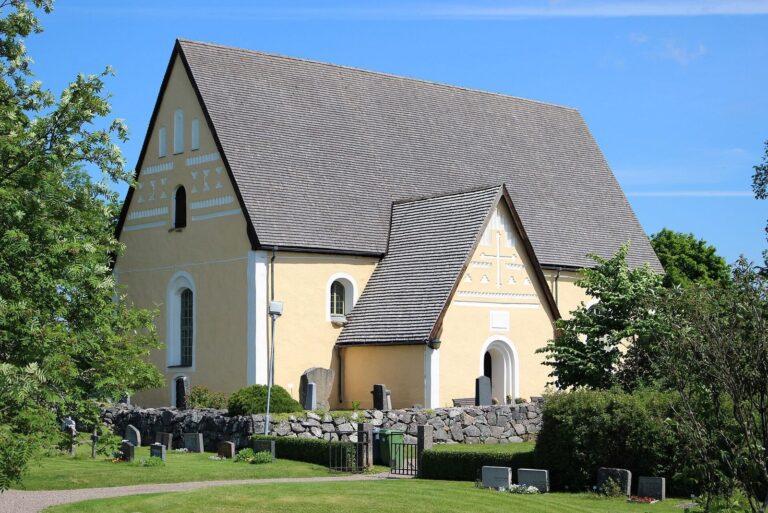
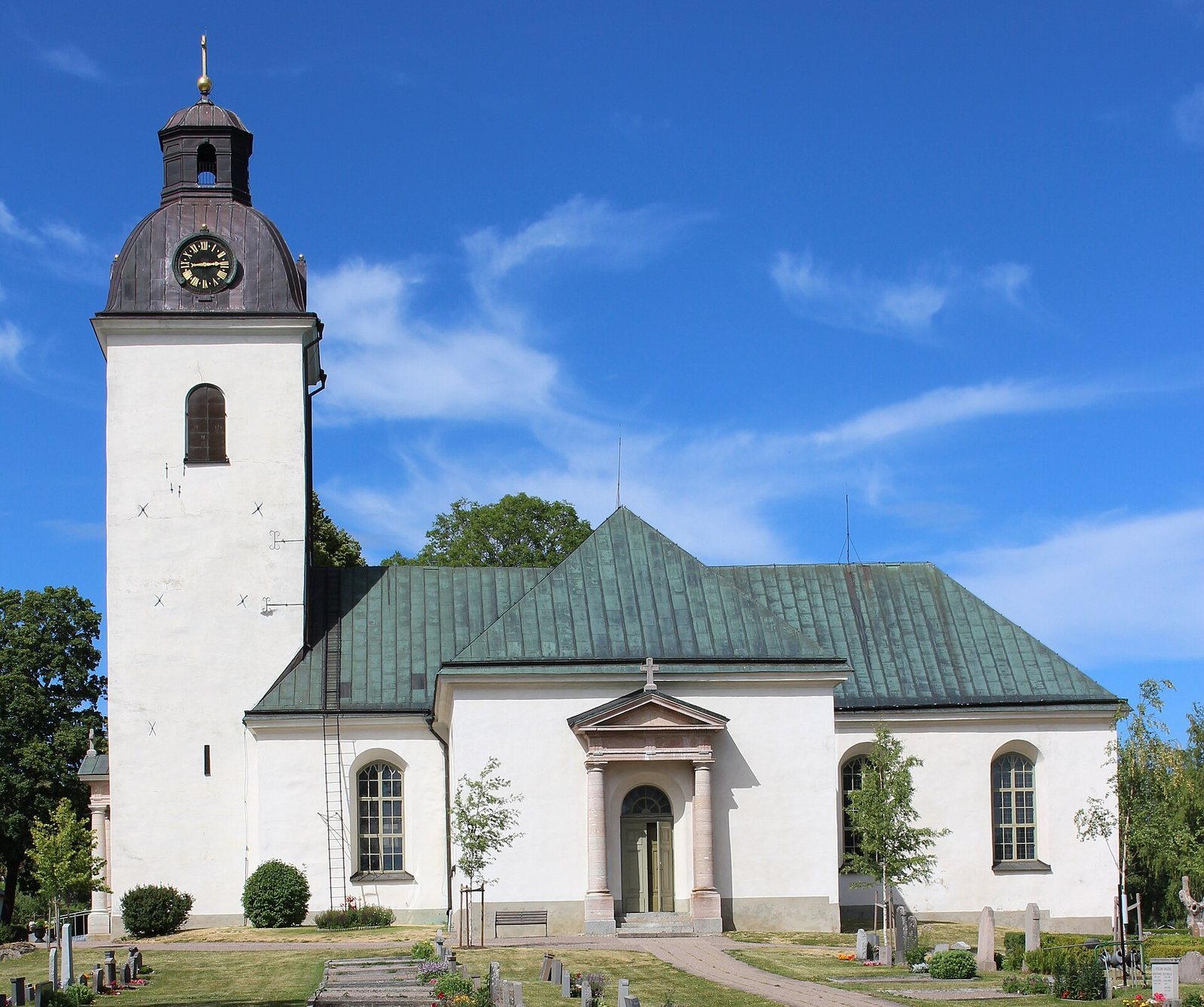
White plaster covers the church, whose tower stands at the west end and choir at the east, with the nave along the main axis. The nave extends eastward to a choir built to its width, while two transepts make the building as wide as it is long. The tower was heightened and given a lantern, and large round-arched windows mark the exterior. Brick vaulting spans the interior, including a barrel vault over the nave. The sacristy has two rooms to the west.
Medieval wall paintings
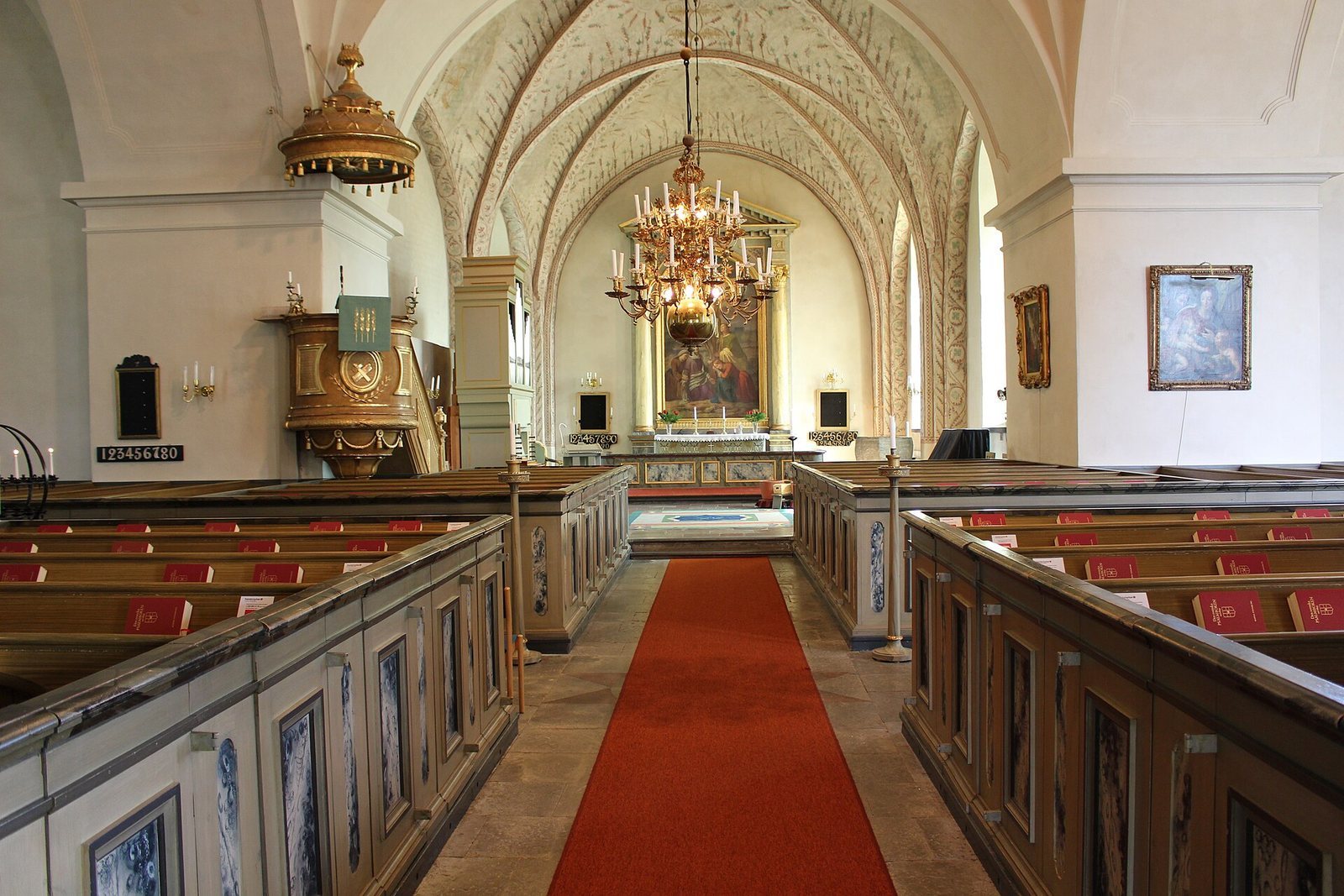
Medieval wall paintings survive in the choir vaults.
Altarpiece and furnishings
The choir’s altarpiece, painted in 1862 by Johan Zacharias Blackstadius, has a carved frame by sculptor Fredrik Smedberg. The church also has a fifteenth-century baptismal font and a pulpit carved in 1796 by Johan Westberg in the Gustavian style, a Swedish decorative style associated with the late eighteenth century. A carved altar rail was added during the 1937 restoration.
Organs
Gallery organ
In 1635, Johannes Haquini Rhezelius, a student of antiquities, noted a small organ above the sacristy. Stockholm joiner and organ builder Jonas Ekengren made a 17-stop organ in 1786, with stops controlling sets of pipes. It was enlarged in 1841 and 1843, then sold to Bethlehem Church in Gävle around 1880. The well-preserved gallery organ was built in 1880 by P. L. Åkerman & Lund of Stockholm. It has 25 stops, two manuals (hand keyboards), and a pedal (foot keyboard). Mechanical action uses physical linkages between keys, stops, and pipes; a Barker machine assists the first manual. The façade pipes are non-speaking, meaning they do not produce sound.
Choir organ
Robert Gustavsson Orgelbyggeri of Härnösand built the choir organ in 1978. It has two manuals, an independent pedal, and mechanical slider chests (mechanisms that distribute wind to the pipes). Hand-operated shutters stand in front of its breastwork, the organ division at the front.
Runestones
Three runestones (stones bearing inscriptions in an early Germanic writing system) stand outside the church: U 1126, U 1127, and U 1128. The inscriptions on U 1126 and U 1128 have no linguistic meaning and were carved by a runecarver with no experience.