Ter Doest Abbey: A Medieval Monastery in Belgium
Site at a Glance
- Popularity
- Medium
- Country
- Belgium
- Primary era
- Medieval
- Eras represented
- Medieval, Early Modern
- Civilizations
- County of Flanders, Spanish
- Site type
- Religious
- Remains
- Monastery
On this page12 sections
History
Foundation and Cistercian affiliation
Ter Doest Abbey was established for Benedictine monks in 1106 at Lissewege, now part of Bruges in West Flanders, Belgium. Lambert, lord of Lissewege, gave the monks an estate with a chapel. Benedictines followed the Rule of Saint Benedict.
In the 1170s, monks from Ten Duinen Abbey at Koksijde joined the community, which became Cistercian. The Cistercians were a monastic order that developed from the Benedictine tradition. Everard of Avesnes, bishop of Tournai, attached Ter Doest to Ten Duinen, and Abbot Hacket secured lands and privileges for the abbey. Ter Doest belonged to the Clairvaux line, named for a leading Cistercian abbey in France. It later established its own daughter monastery, Onze Lieve Vrouw Kamer, founded in 1223.
Medieval activity
The abbey helped build dykes and reclaim coastal land in Flanders, Zeeland, and Holland. This work created protected low-lying farmland, while the community also took part in the wool trade with Flemish towns.
Thorfinn, a Danish monk who became bishop of Hamar in Norway, found refuge at Ter Doest after opposing King Eric II of Norway. He died on 8 January 1285 and was buried at the abbey. Thorfinn is venerated as a saint in the Christian tradition.
Willem van Saeftinghe, a lay brother, fought with Flemish forces at the Battle of the Golden Spurs, a major conflict with the French in 1302. He was credited with unhorsing Robert II, Count of Artois, though whether he also killed the count is uncertain. In 1308, during a revolt of the lay brothers, Willem killed the cellarer and injured Abbot Willem van Cordewaegen so severely that the abbot nearly died. After Willem was excommunicated and fled, Pope Clement V lifted the excommunication on condition that Willem fight in the Holy Land. Willem then joined the Knights Hospitaller, a medieval religious and military order, in Jerusalem.
Decline and dissolution
Ter Doest faced difficulties from the fourteenth century onward. In 1561, it was annexed to the episcopal mensa of Bruges, property and income assigned to support the bishop. Calvinists destroyed the abbey church in 1571, and Reformed peasants destroyed the monastery the following year.
Ter Doest was united with its mother abbey, Ten Duinen, in 1624. Ten Duinen moved to Bruges in 1627. The abbey was dissolved in 1796 during the French Revolution.
Remains
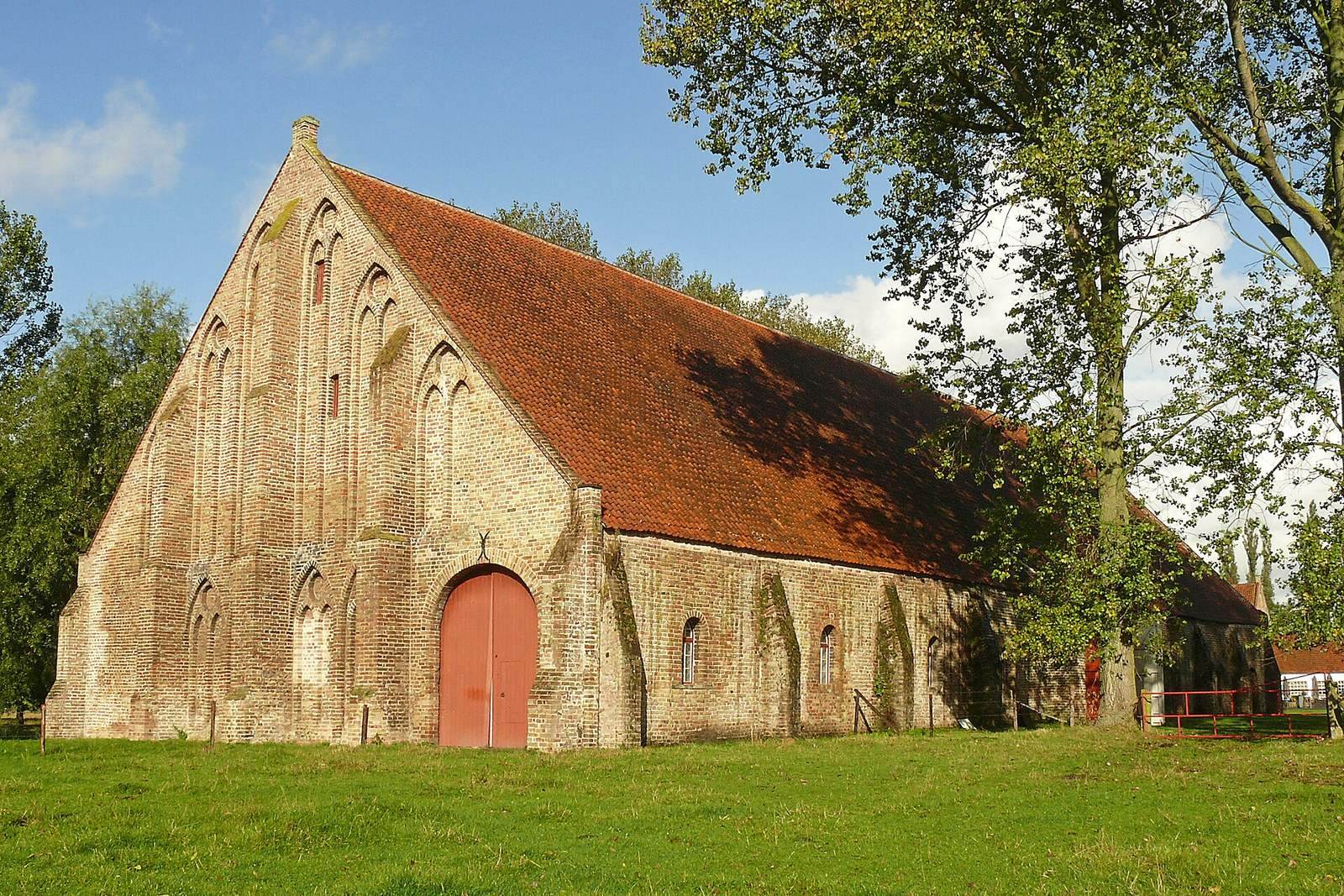
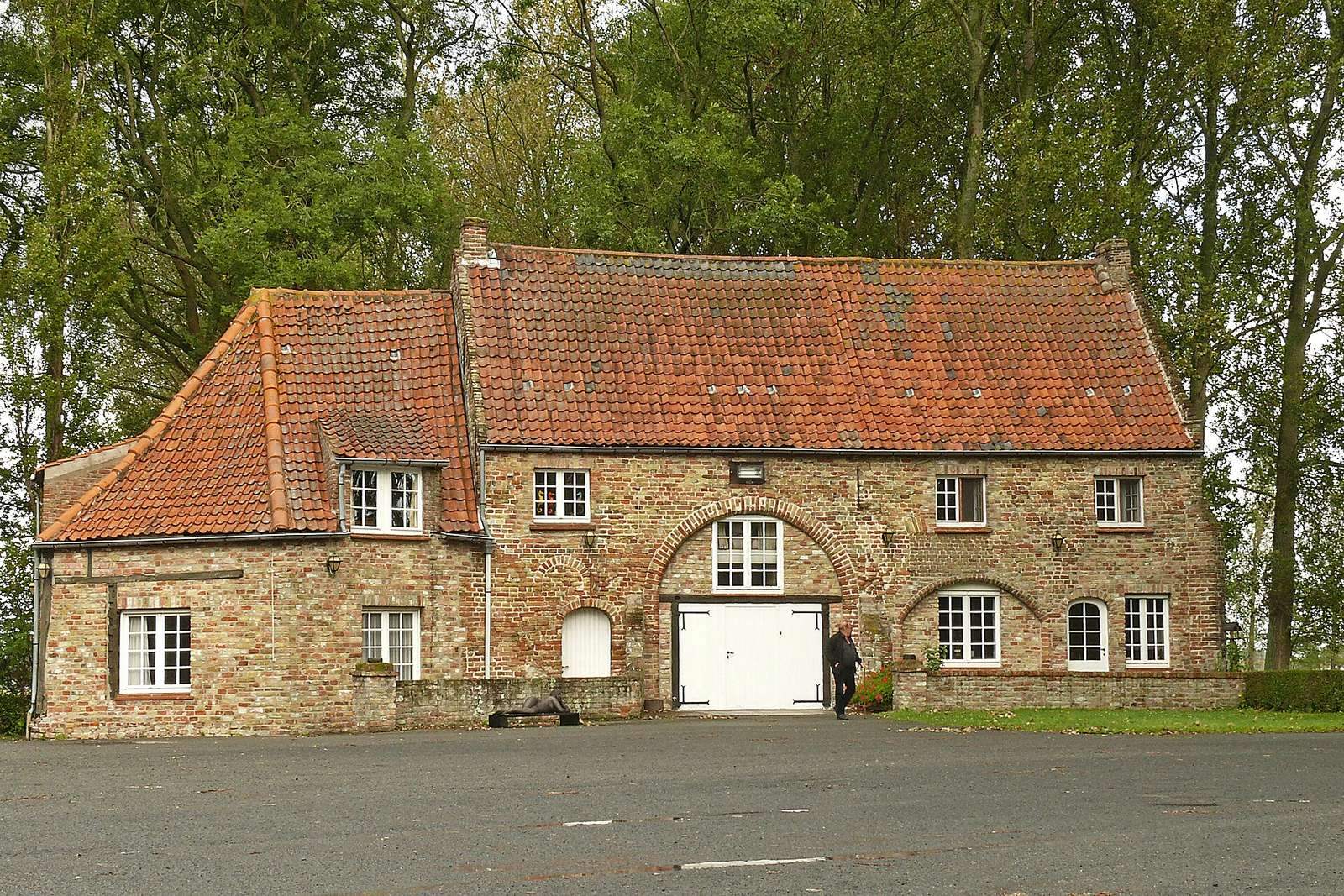
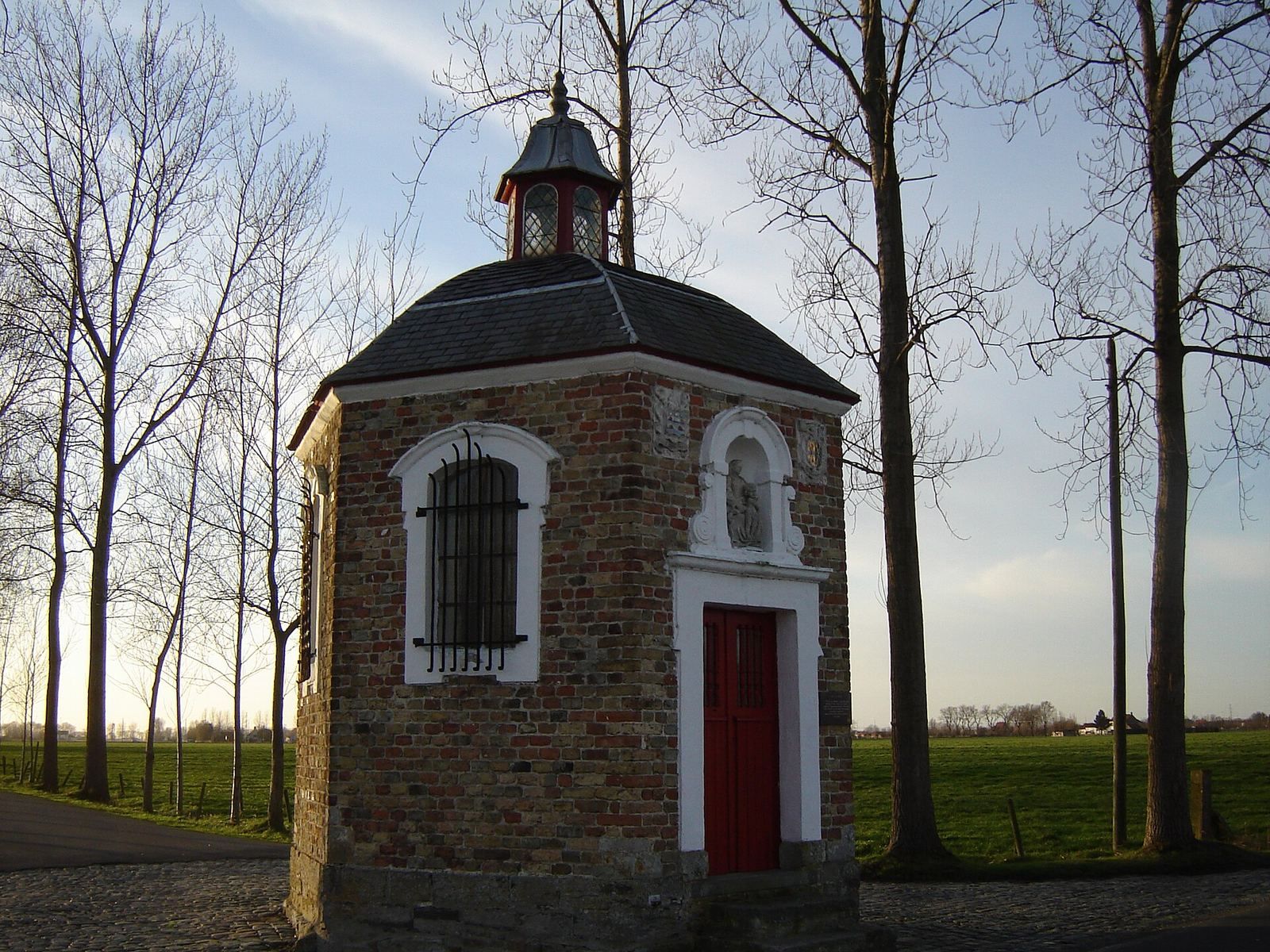
The surviving abbey-related buildings include an oak-framed tithe barn, a building for storing agricultural produce such as tithes, as well as the abbey farm, a chapel, and a monumental porch. The former church stood close to the farm and had three aisles.
Tithe barn
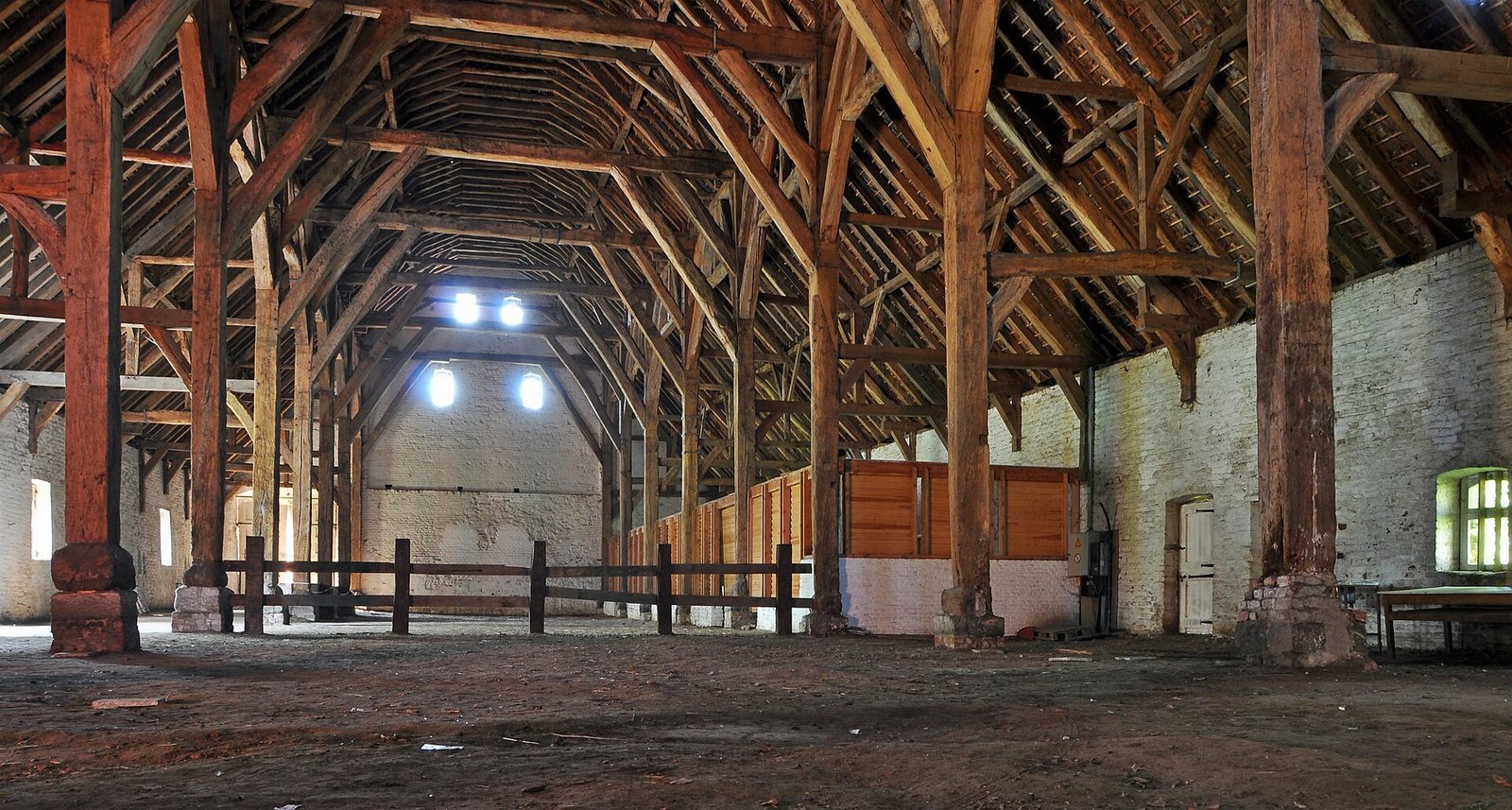
The barn measures 50.50 metres long and 23.75 metres wide. Its ridge reaches 30.75 metres, and its walls rise 9.25 metres beneath the roof. Two rows of ten oak pillars support the frame. Tree-ring dating places the felling of the frame’s oak between 1370 and 1385; the masonry is estimated to be about a century older. The barn appears to have suffered an earlier fire. It could hold the grain harvest from 40 hectares. Its thatched roof had been replaced with 38,000 Boom tiles by 1711.
Church and farm
Former abbey church
The abbey church had three aisles and stood close to the abbey farm.
Abbey farm
The farm, known as ’t Groot Ter Doest, was built in 1632 and still stands.
Other abbey buildings
Octagonal chapel
An octagonal chapel dating to 1687 survives among the abbey-related buildings.
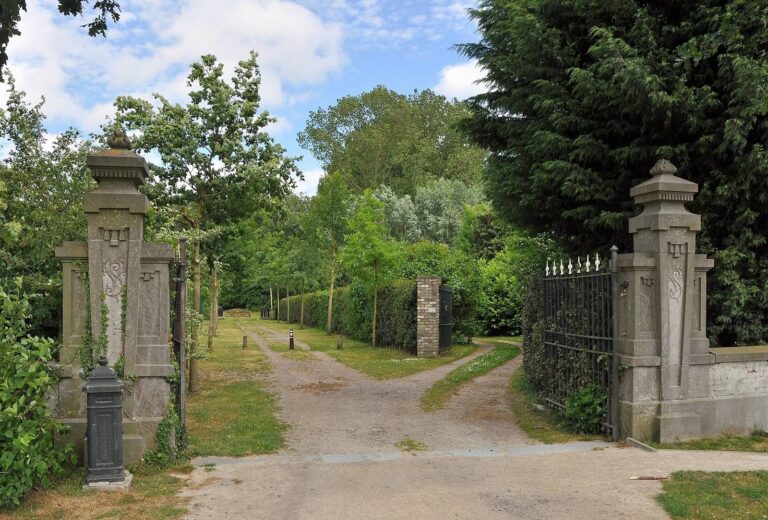
Monumental porch
The surviving monumental porch dates to 1662.