Cucuruzzu: A Prehistoric Fortified Settlement in Corsica
Site at a Glance
- Popularity
- Medium
- Country
- France
- Primary era
- Bronze Age
- Eras represented
- Bronze Age
- Civilizations
- Unclassified
- Site type
- Military
- Remains
- Fortified Town
On this page11 sections
History
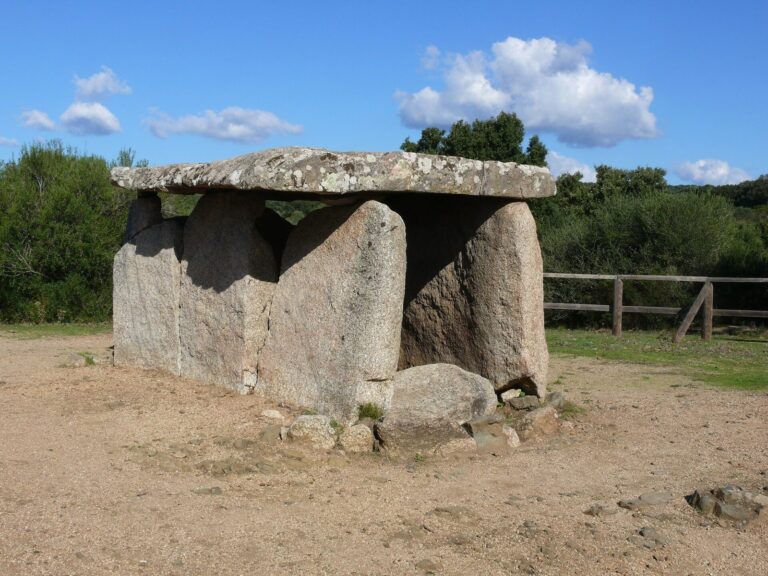
Cucuruzzu is a prehistoric fortified settlement in Levie, Corsica, France, attributed to the Torrean culture, a prehistoric Corsican culture associated with stone-built settlements and tower-like monuments. Its fortification dates to the Bronze Age, and the settlement was occupied from the Middle Bronze Age to the end of the 3rd century BCE.
Prehistoric occupation
Stone tools indicate activity at Cucuruzzu during the Neolithic, before the Bronze Age fortification was built. During the settlement’s later occupation, people farmed and raised cattle, sheep, pigs, and goats. They also hunted deer and wild boar.
Settlement ended by the close of the 3rd century BCE. The site was not permanently settled again, a history that helped preserve its prehistoric remains.
Discovery and conservation
Aerial photography brought Cucuruzzu to attention in 1959. Archaeologist Roger Grosjean began excavations in 1963 and continued into 1964; François de Lanfranchi carried out further work through the 1990s. The excavated collection was small, partly because the site had been looted.
The French state acquired the site in 1975 and classified it as a historic monument in 1982. It is now owned by the Collectivity of Corsica. Restoration work in 1991 and 2016–17 supported conservation and public access; the earlier project also cleared vegetation that had spread over the remains.
Remains
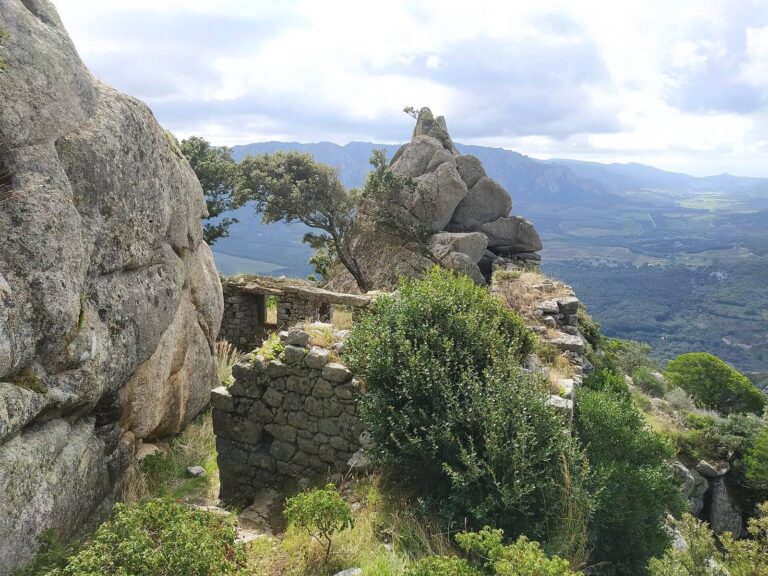
The complex stands about 700 metres above sea level on a granite outcrop surrounded by large natural boulders. It has two main parts: a western fortified enclosure and a separate tower-like monument to the east, about 10 metres higher and divided from the settlement by massive rocks. The wider complex covers roughly 1,200 square metres.
Western fortified enclosure
Wall and western entrance
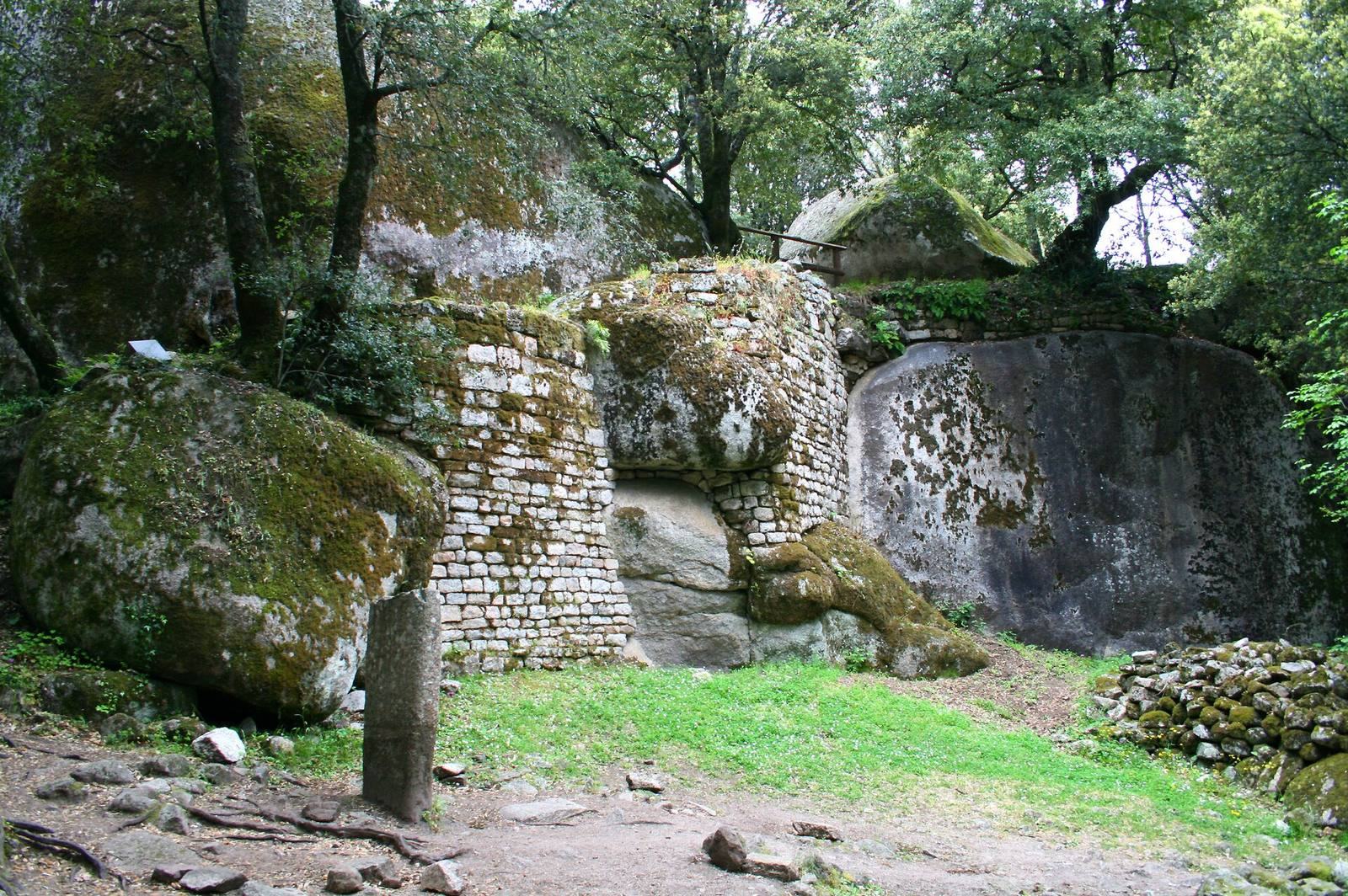
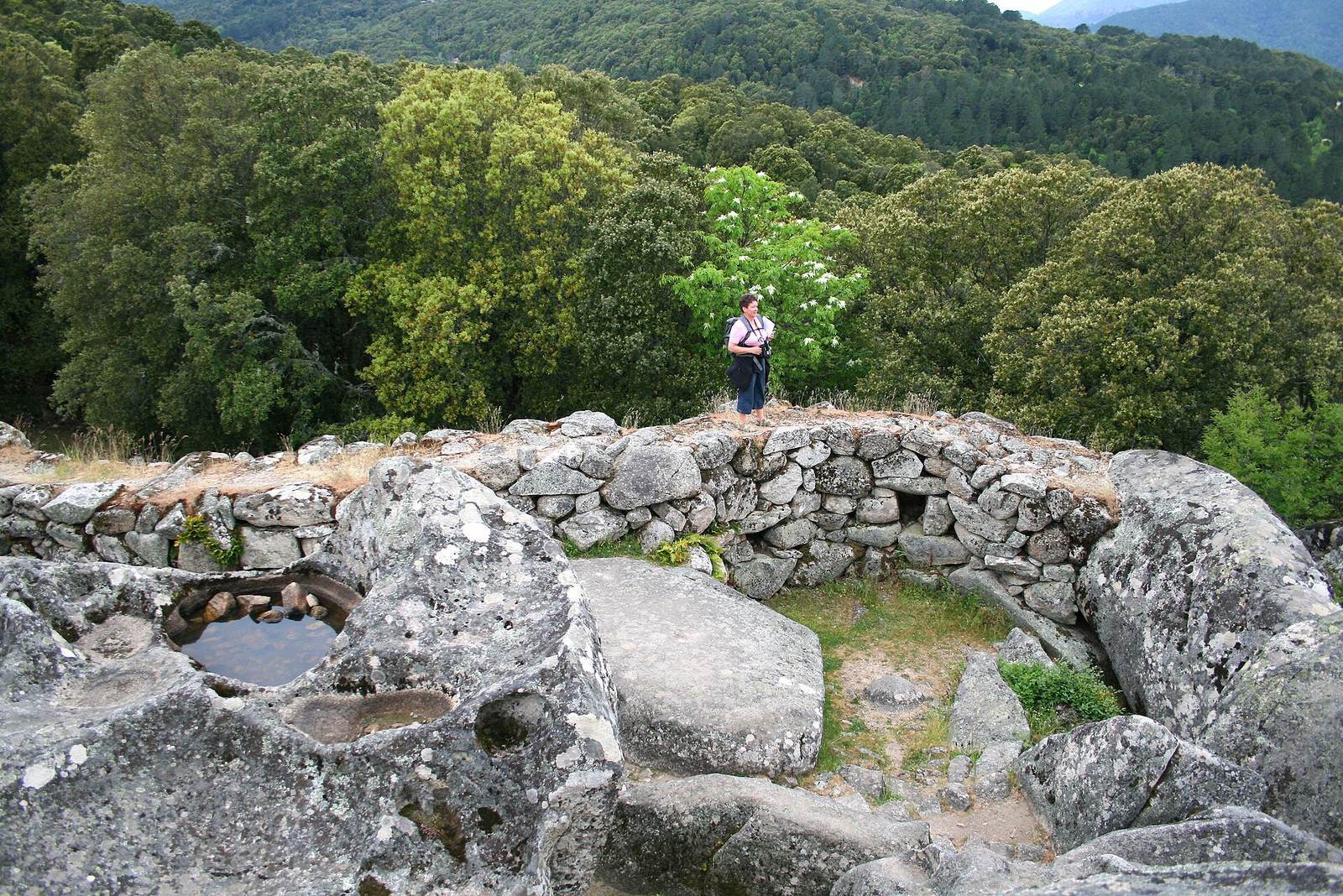
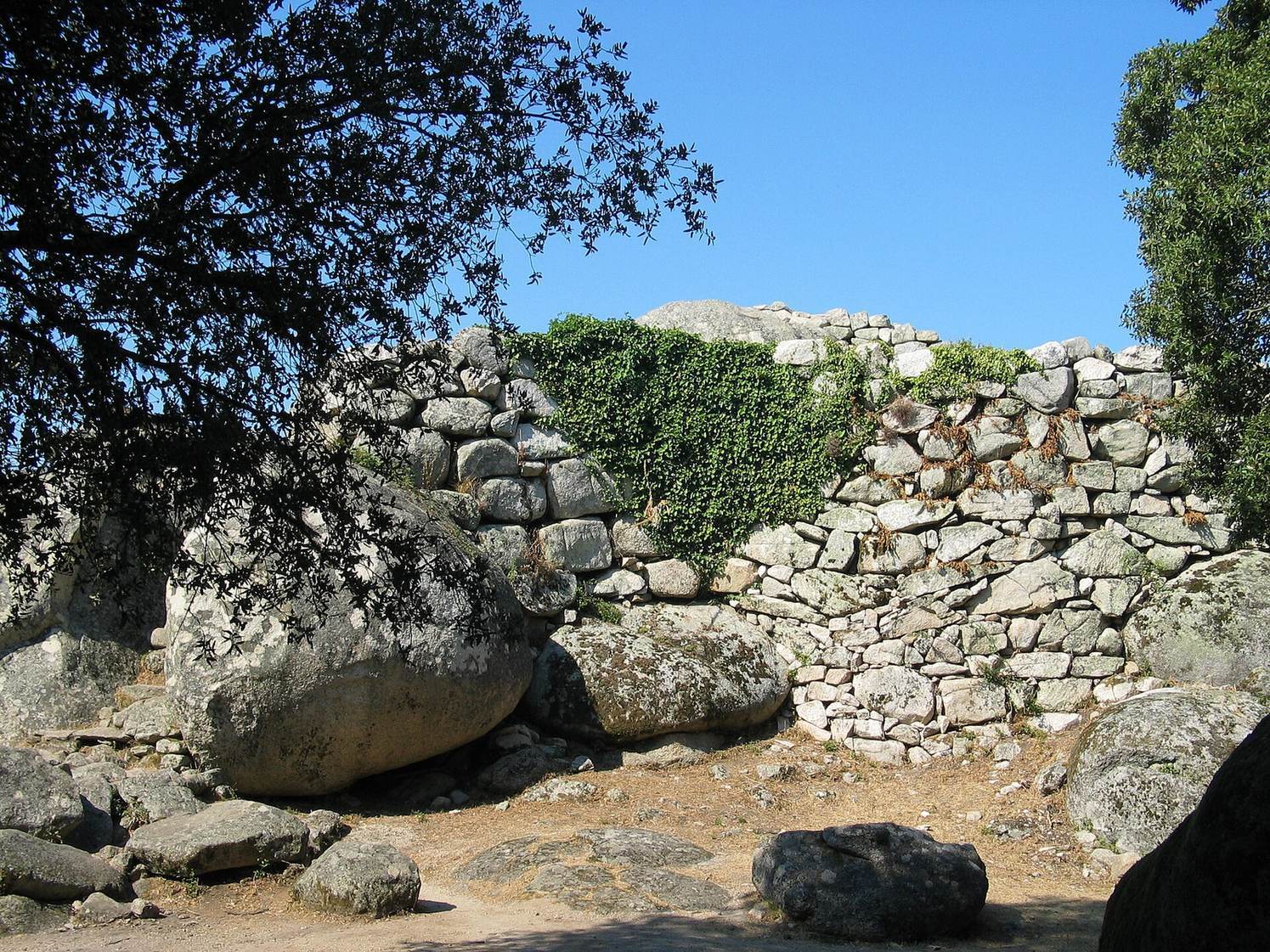
The roughly rectangular enclosure measures about 40 by 20 metres. Its wall is made from large stone blocks, some weighing up to a tonne, and survives to an average height of about 5 metres. The wall is between 2 and 5 metres thick. The only entrance is on the west, where steps built into a large split granite block lead to a passage that bends before reaching the interior. Five openings are noted in the western wall.
Terrace and wall walk
A raised semicircular terrace occupies the enclosure’s northwest side. Traces of hearths were found on its paved surface. A walkway follows the enclosure wall. Grosjean interpreted stones projecting from the wall as supports for a wooden floor about 2 metres above ground, possibly a patrol walk. A square chamber beneath related upper structures may have served as a guardroom.
Covered spaces and work areas
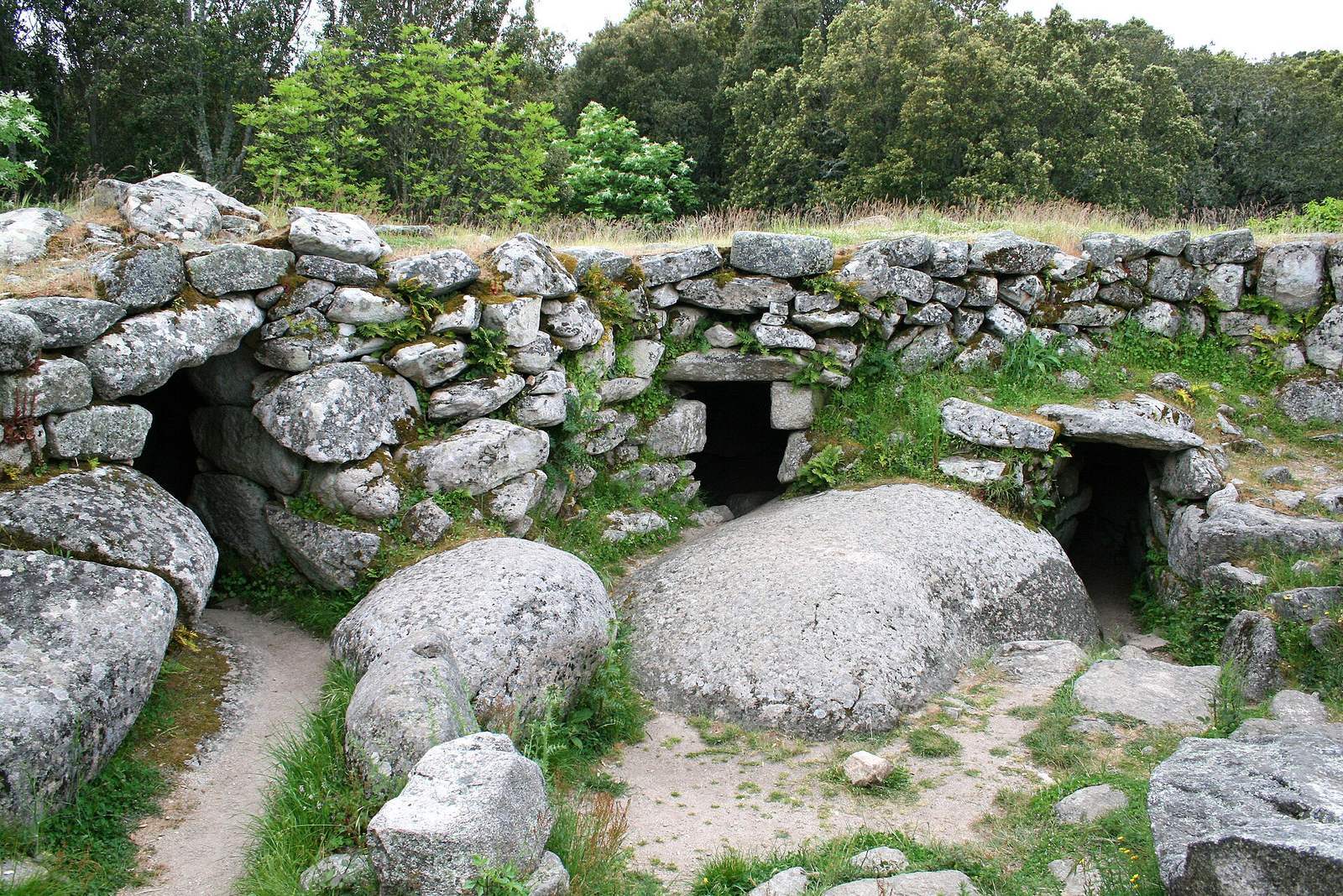
Three small roofed spaces are built into the enclosure wall. Their carefully finished stonework and slab roofs distinguish them from the surrounding masonry. Grosjean considered them too cramped for living and proposed that they were used to store food and water. A nearby rock has a cup-shaped hollow. Elsewhere in the enclosure, a large stone with a round central depression is interpreted as a surface for grinding grain. Clay lumps suggest possible pottery-making areas, while millstones point to grain processing.
Artificial rock shelter
At the rear of the western front, slabs enclose a huge boulder to form an artificial rock shelter. Many broken pottery vessels and animal bones were found beneath it.
Eastern tower-like monument
An entrance on the monument’s east side opens into a corridor with niches on both sides and a pointed-arch roof. The corridor leads to an inner chamber about 3 to 4 metres across. Its original corbel vault, built from successive stone layers that project inward to narrow the space toward the roof, remains intact and stands about 3 metres high. It is the only intact Torrean vault on Corsica. The monument has been interpreted as a cult structure, possibly connected with funerary rites.
Excavated finds
Finds recovered chiefly by Grosjean from the walkway include pottery dishes, bowls and lids, as well as perforated pendants. The collection also contains flint and obsidian arrowheads, pebbles and flakes, fragments of hematite, and pieces of bronze objects. The excavated material is held at the Alta Rocca Museum in Levie.