Fort van Bornem: An Armored Fort in Antwerp’s Defensive Belt
Site at a Glance
- Rating
- 4.7
- Popularity
- Very Low
- Country
- Belgium
- Primary era
- Modern
- External website
- Open
- Eras represented
- Modern
- Civilizations
- Belgian
- Site type
- Military
- Remains
- Fort
On this page9 sections
History
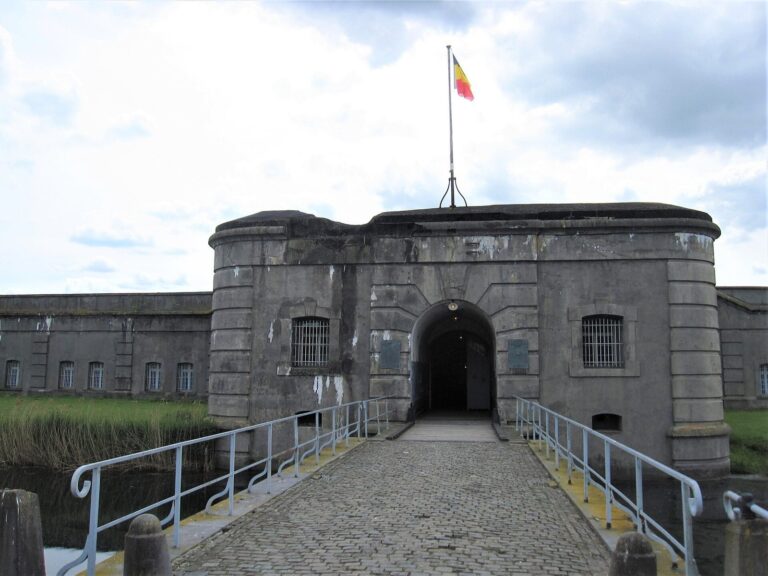
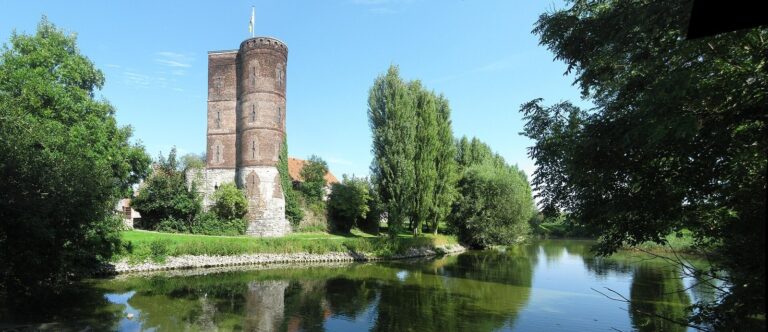
Fort van Bornem is a concrete armored fort in Bornem, Belgium, built as part of Antwerp’s fortification belt. Approved in 1906, it entered construction nearly two years later and was the last fort in the belt to begin work.
Construction and preparations
The program modernized Antwerp’s existing outer forts and added 11 more, including Bornem, Breendonk and Liezele, along with 12 smaller defensive positions near places such as Puurs and Puurs-Kalfort. The belts were successive rings of fortifications around the city. Work on the program fell behind because its scale had been underestimated and military administration was cumbersome. A severe winter in 1911–12 caused further delays.
In summer 1913, the 18th Battery, a unit of guns and their supporting personnel, transferred from Fort 8 at Hoboken. The fort’s gun cupolas, protected rotating mounts for artillery, were still being installed. Adolph Rasquin took command on 23 December 1913 after serving for four years at a fort near Liège.
The First World War
On 12 August 1914, Rasquin was found dead beside the entrance to the cupola in Salient III, a projecting angle of the fort. His revolver and a farewell letter were nearby; he had died by suicide. Albert Jallay succeeded him as commander of the unfinished fort.
About 300 soldiers were stationed at Bornem in 1914 to guard the railway lines from Mechelen to Terneuzen and from Mechelen to Dendermonde, as well as the bridge over the Scheldt. St. Bernard’s Abbey in Bornem also played an important part in the war effort: instructions reached the fort by telephone from the abbey tower.
The fort remained unfinished during the war. Iron and cement were scarce, ammunition supplies were often inadequate, and the electricity system needed to turn the gun cupolas did not work. Poor drainage flooded rooms. Although the fort avoided heavy artillery attacks during the siege, Joseph Busschots drowned in the moat, and the cupola batteries’ turning mechanism was destroyed. After attacks in the Antwerp area, the fort surrendered on 10 October 1914.
Interwar and later use
Between the wars, the fort was adapted as an infantry strongpoint intended for defense by a machine-gun company. It was captured swiftly during the Second World War and then used mainly for logistical purposes.
In the early 1960s, the fort passed from military to private ownership and became a fishing venue, a use that continues. It also forms part of the 3.585 km² Natura 2000 area called “Historical Fortification Belts of Antwerp as Bat Habitat.” Natura 2000 is the European Union’s network of protected areas for habitats and species; the area is protected under the Habitats Directive, the EU law for their conservation. Management is shared by the Agency for Nature and Forests, Natuurpunt, a Belgian nature-conservation organization, and private owners. The site’s European code is BE2100045.
Remains
Layout and defenses
Plan and concrete construction
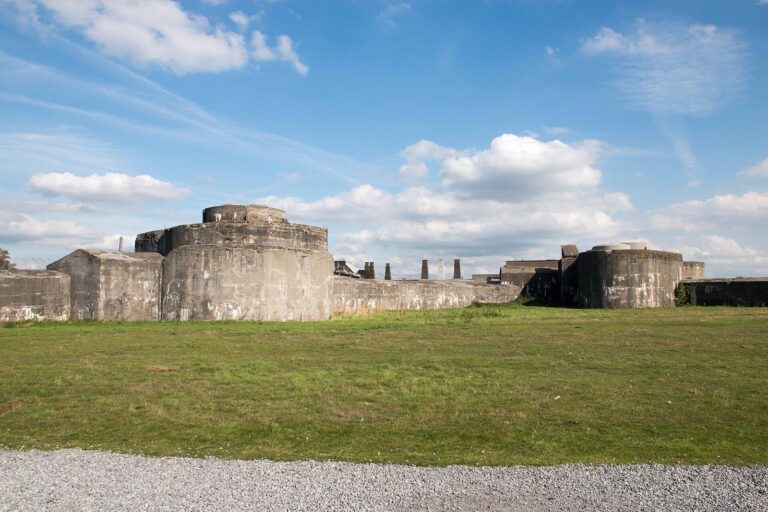
The fort has an irregular quadrilateral outline, with a front shaped like a bastion but not laid out as a conventional bastioned fort. This plan, partly shaped by the fort’s position relative to the Scheldt, is unique among the concrete armored forts of Antwerp’s belt. Its unreinforced concrete was designed to withstand artillery fire from guns with a caliber of 27 cm. At the time, a 27-cm siege gun was the heaviest artillery piece that could be transported by horse.
Planned gun cupolas
The planned armament was distributed among cupolas: one mount for two 15-cm guns, one for a 12-cm howitzer, four for 7.5-cm guns and six for 5.7-cm guns intended for close defense.
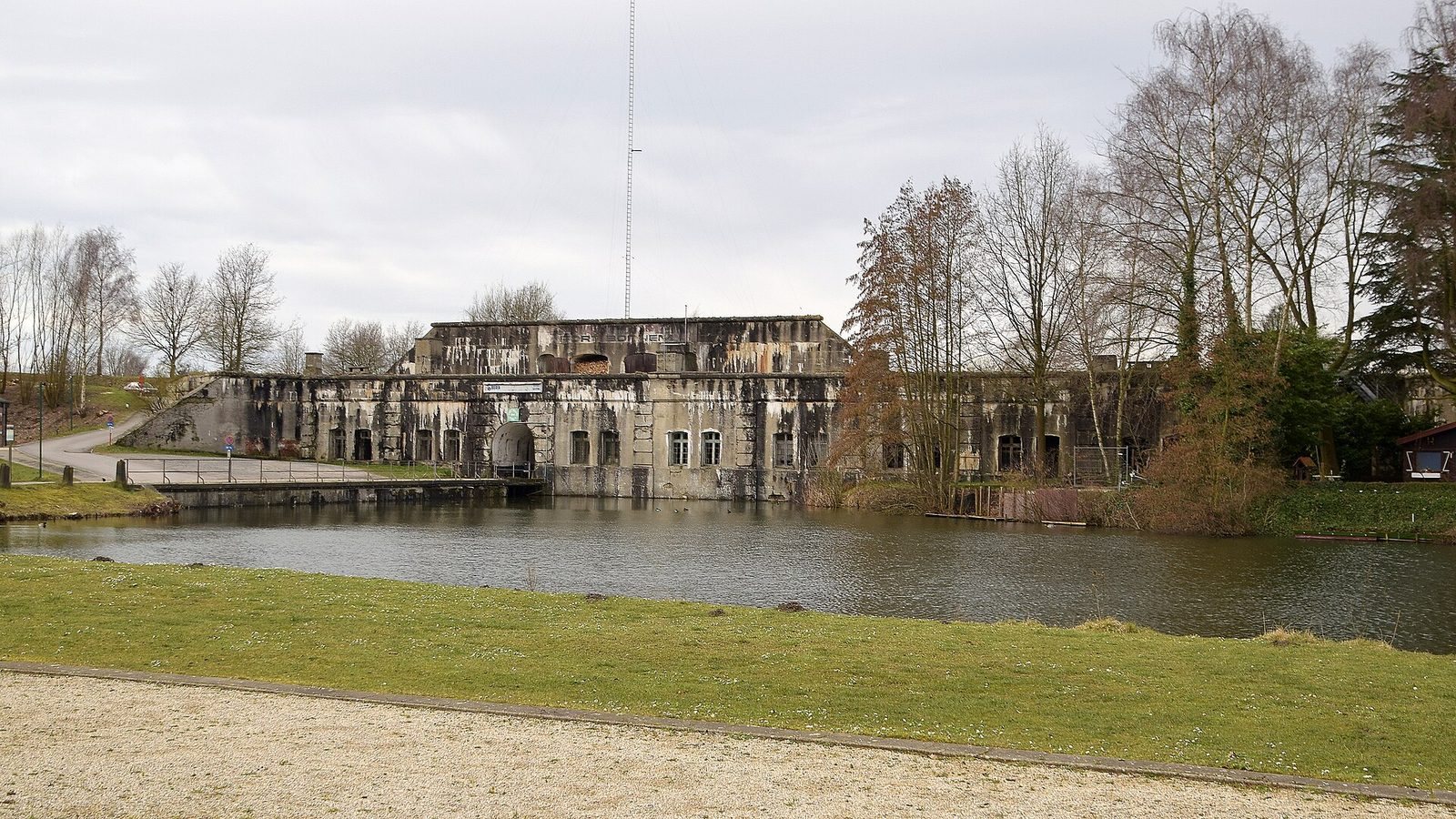
Moat and present condition
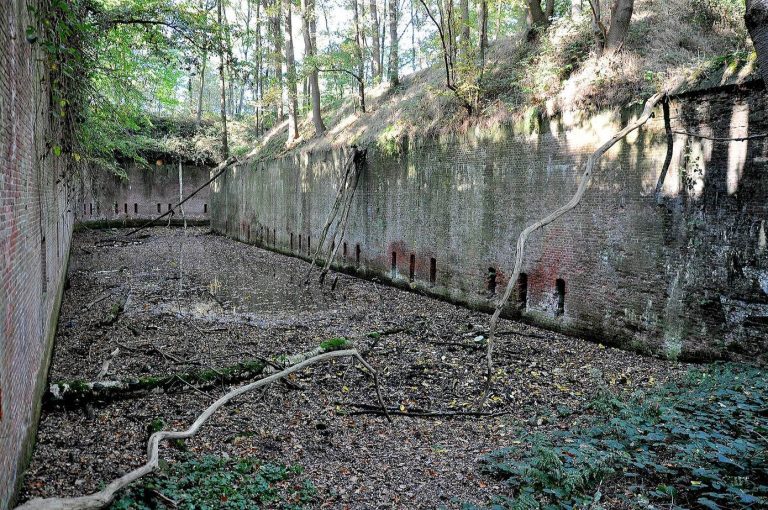
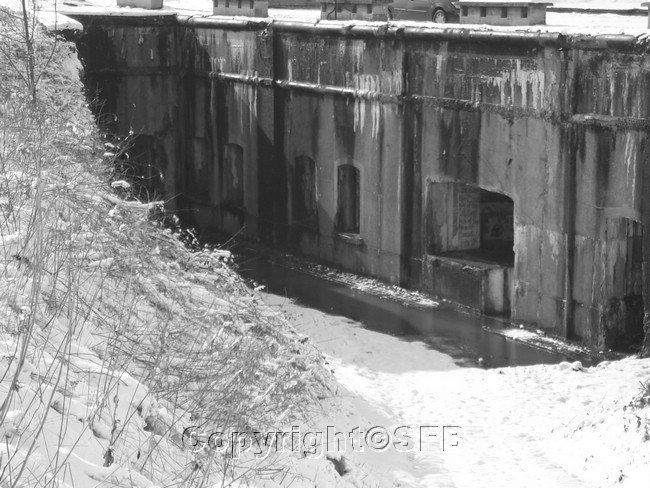
The moat forms part of the fort’s surviving layout. The structure is now severely deteriorated, with overgrowth, rainwater seepage and blocked drains contributing to its decline. Hundreds of bats use the fort as a winter roost.