Church of the Gesù: A Baroque Catholic Church in Frascati, Italy
Site at a Glance
- Popularity
- Medium
- Country
- Italy
- Primary era
- Early Modern
- Eras represented
- Early Modern
- Civilizations
- Papal States
- Site type
- Religious
- Remains
- Church
On this page9 sections
History
Early chapels and the Jesuit church
Around 1520, local feudal landholder Lucrezia Della Rovere had a small chapel to the Virgin Mary built in Frascati. Soon afterward, Monsignor Alessandro Rufini, a Catholic cleric, added a nearby chapel dedicated to Mary Magdalene. The Marian chapel was entrusted to the Congregation of the Blessed Virgin Mary, a devotional association, while the other went to the chapter of Santa Maria in Vivario, the clergy attached to that church. In 1554, the Congregation of Nobles began an oratory, or place of worship associated with a religious group, beside the chapels. The project remained unfinished for lack of funds.
On 1 March 1560, the Jesuits, members of a Catholic religious order founded by Ignatius of Loyola, took possession of both chapels and the adjoining complex, establishing their presence in Frascati. In 1595, they and the Congregation of Nobles agreed to replace the three chapels with one church. Designed by Jesuit architect Giovanni de Rosis, it was completed in 1597 and dedicated to the Annunciation of the Blessed Virgin Mary, the Christian account of the angel Gabriel telling Mary she would bear Jesus. The church measured 17 metres long by 9 metres wide.
Enlargement and later devotion
On 30 November 1694, the Jesuits decided to enlarge the church. Princess Olimpia Aldobrandini, Princess of Rossano, had left 8,000 scudi, a historical Italian currency unit, for the project on the condition that a church be built on the site. Architect Carlo Fontana was first approached, but his design was judged too costly. The Jesuits selected a proposal by Gregorio Castrichini instead. Construction is dated to 1696, and the enlarged church was complete by 1700. It was consecrated on 14 February 1773 by Henry Benedict Stuart, Duke of York, a cardinal bishop belonging to the College of Cardinals’ highest order. The Jesuits remained in Frascati until the order’s papal suppression that year, a measure that ended its official existence in most Catholic territories, although it continued in some places.
In the eighteenth century, Jesuit preacher Blessed Antonio Baldinucci developed a special devotion to the church’s image of the Virgin Mary, called Refugium Peccatorum (Refuge of Sinners) and regarded as miraculous. Saint Vincent Mary Pallotti, also devoted to the image, celebrated his first Mass at the church on 16 May 1818. During the nineteenth century, Jesuits circulated copies of the image in Mexico, where it began to appear in missions. In 2022, conservation work on portions of the frescoes, paintings made on wet plaster, brought concealed findings to light.
Remains
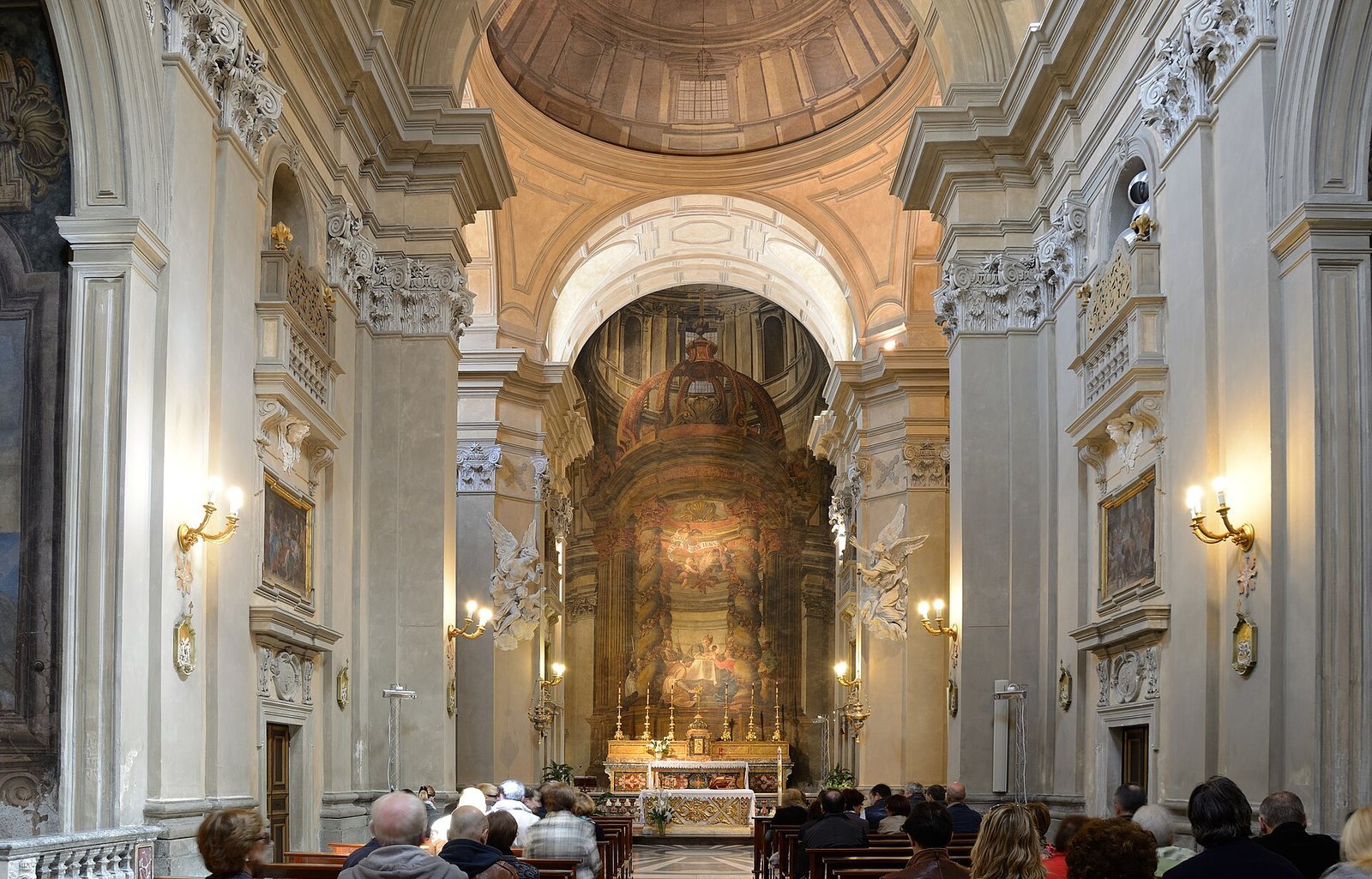
The church has a Latin-cross plan, with a single nave, the main body, intersected by a transept, the crosswise arm. It measures 35.2 metres long, reaches a maximum external width of 18.15 metres, and is 21.10 metres high to the roof; its width at the transept is about 18 metres.
Exterior and plan
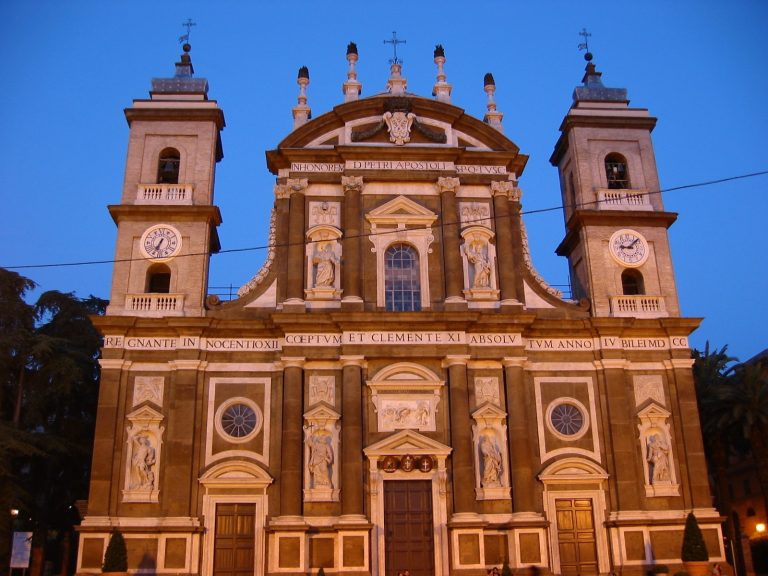
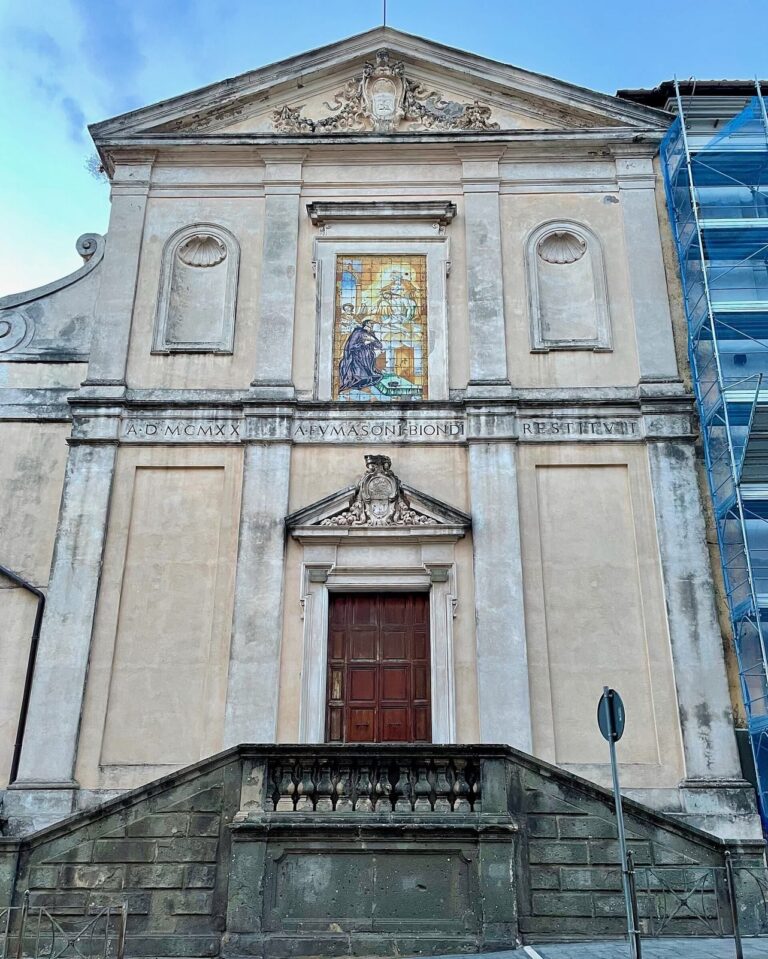
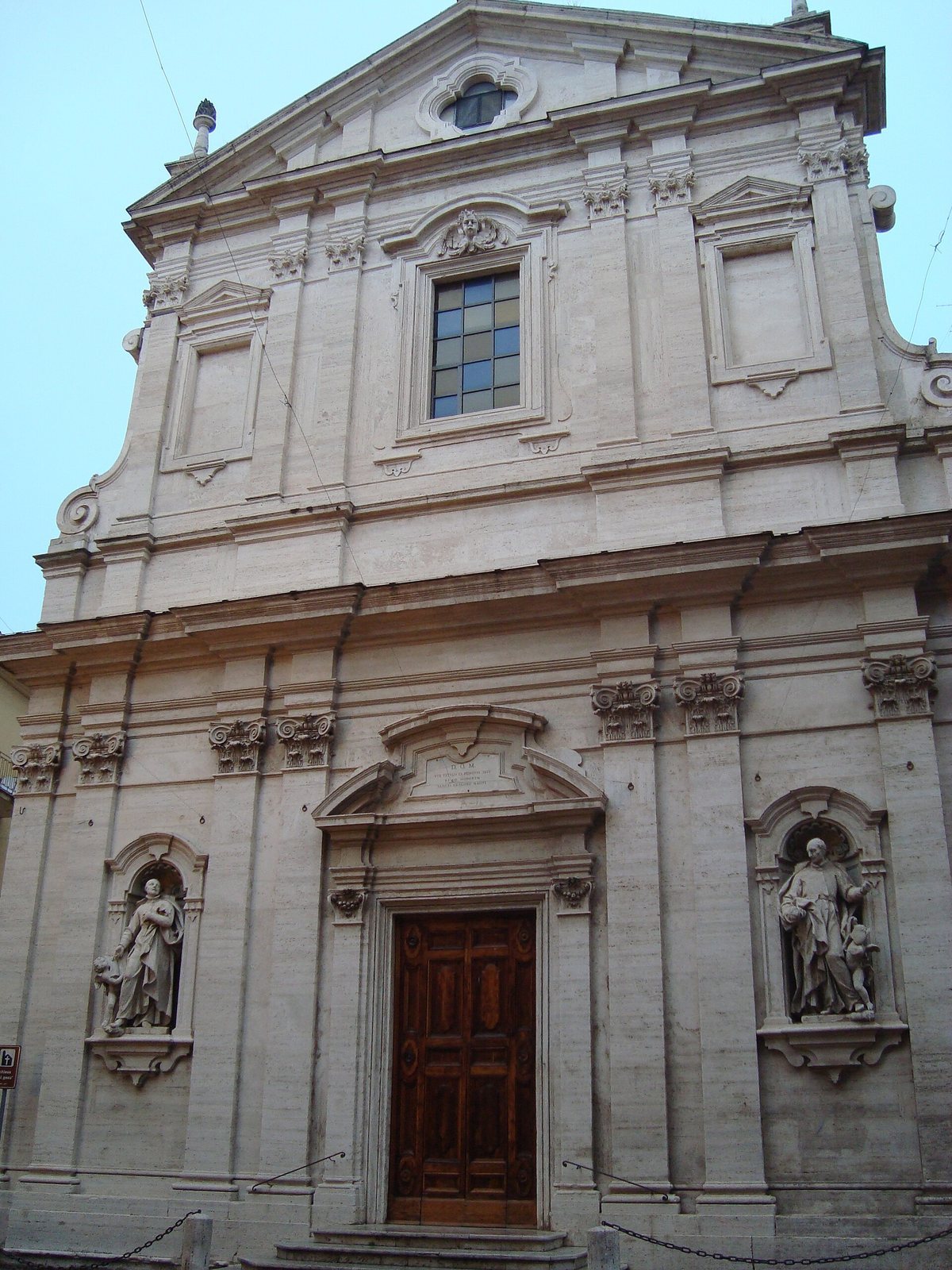
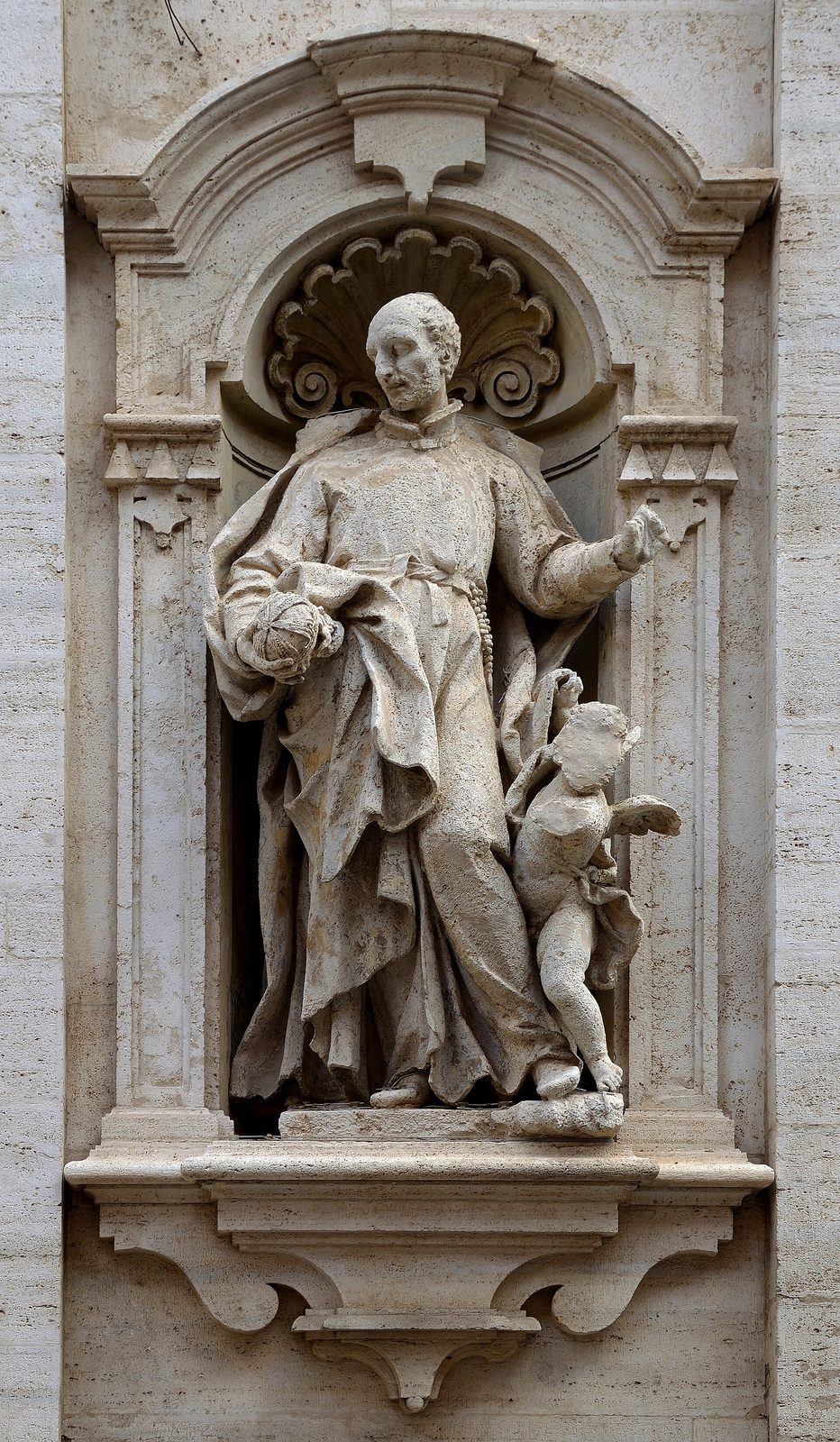
The façade takes inspiration from the Church of the Gesù in Rome. Two recesses beside the entrance contain statues of Saint Francis Borgia and Saint Ignatius of Loyola.
Interior
Side and transept chapels
Two shallow chapels along the sides of the church are dedicated to Saint Francis Xavier on the left and Saint Vincent Pallotti on the right. The transept chapels honour Saint Francis Borgia on the left and Saint Sebastian on the right; the latter is also associated with Saint Agnes. Another chapel is dedicated to Mary Magdalene.
Marian chapel
A chapel to the left of the choir is dedicated to the Virgin Mary under the title Refugium Peccatorum. The Marian image associated with that title is linked to this chapel.
Dome and paintings
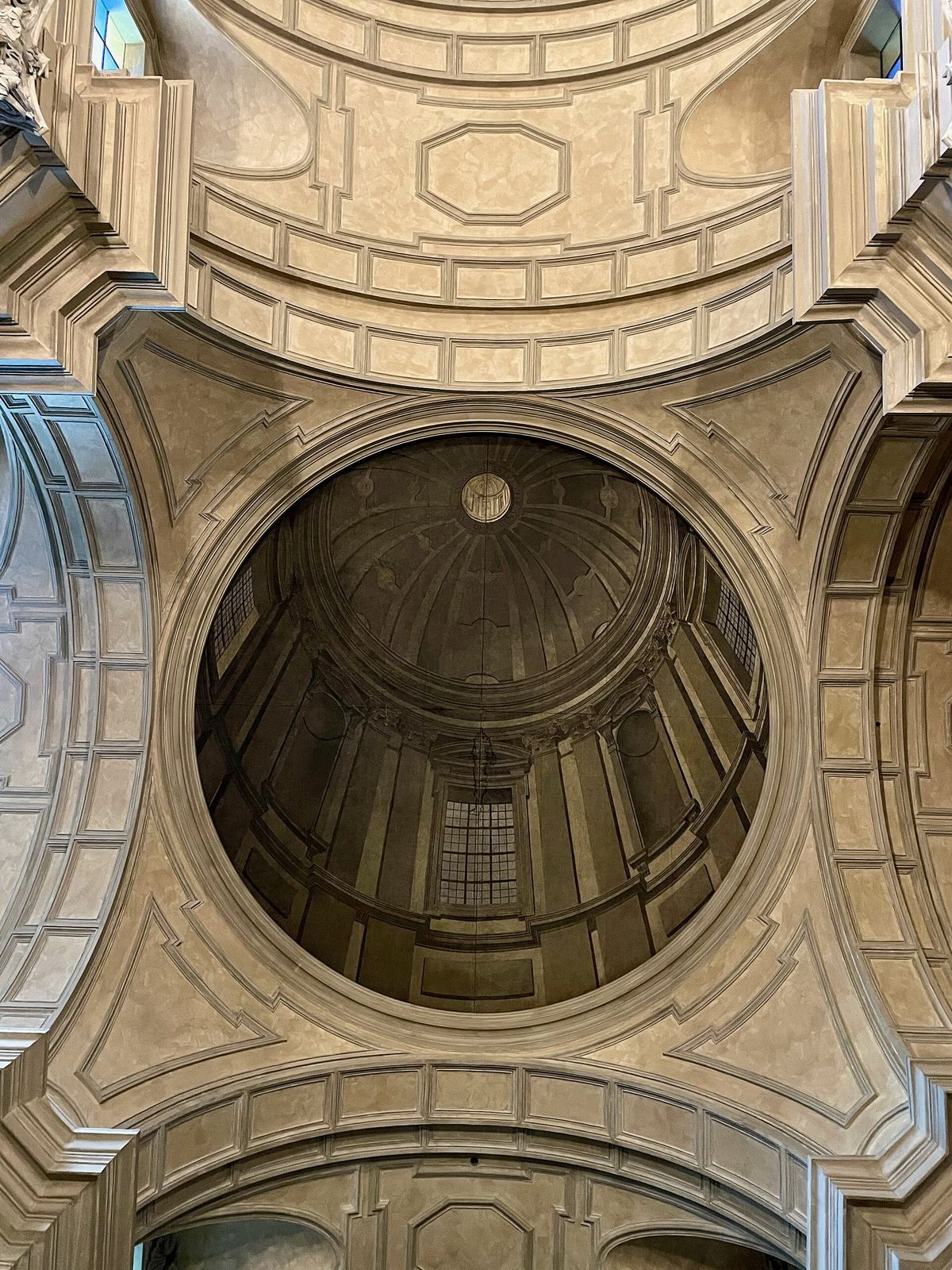
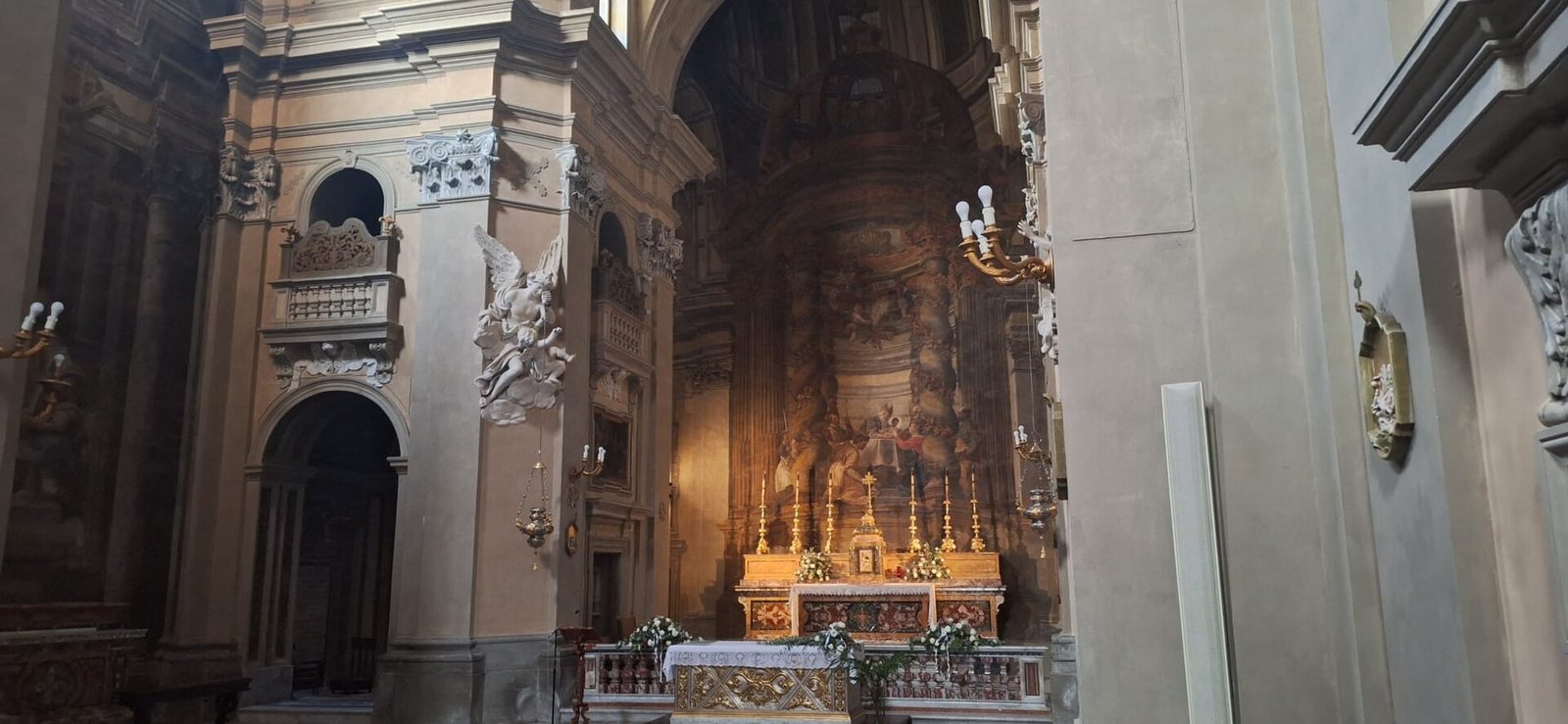
An illusionistic painted dome occupies the centre of the transept and is probably by the Jesuit artist Andrea Pozzo. Paintings attributed to Pozzo include The Flight into Egypt and Jesus among the Doctors. Other works associated with him are The Circumcision of Jesus, also titled Datum est nomen Iesus, above the main altar, and Jesus in the Temple.