Anta da Arca: A Chalcolithic Dolmen in Portugal
Site at a Glance
- Popularity
- Medium
- Country
- Portugal
- Primary era
- Stone Age
- Eras represented
- Stone Age
- Civilizations
- Unclassified
- Site type
- Burial
- Remains
- Tomb
History
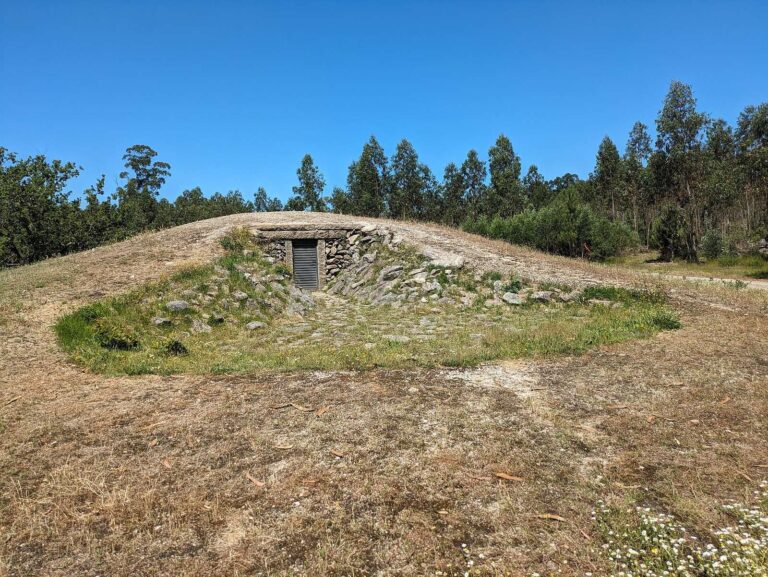
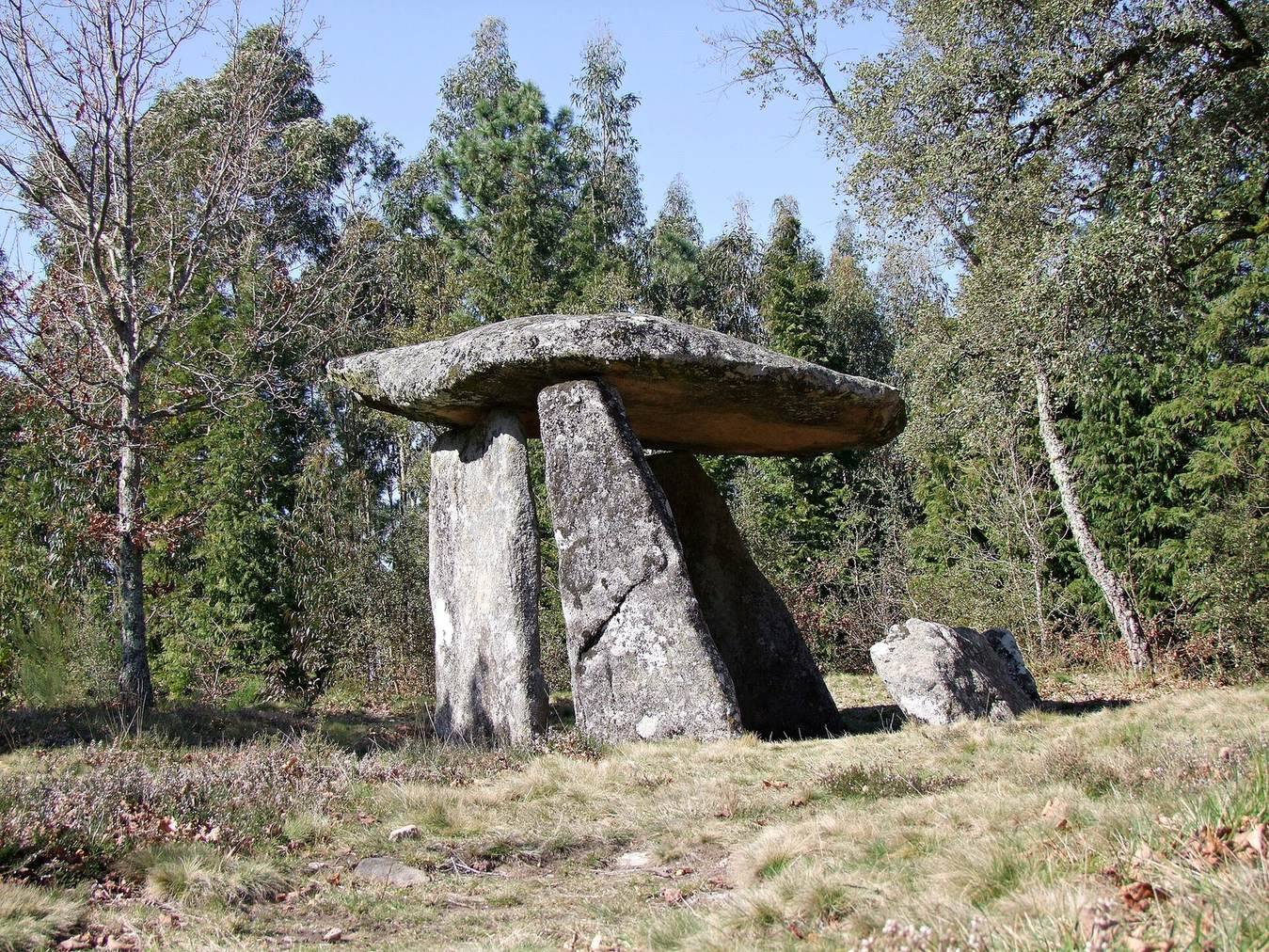
Anta da Arca is a dolmen, or megalithic tomb, in Arca, Portugal. It dates probably to the later part of the Chalcolithic, the Copper Age between the Neolithic and Bronze Age. The monument is also known as Anta do Espírito Santo d’Arca and Pedra dos Mouros, meaning “Stone of the Moors.”
The tomb appears in Luís Cardoso’s Diccionario Geographico (1747–1752). In 1758, parish memoirs called it Pedra da Arqua and said that name had been known for as long as people could remember. José Leite de Vasconcelos published its first scientific account in 1898, including a drawing and a plan to investigate the tomb. Portugal declared it a National Monument, a high-level heritage designation, by decree on 16 June 1910. An archaeological investigation followed in 1921, when the tomb may already have been looted in antiquity.
Local legend says an enchanted woman built the tomb, carrying its capstone on her head while spinning. The tale belongs to a wider Iberian tradition, with medieval roots, of supernatural women who build and inhabit dolmens, sometimes as they spin. On St John’s Night, the eve of the midsummer feast of St John the Baptist, the woman is said to appear with gold hidden in the tomb. Those who admire the gold more than her eyes turn to dust. The legend also promises the treasure to anyone who prays to Saint Cyprian, although attempts to obtain it this way have failed.
Remains
The dolmen stands at Paranho de Arca, in the Arca e Varzielas parish union, Oliveira de Frades municipality, Viseu District. Its chamber has an irregular polygonal plan and measures about 4.5 metres long, 3.75 metres wide, and 2.65 metres high. Seven granite supports survive; several are broken, three are complete, and three remain in their original positions.
The three supports still in place carry a capstone with rounded edges, measuring approximately 4.20 by 3.20 metres. The capstone is oriented exactly east.