Schmölwall: A Circular Rampart Fortification in Denmark
Site at a Glance
- Popularity
- Low
- Country
- Denmark
- Primary era
- Unclassified
- Eras represented
- Unclassified
- Civilizations
- Unclassified
- Site type
- Military
- Remains
- Fort
On this page8 sections
History
Schmölwall is a former circular rampart fortification near Smøl, at the edge of Broager in Denmark. It may have prehistoric origins, although its construction has also been dated to the 3rd century or later. Its original purpose is uncertain; it may first have served as a cult site.
Origins and proposed uses
The fort’s later function is also unclear. Its resemblance to Kajborg, a fort on the nearby island of Als, has prompted the suggestion that it offered refuge from hostile Wends, a historical German term for Slavic peoples, especially those living east of German-speaking lands. Another possibility is that it was used to light warning fires when enemies approached.
Legends and later use
Medieval local tales gave the fort different inhabitants: a knight and his family, or two conjoined sisters. Both stories said that the inhabitants built Broager Church. A related tale of a tunnel linking the fort and church is regarded as an invention.
Another legend places the rampart in 1658, during the Second Northern War, a mid-17th-century conflict involving Denmark and Sweden. It says that peasants from Broager Parish dug the earthwork as a barrier against Swedish forces, trained with farm tools near the church, and died defending the fort. In the same story, Frederick William, Elector of Brandenburg-Prussia, later drove the Swedes from the area with Danish support. This account places the fort outside the Thirty Years’ War, the major European conflict of 1618–1648.
In 1864, Prussian soldiers used the site as a viewpoint over the Düppel redoubts, detached defensive works associated with Dybbøl. A Danish community bought the site in 1931 to prevent the German minority from acquiring the land.
Remains
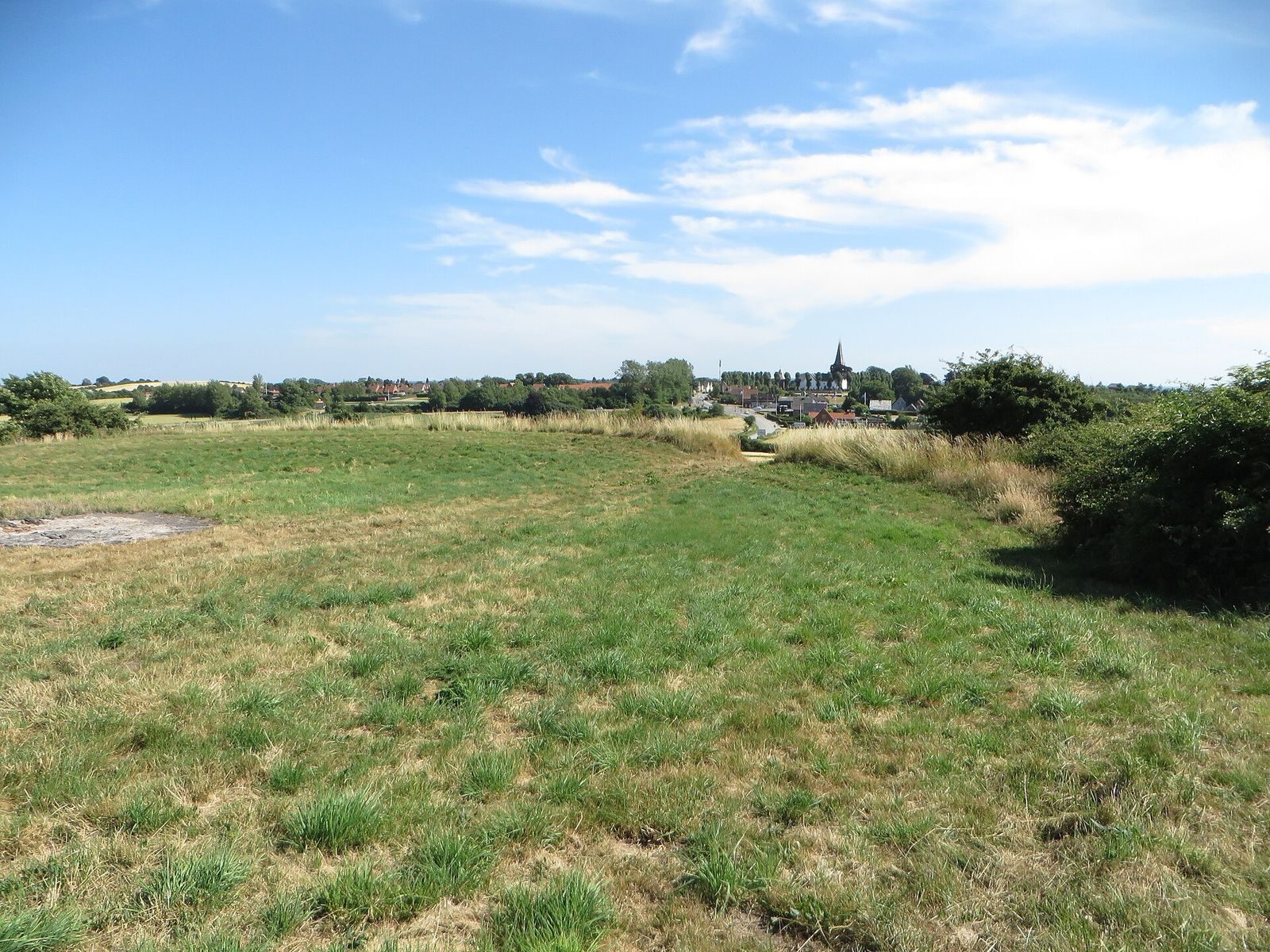
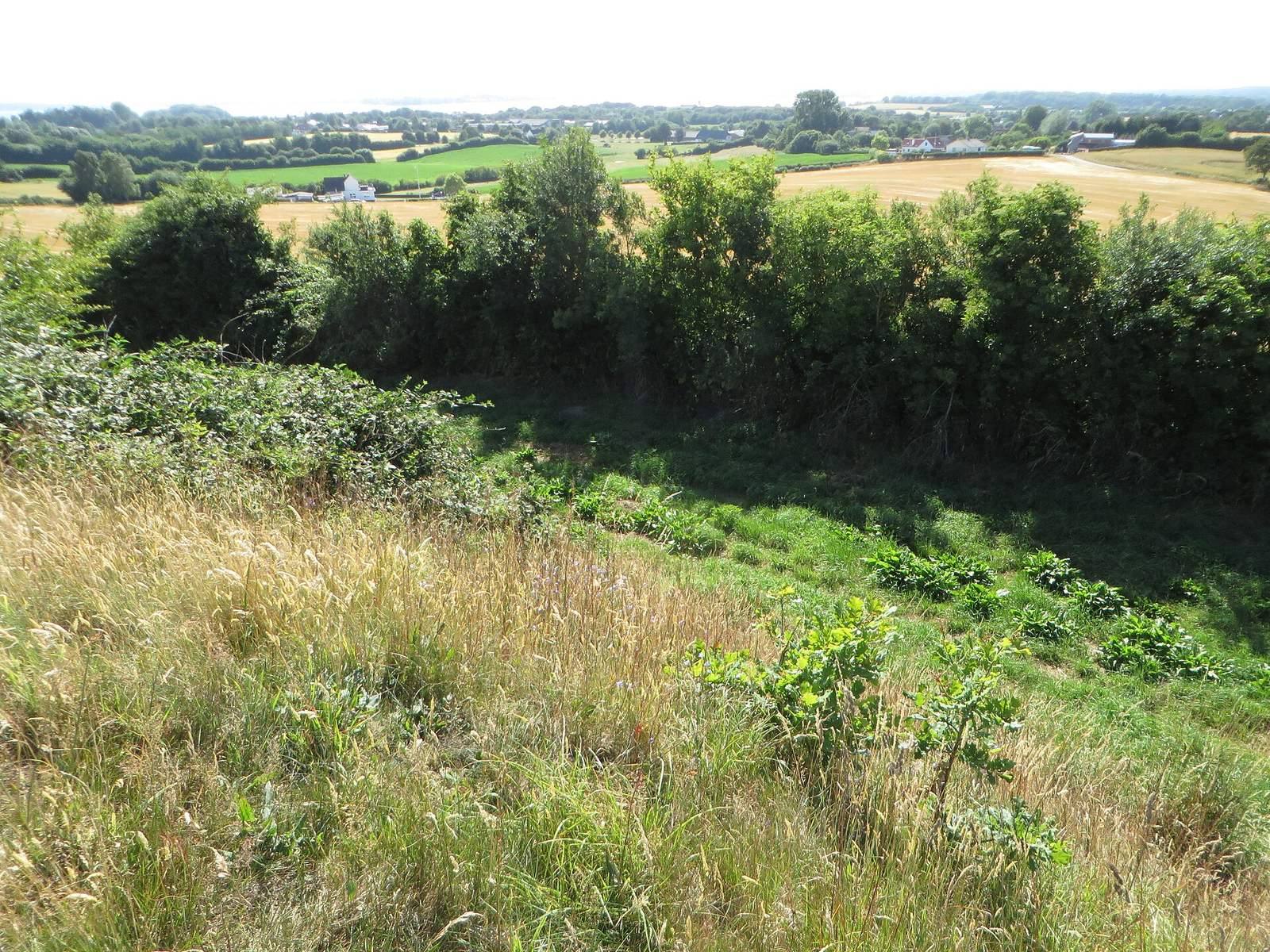
The enclosure stands on a 46-metre-high rise, the highest point between Nybøl Nor and Broager, with a view over Flensburg Fjord.
Enclosure and archaeological features
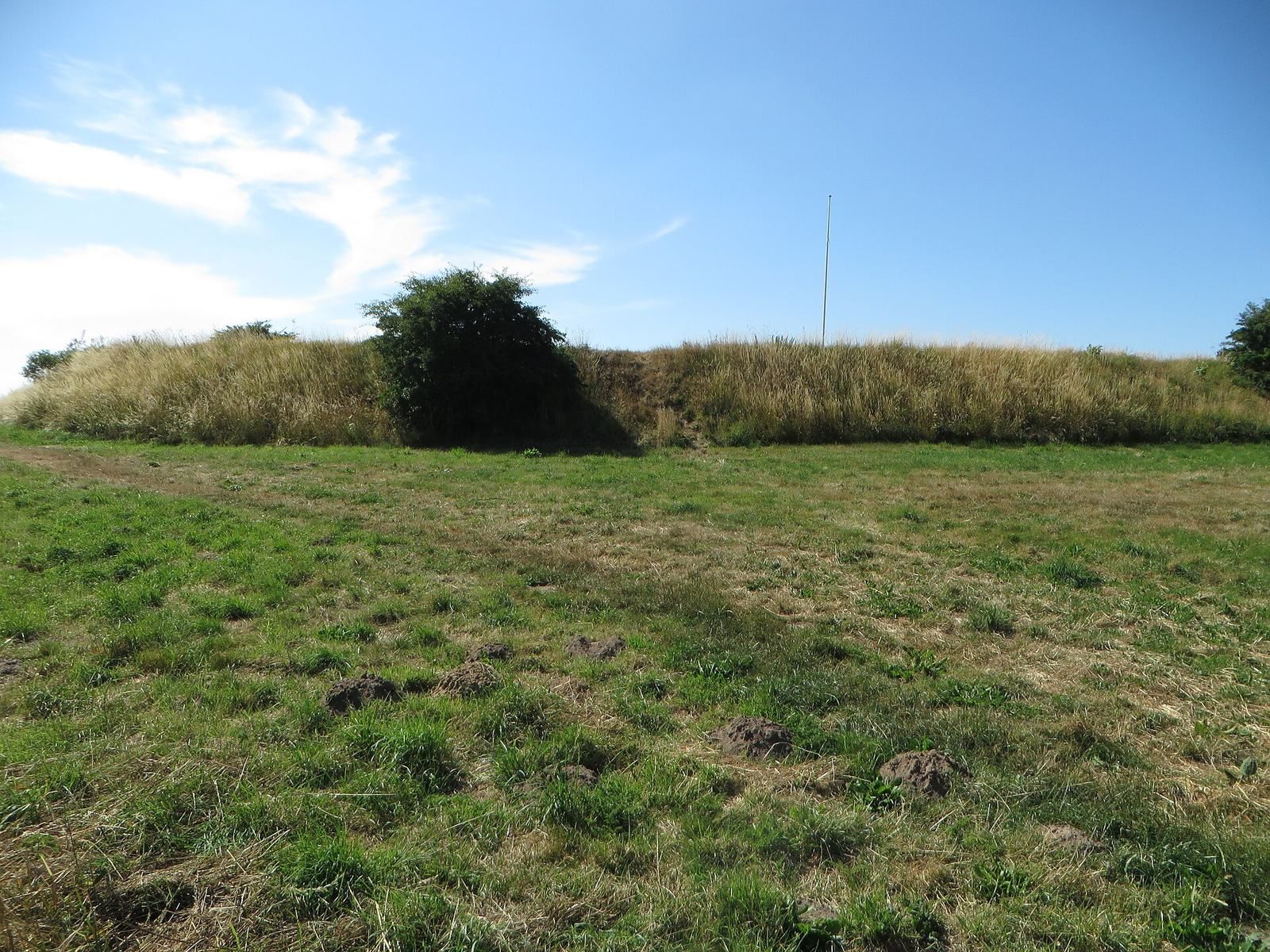
Rampart enclosure
The circular enclosure measures 50 metres across. A remnant of its rampart survives; the earthwork is thought to be older than the 5th-century pottery found through excavation.
Excavated finds
Pottery sherds recovered at the site date to the 5th century. Parts of a sword found there in 1920 date to the 13th century and are medieval, not from the Viking Age.
Central flagpole
A flagpole stands at the centre of the enclosure and usually flies the Danish flag, the Dannebrog.