Dolmen D11: A Neolithic Passage Grave in the Netherlands
Site at a Glance
- Popularity
- Low
- Country
- Netherlands
- Primary era
- Stone Age
- Eras represented
- Stone Age
- Civilizations
- Unclassified
- Site type
- Burial
- Remains
- Tomb
On this page7 sections
History
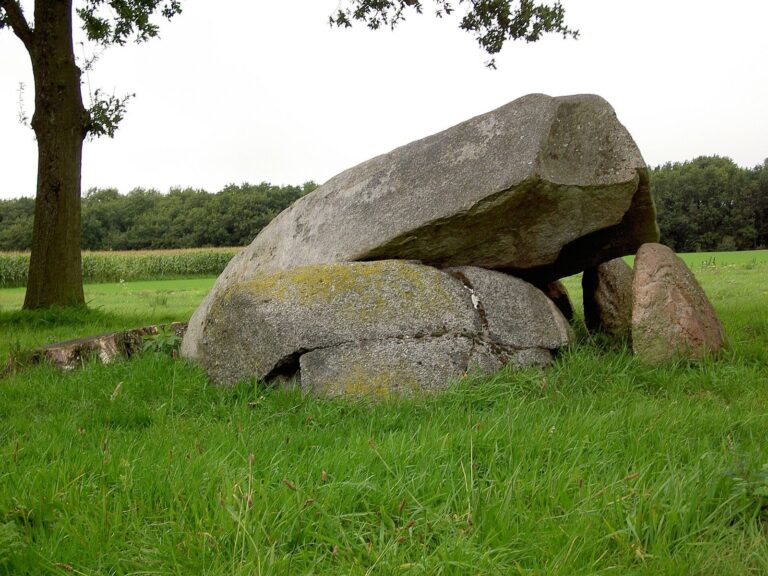
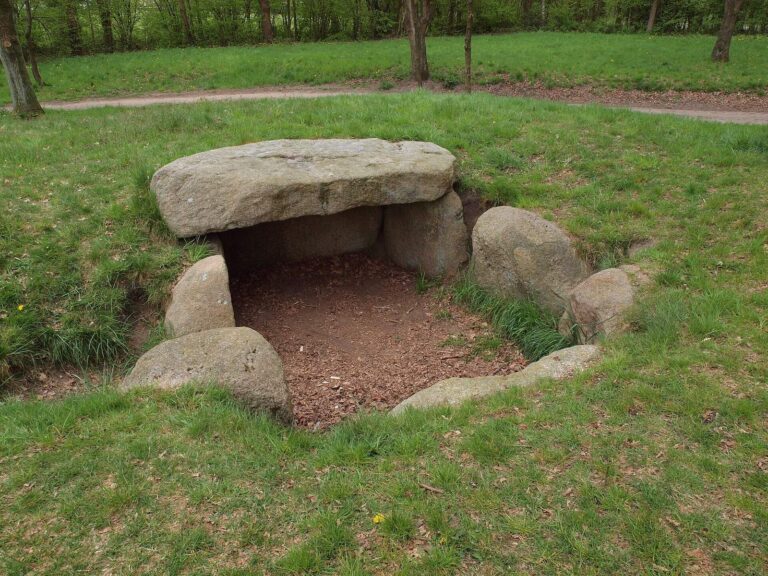
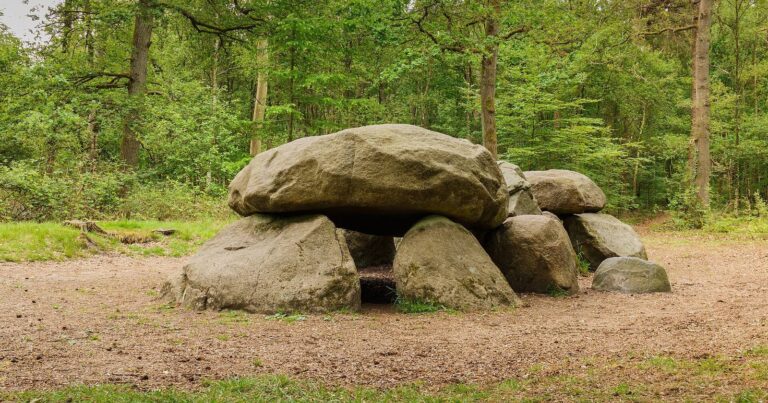
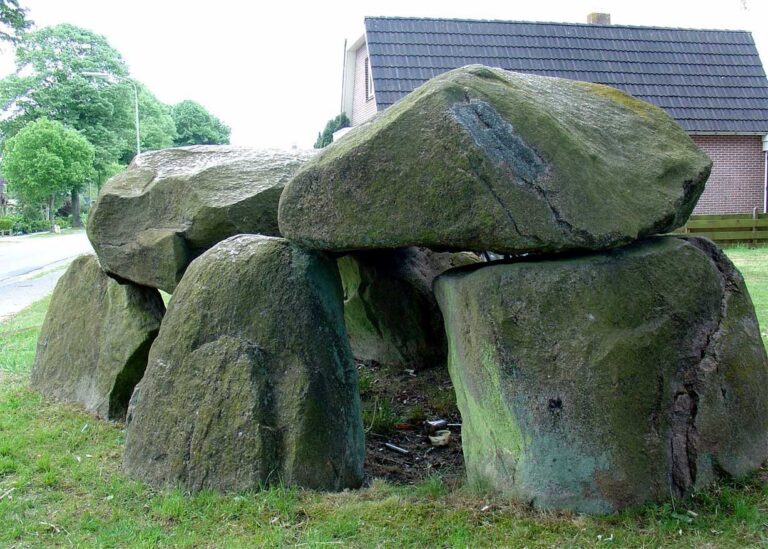
Dolmen D11, also known as Anloo-Zuid, is a Neolithic passage grave (a burial chamber reached through a passage) in the Anloo forest between Anloo and Eext in the Netherlands. It dates to 3470–2760 BC and belongs to the Western Group of the Funnel Beaker culture, a Neolithic tradition named for its distinctive funnel-shaped pottery.
Early records and nineteenth-century surveys
Dutch physician, poet, and antiquarian Ludolf Smids first recorded the tomb in 1711. In 1871, it was transferred to the Province of Drenthe. Three years later, museum curator Willem Pleyte and photographer Jan Goedeljee made a systematic photographic record of Drenthe’s megalithic tombs. Pleyte also created lithographs, prints made from designs transferred to a flat surface. In 1877, museum director Conrad Leemans visited Drenthe, and Jan Ernst Henric Hooft van Iddekinge prepared plans of the tombs for him. Leemans’s report was not published.
Concern in England that Dutch restoration might alter the tombs’ original appearance led the director of the Society of Antiquaries of London to commission William Collings Lukis and Sir Henry Dryden to record them. In 1878, the two antiquarians measured and described 40 tombs on the Hondsrug, including D11, and prepared plans, sections, and watercolors. D11 appears on their Plan VII; their report was published later. From 1904 to 1906, physician and amateur archaeologist Willem Johannes de Wilde made plans, photographs, and descriptions of surviving Dutch megalithic tombs. Albert Egges van Giffen photographed D11 for his atlas in 1918, when it stood in extensive heathland and was considered to be in very good condition.
Forest, restoration, and later study
The Anloo forest was planted in the 1920s and 1930s as a production forest belonging to the Terborgh estate. Most of the woodland is now owned by Staatsbosbeheer, the Dutch State Forestry Service. D11 was restored in 1952 and has been a Dutch National Monument since 1978.
In 2015, Drenthe archaeologist Wijnand van der Sanden published Lukis and Dryden’s work with an introduction and a review of subsequent research on the tombs through that year, assessing their record as high quality. In 2017, D11 was included in a three-dimensional atlas project by the Province of Drenthe, the University of Groningen, and the Gratama Foundation. The project used photogrammetry, a method that uses photographs to create measurements and three-dimensional models.
Remains
Setting and structure
Forest setting
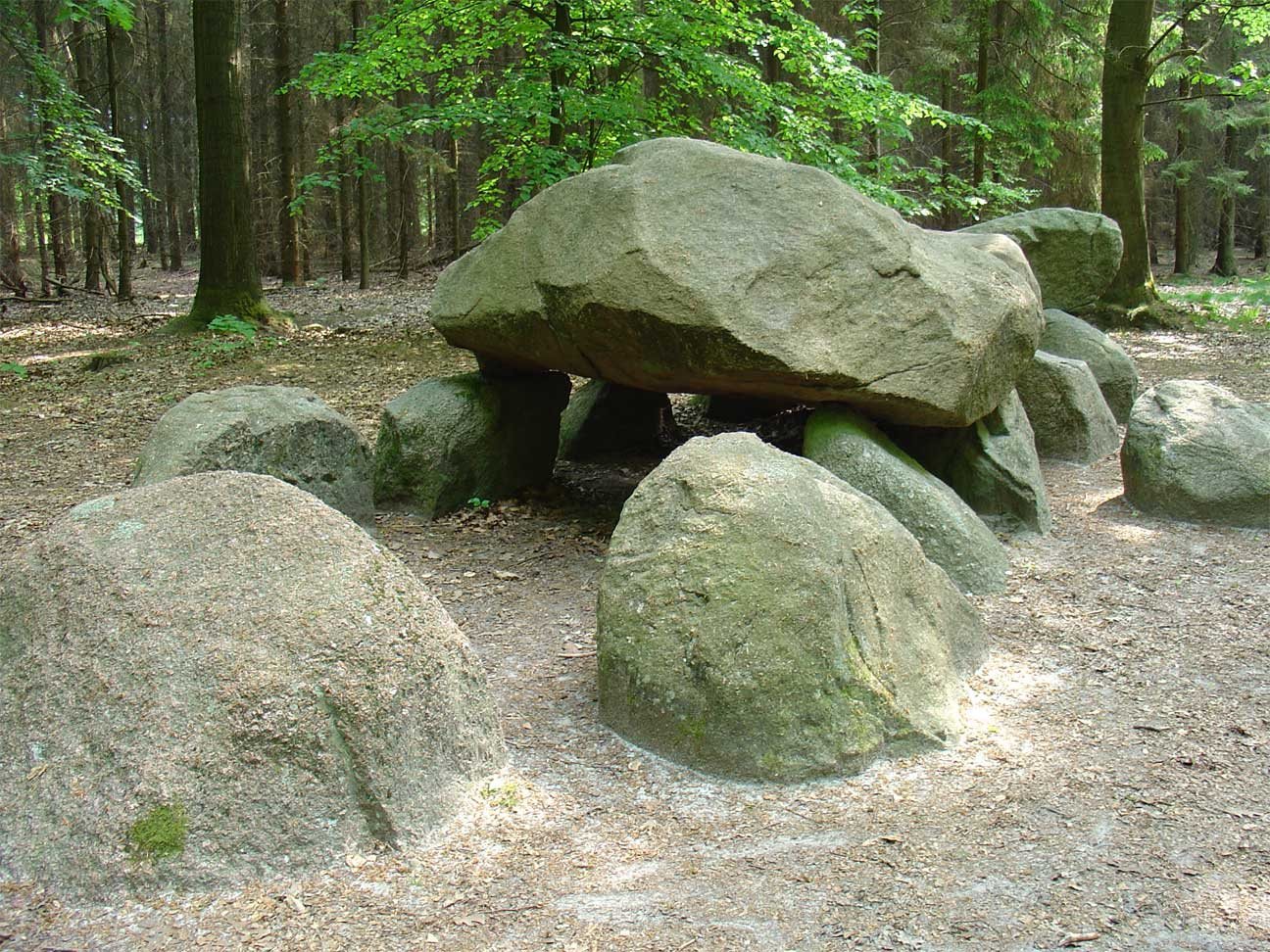
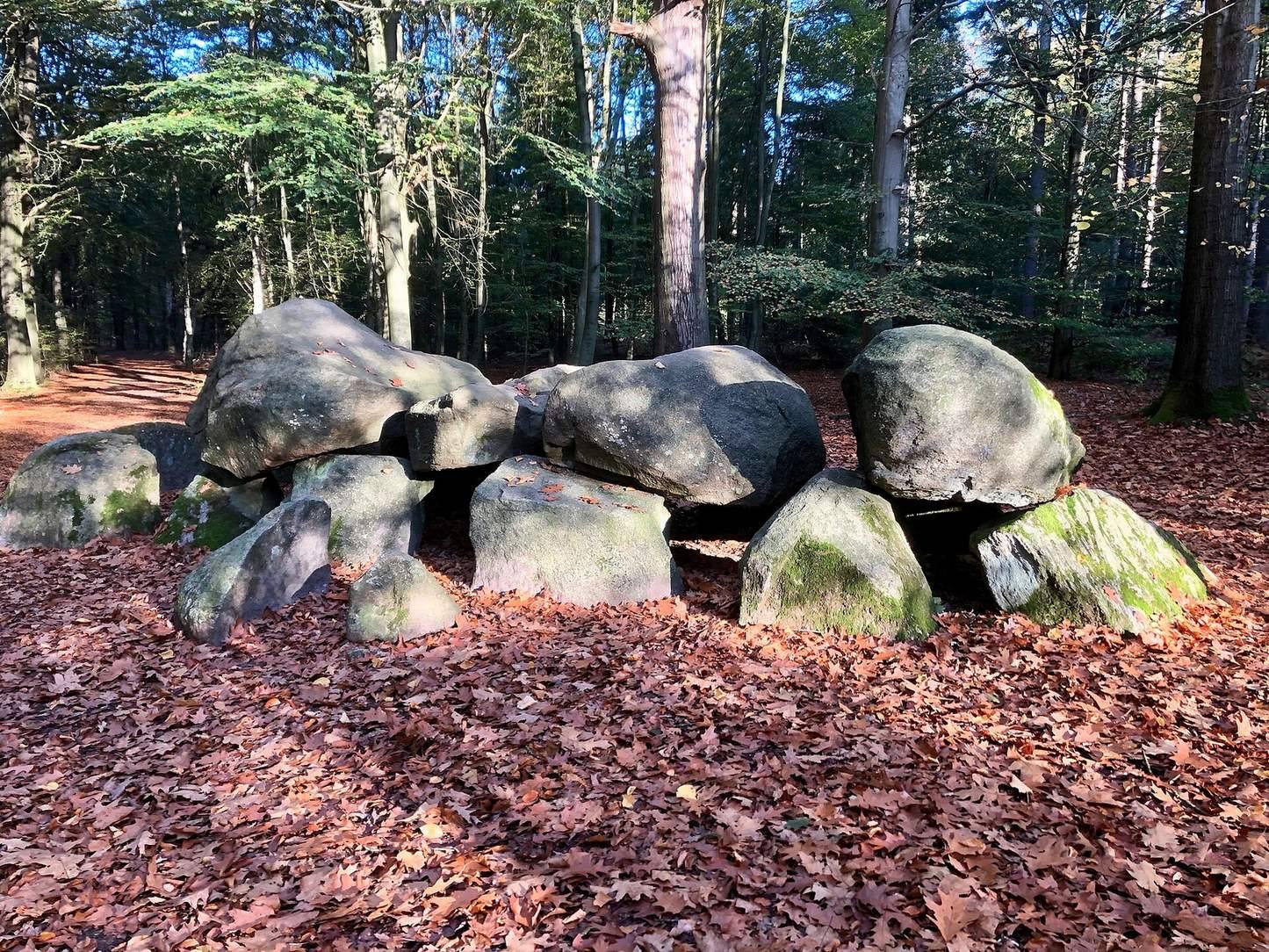
The tomb lies in the Evertsbos area of the Anloo forest, south of Anloo and beside a forest track. Nearby are several Iron Age burial mounds and Pinetum Ter Borgh, a collection of conifer trees. The Eext-Es tomb, also called D12, is 2 km to the south-southeast; the Eext tomb, D13, lies in the same direction.
Chamber and entrance
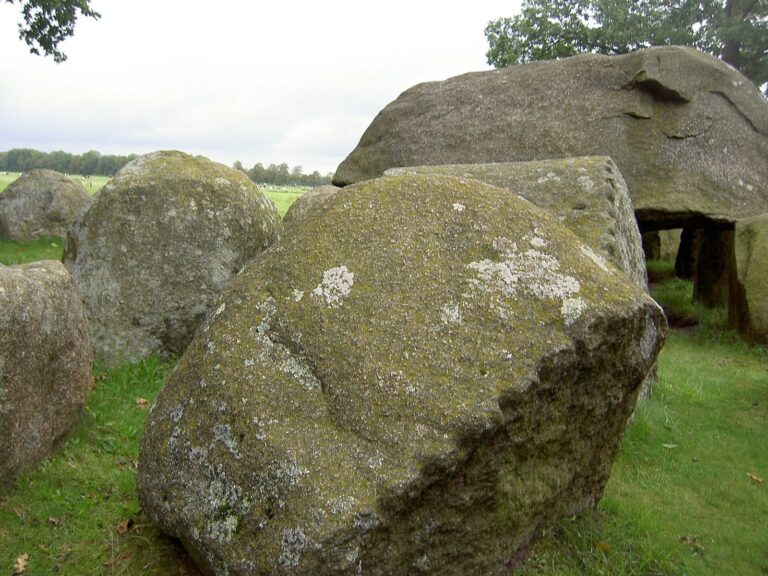
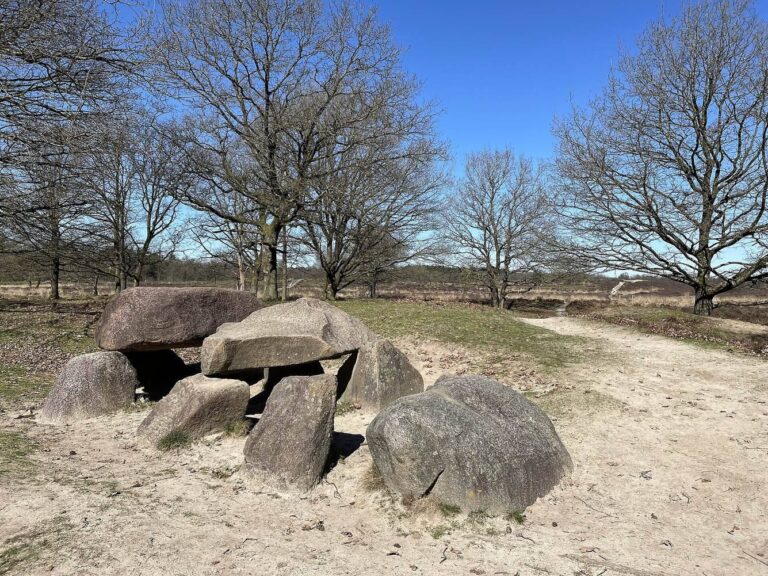
D11 is aligned east-southeast to west-northwest. Its chamber measures about 9.4 m long and 3.7 m wide. Five pairs of side stones line its long sides, with an end stone at each short end. Four surviving capstones, the large stones forming the roof, rest on the supporting stones. The entrance is midway along the southern side; a surviving portal stone and the supporting stones around the entrance have smoothly flattened surfaces. Lukis and Dryden noted urn fragments on the ground and three nearby burial mounds in 1878. Finds from the tomb are held at the British Museum in London.