Kvamsøy Church: A Medieval Stone Church in Norway
Site at a Glance
- Popularity
- Low
- Country
- Norway
- Primary era
- Medieval
- Eras represented
- Medieval, Early Modern, Modern
- Civilizations
- Denmark–Norway, Norwegian
- Site type
- Religious
- Remains
- Church
On this page12 sections
History
Medieval setting and foundation
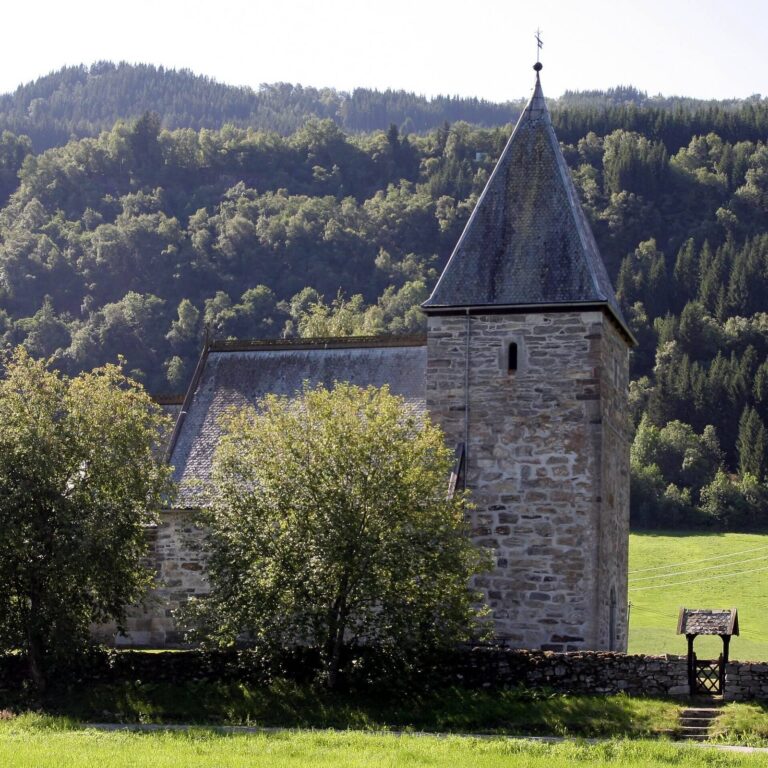
Kvamsøy Church is a medieval stone church on Kvamsøy, an island in Sognefjord, Norway. It was probably built and consecrated between about 1280 and 1300, a date inferred from its architecture and window styles. The church was first mentioned in writing in 1349 and served the old Kvamsøy parish.
The island had a place in Norwegian history before the church was built. In 1184, King Sverre stayed there with his fleet before fighting King Magnus Erlingson at the Battle of Fimreite. The two kings were rivals during Norway’s medieval civil wars. A local tradition says English sailors took shelter on Kvamsøy during a storm and gave a gift, after which the church was built.
The church began as a Catholic place of worship and later became part of the Church of Norway, a Lutheran church in the Protestant tradition that emerged during the Reformation. It belongs to the Diocese of Bjørgvin, a regional church jurisdiction, and the Sogn deanery, a grouping of parishes.
Repairs and changes, 17th to 19th centuries
An inspection in 1686 found the building in very poor condition. Its northern foundation had sunk, and large cracks crossed the walls; support walls were subsequently added. Earlier entrance towers had stood only briefly and were probably destroyed in severe storms during the 17th century. Those storms were also associated with substantial spending on roof tiles. A timber-framed entrance tower was built in 1715 and 1716.
Colonel Gerhard Munthe, a senior military officer, bought the church in 1725 and added a burial chapel for his family. The chapel was demolished in 1875. A restoration in the decade after 1868 brought new windows, a partition between the nave and porch, and new benches.
Changing parish use
When Sæle Church opened on the mainland in 1903, it became the parish’s main church, and Kvamsøy Church was used mostly as a museum rather than for regular services. The last confirmation before a gap of nearly a century took place there in 1904. In 2000, one person was confirmed in the church, where that person had also been baptized.
The roof was repaired in the 1970s, and the exterior walls were limewashed in the 1980s. Kvamsøy Church remains protected as a Norwegian cultural heritage site. It continues to host two regular services each year, one in May and one on Olsok, the observance for Saint Olaf traditionally held on 29 July. Occasional funerals and, when requested, weddings, baptisms, and confirmations are also held there.
Remains
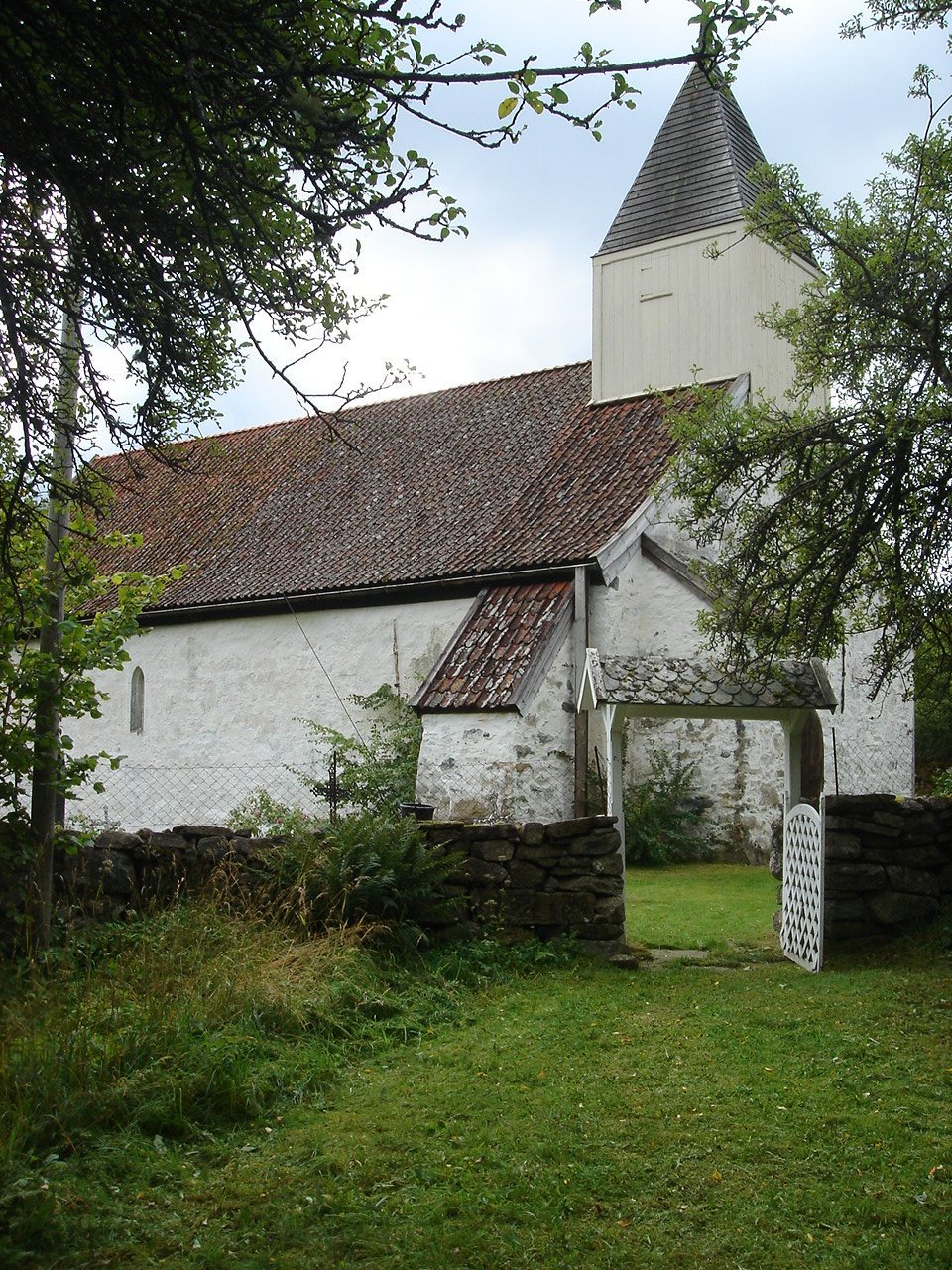
The church stands beside its churchyard on Kvamsøy, about 50 metres from the mainland. The island is regarded as the world’s smallest island with its own church. The building combines a long-church plan, with the nave and chancel aligned along one lengthwise axis, with a basilica design, a form generally organized around a central nave and lower side aisles.
Building and layout
Dimensions and arrangement
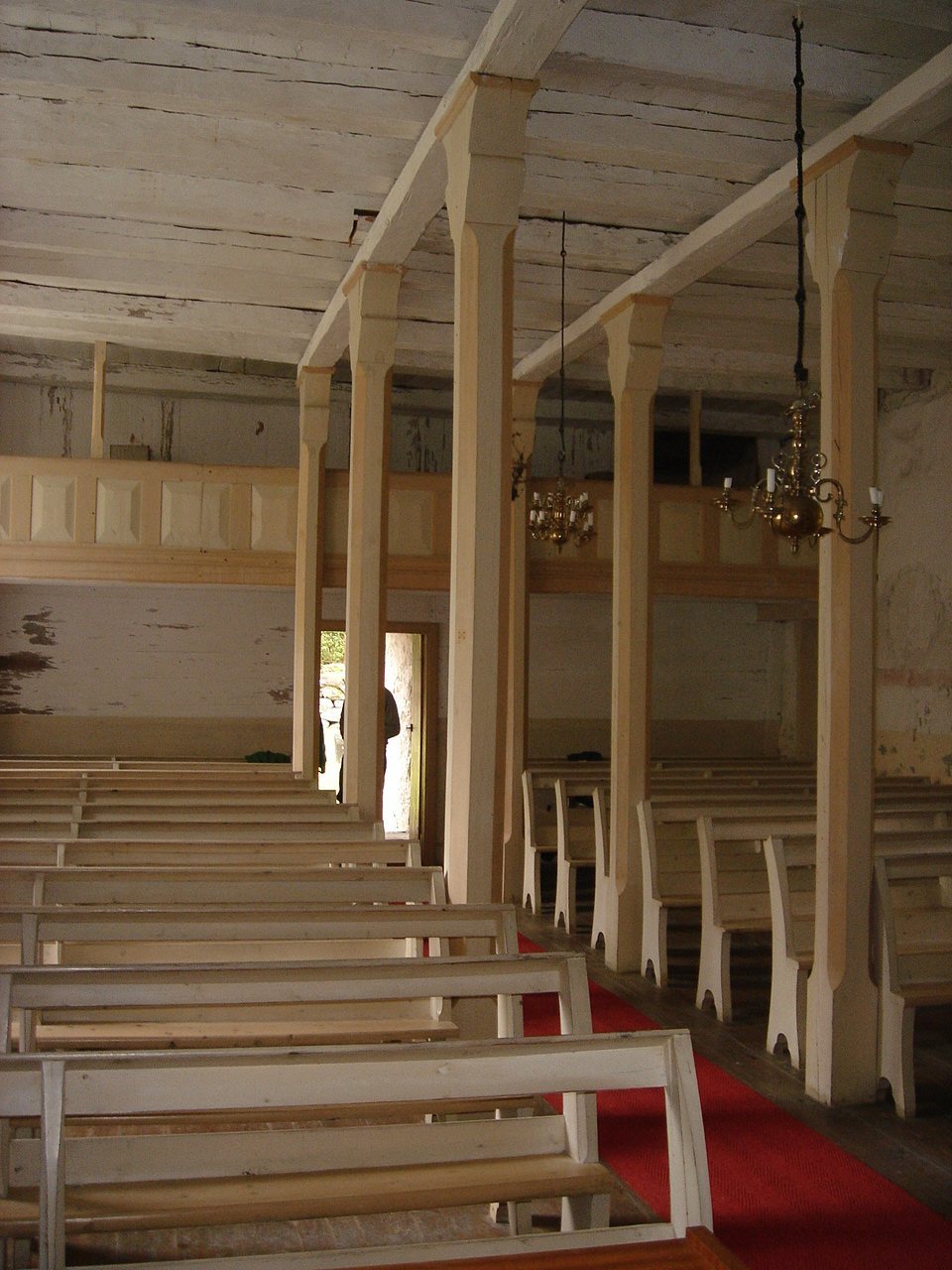
The church’s main body measures about 17.8 by 7.9 metres, and it has seating for 210 people. The nave is 11.09 metres long and 7.82 metres wide; the chancel measures 4.15 by 7.82 metres, and the porch 2.69 by 7.86 metres. The stone walls are 1.34 metres thick.
Masonry and windows
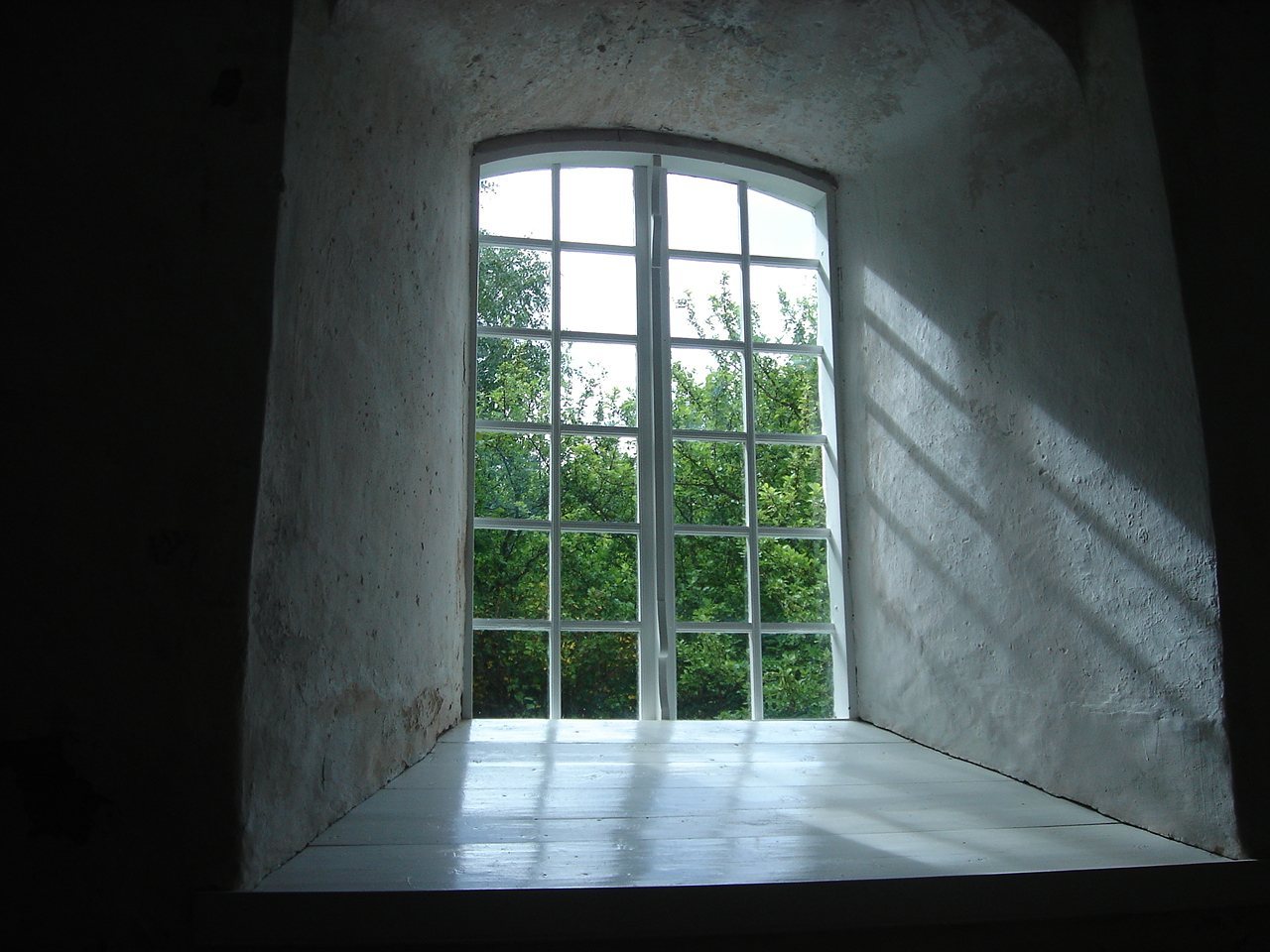
The masonry is coarse. Local residents may have built the church rather than professional builders, and some of the stone may have been unloaded on the island as ship’s ballast. The stone walls stop below the gables, which are made of wood. Three original windows remain in place, alongside others installed during the 19th-century restoration.
Exterior and interior features
North-wall niche
A niche framed in soapstone is set into the north exterior wall and dates to the church’s construction. It may have held a statue of a saint. The niche may relate to the church’s use as a harbor stop for sailors: those unable to land could turn toward the image and pray for the saint’s intercession.
Painted decoration
Paintings described in 1868 showed Peter, Paul, and the four Evangelists, traditionally regarded as the authors of the Gospels, in the nave, with Moses and Jesus in the chancel. They were covered with limewash during the subsequent restoration, but traces remain visible beneath it. An angel can also be seen in the porch.
Furnishings and bells
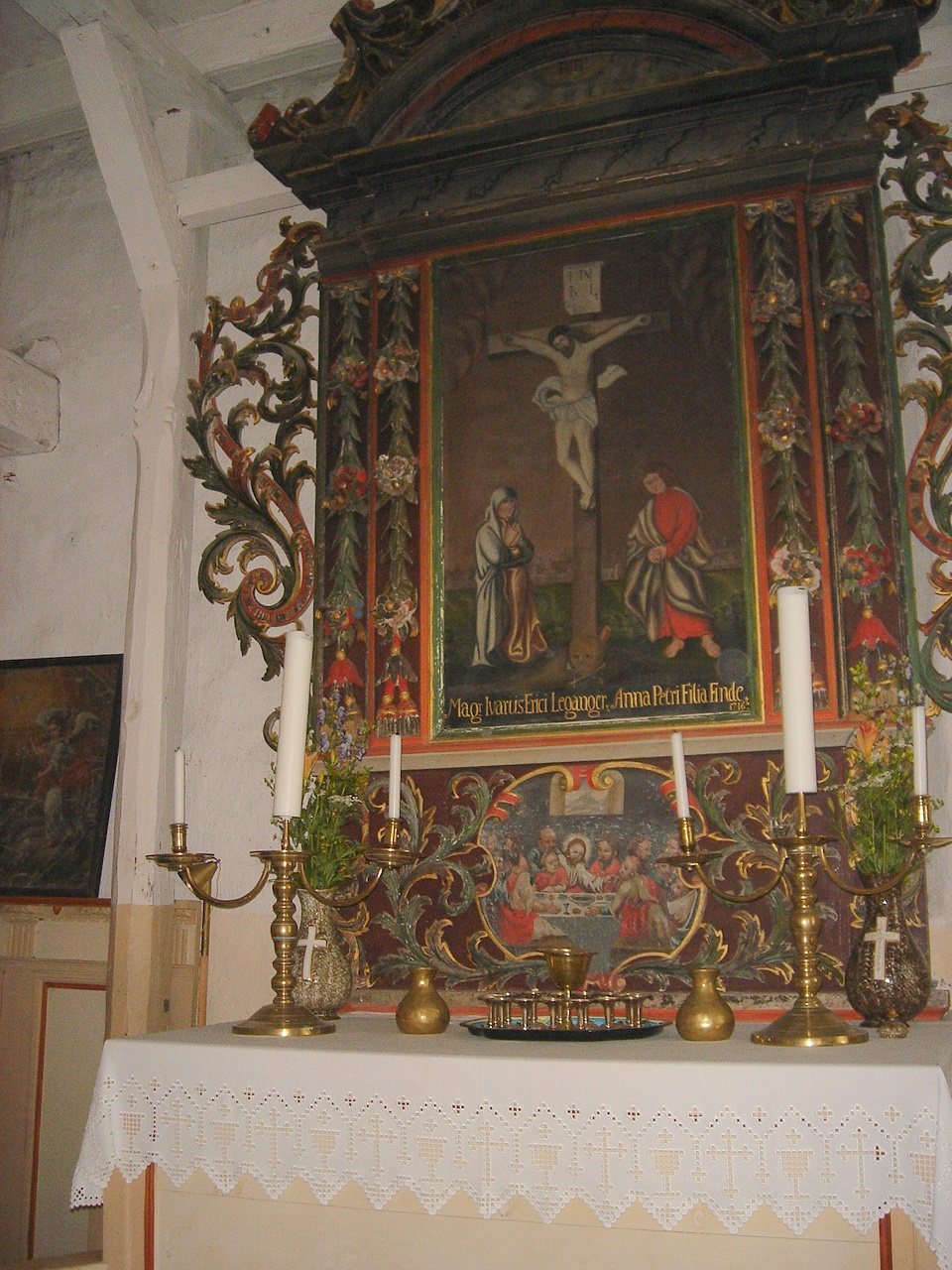
The altarpiece, made in 1716, depicts Jesus on the cross and is a high-quality Baroque work in an ornate style. A baptismal basin dating to the 16th century rests in an iron ring fixed to a post between the nave and chancel. Its surface is engraved with a lamb carrying a victory banner. A crucifix dated to 1694 or 1695 hangs above the chancel door. One of the church’s two bells is undated and medieval; the other dates to 1701. Some older benches were reportedly reused as fittings in a pigsty on the island. The church is in very poor condition.