Hopperstad Stave Church: A Medieval Wooden Church in Norway



Site at a Glance
- Rating
- 4.6
- Popularity
- Medium
- Country
- Norway
- Primary era
- Medieval
- External website
- Open
- Eras represented
- Medieval
- Civilizations
- Norwegian
- Site type
- Religious
- Remains
- Church
On this page14 sections
History
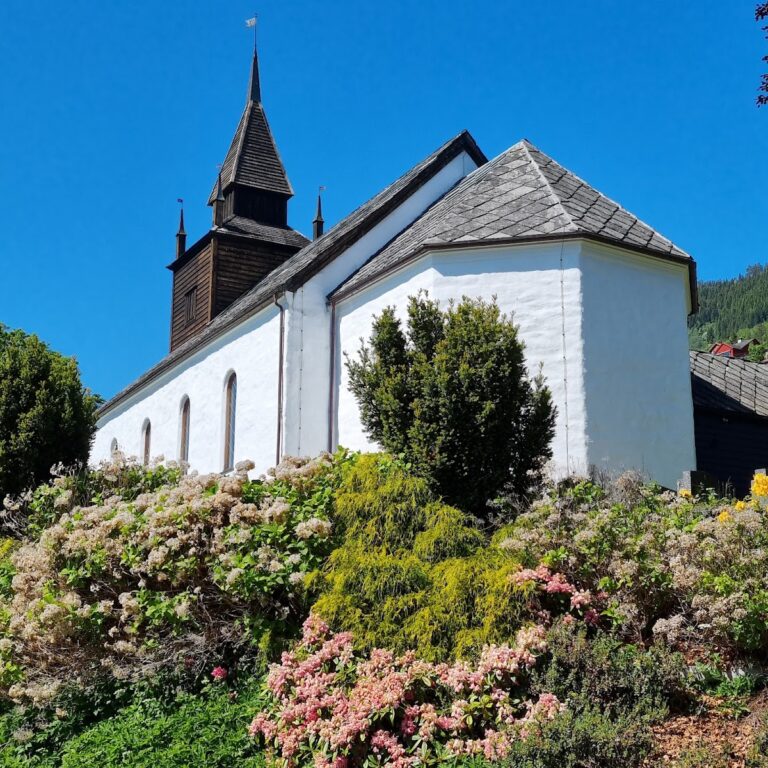
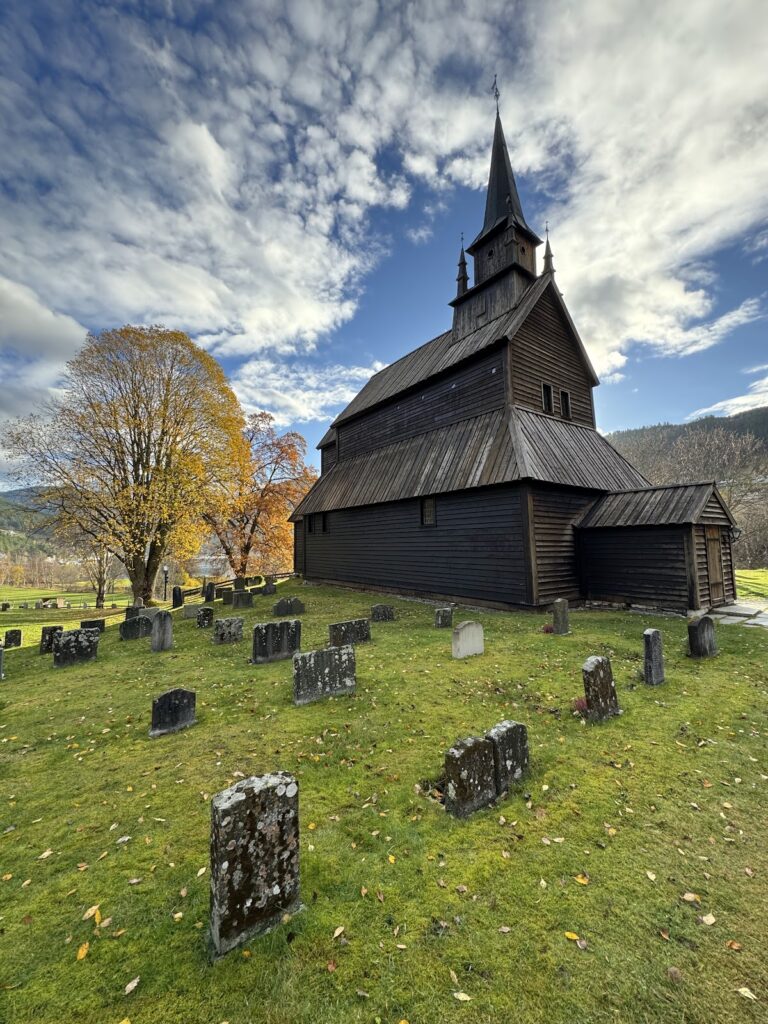
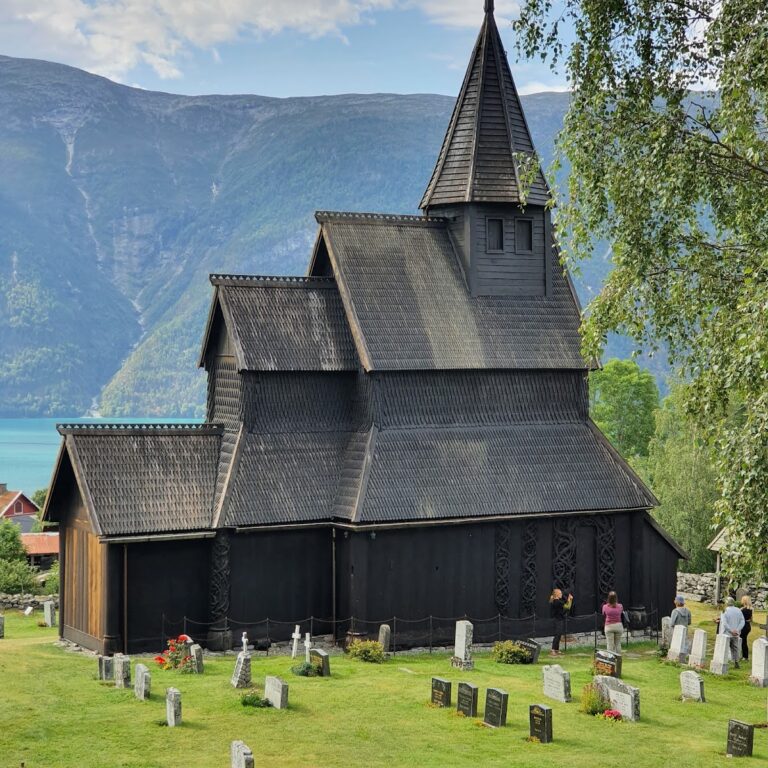
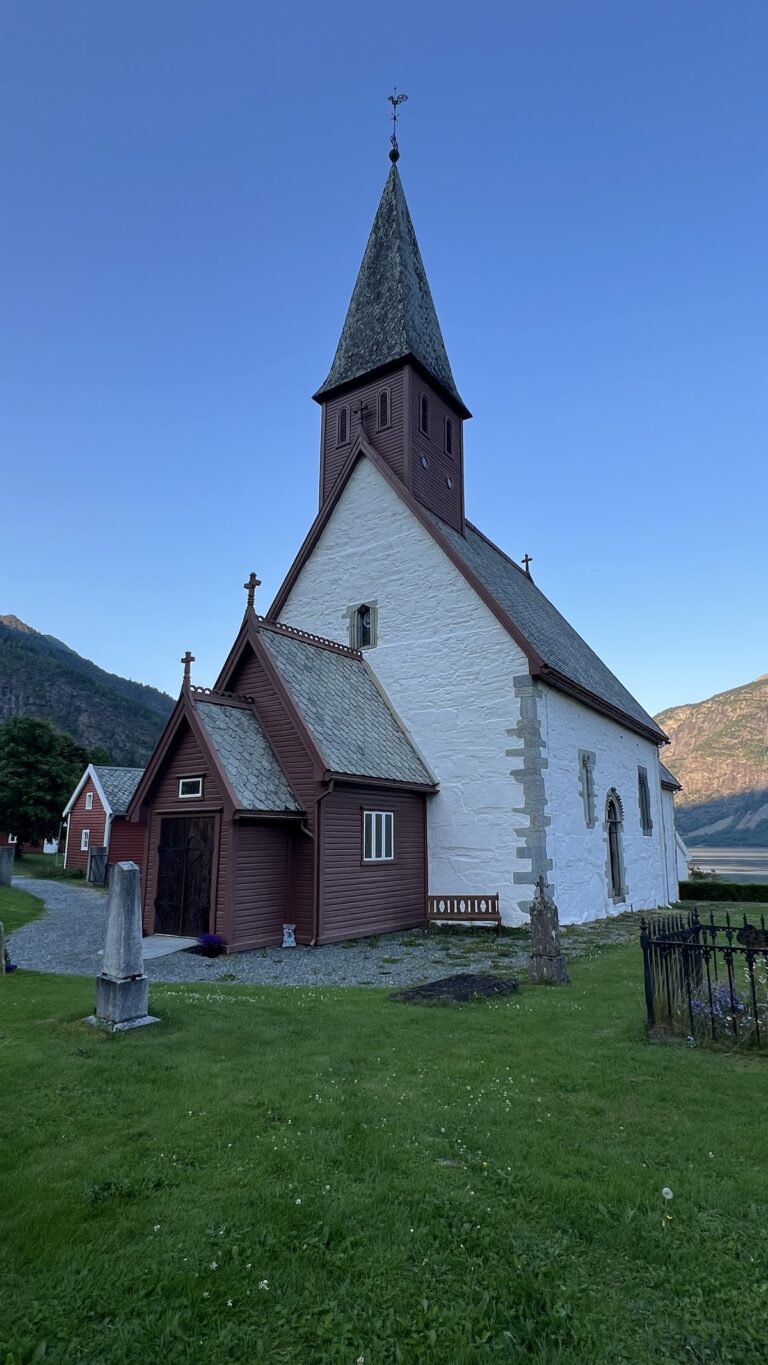
Hopperstad Stave Church is a medieval wooden church in Norway, standing on its original hilltop site at Vikøyri in Vik Municipality beside the Sognefjord. Its date remains uncertain: it has been placed around 1070 and is also generally dated to around 1130. The building belongs to the stave-church tradition, in which load-bearing vertical timber posts support the structure instead of masonry walls. Hopperstad is one of Norway’s oldest surviving authentic stave churches and is among the approximately 30 authentic stave churches still in existence.
Early church and uncertain origins
The earliest surviving written record mentioning Hopperstad dates from 1322, when the church was already old. Archaeological evidence found in 1982, together with carved timber sections discovered beneath the floor during a later reconstruction, points to a smaller earlier stave church on the site in the mid-eleventh century, possibly around 1060.
Seven timber samples examined in 1997 through dendrochronology, the dating of wood by matching annual growth rings with established tree-ring sequences, produced dates of approximately 1034 to 1116. These results support the possibility that material from an earlier church was reused in the present building, but they do not establish a definite construction date for the church itself.
Expansion and changing ownership
Hopperstad probably retained its original form until the seventeenth century. The nave was then extended westward, with a bell tower built above the extension. Additions were also made to the east, south, and especially north. The major enlargement was completed during the eighteenth century, when the northern extension was known as the “new church.”
In 1723, the church was sold into private ownership at a Norwegian church auction. The sale formed part of the Crown’s effort to raise money for debts incurred during the Great Northern War, a conflict in which Sweden and its opponents fought for supremacy in northern Europe.
Hopperstad served as an election church in 1814 for the elections to Norway’s Constituent Assembly. That assembly drafted the Norwegian constitution at Eidsvoll later in the same year.
Closure and nineteenth-century reconstruction
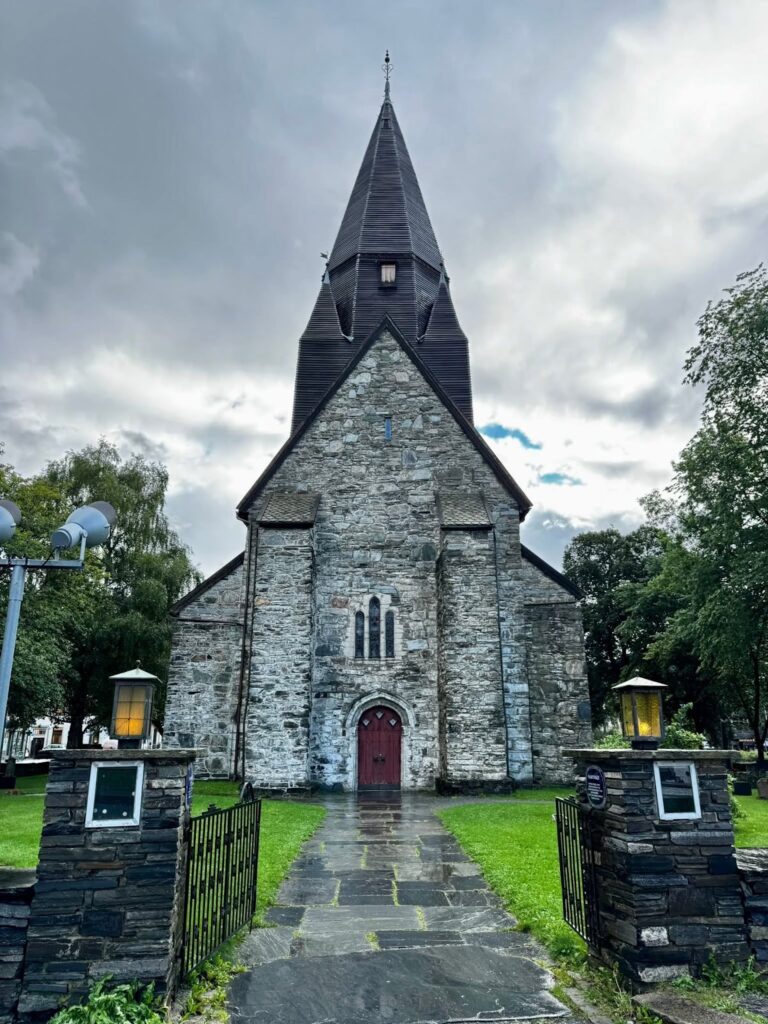
During the nineteenth century, Hopperstad was regarded as too small, cold, drafty, and costly to maintain alongside neighboring Hove Church. A royal decree dated 11 December 1875 ordered the closure of both churches and the construction of a new church for the merged parish. Vik Church was completed in 1877, and Hopperstad was abandoned from regular use after roughly seven centuries.
The later extensions were dismantled, and some of their timber was sold. The Society for the Preservation of Ancient Norwegian Monuments acquired the church in 1880 and remains its owner. The society paid 600 kroner for the church, while dismantled later timber was sold to private buyers for 800 kroner.
The church was initially intended for relocation to Nygårdsparken in Bergen, but it was instead restored on its original site. Architect Peter Andreas Blix began the work in 1880 without payment and contributed his own money, assisted by antiquarian Lars J. Nicolaysen. The principal reconstruction lasted from 1884 to 1891. Borgund Stave Church provided the main model, while Urnes and Kaupanger also influenced the reconstruction.
The restoration removed most of the seventeenth-century wall paintings and dismantled the later extensions. The medieval nave and choir were largely retained, while the apse, surrounding passage, and roof were reconstructed to recreate the presumed medieval appearance. A passage, an apse with a tower, and roof turrets were added as part of this reconstruction. Hopperstad has since been used primarily as a museum, although special religious services may still be held there.
The roof was renewed in 2008, and the church was recoated with wood tar made by boiling pine roots. This treatment provides natural conservation. It is initially black before the brown color of the wood gradually reappears. The missing cross on the gable of the west portal was also replaced during restoration work. Hopperstad is an automatically protected Norwegian cultural-heritage site.
Remains
Layout and timber frame
Central nave and choir
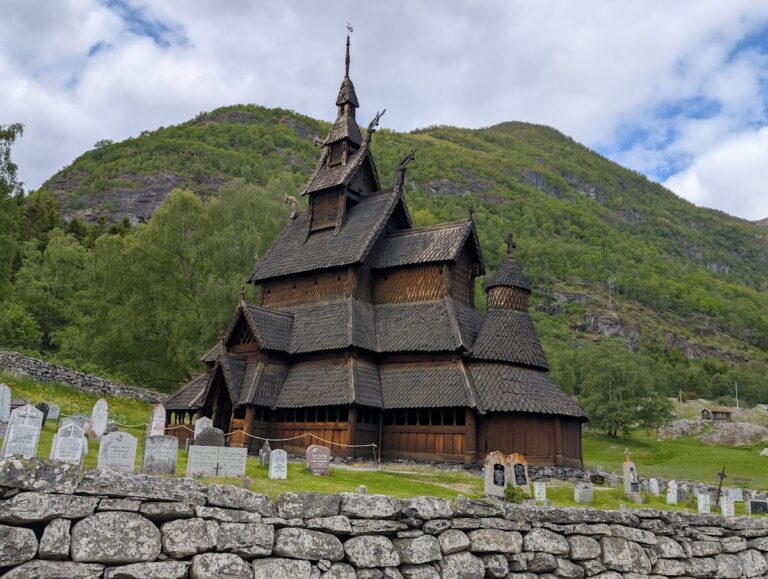
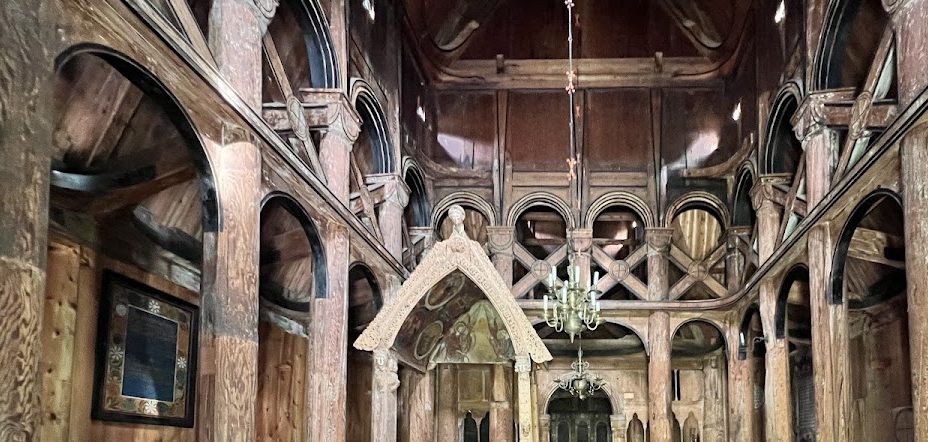
Hopperstad is a three-nave wooden stave church of the Borgund type. Its raised central nave is enclosed by lower aisles, and the narrower choir ends in an apse, a rounded termination of the sanctuary. The principal high-post system has six posts along each long side and three across the transverse sides. The middle transverse post reaches only to the lower beam clamp, while the other posts extend to the ground. The posts rise approximately 8 meters from large floor beams that form a rectangular frame.
Plain cube capitals crown the posts beneath the arcades. Wooden round arches connect the posts, and the arcades support beams carrying the walls of the raised central space. The lower arcades, beam clamps, and Saint Andrew’s crosses belong to later alterations rather than the original architectural arrangement.
Roof stages and turrets
The six-tiered roof follows the general arrangement of Borgund Stave Church. Two successive lean-to roofs cover the nave and choir, with the upper roof resting directly on the lower one. The lower roof has the flatter pitch. Above these stages are gabled roofs of different heights over the nave and choir.
A three-tiered roof turret rises over the nave. It has a lean-to roof and two tiers of pyramidal roofs, topped by a Celtic cross and a weathercock. The apse carries three tiers of conical roofs and a round turret with its own conical roof. Crosses crown the gables of the nave portals, the apse turret, and the choir roof. Dragon heads project eastward and westward from the two nave gables, while decorative ridge work and interwoven zigzag ornament with dragons cover the gable ends and bargeboard cornices. Such crosses, figures, and dragons may have had an apotropaic purpose, meaning that they were intended to ward off harmful or evil forces.
Portals and carved timber
West portal
The church has three portals. The west portal is a finely carved medieval entrance whose interlaced dragons bite one another’s necks. Its ornament has a broadly Romanesque character, reflecting a medieval European artistic tradition associated with round arches and robust decoration. The design has been compared with the west portal of Borgund and may have been made by a master connected with the decoration of several stave churches.
Choir portal and interior marks
A portal separates the nave from the choir. Its posts have cube capitals supporting a round arch, and the opening has an oval threshold. Three trefoil arcades, carried by very slender posts, are cut into the adjoining plank wall on each side.
The medieval timberwork carries numerous carved inscriptions and graffiti, including runic graffiti. Incised images and marks on the north and south walls include lions’ heads, fish, seals, and compass-drawn designs. One post retains a medieval painted figure of a saint.
Altars and medieval canopy
North altar and ciborium
Three stone altars belong to the church’s furnishings. The north side altar has a gabled ciborium, or baldachin, a canopy erected over an altar or sacred image. Dating from around the transition between the thirteenth and fourteenth centuries, the canopy was probably dedicated to the Virgin Mary, judging from its paintings and position. It stands against the northern nave posts and rests on two additional supports in the central aisle. Its rear support probably came originally from the southern ciborium, and its back may once have been covered with leather.
The gabled canopy is formed from wind boards decorated with carving. Its rear gable shows two angels swinging censers. The underside of the roof is painted with medallions bearing Latin inscriptions and scenes from the early life of Jesus. They show the Annunciation, the Nativity, angels announcing Christ’s birth to the shepherds, the shepherds receiving the message, the Adoration of the Magi, Mary’s purification and the presentation of Jesus in the Temple, the Massacre of the Innocents with Herod the Great and two knights, and the Flight into Egypt. Earlier cleaning and restoration damaged the original character of these paintings. The front posts have carved leaf roses.
Four sculpted heads decorate the ciborium. They represent Christ with a cross-shaped halo, a crowned female figure, a crowned male figure, and a monk beneath the right post. The crowned figures are often conventionally described as a queen and king. The heads probably date mainly from the thirteenth century, although some features reflect twelfth-century Romanesque art. Several may have belonged to the southern ciborium and been repositioned by Peter Andreas Blix. The head of Christ is probably the only one still in its original position.
Other altars and furnishings
The main altar in the choir has a tripartite catechism panel probably dating from 1621. The south side of the nave contains another stone altar. Changes to its southern posts indicate that it probably once had a ciborium, although the altar now stands without decoration.
Seventeenth-century furnishings included galleries at three levels around the walls, stairways leading to them, a baptismal font beneath the medieval canopy, and brightly colored biblical quotations painted on the walls. Most of the wall painting was removed during the nineteenth-century restoration. A Renaissance altarpiece dated 1621, a lectern from the same century, two gravestones, an oval inscribed board dated 1688 and referring to the reign of Christian V, and a female portrait from about 1650 remain among the church’s furnishings.
A wooden Madonna dated approximately 1230 to 1235 is held at the Bergen Museum. Tradition associates the oak sculpture with neighboring Hove Church, while another interpretation places it originally beneath Hopperstad’s ciborium before its transfer to Hove. The figure has been associated with early Gothic sculpture in Norway and possible English influence.