Dolmen D44: A Neolithic Megalithic Tomb in the Netherlands
Site at a Glance
- Popularity
- Very Low
- Country
- Netherlands
- Primary era
- Stone Age
- Eras represented
- Stone Age
- Civilizations
- Unclassified
- Site type
- Burial
- Remains
- Tomb
On this page7 sections
History
Dolmen D44 is a Neolithic megalithic tomb at Westenesch, near Emmen in the Netherlands. It belongs to the Western Group of the Funnel Beaker culture, a Neolithic culture named for its characteristic funnel-shaped pottery, and is dated to 3470–2760 BCE.
Nineteenth-century documentation
Leonhardt Johannes Friedrich Janssen visited D44 in 1847. The following year, his overview of Dutch megalithic tombs included a description and schematic plan of the monument, providing its first recorded account.
In 1874, Willem Pleyte and photographer Jan Goedeljee undertook the first systematic photographic survey of Drenthe’s megalithic tombs. Pleyte also made lithographs, prints produced from prepared surfaces, based on the photographs. Four years later, British antiquaries William Collings Lukis and Henry Dryden surveyed forty tombs in Drenthe, including D44. Concern that restoration could alter the monuments’ original appearance led the Society of Antiquaries of London to request careful records, while antiquarian Augustus Wollaston Franks encouraged the work. The survey report remained unpublished at the time.
Archaeological work and later recording
Dutch archaeologist Albert Egges van Giffen recorded D44 in 1918. In 1925, he described it as completely ruined and linked its condition to a pigsty once built partly over the tomb. Van Giffen carried out a small archaeological investigation and restoration in 1961, and photographed the site. This work did not establish the tomb’s original form.
D44 became a National Monument in 1983. In 2015, Drenthe archaeologist Wijnand van der Sanden published the Lukis and Dryden survey and assessed their work as high quality after reviewing later research on the tombs. In 2017, photogrammetry, which uses photographs to create measured records or models, was used to include D44 in a three-dimensional atlas produced through a project involving the Province of Drenthe, the University of Groningen, and the Gratama Foundation.
Remains
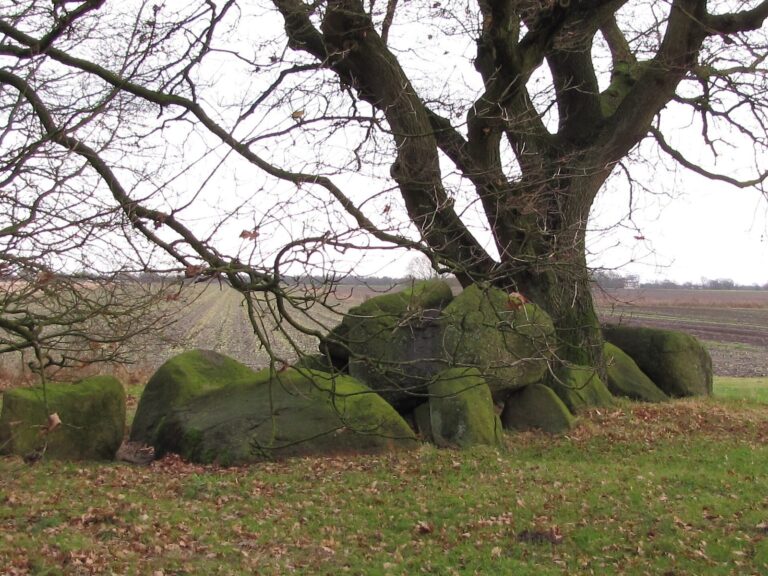
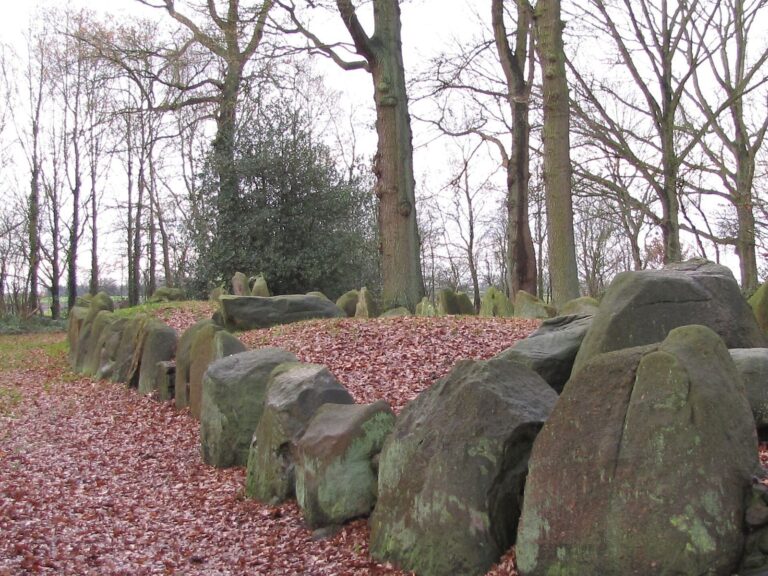
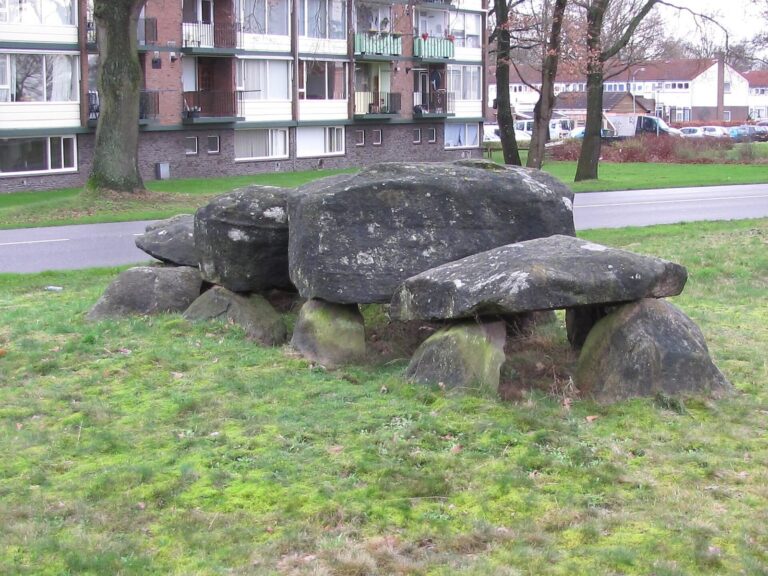
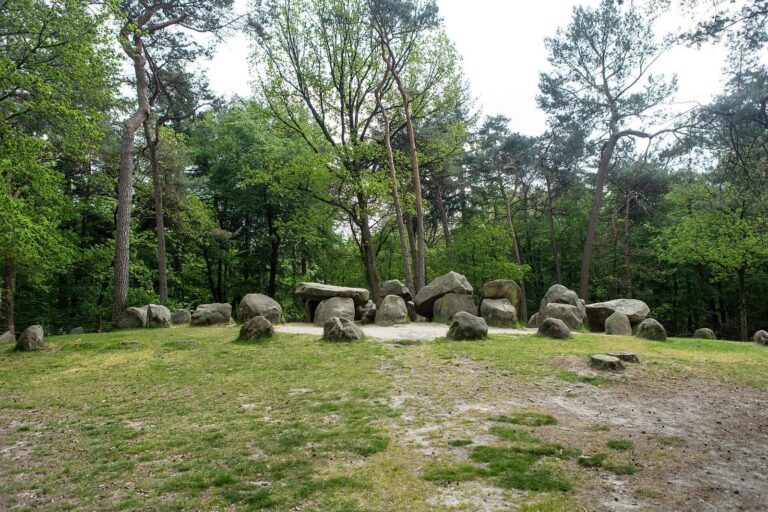
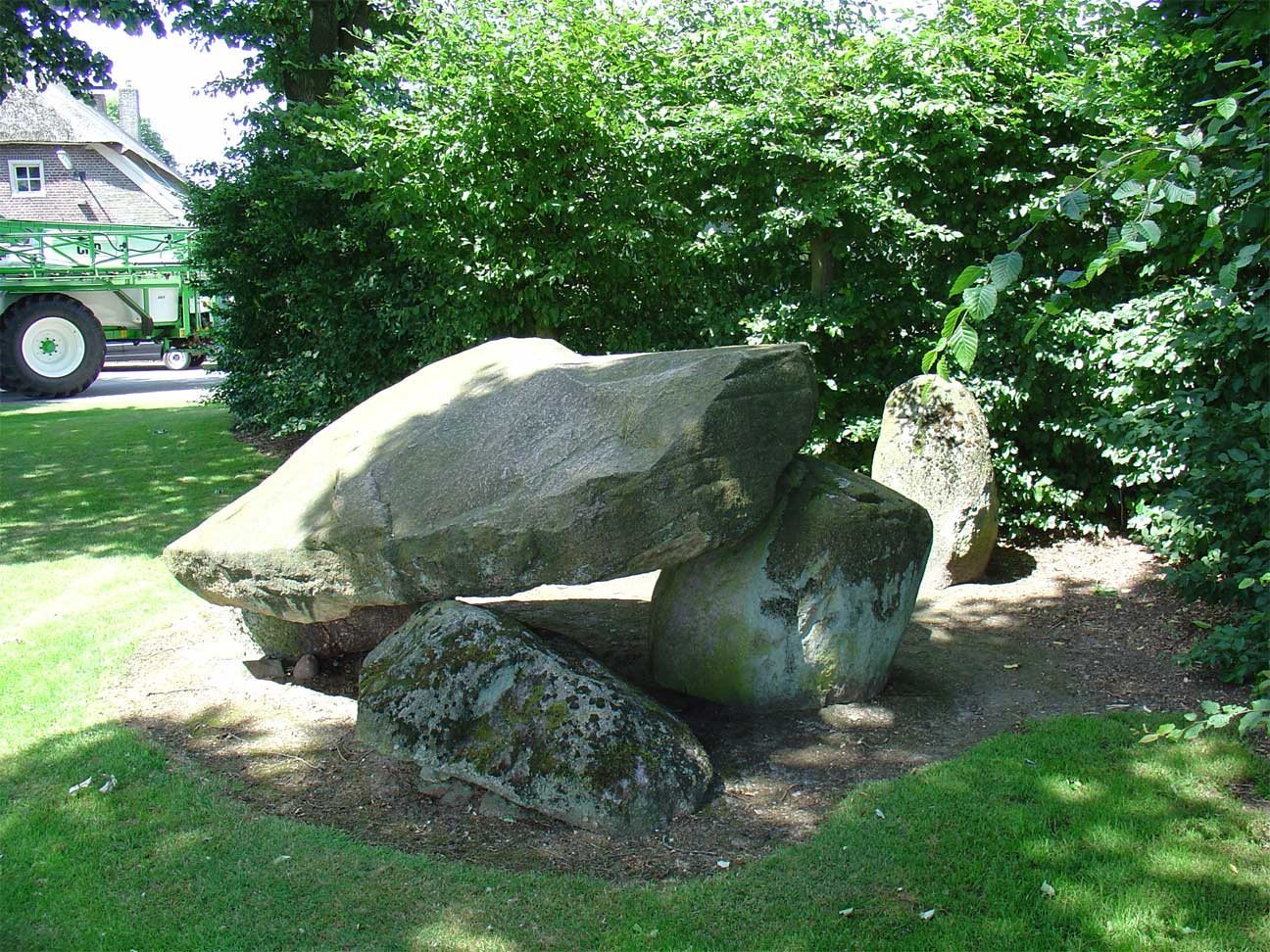
D44 survives in a severely ruined state, with a small group of upright stones and a capstone. It is described as the most deteriorated megalithic tomb in the Netherlands.
Stone remains and setting
Surviving stones
At the eastern end, two upright wall stones stand beside an end stone, which supports a capstone. Farther west, another upright wall stone has a row of wedge holes. A plan from 1878 depicts a capstone supported on one side by a stone, with another support stone fallen. The surviving arrangement does not establish the tomb’s original orientation, dimensions, or precise type.
Location and nearby tombs
The tomb lies on a farmstead along Schietbaanweg, at the northern edge of Westenesch, and is the only Dutch megalithic tomb on private property. Another tomb, D44a, lay very close by. Other nearby tombs include D42, 940 metres to the north; D43, 1.2 kilometres east-northeast; D41, 1.6 kilometres northeast; D45, 2.5 kilometres east; and D38–D40, 2.8 kilometres north-northeast.