Salvatorkirche Weißbach: A Late-Gothic Lutheran Church in Saxony
Site at a Glance
- Popularity
- Very Low
- Country
- Germany
- Primary era
- Early Modern
- Eras represented
- Early Modern, Modern
- Civilizations
- German, Holy Roman Empire
- Site type
- Religious
- Remains
- Church
On this page12 sections
History
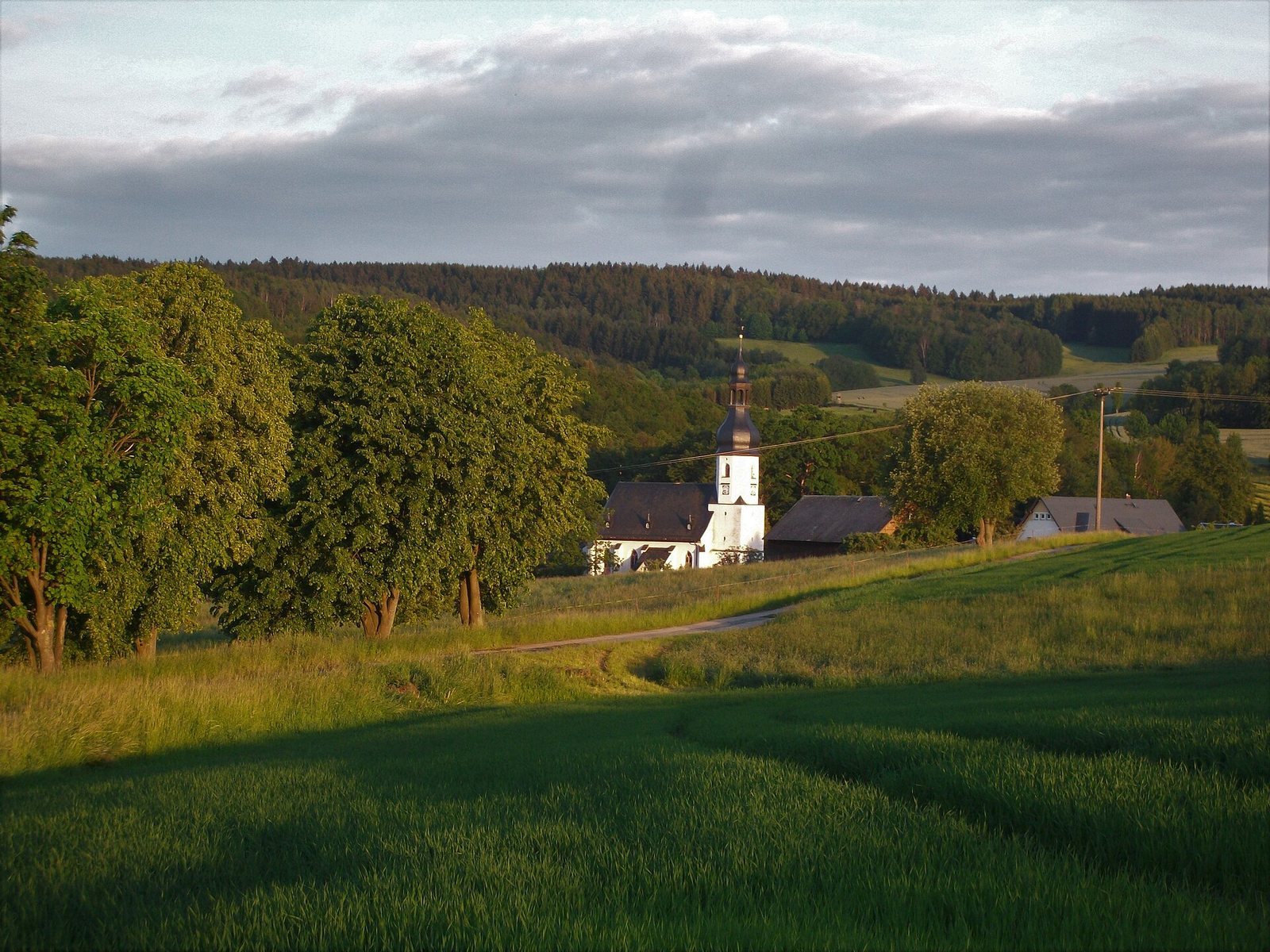
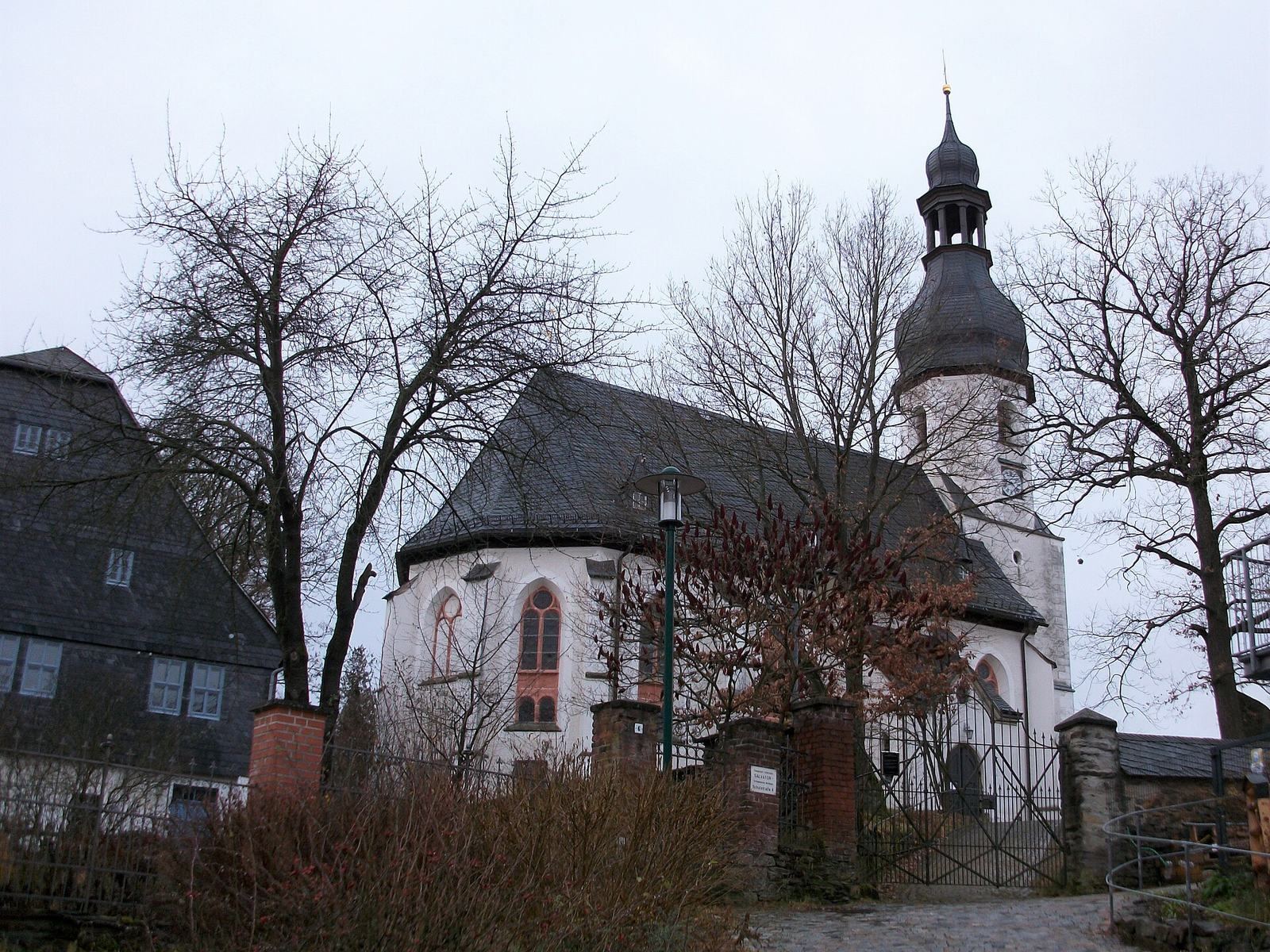
Salvatorkirche Weißbach is a late-Gothic Evangelical Lutheran church in Weißbach, a district of Langenweißbach in Saxony, Germany. Built in 1515–16 during the final phase of medieval Gothic art and architecture, it is particularly known for its valuable altar. The church belongs to the Salvator congregation of Langenweißbach, within the Zwickau church district of the Evangelical Lutheran Church of Saxony.
Construction and later alterations
The church was remodeled in 1692–94 and restored in 1895 by Oskar Mothes, a nineteenth-century German architect and restorer. These works followed its late-Gothic construction and added later phases to the building’s history.
Modern conservation
An exterior restoration took place in 1992–93. Work to restore the church’s historic altar finish continued through 2016.
Remains
Exterior and plan
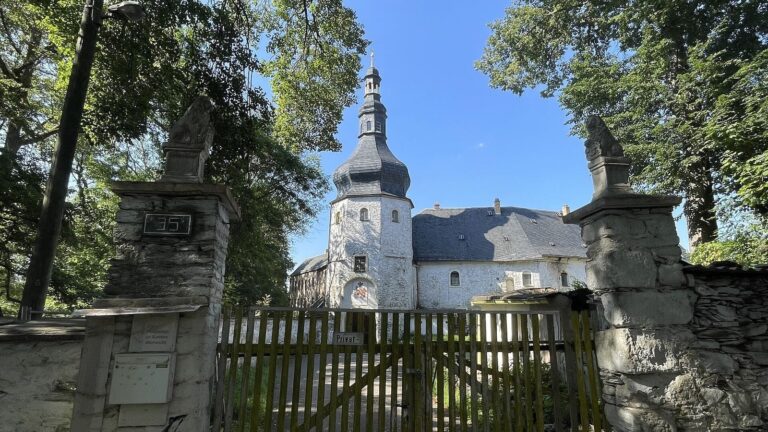
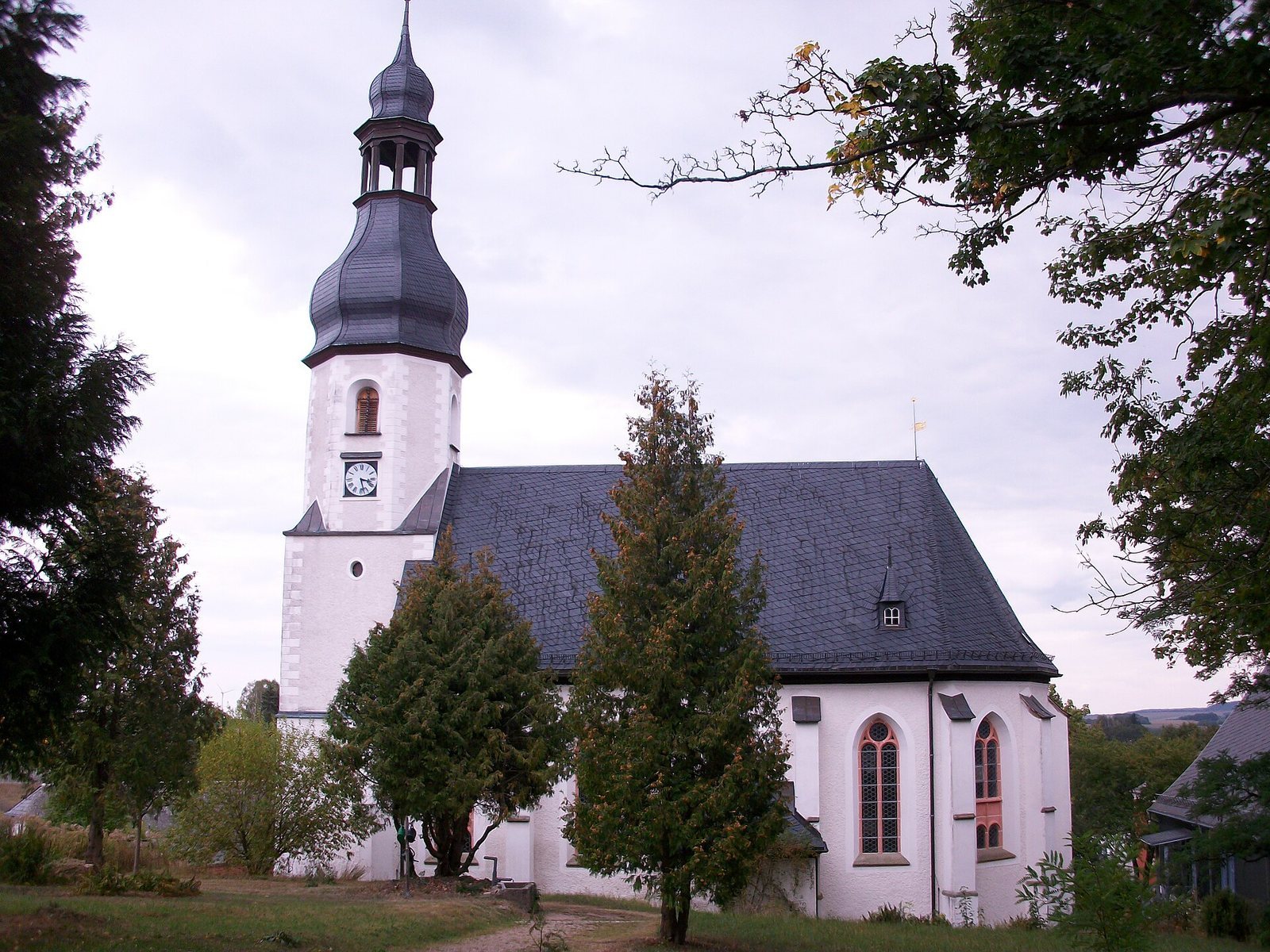
The substantial, plastered church has a single nave, meaning one main worship hall, and a choir, the sanctuary end, closed on three sides. Buttresses reinforce the walls, while tracery, ornamental stone patterns within a window, frames the windows. The square-plan west tower rises to an octagonal upper level for the bells, capped by a curved Baroque roof and a lantern, a small roofed structure. A late-Gothic doorway opens on the tower’s north side. Exterior work in 1992–93 included repairs to the sandstone window and door surrounds, new leaded-glass windows, and roofing on the nave and entrance.
Interior and furnishings
Hall and galleries
A painted panel ceiling dated 1747 depicts scenes from the Old and New Testaments. Two-story galleries extend along the west and north sides; their balustrade panels carry painted scenes from the life of Christ, added in 1753.
Carved altar
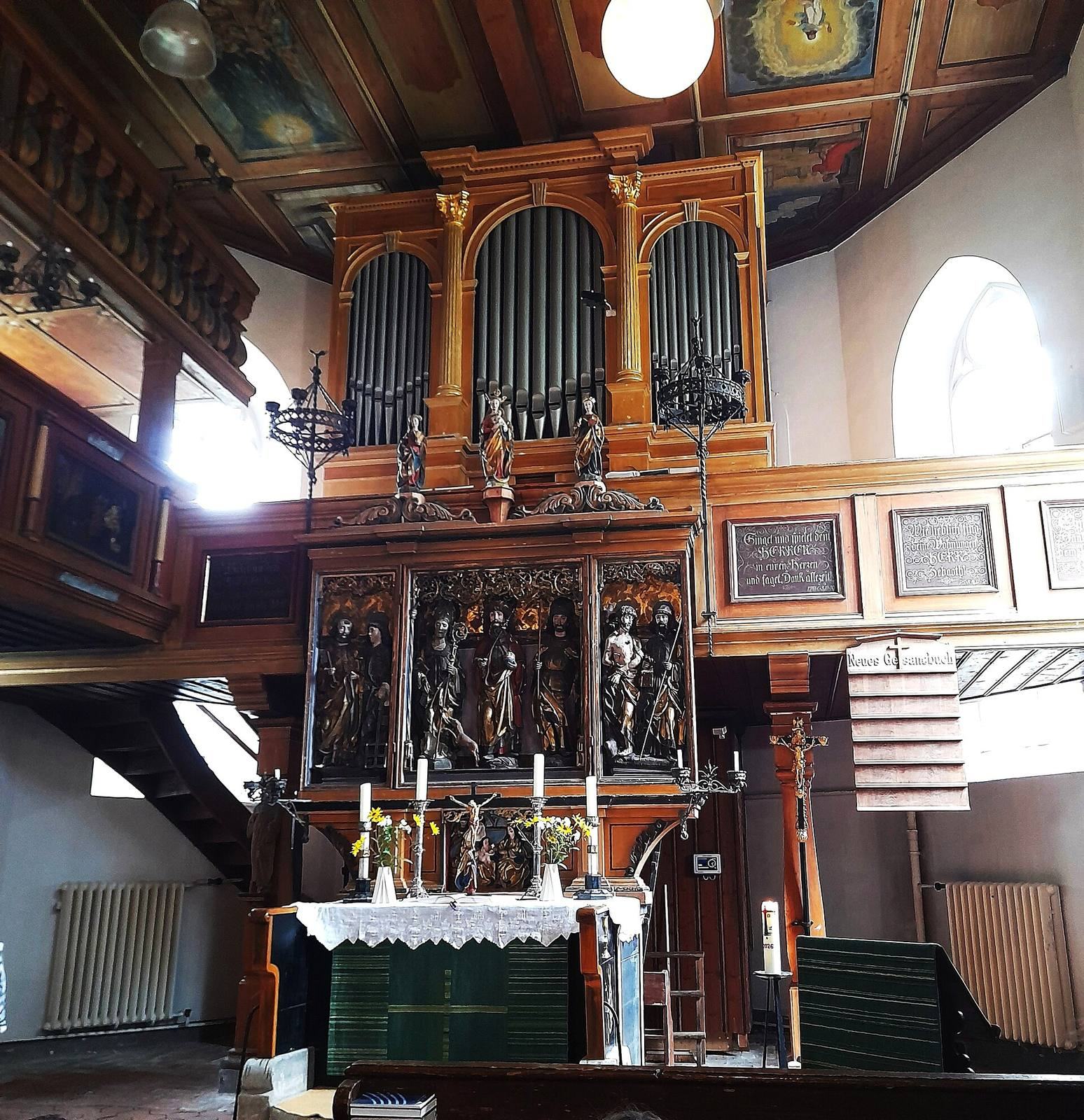
Peter Breuer, a German sculptor of the late Gothic period, carved the altar in 1518–20, a major work from the later part of his career. Its predella, or lower section, represents the Holy Kinship, Jesus’ extended family. In the central body, Christ appears triumphant with Saints Giles and Quirinus. The side panels show Peter and Lawrence on one pair of wings, and Sebastian and Thomas on the other. When the altar is opened, painted figures of Wolfgang, John the Baptist, Jerome, and Christopher are revealed. Its upper section shows Mary above a crescent moon, accompanied by Barbara and Catherine. The altar’s original finish was restored through work completed by 2016.
Baptismal font
A sandstone baptismal font with tracery dates to around 1500. Its Baroque cover, in a European style prominent in the seventeenth and eighteenth centuries, depicts Christ with children. Comparable fonts survive in other churches in the Zwickau district.
Pulpit and crucifix
The sandstone pulpit dates to 1693 and rests on a figure of Peter. Its recessed arches contain reliefs of Christ and the four Gospel writers. An angel stands atop the wooden canopy above the pulpit. Beside it hangs a large wooden crucifix dated 1695.
Other carved and printed furnishings
Two unpainted carved figures, a saintly bishop and another probably representing Saint George, stand on the gallery pillars. A sacrament niche in the sacristy, the room used to store service objects and prepare for worship, probably dates to around 1515. The church also has life-size woodcut portraits of Martin Luther, a leading figure in the Protestant Reformation, and Philipp Melanchthon, a humanist scholar and theologian who helped shape it. The portraits date from the early sixteenth century.
Organ and bells
Eule Orgelbau of Bautzen made the organ in 1876. Three bells of hard-cast iron hang in a steel frame.