Dòmu d’Urxia: A Nuragic Sanctuary in Sardinia
Site at a Glance
- Popularity
- Low
- Country
- Italy
- Primary era
- Bronze Age
- Eras represented
- Bronze Age
- Civilizations
- Nuragic
- Site type
- Religious
- Remains
- Temple
On this page12 sections
History
Nuragic sanctuary and later use
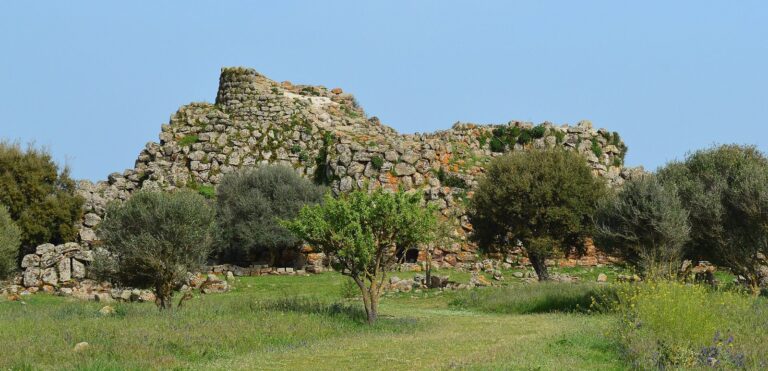
Dòmu d’Urxia is a Nuragic sanctuary on Monte Cuccureddi near Esterzili in Sardinia, Italy. The Nuragic civilization, Sardinia’s prehistoric culture known for stone-built monuments and settlements, constructed it in the Late Bronze Age, when bronze remained a major material, around the end of the 13th century BCE. It is the largest Sardinian temple of megaron form. Set at a highland junction used by people moving livestock seasonally, it lies about 20 km east of the sanctuary of Santa Vittoria.
The temple was erected over an earlier Nuragic settlement, whose remains date to around 1300 BCE. Excavations place the complex broadly in the second half of the second millennium BCE, and people continued to frequent the sanctuary into the Roman period. In later times, shepherds adapted the building as a cattle enclosure and altered it in the process.
Changing interpretations
In 1840, Alberto Della Marmora interpreted the building as Roman and considered it a military outpost. Sardinian writer and historian Vittorio Angius included a notice about it in 1883. In 1981, archaeologist Ferruccio Barreca compared the temple’s three-part plan with that of the Temple of Jerusalem. He proposed eastern Mediterranean cultural influence and dated construction to the fifth century BCE.
Later excavations clarified questions raised by these earlier interpretations, which had been made while collapse debris covered parts of the building. The newly recovered evidence also included objects associated with ritual activity, including offerings brought by pilgrims.
Remains
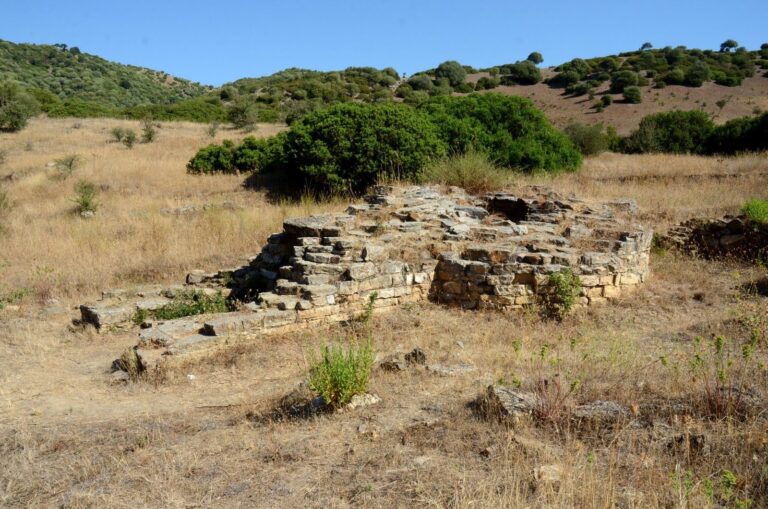
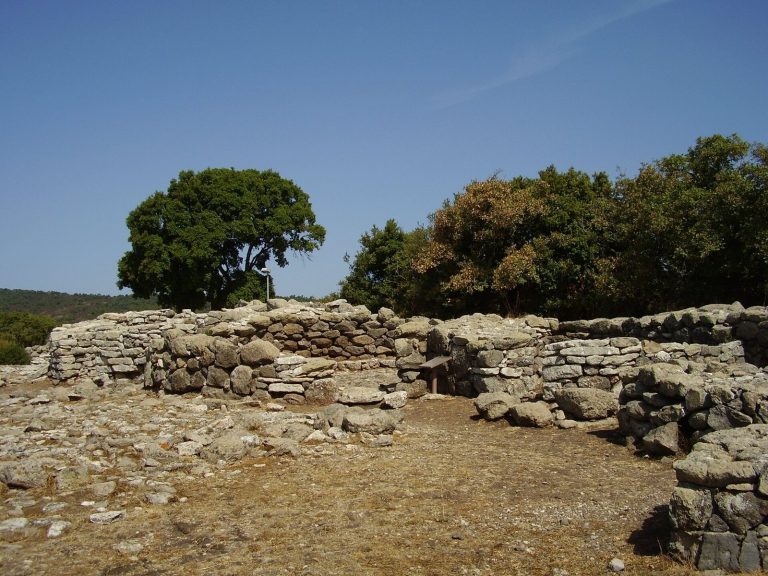
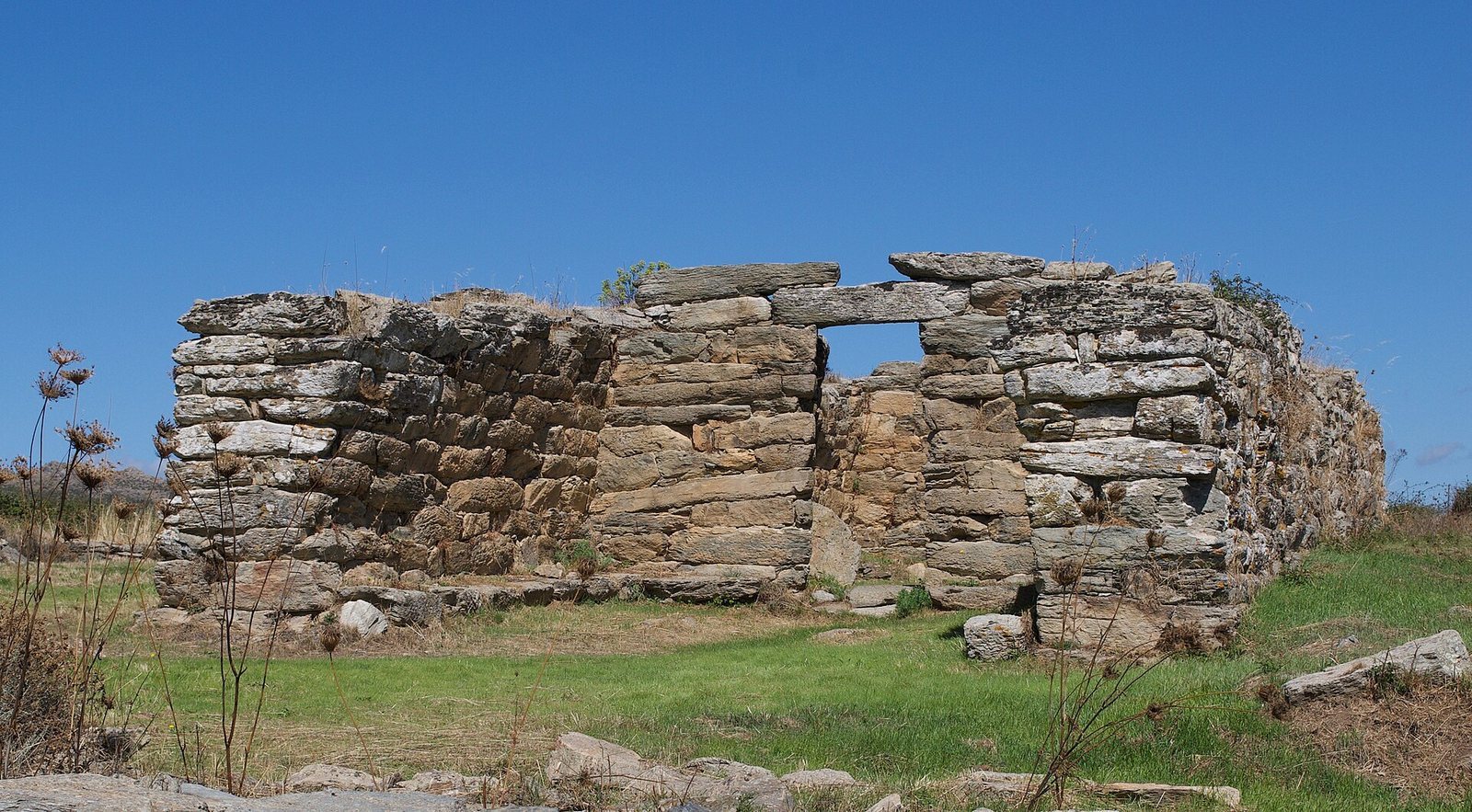
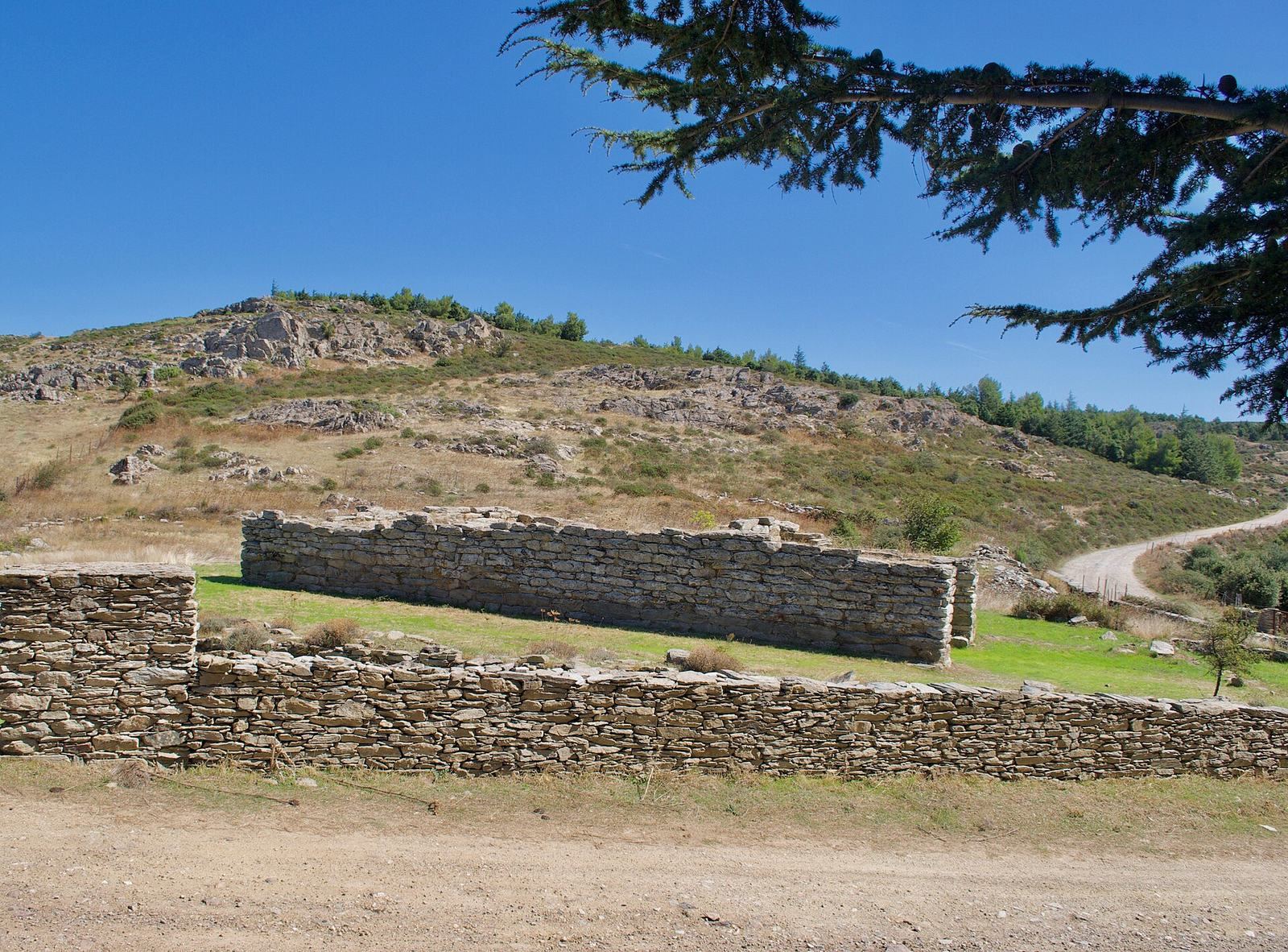
The south-facing sanctuary is a rectangular schist building, with a large vestibule before two chambers. Its plan is that of a megaron, a rectangular building with a principal room behind a vestibule. The temple occupies a broad hollow at about 1,000 m elevation on Monte Cuccureddi. It measures approximately 22 by 8 m and covers about 180 m².
Temple structure
Entrance and vestibule
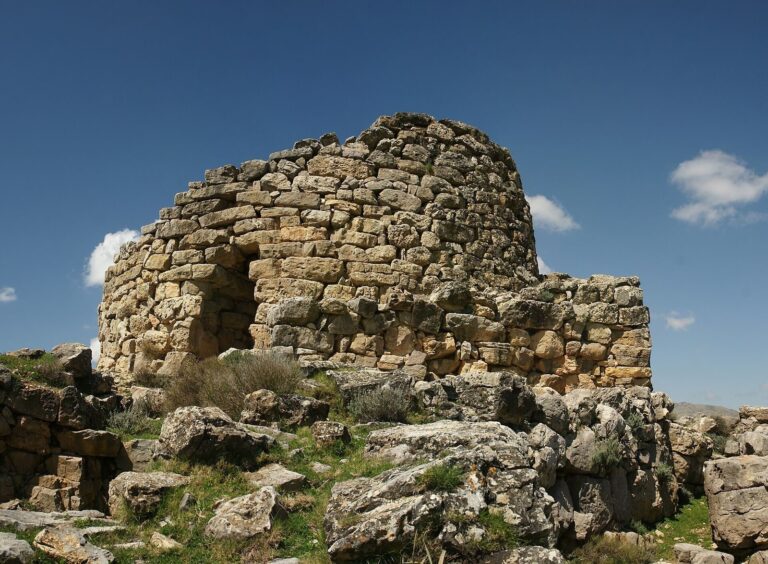
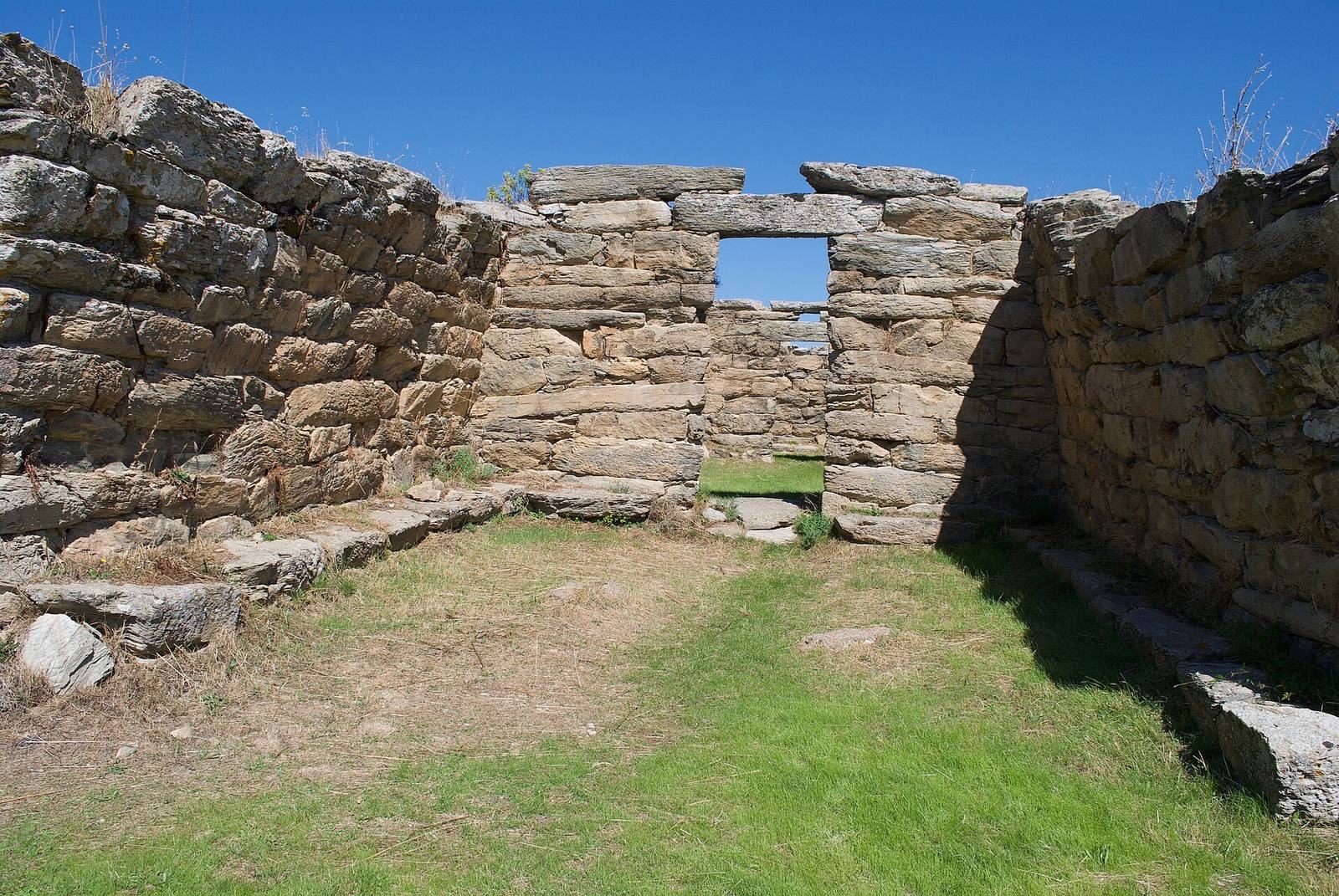
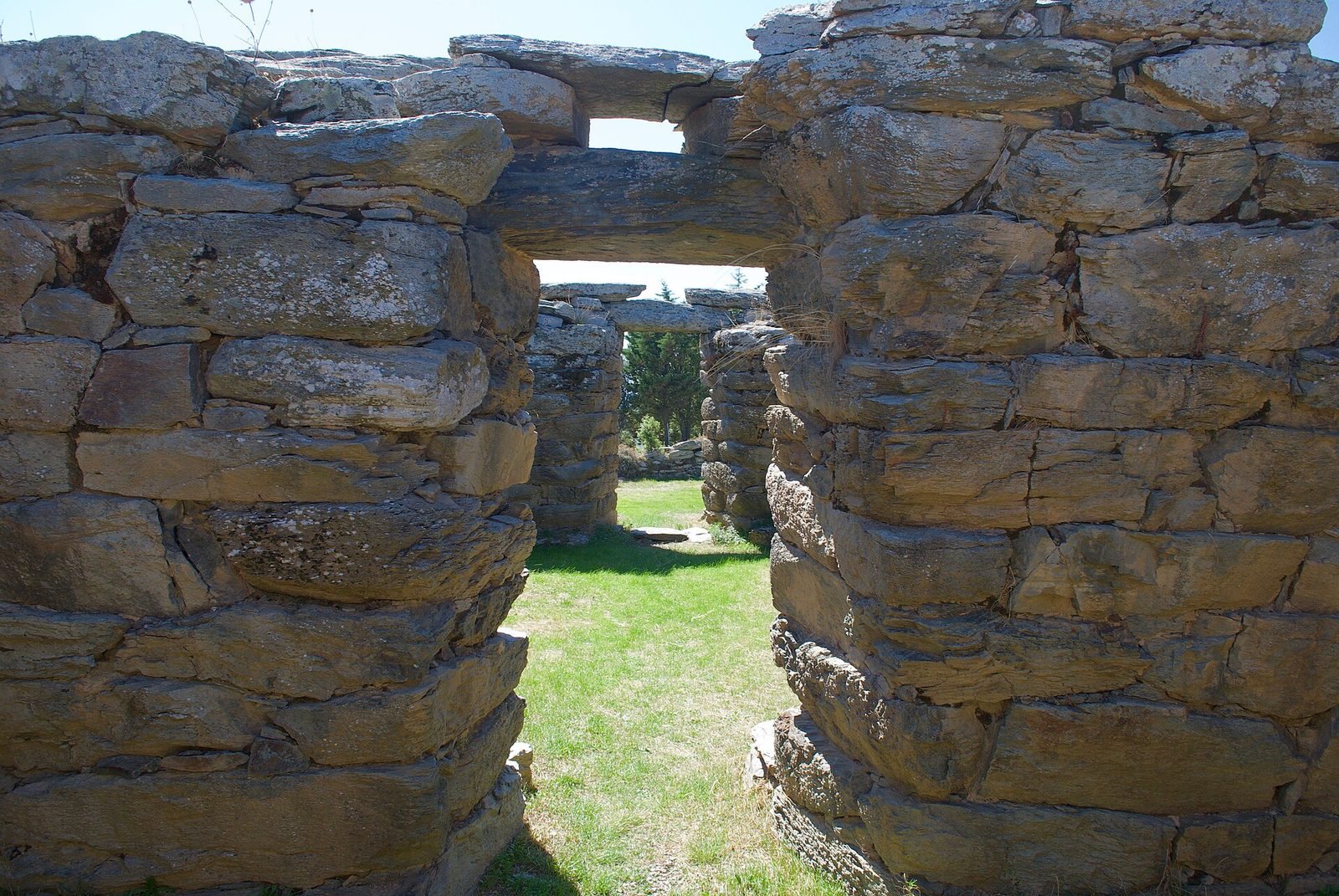
Local schist forms the temple’s carefully arranged masonry. Courses of long blocks alternate with rows of smaller stones, a pattern intended to strengthen the friable rock against the area’s substantial temperature changes. The surviving walls reach about 2 m in height, with some sections rising to a maximum of roughly 2.4 m.
A roughly square vestibule, about 5 m across, stands before the chambers. Wide blocks at the base of its side walls create a bench. The entrance retains a stone threshold and a long lintel, with an opening above it to ease the load. Blocks with slanted ends found in the vestibule suggest that the building may once have had an overhanging stone roof with two slopes. Benches at the entrance and along its projecting side walls have been interpreted as bench-altars.
Inner chambers
The first chamber measures about 8 by 4.5 m. Broad schist slabs form benches along its walls, and a large upright stone on the right separates a small storage area. The second chamber measures approximately 3.3 to 3.5 by 4.5 m. It is interpreted as the naos, the temple’s innermost sacred chamber, and may have been accessible only to ritual officiants. A bench was also present there. Both chambers had compacted-earth floors, portions of which survive. Plaster fragments came from the inside of the first chamber’s left wall.
Architectural details and parallels
The curved stone beam and rounded projections, interpreted as feminine, have parallels at Sardinian well sanctuaries dated to the 12th–10th centuries BCE. Similar plastered wall arrangements occur at Temples 1 and 2 at S’Arcu ’e Is Forros and at Gremanu, sites with comparable elevations and climatic conditions. Megaron plans also appear in early levels at Troy, an ancient city in northwestern Anatolia.
Enclosure and earlier settlement
A low elliptical enclosure, approximately 50 by 30 m, surrounds the temple. Its dry-stone wall survives in a few courses, with its base resting on huts from the earlier settlement. Some huts were incorporated into or altered for the sanctuary area; parts of their masonry were reused to form an access corridor.
Bronze offerings and pottery
Figurines from the vestibule
Excavation of the vestibule uncovered an intentionally arranged group of ten bronze figurines. Their placement may have been connected with white earth found in the vestibule’s corners and on the bronzes. Two praying priestesses, each 15 cm high, have long straight hair, simple tunics, and broad mantles with decorated bands held by shoulder straps. Each raises her right hand and holds a four-flamed torch in her left.
A 17 cm male figure wears a head covering and short tunic, with a shoulder strap carrying a dagger with an angular, gamma-shaped hilt. He raises his right hand and offers a collared pot held by a small cord in his left. Another male figure, 14 cm high, has lost his head and right arm. He wears a short tunic and a similar dagger strap, with a long stole over his left shoulder bearing raised decoration at the centre. His left hand offers a cord-held pot with a distinct cylindrical neck.
The animal figures include a 21 cm-long bull, 13 cm high, with a dove perched between its broad horns; a hollow-bodied wild sheep, or mouflon, 11 cm long and 13 cm high, with detailed horns, bulging eyes, and a tapered muzzle; and a 5 cm bird with carefully rendered feathers. The group appears arranged around a 19 cm praying figure in a short tunic, dagger strap, and stole. The figure offers a circular dish that may contain food or sling projectiles. When found, a 22 cm-long, 12 cm-high stag was fitted into the worshipper’s arm, while a collared dog bit its neck. A 15 cm archer completes the described grouping. He wears a helmet, cheek guard, body armour, and a leather kilt decorated with metal studs, leaving his back exposed.
Finds from the first chamber
A separate bronze figurine depicts a worshipper carrying a bound wild sheep on the shoulders, apparently prepared for offering and sacrifice. Other finds from the chamber include bowls with angled sides, small pots with large perforated projections, and miniature vases. The miniature vessels are interpreted as containers brought by pilgrims with small food offerings.