Ōchiwatoge Temple Ruins: A Heian-Period Buddhist Mountain Temple in Japan
Site at a Glance
- Popularity
- Very Low
- Country
- Japan
- Primary era
- Unclassified
- Eras represented
- Unclassified
- Civilizations
- Unclassified
- Site type
- Religious
- Remains
- Temple
On this page10 sections
History
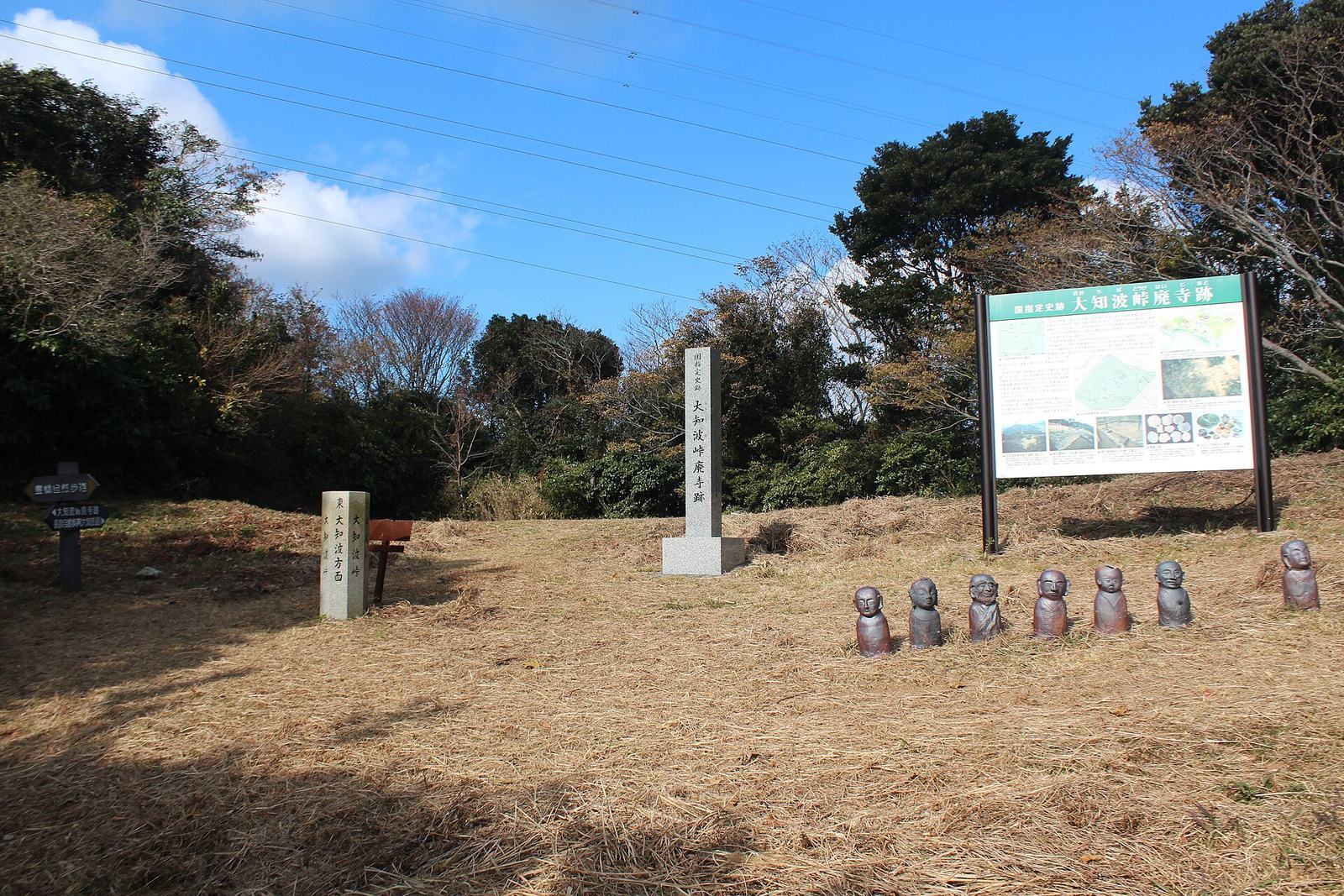
Ōchiwatoge Temple Ruins are the remains of a Japanese Buddhist temple on the eastern side of Ōchiwa Pass, on the border of Shizuoka and Aichi prefectures, Japan. A substantial temple was built here from the mid-tenth century, during the middle centuries of the Heian period (794–1185), as Buddhist culture spread beyond the Kinki region.
Early use and the temple
People used the site from around the eighth century. The temple took shape on a substantial scale from the mid-tenth century and had been abandoned by the end of the eleventh. It belonged to esoteric Buddhism, whose teachings and rituals are transmitted through initiation. Its specific tradition is uncertain: both Tendai and Shingon, Japanese Buddhist traditions that include esoteric practices, have been proposed.
Ōchiwatoge is understood as a regional mountain temple formed as Buddhism spread beyond Kinki. The expansion followed the development of Enryaku-ji, a major Tendai monastery, and Kongōbu-ji, a major Shingon monastery, in the region during the early Heian period. Later mountain temples in this wider movement included Yama-dera in Yamagata, Enichi-ji in Fukushima, and a temple in Kumamoto.
Renewed use and archaeological recognition
In the latter half of the twelfth century, a small hall dedicated to Jizō, a Buddhist figure associated with protecting and caring for beings, was built over the earlier remains. The site was also used again for religious practice by mountain ascetics, who undertake spiritual discipline in mountain settings.
The remains had been recognized as traces of a building, but their identification as a temple was uncertain. Excavations by the Kosai City Board of Education began in 1989 and continued for seven years, establishing the site’s Buddhist character and clarifying its chronology. On 29 January 2001, it was designated a National Historic Site for its well-preserved evidence of provincial Buddhist temples in the middle Heian period.
Remains
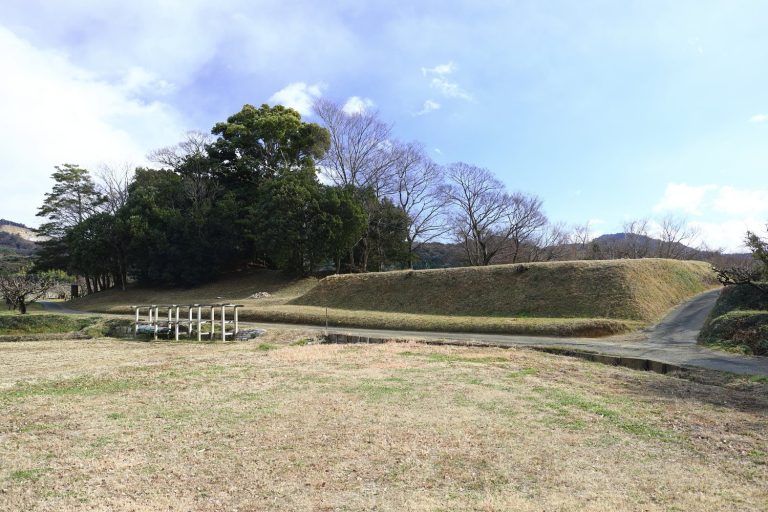
The approximately 3.7-hectare complex occupied a gently sloping area below the ridge on the eastern side of Ōchiwa Pass, at about 340–350 metres above sea level. Its buildings and related features were arranged around a small valley. The pass is the highest point of the Toyokawa Road, a mountain route linking the Chibata area of Kosai with Toyokawa Inari in Toyokawa. The site overlooks Kosai, Lake Hamana, Hamamatsu, and the wider Enshu region.
Temple layout and buildings
Platforms and building remains
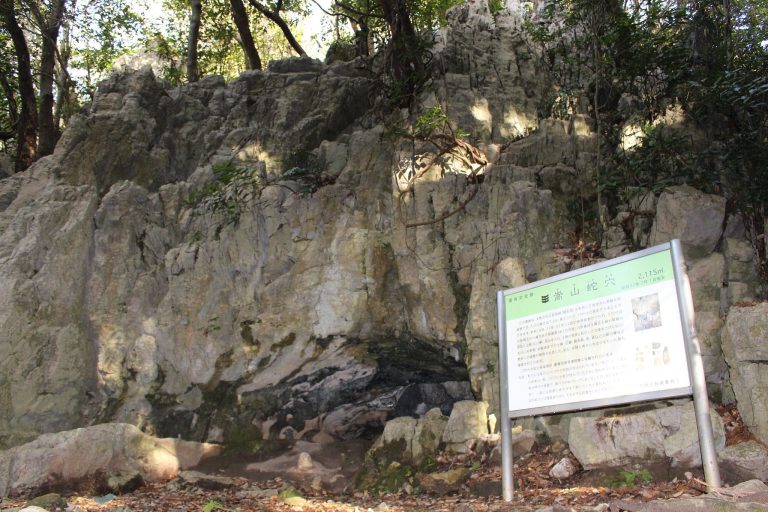
Platforms were formed by cutting into the uphill side of the slope and building stone retaining walls on the downhill side. The complex included the remains of twelve buildings, a temple gate, and a sacred rock.
Buddhist halls and other buildings
Five of the twelve building remains were Buddhist halls. The largest measured 16 by 11 metres and had a seven-by-four-bay plan, meaning seven structural intervals by four, with roof eaves on all four sides. The other buildings may have included monks’ quarters, which stood east of the pond remains.
Ponds and ritual activity
Pond complex
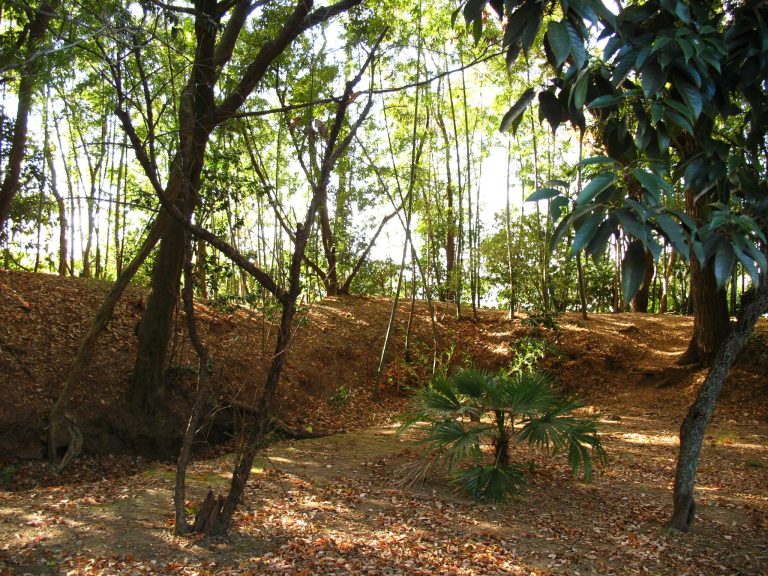
Two ponds lay at different levels in the hollow of the central valley, with a weir between them. They formed part of the temple complex.
Finds and fire rituals
Objects from the pond area included green-glazed and ash-glazed ceramics, Haji ware (unglazed Japanese earthenware), bowls, dishes, and wooden items. Among the pottery and ceramics were 445 pieces with ink inscriptions, including references to offerings to the Buddha and six vessels used in rituals. Burnt soil and stones associated with an altar, together with Haji ware and glazed pottery, indicate that fire rituals took place here. After excavation, the area was backfilled, leaving the remains underground.