Peyre von Pithié: A Late Neolithic Megalithic Tomb in France
Site at a Glance
- Popularity
- Very Low
- Country
- France
- Primary era
- Stone Age
- Eras represented
- Stone Age
- Civilizations
- Unclassified
- Site type
- Burial
- Remains
- Tomb
On this page9 sections
History
Peyre von Pithié is a Late Neolithic megalithic tomb in the forest of Caillan, northeast of Fargues, in the Landes department of Nouvelle-Aquitaine, France.
Archaeological investigations
Work at the monument began in 1873, when Braquehaye and Frédéric de Dieu de Samazan excavated there. Teulière and Faugère-Dubourg later carried out excavations and published a detailed account in 1876.
Amateur antiquarians repeatedly plundered the monument. Pierre-Eudoxe Dubalen reported on it in 1925, and J. Roussot-Larroque conducted another excavation in 1976.
Remains
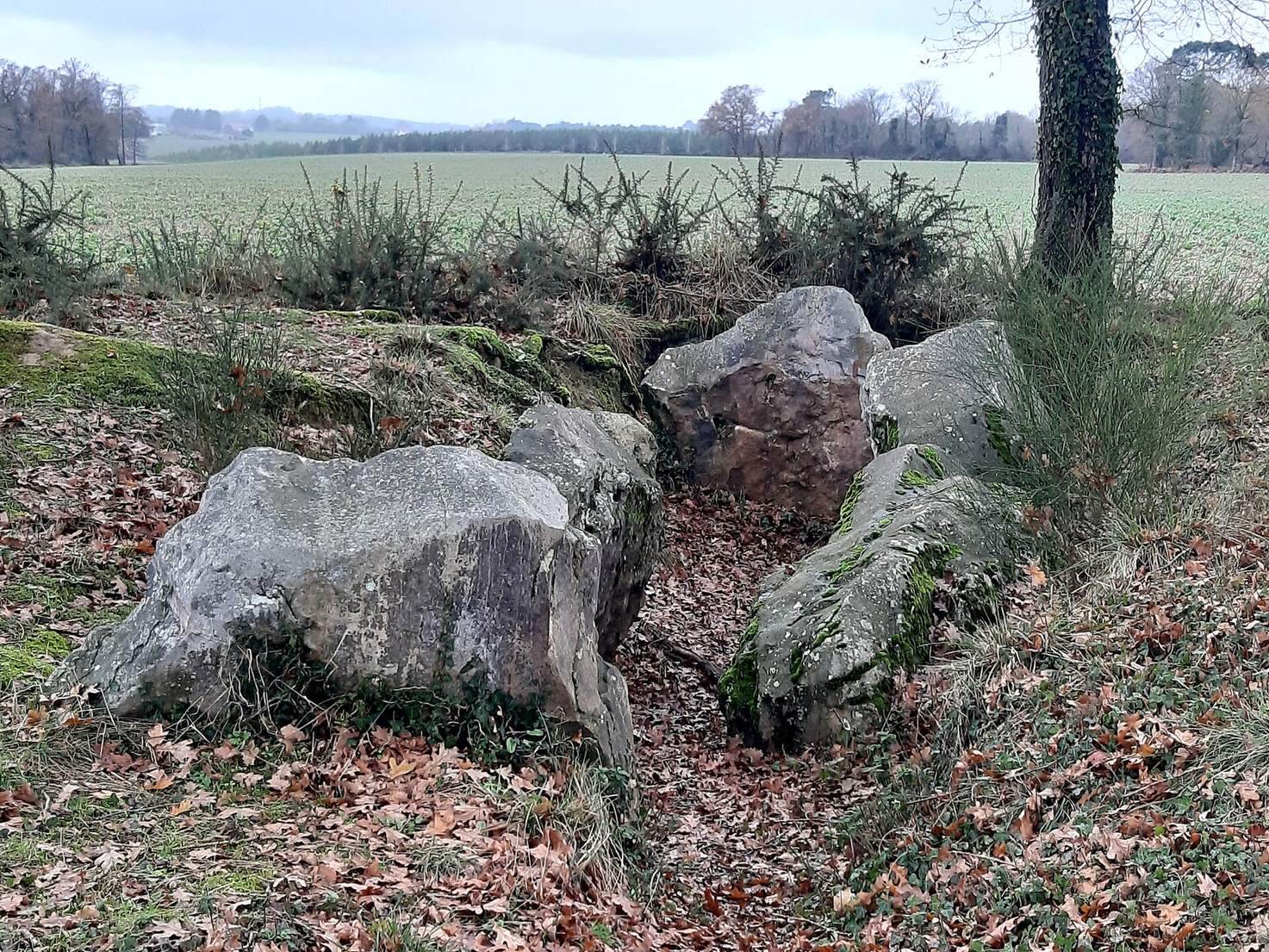
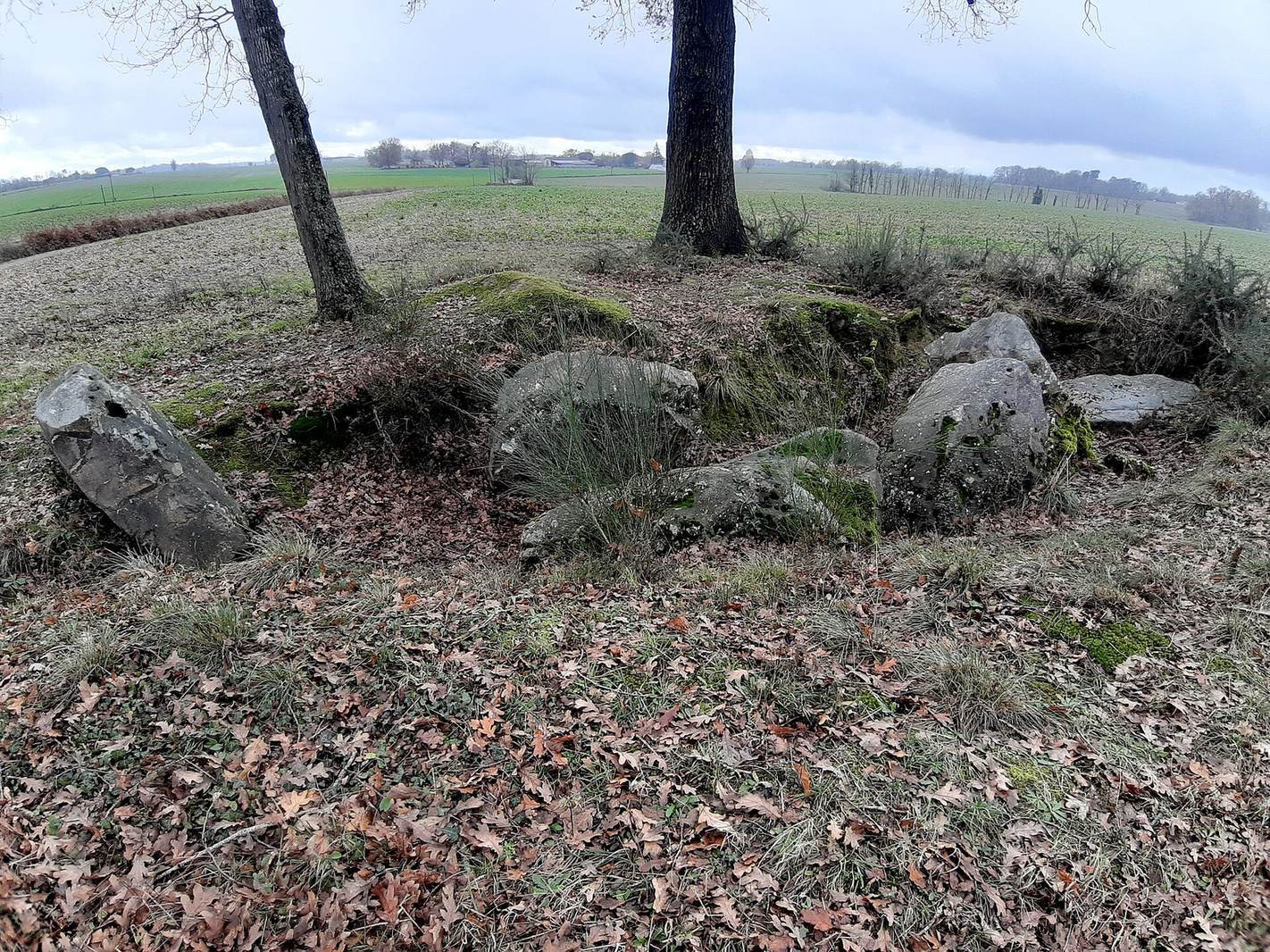
The trapezoidal chamber is aligned northwest to southeast, within a low, oval burial mound that survives in part. It is 5.6 m long, widening from 0.75 m at the entrance to 1.5 m at the rear. Roussot-Larroque gives 18 m as the monument’s total length. Ten upright stones form the chamber: eight are sandstone from Coudures dating to the Eocene, an epoch within the Paleogene Period, and two are limestone. Two adjoining flat slabs pave the chamber’s rear. A large slab behind the monument may have served as a cover.
Architectural interpretation
Its classification is disputed. Alain Beyneix regards it as a simple dolmen, a type of megalithic tomb, of the western Pyrenean type. He compares it with simple tombs from the Causses region, noting that its side walls consist of two or three upright stones set in line or overlapping. J. Roussot-Larroque instead identifies it as a covered gallery, an elongated tomb chamber with parallel walls made from upright stones of uniform height.
Excavated finds
Burnt remains and flint
Dubalen’s 1925 report describes a small quantity of calcined bone and traces of ash. The 1976 excavation recovered two flint flakes.
Worked bone and antler
Two fragments of a worked-bone object, whose purpose is unknown, resemble objects from the covered galleries of Sabatier and Maine-le-Prieur at Bellefond, about 30 km north of Fargues. Roussot-Larroque proposed that other galleries of the same kind may have stood between the two groups of finds. A deer-antler pendant has parallels among Late Neolithic finds from the Paris Basin and Switzerland.
Ornaments and pottery
Finds from Teulière and Faugère-Dubourg’s excavations include a necklace of deer canine teeth and perforated, disc-shaped stone beads, several small rock-crystal prisms, and a pottery fragment. These objects are now in the collections of the museum at Nérac.
The nearby Peyre de Pithié slab
The name Peyre de Pithié refers specifically to a slab a few metres from the tomb’s entrance. A hollow in the stone is linked to a local belief that it fills with water during certain lunar phases. The water is said to have healing properties, and women who drink it are believed to become fertile.