Abiward: An Ancient Frontier City in Turkmenistan

Site at a Glance
- Popularity
- Very High
- Country
- Turkmenistan
- Primary era
- Classical
- Eras represented
- Classical
- Civilizations
- Parthian
- Site type
- City
On this page8 sections
History
Abiward was an ancient city in present-day Turkmenistan, in northern Greater Khorasan, a historical region of Central and western Asia. Its history includes the Sasanian period, when the Sasanians ruled the Iranian Empire from the third to seventh centuries. Abiward belonged to a chain of frontier towns established by ancient Iranian rulers to deter raids from Inner Asia. The surrounding district, which also included Nisa and Serakhs, was known as Etek.
Origins and the Sasanian period
The city’s foundation is uncertain. One tradition says Arsaces, an early Parthian ruler, founded Abiward and Nisa in the third century BCE before making Hecatompylos, a major Parthian capital, his own capital. Another credits Arsaces’s brother Tiridates with founding the city as Dara in Apavar, an ancient regional name. A separate story from Iranian epic tradition, whose characters are legendary rather than securely historical, says Kay Kavus gave land in Khorasan to a son of Gudarz, who built a city and named it after himself.
Abiward helped develop the Christian tradition historically called Nestorian, associated with the Church of the East. Church chronicles mention its bishops during the reign of the Sasanian royal figure Zamasp, before 499, and again in 553. Yazdgard, whose reign is dated 632–651, and Peroz, whose reign is dated 651–677, each built a fortress near the city.
Medieval prosperity and Mongol attack
Medieval geographers described Abiward as prosperous, with fertile land and abundant harvests, and characterized its inhabitants as warlike. The city issued its own coins, evidence of its economic importance and independent standing. Its prosperity is associated with the reigns of Toghrul-Beg, an early Seljuk ruler, and Masud, a Ghaznavid ruler. Writers described Abiward as richer and more fertile than nearby Nisa.
In 1221, after the Mongols had destroyed Merv, Tolui, a son of Genghis Khan and a Mongol commander, attacked Abiward. He ordered its walls demolished and its ditches filled, an assault that began a prolonged decline. A traveler in 1404 later described the city as fairly large but without fortifications.
Safavid and Afsharid rule
From the sixteenth century, Uzbek tribes arriving from Khiva and Bukhara accompanied changes in the city’s name. Successive rulers used Bavard and Giva, and Abiward was still described as richer than Nisa. After the death of Shah Ismail I, founder of the Safavid dynasty, Uzbek attacks prompted the evacuation of the city and surrounding area. Control then passed repeatedly between Iran and the Uzbeks until Shah Abbas I recovered Abiward and settled 4,500 Afshar households there. During this period, the Iranian city received envoys from the Russian state.
As Safavid control weakened, Iran lost the region until Nader Shah restored Iranian rule. Regarded as a native of Abiward, he freed 4,000 Iranian captives from Khiva and settled them in a fortress near the city; Kurds also lived in the area. The Afshars of Abiward were related to Nader and served alongside him. After Ashraf Afghan, a Hotak Afghan ruler, was defeated and killed and other rivals in Fars were removed, Nader appointed a brother-in-law from the Abiwardi group as governor of Fars.
Destruction and later settlement
Abiward was destroyed and abandoned during the eighteenth century. It later passed out of Iranian rule and was eventually annexed by the Russian Empire. Most inhabitants moved to an Abiwardi settlement in Shiraz. In a later settlement arrangement in Fars, a governor secured land from a local landowner for Abiwardis, with deeds drawn up in the names of four men. Many of the community’s men served in the provincial artillery. Archaeological excavations at the ancient city took place in the twentieth century.
Remains
The excavated area covers 12,000 square metres and includes several mounds and rises interpreted as settlement remains. The central mound is about 30 metres high and measures roughly 350 metres around. Later layers cover earlier ruins, making it difficult to identify particular building types.
Setting and disputed identification
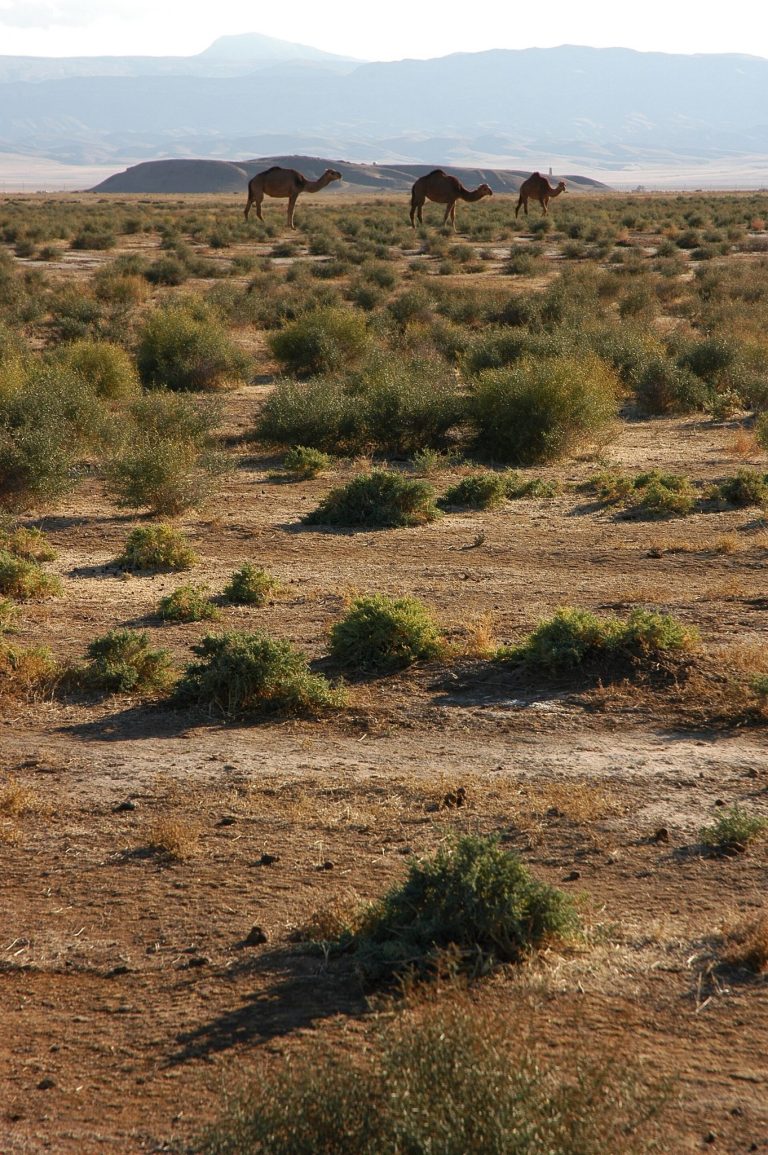
The remains commonly associated with Abiward lie in Turkmenistan’s Ahal region near Kaka, at the foot of three mountains and close to the edge of the Karakum Desert. The identification and precise location of the ancient city remain disputed. Suggested locations include Mohammadabad west of Merv and a place near present-day Dargaz in Iran. A village near the old city, once also called Abiward, is now known as Pushtak. Abiward is often identified with Dara, an ancient Parthian city, though the identification is uncertain. The Bandian fire temple, a Zoroastrian place of worship where sacred fire was maintained, lies nearby.
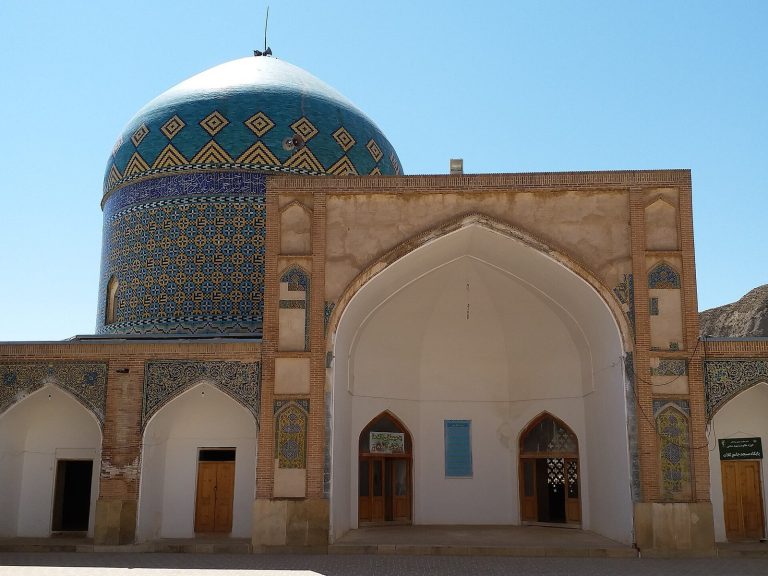
Juma Mosque
An eleventh-century Juma mosque, a congregational mosque used for Friday prayers, stood in the western part of the fortified complex. It collapsed completely in the mid-nineteenth century following seismic activity and human actions.