Broby bro Runestones: Viking Age Memorial Stones in Täby, Sweden
Site at a Glance
- Popularity
- Low
- Country
- Sweden
- Primary era
- Medieval
- Eras represented
- Medieval
- Civilizations
- Swedish
- Site type
- Civic
- Remains
- Monument
On this page10 sections
History
The Jarlabanke family and its memorials
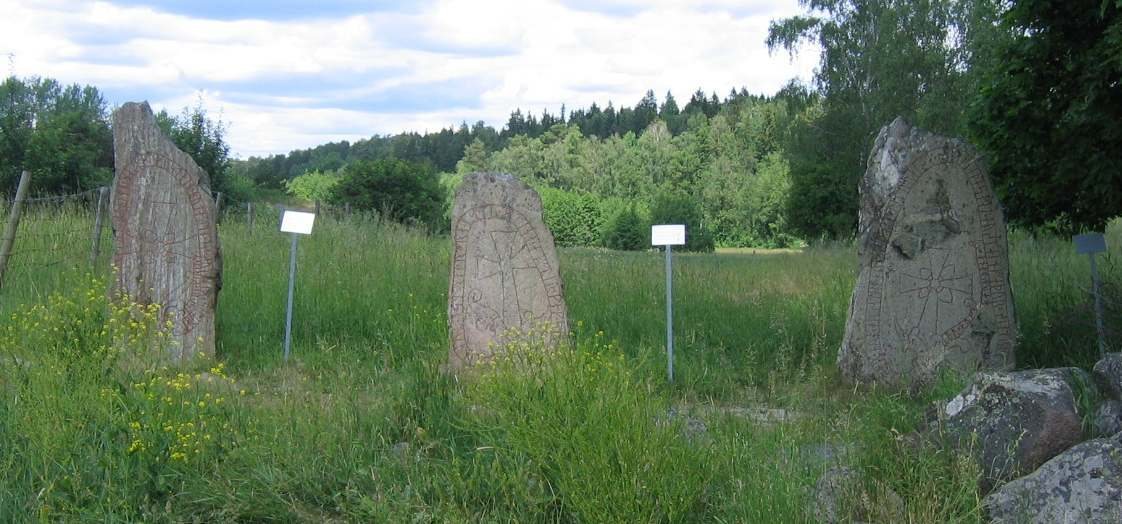
The Broby bro Runestones are six standing stones bearing runic inscriptions in Täby, Sweden. Three of them, U 135, U 136, and U 137, belong to a group of roughly twenty stones associated with the local magnate Jarlabanke and his family. Dating to about 1020–1050 on stylistic grounds, these three also form part of a cluster of inscriptions focused on Estrid, alongside stones at Hargs bro and Uppland stones U 101, U 143, and U 147.
U 137 is the oldest of the three family stones. It commemorates a son of Estrid and Östen whose name is read uncertainly as Kagr or Gagr. The inscription names Östen among those who raised the stone, indicating that he was alive when it was erected.
U 135 and U 136 were raised together in memory of Östen. U 136 says that Estrid commemorated her husband, who went to Jerusalem and died in Greece, then part of the Byzantine Empire, the medieval eastern Roman state. The verb describing his journey has several possible meanings: he may have sought, visited, or travelled to Jerusalem, or attacked it. The attack is considered the likelier interpretation. Their other sons, Ingefast, Östen, and Sven, are named on U 135 as the makers of a memorial that included a bridge and an earthen mound for their father.
Estrid is identified with a woman commemorated on other stones in Täby and nearby parts of Uppland. She was the Jarlabanke clan’s matriarch and the maternal grandmother of Jarlabanke, who claimed to own all of Täby. The carver Fot also made the clan’s stones and U 329 at Snottsta, which mentions an Estrid and her brother Ragnfast. This connection suggests that Estrid was born at Snottsta, married Östen of Täby, and later married again at Harg near Snottsta.
Discovery and relocation
In 1852, plowing exposed part of U 136. The farmer raised the stone upright where it had been found, and the antiquarian Richard Dybeck recorded the discovery in 1857. Dybeck also found U 140 in the foundations of a small building and searched unsuccessfully for the rest of the stone. Its surviving fragment was first moved to a slope beside the road between Hagby and Täby Church, then placed beside the road in 1930.
Remains
The six inscribed stones occupy positions beside or near a road. U 139, U 140, and U 151 stand beside it, while U 135, U 136, and U 137 were shifted several metres away to protect them from traffic damage. The stones preserve carved inscriptions and ornament in differing states of survival.
The Jarlabanke family stones
U 135, U 136, and U 137
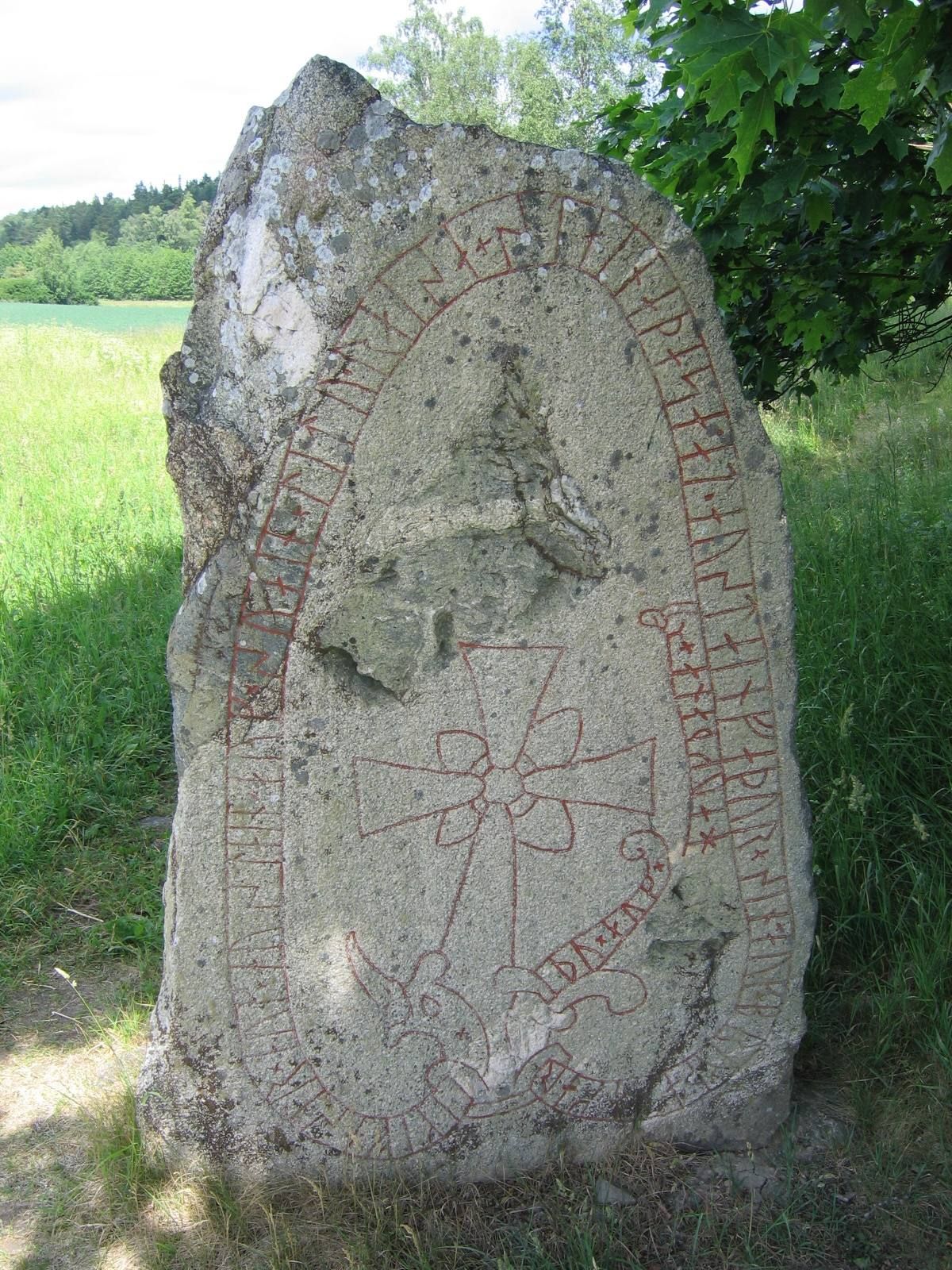
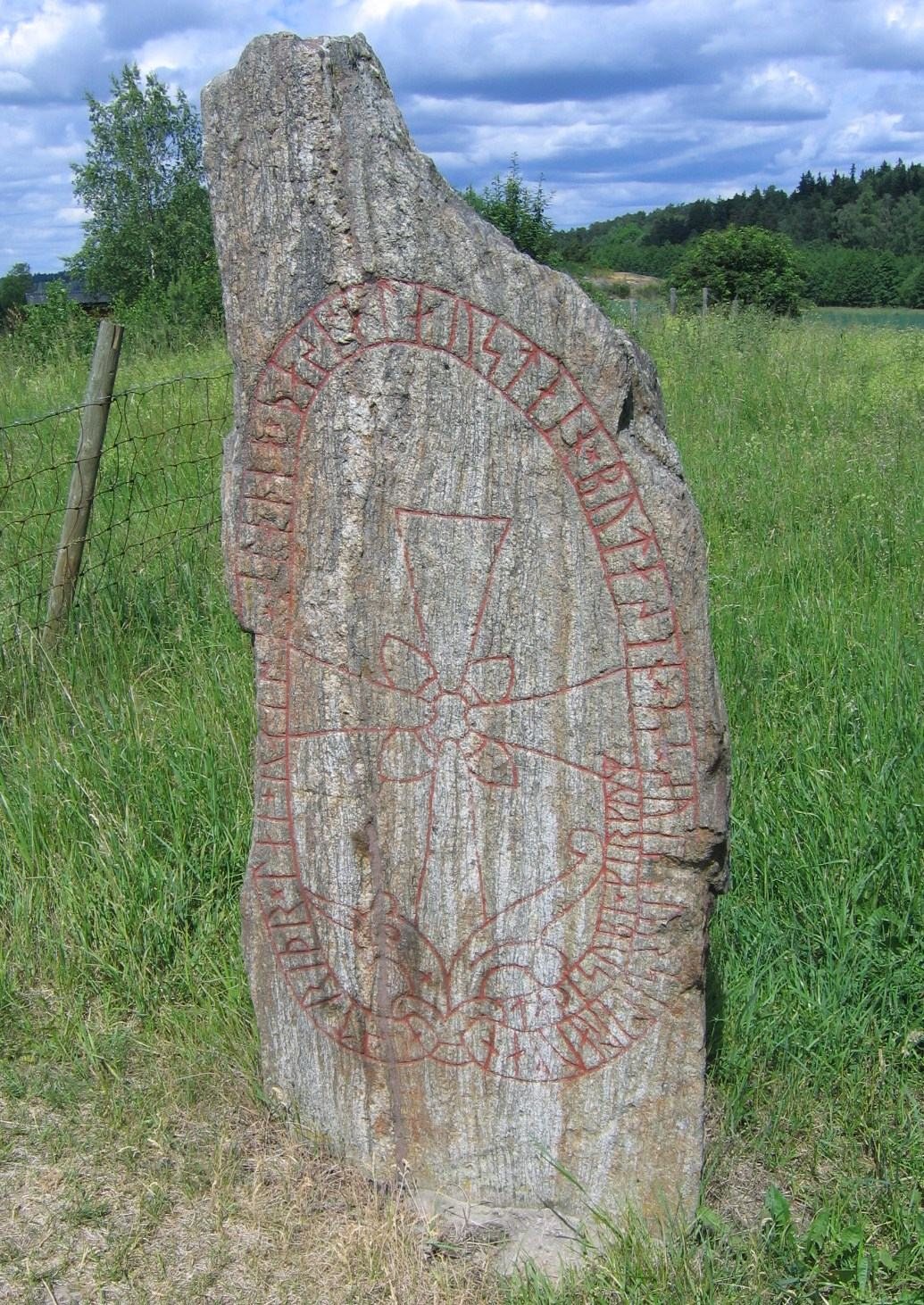
U 135, U 136, and U 137 form the family group moved away from the road. U 136 is a dark-grey stone measuring 1.73 metres high and 0.85 metres wide. Its ornament is classified as Pr2, a category within Viking Age runestone styles. Pieces broke away when the stone was raised, and the upper portions of some runes were lost.
Other inscribed stones
U 139
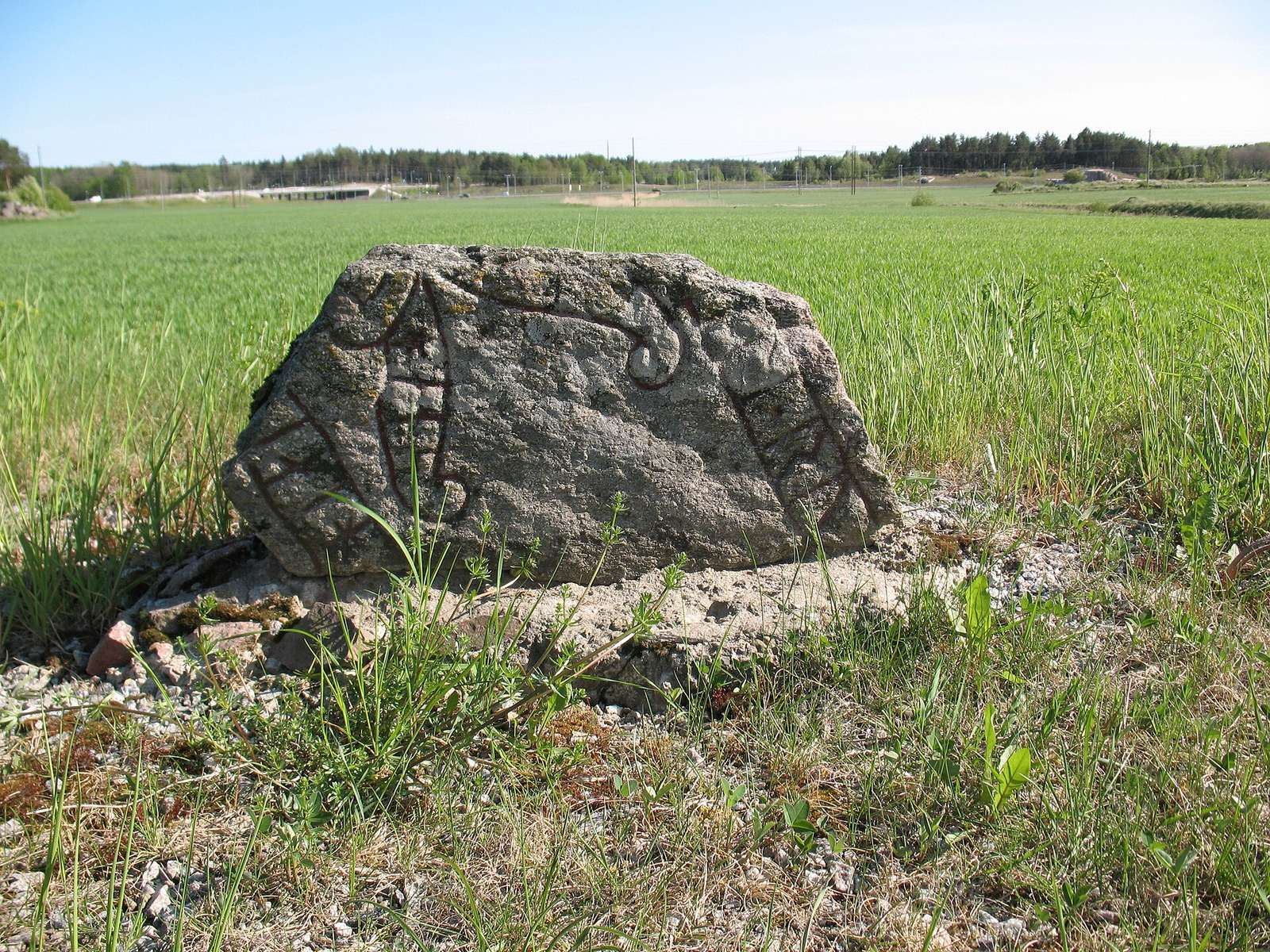
U 139 preserves a fragmentary inscription with phrases stating that someone carved the runes and may help another person. The stone stands beside the road.
U 140
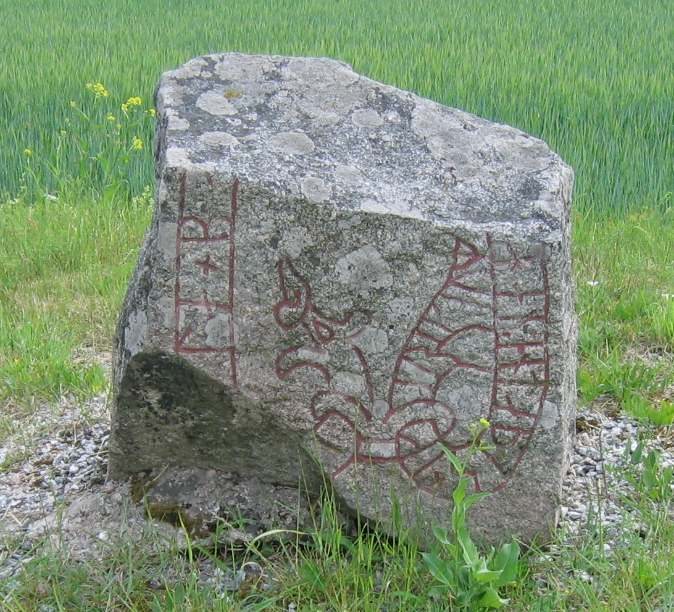
U 140 is a granite fragment beside the road, near U 136 and U 150. Its carved ornament follows the Ringerike style, a Scandinavian art style, and it is also classified as Pr2.
U 151
Listed at Karby, U 151 stands beside the road. Its inscription names Þorbjôrn and Ingiþóra as those who raised the stone for their father, Ígull, and says that Erinvé raised it for her husband.