Täby Church: A Medieval Parish Church in Sweden
Site at a Glance
- Rating
- 4.6
- Popularity
- Low
- Country
- Sweden
- Primary era
- Medieval
- External website
- Open
- Eras represented
- Medieval, Early Modern
- Civilizations
- Swedish
- Site type
- Religious
- Remains
- Church
On this page13 sections
History
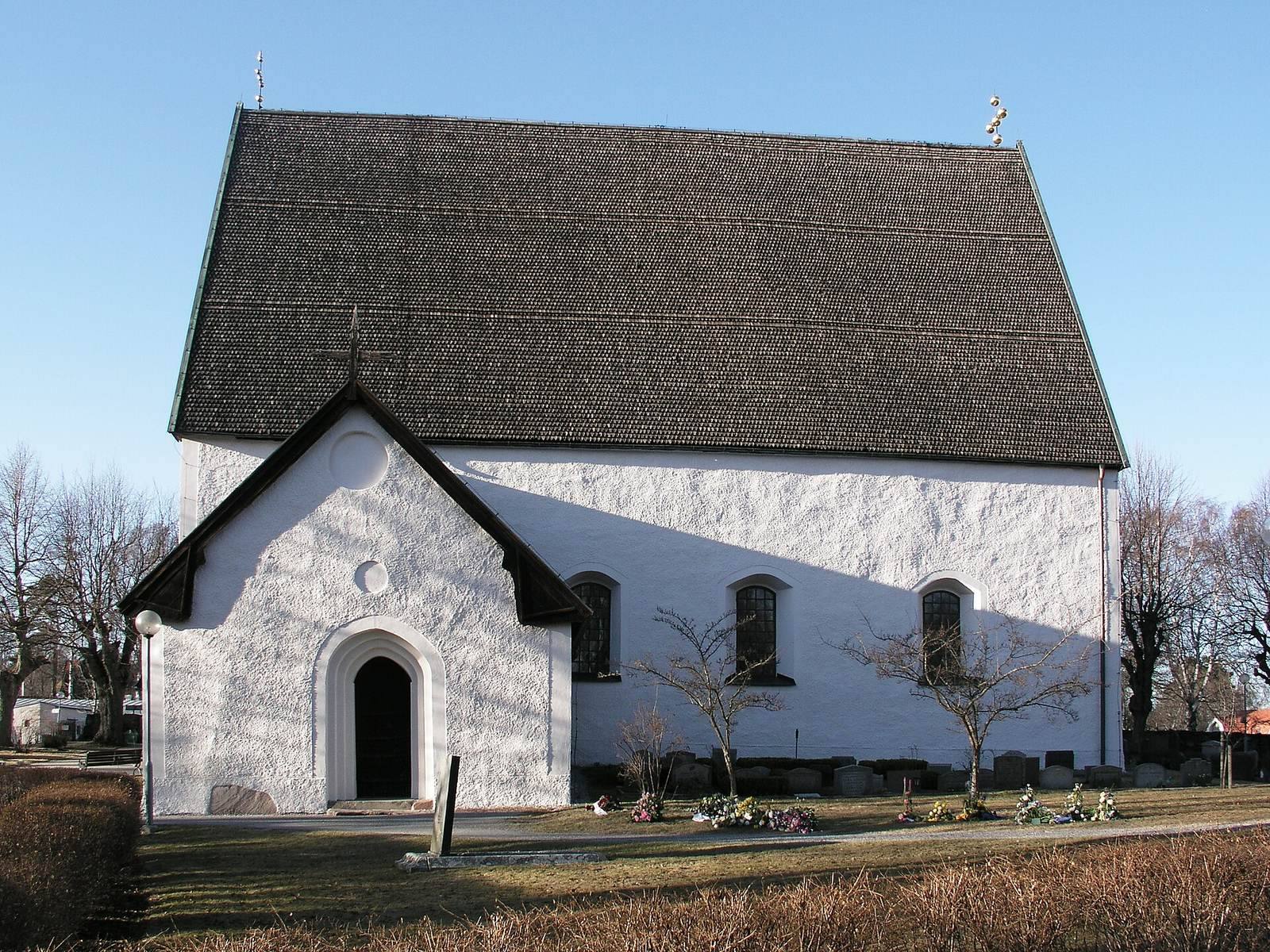
Täby Church is a medieval stone parish church in Täby, Sweden, built during the second half of the thirteenth century. It belongs to Täby Parish, the Stockholm Diocese, and the Church of Sweden, Sweden’s Lutheran national church. Before the Reformation transformed Swedish churches from Catholic institutions into Lutheran ones during the sixteenth century, Täby Church was Catholic until the 1520s.
Early church and medieval construction
A wooden church probably stood at Täby when Christianity had become the official religion in Uppland, probably during the eleventh century. Nothing is known about that building. The present stone church followed during the second half of the thirteenth century and was originally built as one of the early square-hall churches.
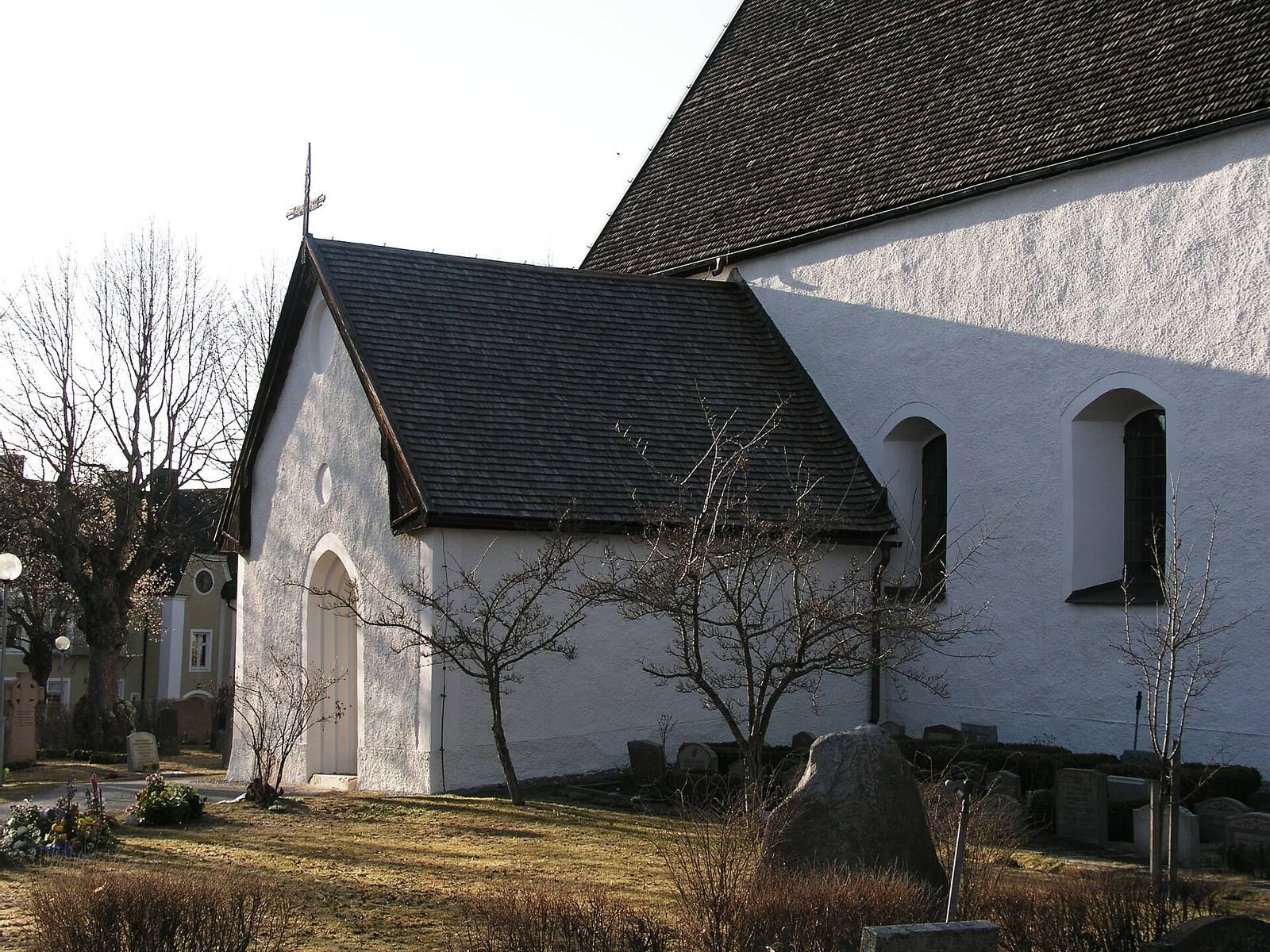
The church later received a vestry, although its date remains uncertain. It may have been added in the late thirteenth or mid-fourteenth century, or it may have belonged to the earlier wooden church. Because the vestry is not structurally joined to the main body, its relationship to the stone building has been interpreted in more than one way. A stone vestry would also have provided greater protection against fire and intrusion than a wooden structure.
Fifteenth-century transformation
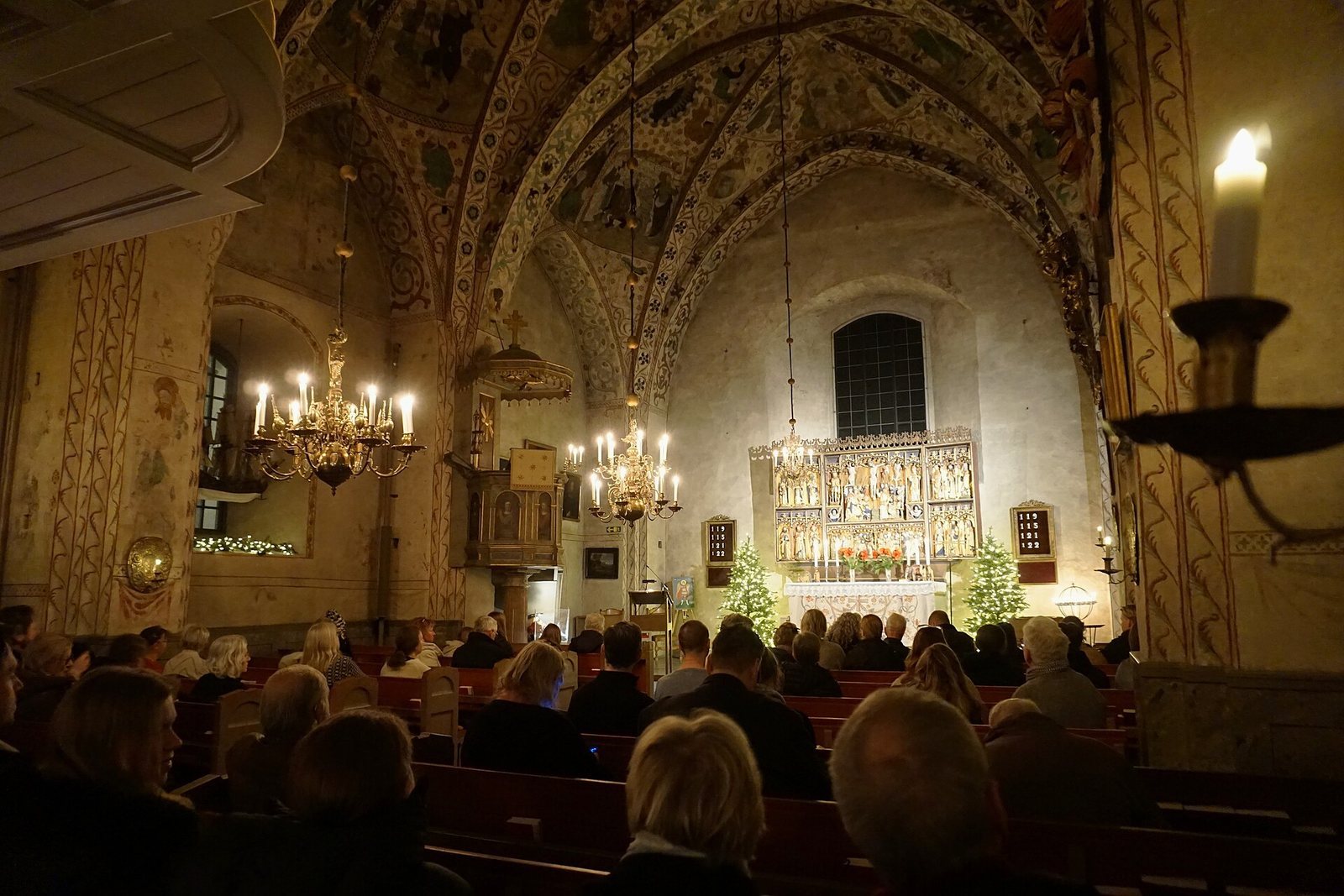
Between 1425 and 1460, a church porch was added to the building and decorated with frescoes by an unknown master. During the second half of the fifteenth century, the interior underwent a major transformation. Around 1475, four vaults replaced the earlier flat wooden ceiling, changing the character of the main body.
After 1480, the Swedish medieval church painter Albertus Pictor decorated the walls and vaults. Albertus Pictor, whose name means “Albert the Painter” in Latin, died in 1511. His work at Täby is regarded as among his most outstanding and best-preserved surviving paintings.
Later use and conservation
The church continued in use through the Reformation and subsequent centuries as a parish church. Its later furnishings include a pulpit from the 1630s, originally made for a chapel in the former Three Crowns Castle in Stockholm. The organ gallery and organ case date from the eighteenth century.
Täby Church and its paintings underwent comprehensive restoration in 1993 and 1994 under the direction of architect Uno Söderberg. The frescoes were cleaned, and new pews were installed. The church is protected as an ecclesiastical historic monument under Chapter 4, Section 3 of Sweden’s Cultural Heritage Act, which covers buildings erected by the end of 1939.
Remains
Church building and medieval enclosure
Main body and vestry
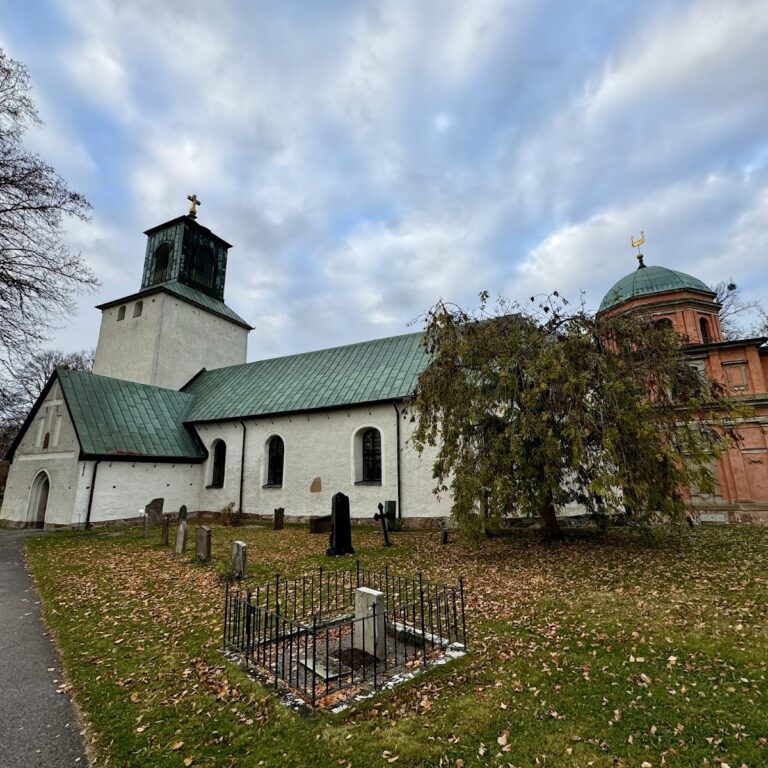
The church is a stone-built medieval structure composed of a main body and a vestry that are not structurally joined. The main body retains the four vaults built around 1475, while the vestry represents a later phase whose precise date is uncertain. This separate construction relationship preserves evidence of the church’s successive development.
Church porch
The church porch, added between 1425 and 1460, contains frescoes by an unknown master. Its external portal is original and has iron-bound oak doors. A runestone is immured in the porch, adding an earlier Scandinavian monument to this medieval entrance building.
Walls, gate, and bell tower
A wall dating from the fourteenth century encloses the church, and the southern roofed gate is also medieval. Between the church and the Chapel of the Eternal Light stands a free-standing bell tower dating from 1763.
Paintings and furnishings
Albertus Pictor’s murals
Albertus Pictor’s murals cover the walls and vaults, arranging scenes from the Old and New Testaments opposite one another. Much of the imagery draws on the Biblia Pauperum, or “Bible of the Poor,” a medieval picture-based compilation that communicated biblical events and sacred parallels through images.
The paintings include paired images of Saint Olof and Saint Erik. Saint Olof refers to Olaf II of Norway, a medieval Scandinavian king venerated as a Christian saint, while Saint Erik is Erik IX, a medieval Swedish king and saint traditionally associated with Sweden. Other scenes show the prophet Jonah being disgorged naked by a whale and the Throne of Grace above the altar, with God the Father holding the crucified Christ.
Chess-playing knight
In a corner above the organ gallery, a knight plays chess with Death. This unusually rare motif is known from only one other source. The image inspired Ingmar Bergman’s play Wood Painting and his film The Seventh Seal. The film also contains visual references to Pictor’s paintings, including a penitential procession and a conversation between a squire and a church painter.
Altarpiece and later furnishings
The altarpiece was made in Lübeck during the 1470s and centres on the Crucifixion at Golgotha. Saint Olof and a bishop stand beside the central scene. Four Passion scenes appear below, while the wings contain the Twelve Apostles. Their reverses show the Last Supper, the death and Coronation of the Virgin, and the Mass of Saint Gregory.
A tomb monument dated 1345 stands to the right of the altar. Numerous gravestones lie in the church floor, including one bearing the name of Johan Palmstruch, identified as the father of Swedish banking. The seventeenth-century pulpit, the eighteenth-century organ gallery, and the organ case remain part of the church’s later interior furnishings.