Dolmen de Pierre Folle, Montguyon: A Prehistoric Burial Complex in France
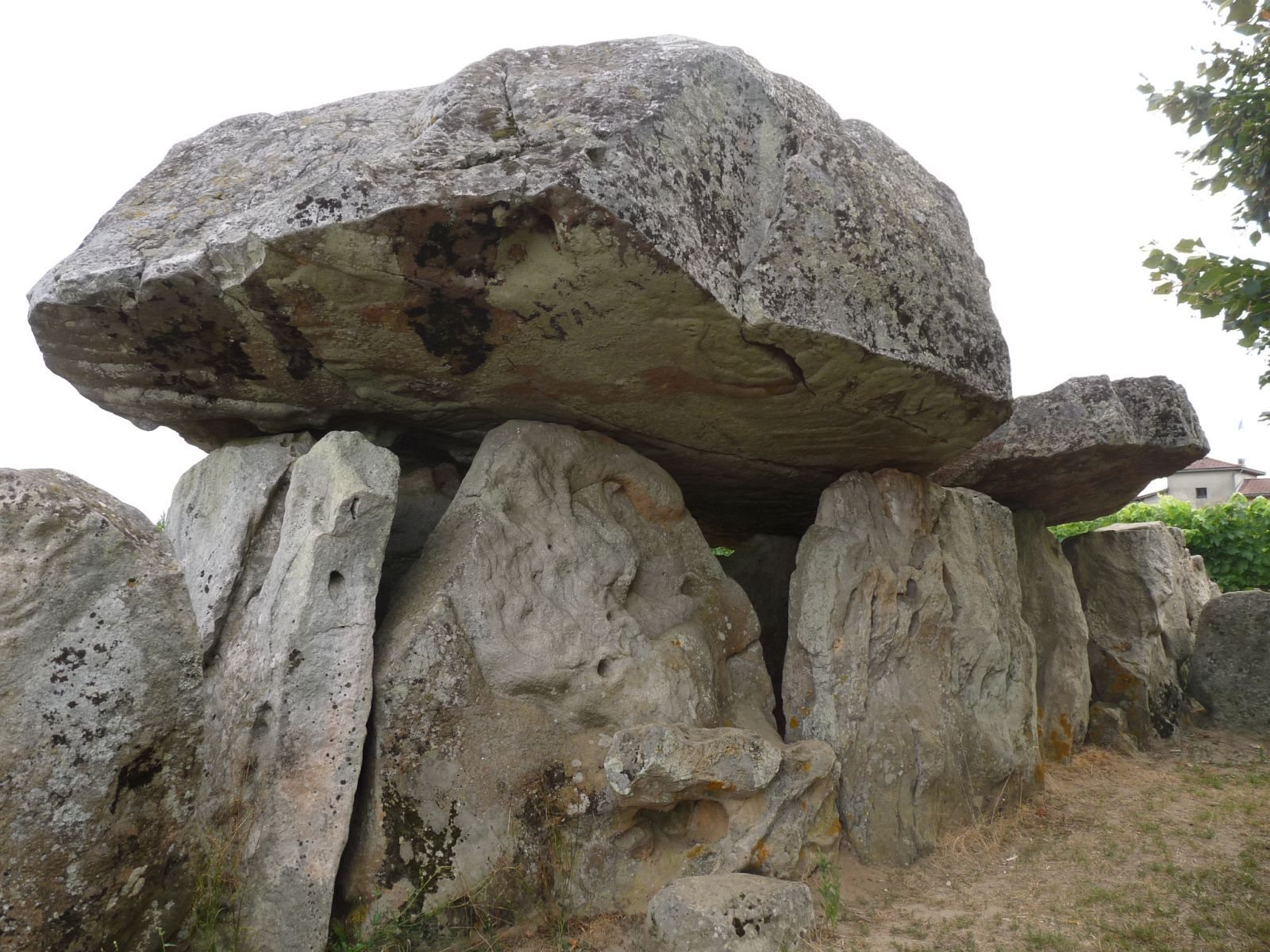
Site at a Glance
- Popularity
- Low
- Country
- France
- Primary era
- Stone Age
- Eras represented
- Stone Age
- Civilizations
- Unclassified
- Site type
- Burial
- Remains
- Tomb
On this page9 sections
History
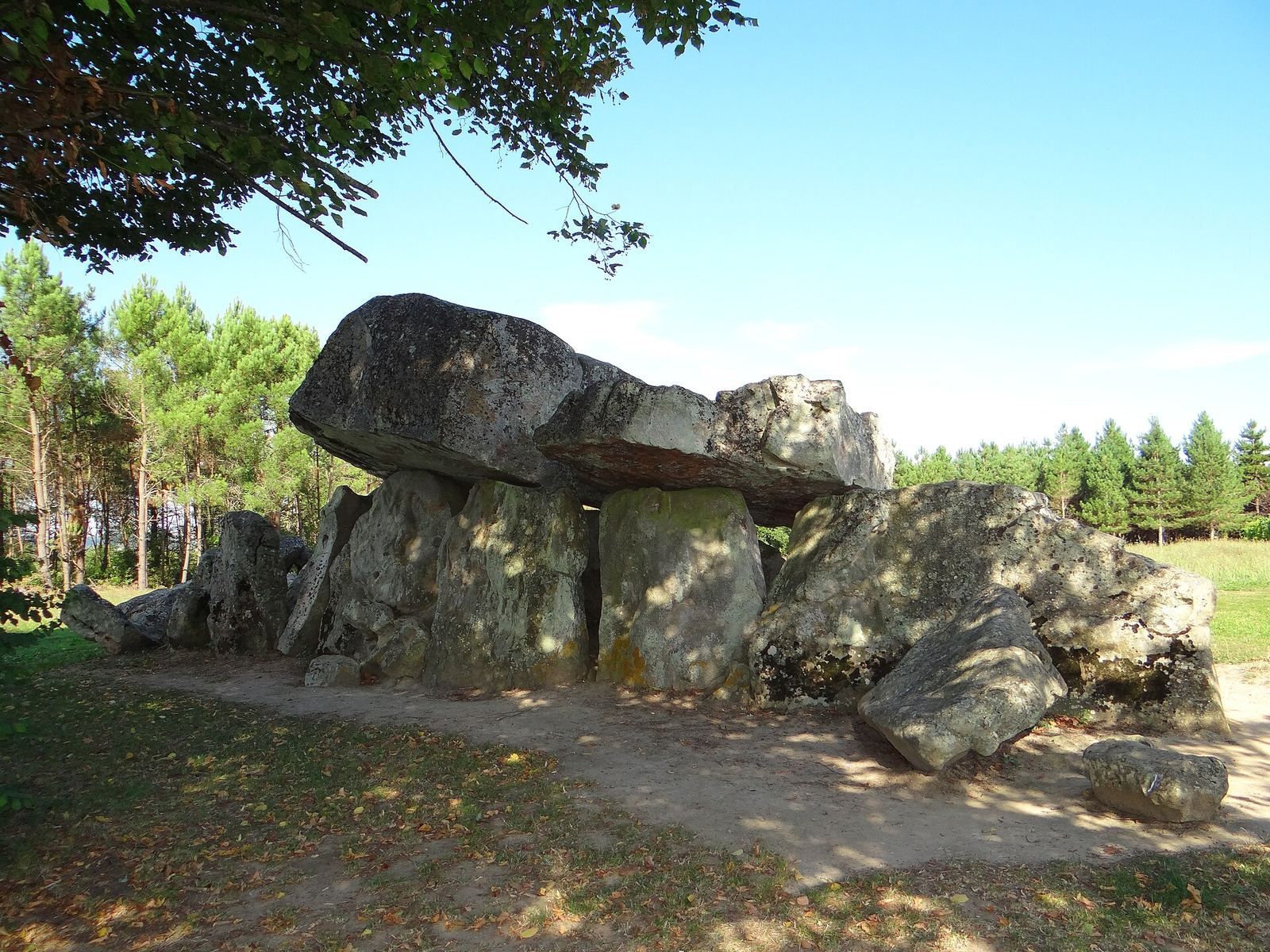
The Dolmen de Pierre Folle is a prehistoric megalithic complex in Montguyon, France, comprising a dolmen and a covered passage built in different periods. The passage was probably erected around 3500 BC, during the regional Middle Neolithic, a phase of the Neolithic associated with settled farming communities and polished-stone technologies. The dolmen predates it by at least 500 years. The passage may be associated with the Roquefort group, an archaeological cultural grouping, although this attribution does not identify its builders. The monument was reused in later periods.
Excavation, protection, and local traditions
Camille Duteil excavated the monument in 1840. Gassier and François Daleau carried out further excavations in 1874. The naturalist and geologist Louis-Benjamin Fleuriau de Bellevue intervened to prevent its destruction, and it was classified as a historic monument in 1889.
Local folklore says that the monument turns three times when midnight strikes on Christmas Eve. Other traditions claim that its stones fell from the sky and were assembled by the Virgin Mary, or that Charlemagne, the Frankish ruler crowned emperor in 800, built it to bombard Montlieu.
Remains
The ensemble brings together a covered passage and a dolmen in its northwestern continuation. It measures 16 m long, 3 m wide, and up to 4 m high. Its stones are local sandstone, thought to have been obtained within about 2.5 km of the site.
The covered passage
Structure and roof
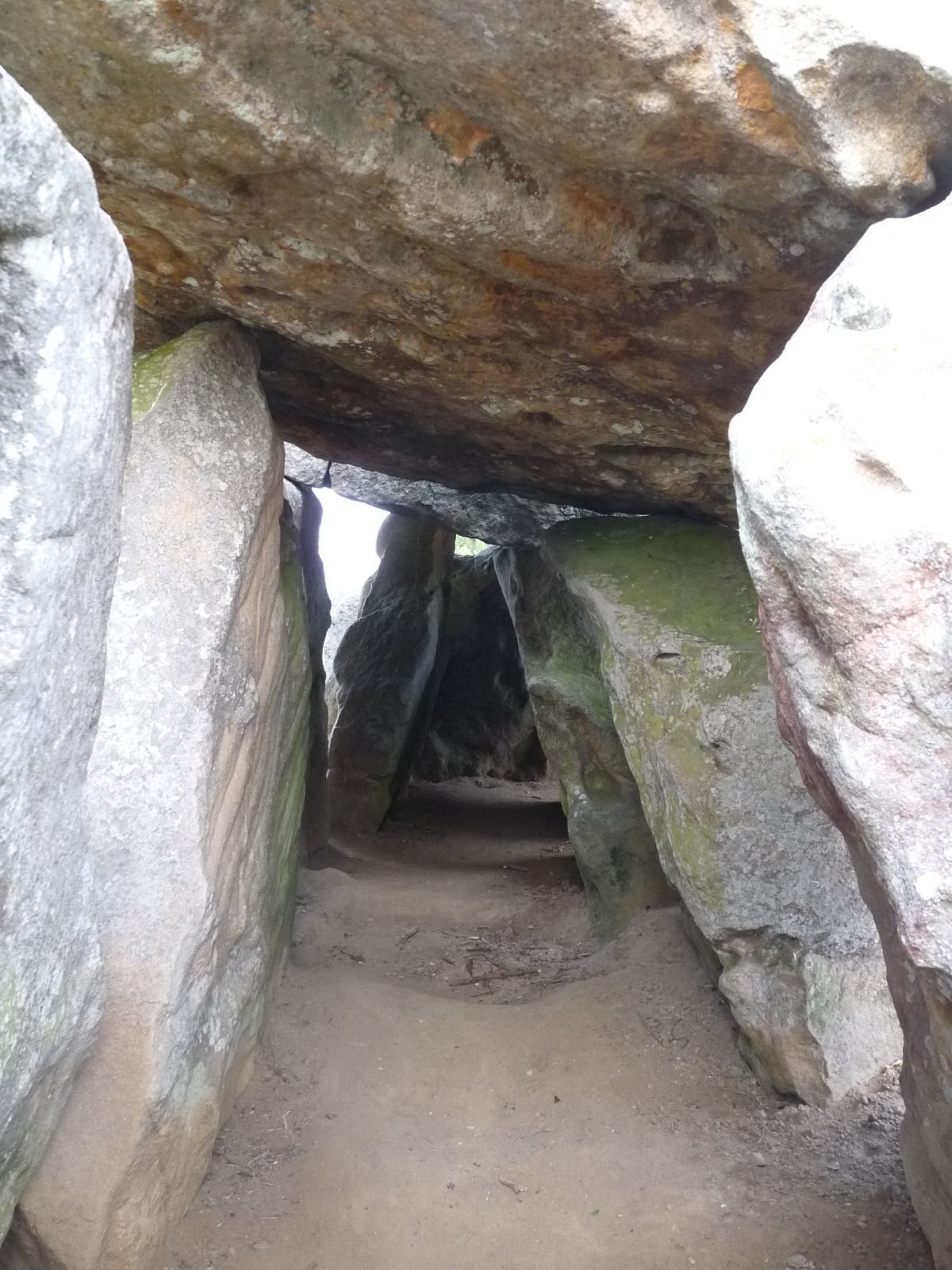
The Aquitanian-type passage, a regional form of megalithic gallery, runs east to west and has its entrance at the east end. It is 9.5 m long and 1 m wide. Nine upright stones, progressively lower toward the entrance, and an end slab form its sides; some of the uprights tilt slightly inward. Two of the three original roof slabs remain in place. The largest is 1.4 m thick and weighs an estimated 30 tonnes, while the third lies overturned outside the passage. An earthen mound originally covered the structure.
Floor and carved stones
Limestone blocks joined with mortar paved the passage floor. Two hollows in the first slab to the left of the entrance resemble holy-water basins; Duteil found serpentine arrowheads and spearheads inside them. Cup-shaped hollows also occur on several stones. Serpent-shaped engravings appear on the outer, mound-facing surfaces of several upright stones. They may have been made before the monument was built or after the mound was destroyed. More recent graffiti is also visible.
The dolmen
Chamber and entrance passage
The ruined dolmen is an Angoumoisin-type form, a regional style of megalithic monument. Four upright stones define its quadrangular chamber, which measures 3 m by 2 m. An entrance passage 2.5 m long, bounded by two upright stones, meets the chamber at a right angle to the covered passage and opens northward. One side of the chamber is formed by a stone belonging to the covered passage. The dolmen’s two roof slabs have fallen and lie on the ground.
Burial finds
Excavations recovered human skulls and bones, arrowheads, flint tools, polished axes, a boar’s tusk, pottery fragments, and a clay urn containing cremated bones. A small green polished-stone axe is the one surviving object from this assemblage.