Village Church of Friedersdorf: A Medieval Church Shaped by Baroque Patronage
Site at a Glance
- Popularity
- Very Low
- Country
- Germany
- Primary era
- Medieval
- Eras represented
- Medieval, Early Modern, Modern
- Civilizations
- German, Holy Roman Empire, Margraviate of Brandenburg
- Site type
- Religious
- Remains
- Church
On this page11 sections
History
Medieval origins and aristocratic patronage
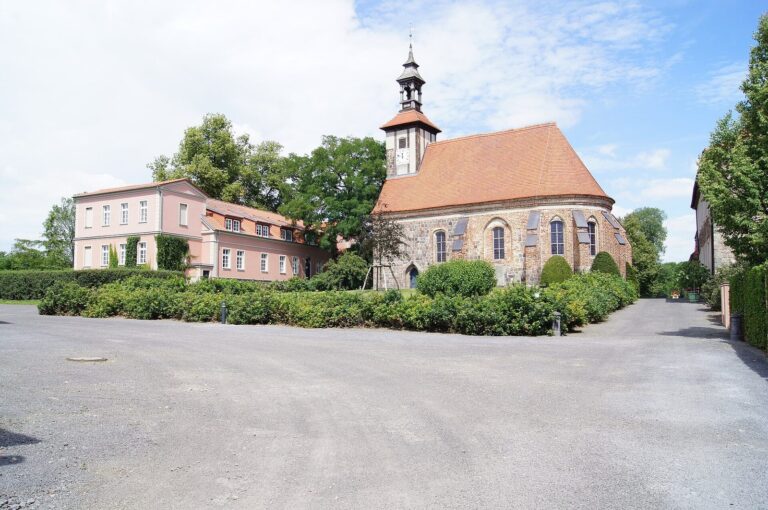
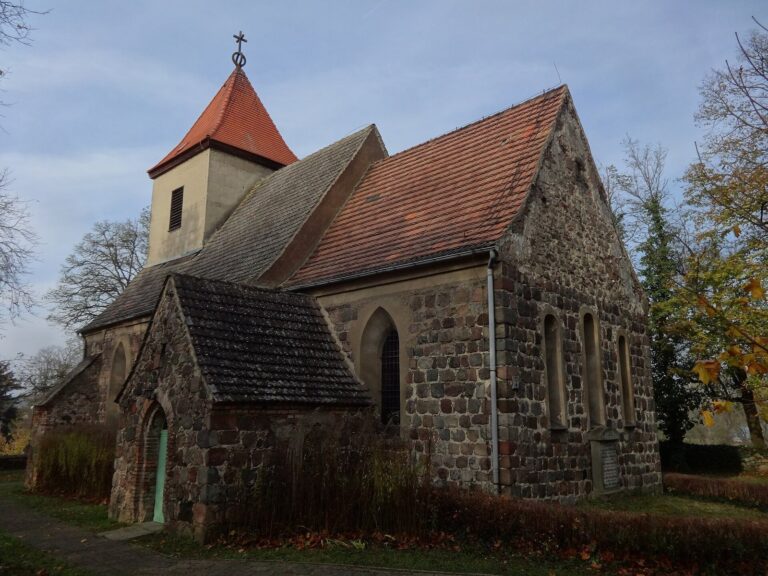
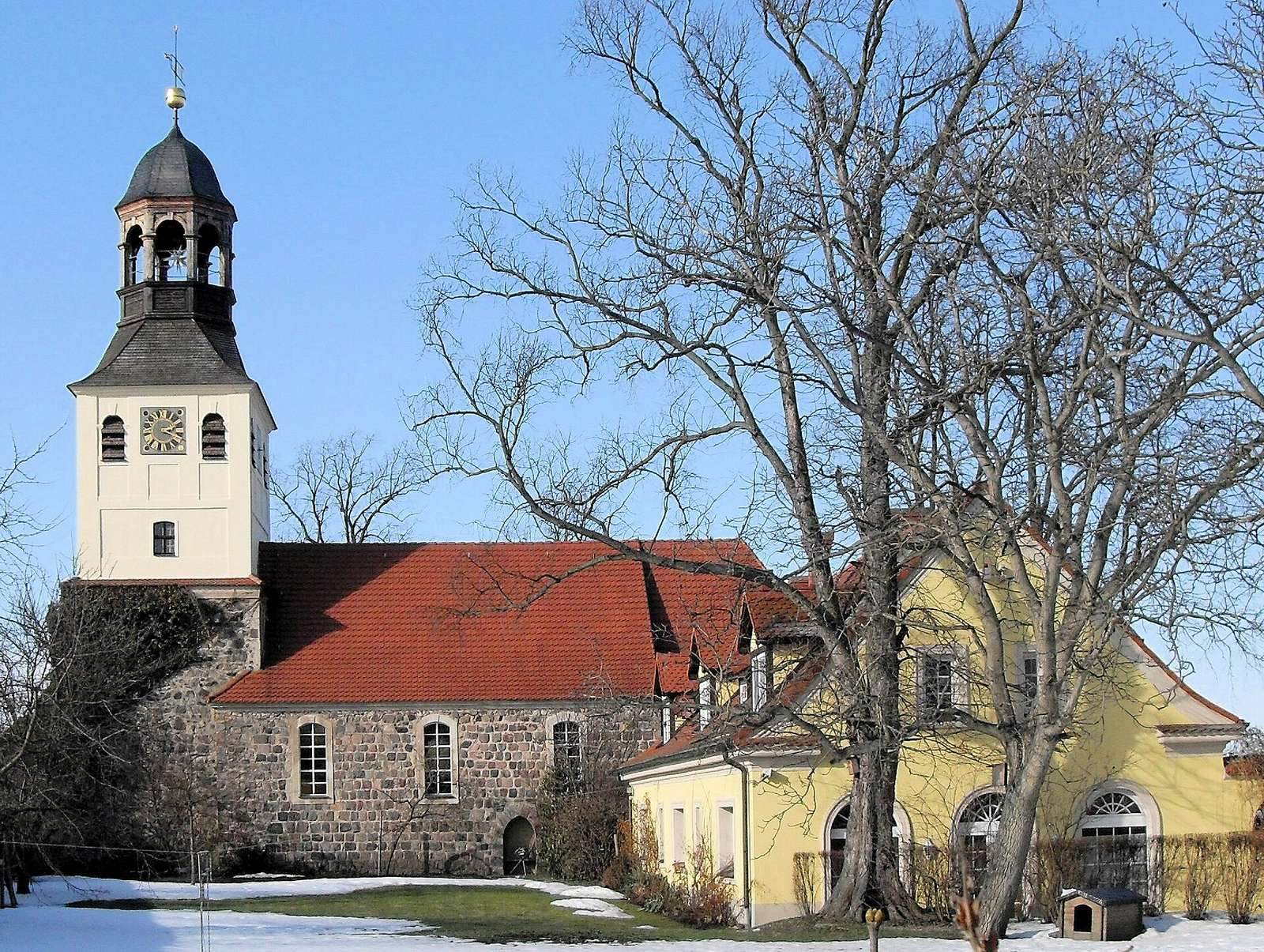
The Village Church of Friedersdorf is a 13th-century church built of fieldstone, stone gathered from fields and usually left roughly unworked, in Vierlinden-Friedersdorf, Germany. Later altered in the Baroque style, it became closely linked to the von der Marwitz family, whose patronage and memorials shaped its history.
The church was destroyed during the Thirty Years’ War, a major European conflict fought from 1618 to 1648. In 1653, Joachim Ernst von Görzke acquired the church and arranged for repairs. In 1682, his daughter Elisabeth married into the von der Marwitz family, and the church passed to them as her dowry.
In 1702, Hans Georg von der Marwitz gave the church its Baroque form. His second wife, Sybille Elisabeth, née von Osterhausen, was associated with the organ and carved Baroque decoration, and completed the work after his death.
Damage and restoration
The church underwent restoration in 1854 and again in 1935. Near the end of the Second World War, a shell struck it during fighting around the Seelow Heights, a battlefield in the war’s final phase in Europe. The impact caused severe damage. Two years later, a wall was built to separate the area around the altar from the main worship space.
The church closed in 1959 because of its poor condition. In 1984, the congregation renewed the roof over the main worship space, helping prevent further decay. The von der Marwitz family returned to the parish in 1989, and a phased restoration followed. The tower spire was mounted in 1991 and bells installed in 1992; the first service after restoration work began took place in 1993. Further work included plastering in 1994, restoration of the pulpit in 1995, reconstruction of the patron’s gallery in 1996, and repairs to the galleries in 1997. New pews followed in 1998 and an organ was inaugurated in 1999. The altar was consecrated in 2002, epitaphs restored in 2004, a chandelier installed in 2005, and a sounding board above the pulpit added in 2007.
Family memorials and reputation
Friedrich August Ludwig von der Marwitz, a Prussian nobleman and political figure, commissioned many grave monuments bearing brief, pointed epitaphs, or inscriptions memorializing the dead. Their concise style impressed the 19th-century writer Theodor Fontane, who judged the church possibly without equal among village churches in Brandenburg. Udo von Alvensleben-Wittenmoor described it as a “small Brandenburg pantheon,” referring to its Baroque furnishings and the family memorials.
A memorial to Johann Friedrich Adolf von der Marwitz, a Prussian officer, recalls his refusal to obey Frederick the Great, king of Prussia from 1740 to 1786, when ordered to plunder Hubertusburg Castle. He considered the act unworthy of an officer and left the royal army. The memorial’s closing sentiment, that obedience would bring no honor, later became a secret motto of resistance to Nazism.
Remains
Building and interior
Structure and division of space
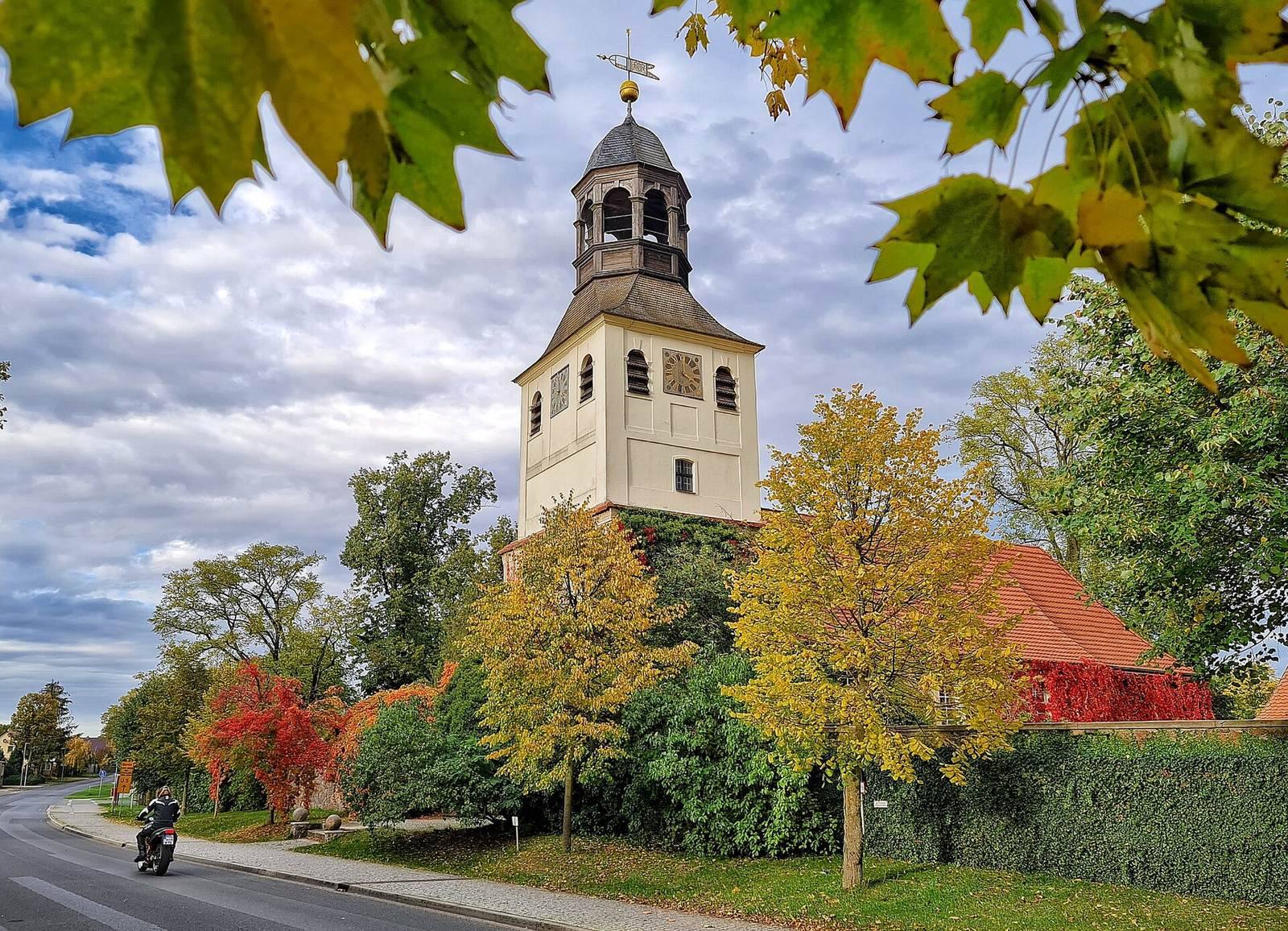
The surviving church combines its 13th-century fieldstone construction with later Baroque alterations. A wall divides the area around the altar from the main worship space, a partition made necessary after the Second World War damage. The tower has a spire, and the building’s interior retains a coved ceiling, whose concave curve meets the walls, along with a pulpit and altarpiece identified as Renaissance features.
Furnishings
The interior includes Baroque woodcarving, a lord’s pew reserved for a local lord or estate-owning family, galleries, and a patron’s gallery associated with the church’s patron or landowning family. It also contains an altar, pulpit, organ façade, the visible front of the organ, pews, and a chandelier. A sounding board above the pulpit is designed to direct the speaker’s voice.
Family memorials
Epitaphs and tomb monuments
Von der Marwitz tomb monuments and numerous epitaphs form a substantial part of the church’s interior. One epitaph commemorates Hans Georg von der Marwitz. The memorials include the short, pointed inscriptions associated with Friedrich August Ludwig von der Marwitz’s commissions.
Memorial to Johann Friedrich Adolf von der Marwitz
A memorial stone honors Johann Friedrich Adolf von der Marwitz and bears an inscription recalling his service in Frederick the Great’s wars and his refusal to obey an order he considered dishonorable.