Torre del Candeliere: Medieval Watchtower of Massa Marittima
Site at a Glance
- Popularity
- Low
- Country
- Italy
- Primary era
- Medieval
- Eras represented
- Medieval, Early Modern
- Civilizations
- Grand Duchy of Tuscany
- Site type
- Military
- Remains
- Tower
On this page9 sections
History
Construction and the New Town
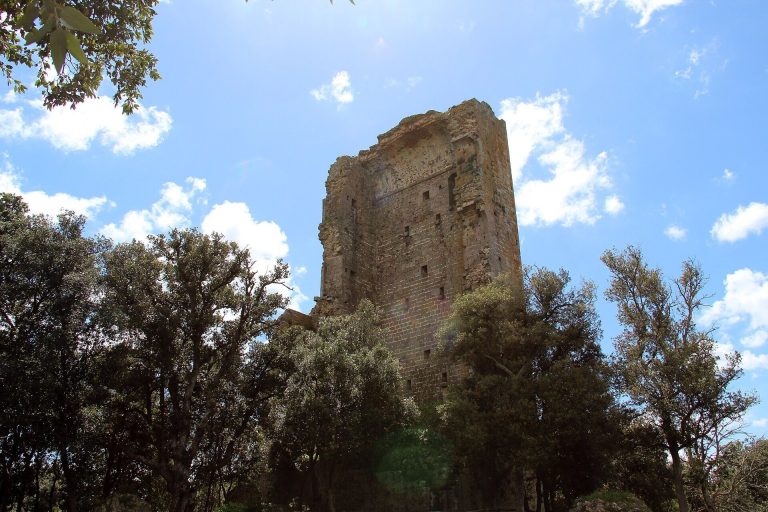
Torre del Candeliere is a medieval watchtower in Massa Marittima, Italy, built in 1228 under Tedice Malabarba, the Pisan podestà, or chief magistrate of a commune. Also known as the Clock Tower, it marked the city’s expansion beyond the Old City and Borgo into the New Town. Massa had recently freed itself from the rule of its bishop-prince, and the tower also expressed the commune’s authority in a city where the bishop’s seat, Castello di Monteregio, stood opposite.
An act dated 15 October 1228 clarifies the roles of two municipal magistrates associated with the construction. Umberto Faselo was a judge, while Mellone di Sassetta was the camerlengo, a municipal financial officer.
Sienese rule and the Cassero
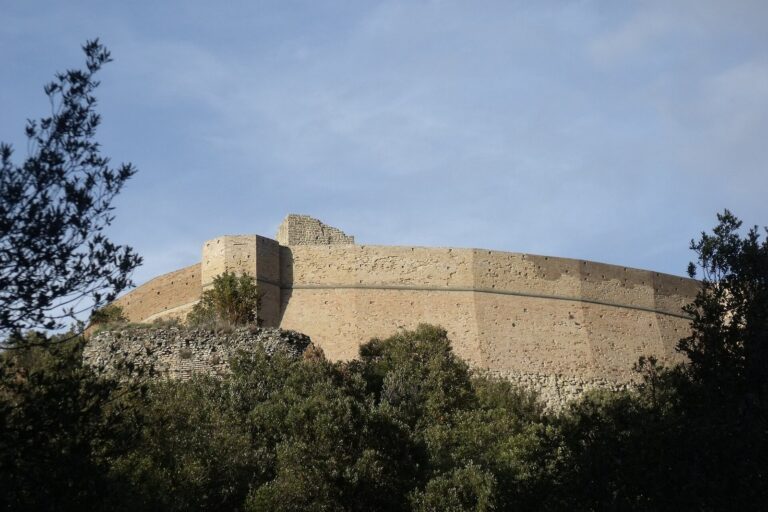
After years of fighting between Massa and Siena, Massa surrendered to the Sienese in 1335. The new rulers asserted their authority by removing one-third of the tower’s height and starting construction of the Cassero Senese fortress. The fortress was completed on 19 February 1337.
Bells and clocks
A bell made by Luca di Bandi da Cortona was placed at the top of the tower in 1413. It weighed 400 kilograms, and its clapper weighed 40 kilograms. Massa’s first clock followed in 1443. Grand Duke Cosimo I de’ Medici, the first grand duke of Tuscany, donated a replacement in 1563; another clock took its place in 1610.
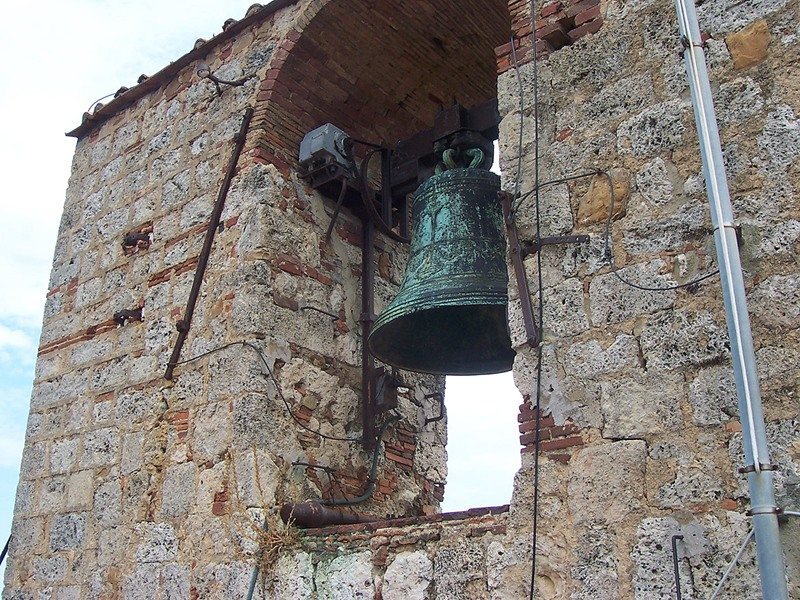
Lightning destroyed the bell on 14 March 1760. A bell cast in Florence replaced it.
Remains
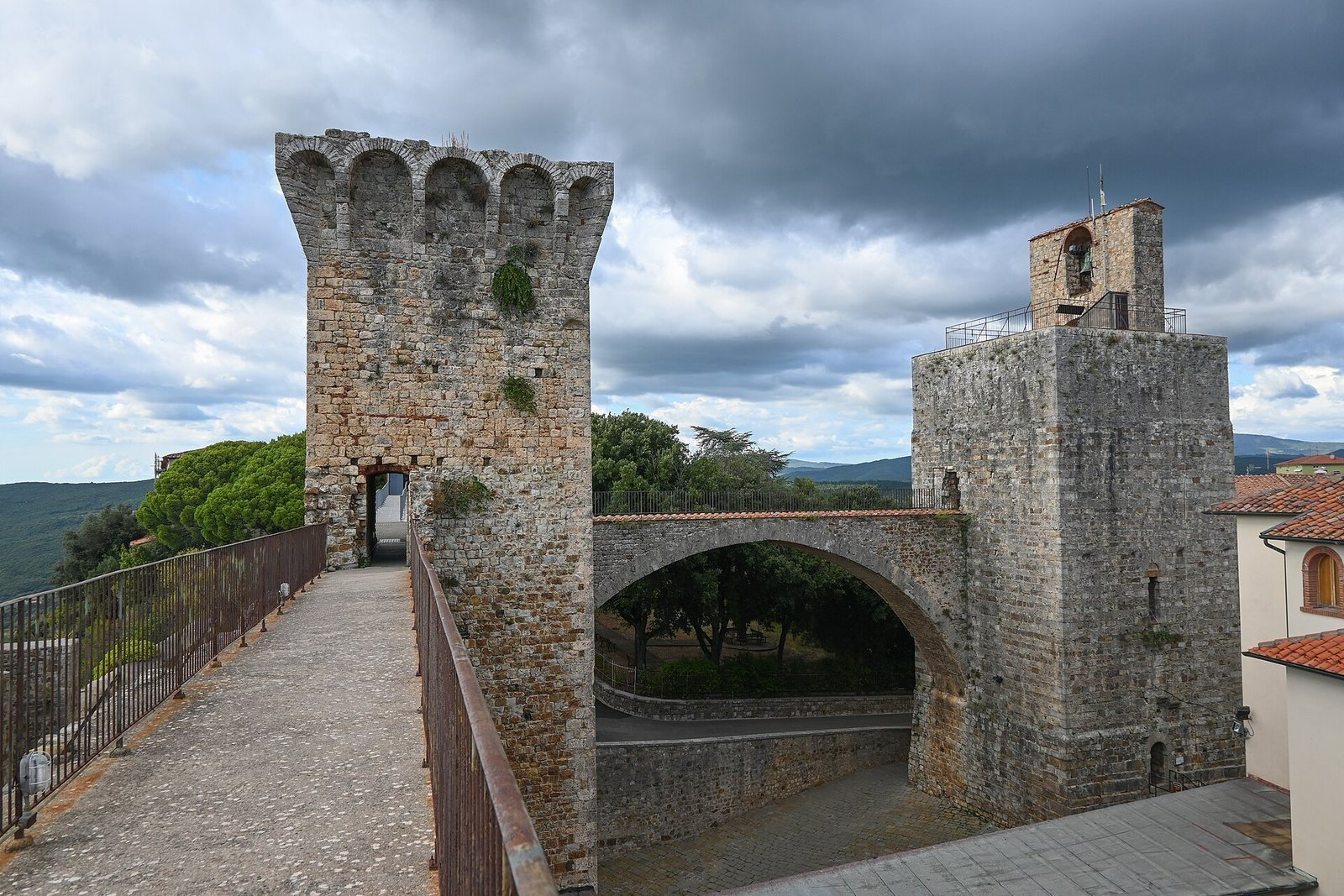
The surviving tower has a square plan and a sloping base faced with travertine. Its exterior clock and bell feature, raised entrance, and interior levels occupy the same vertical structure, which is connected to the Cassero Senese fortifications by an arched passage.
Exterior and entrance
The tower originally stood 28 metres high. On the side facing the square, the clock is set about halfway up, with a narrow rectangular bell gable above it. The entrance is raised above ground level and is reached by a modern staircase, which replaced the original ramp.
Inscriptions and carvings
A Latin inscription marks the tower’s beginnings in 1228 and describes it as the starting point of the new city. A second inscription is only partly legible. Below it are two carved human heads, with a fish above them and a goose neck below.
Interior levels
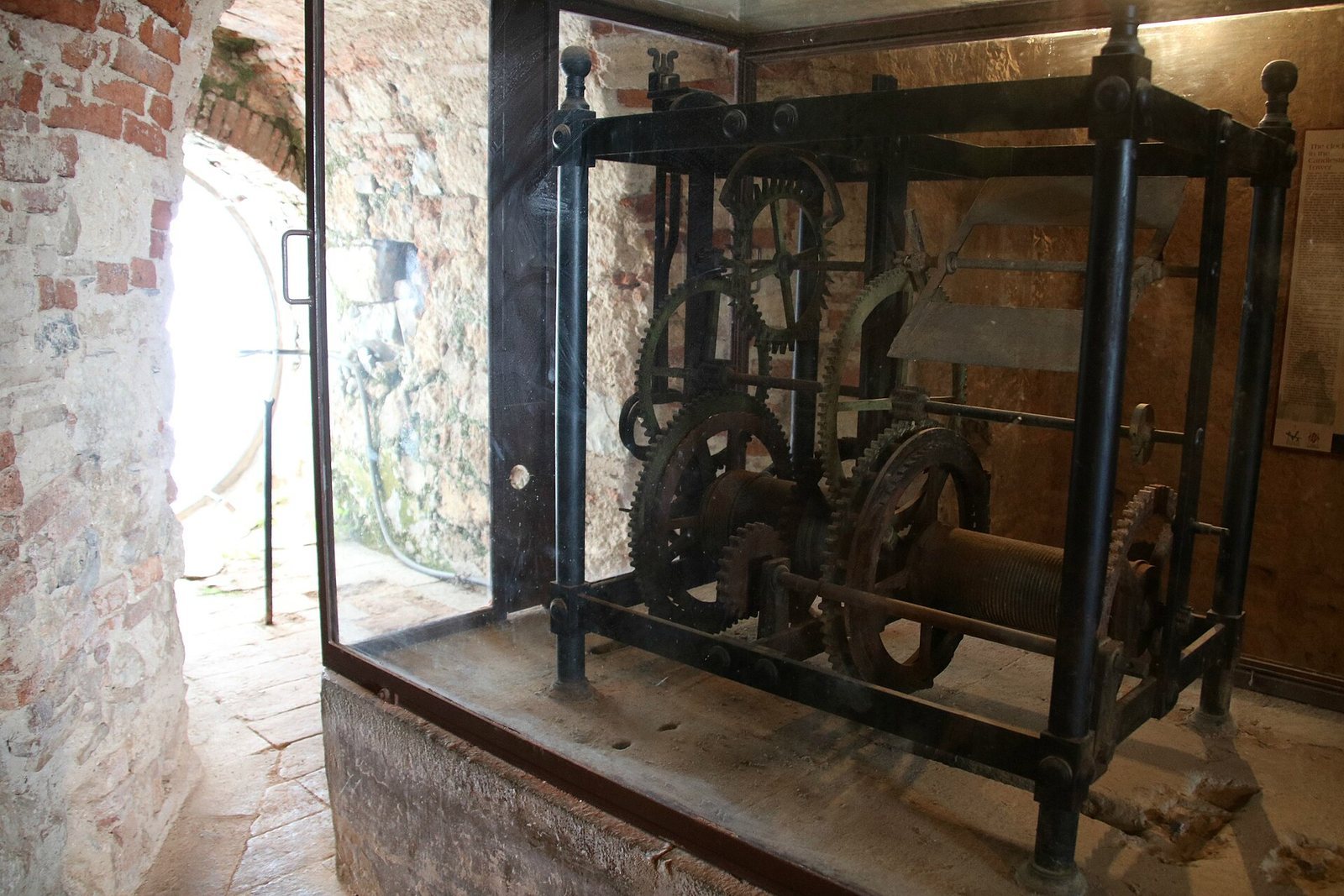
The interior is arranged across several levels. The level called the ground floor is raised and functions as the first upper level; a narrow staircase leads to the second floor. There, one panel explains the tower and Cassero Senese, while three others describe Massa Marittima’s mint and the commune’s coin production from 1317 to 1319. The clock mechanism can be seen on the third floor.
Bell and link to the Cassero
Another staircase leads to the tower top, where the replacement bell cast in Florence in 1760 remains visible. Made of iron, it weighs 140 kilograms. Its inscription asks for blessings from the Virgin Mary, known in Catholic devotion as the Madonna, Saint Cerbone, an early Christian bishop associated with Populonia, and Saint Bernardino of Siena, a Franciscan preacher.
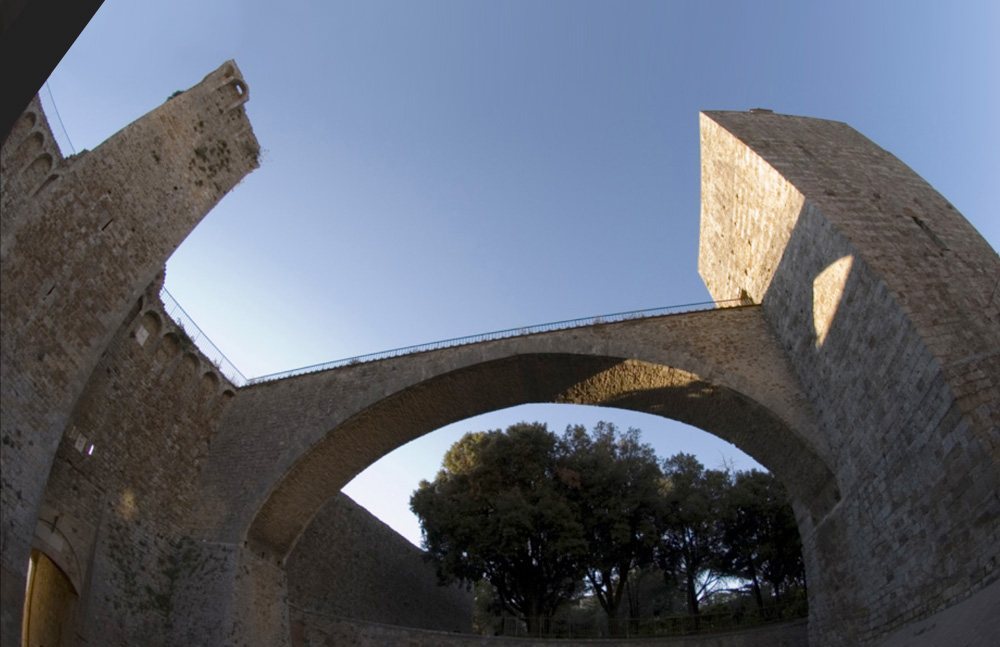
A door on the third floor opens onto a single-span arch connecting the tower to the Cassero Senese fortifications. The span measures 21.79 metres.