St. Veit: An Evangelical Lutheran Parish Church in Leipheim
Site at a Glance
- Popularity
- Very Low
- Country
- Germany
- Primary era
- Medieval
- Eras represented
- Medieval, Early Modern, Modern
- Civilizations
- German, Holy Roman Empire, Kingdom of Bavaria
- Site type
- Religious
- Remains
- Church
On this page7 sections
History
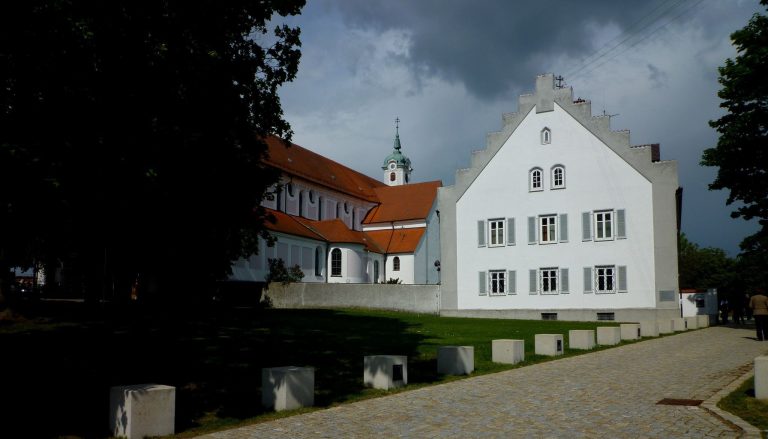
St. Veit is an Evangelical Lutheran parish church in Leipheim, Bavaria, Germany, built at the end of the fourteenth century. Its name is the German form of Saint Vitus, a Christian martyr venerated as a saint. The church belongs to the Evangelical Lutheran Church in Bavaria, within the Augsburg church district and the Neu-Ulm deanery, a regional administrative grouping of congregations.
Organ history
Paul Prescher of Nördlingen installed the church’s first organ in 1687. When a replacement was built in 1766, the earlier instrument was sold to Oberfahlheim. Ulm organ builder Georg Friedrich Schmahl made the new organ in the South German Baroque style. Joseph Speidel extensively repaired it in 1822 and added a 16-foot trombone-bass stop, a pipe rank with a particular pitch range. Occasional repairs followed through 1963.
Between 1911 and 1922, the congregation raised money for a proposed organ based on a design by Steinmeyer, a German organ-building firm. The planned instrument would have had two hand keyboards, a foot keyboard, 26 stops, or sets of pipes selected for particular sounds, and numerous playing aids. A new front in a revived Gothic style was also planned. Hyperinflation erased the savings and brought the project to an end. Paul Ott thoroughly renovated the existing organ in 1932.
In 1960, organ builder Gerhard Schmid received a commission for a new instrument, which was inaugurated on 7 July 1963. After a general renovation of the church was completed in 2020, the congregation sought a comprehensive repair of the organ because of serious defects. The Lenter workshop carried out the work in 2026, aiming to bring the sound closer to Schmahl’s instrument while retaining Schmid’s additions.
Remains
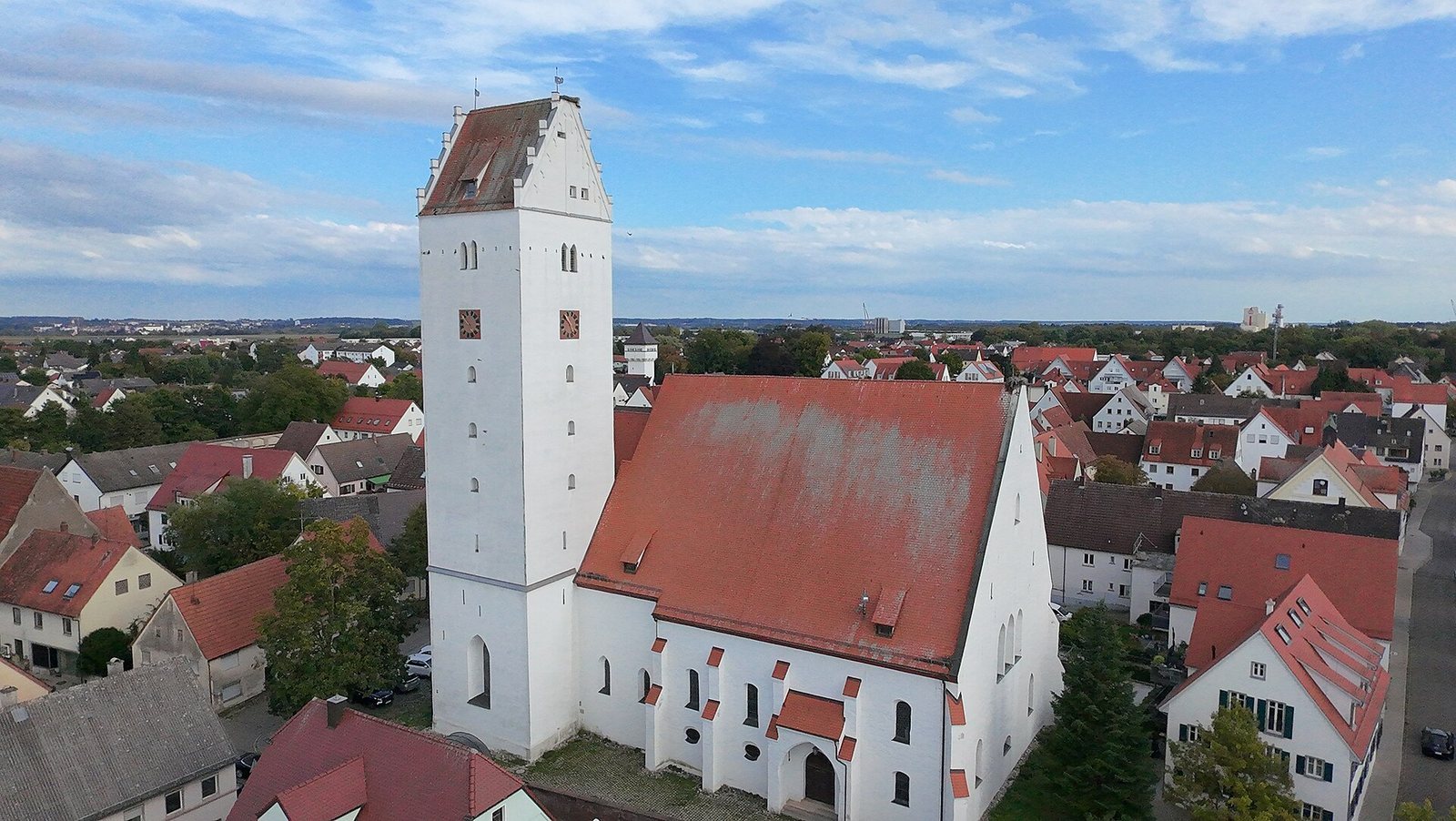
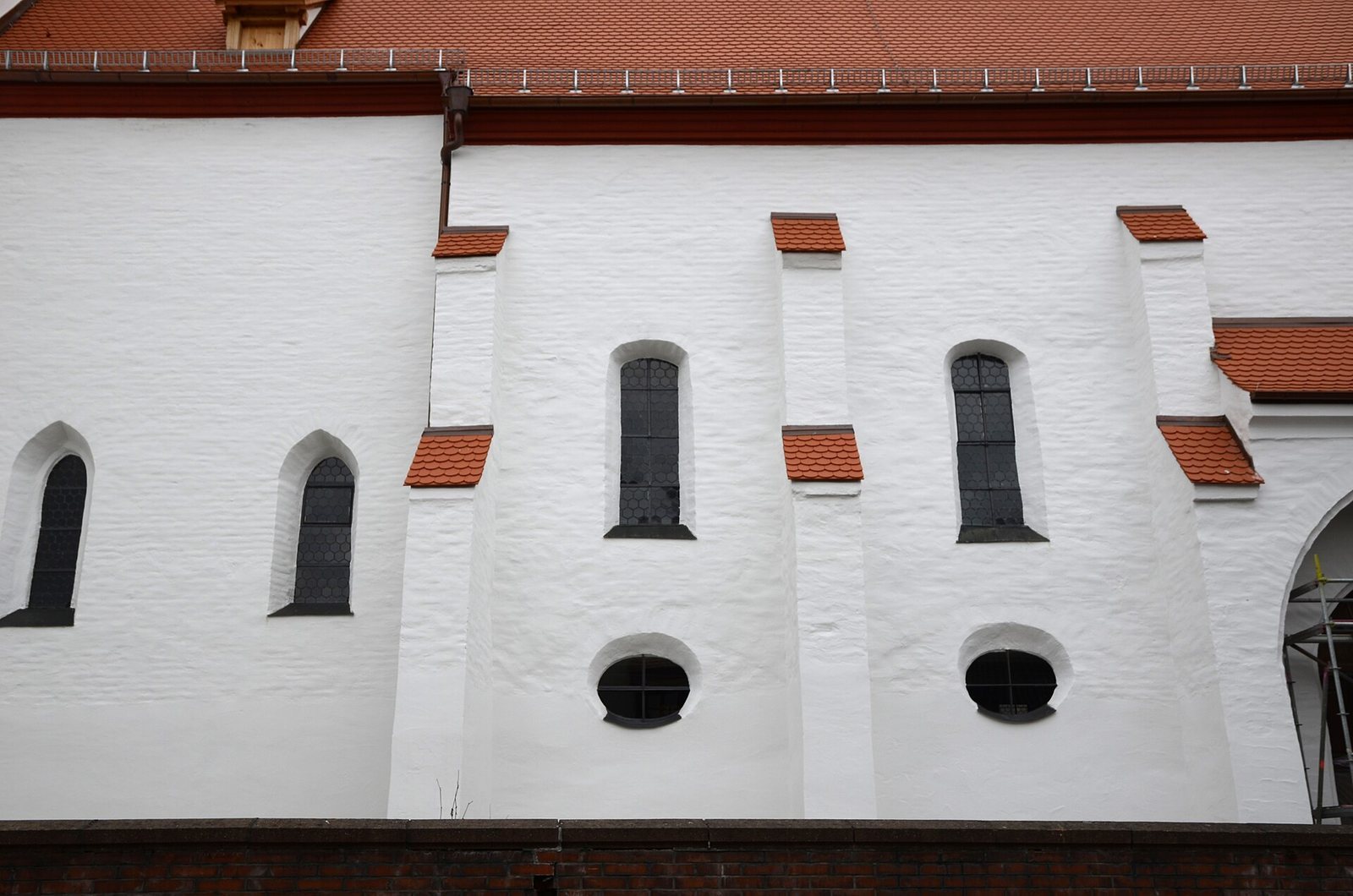
The church has a pseudo-basilica plan, with a central nave higher than its two side aisles but without a full row of high windows. A choir projects northeast from the nave and ends in three sides; buttresses support it.
Choir, tower, and altar
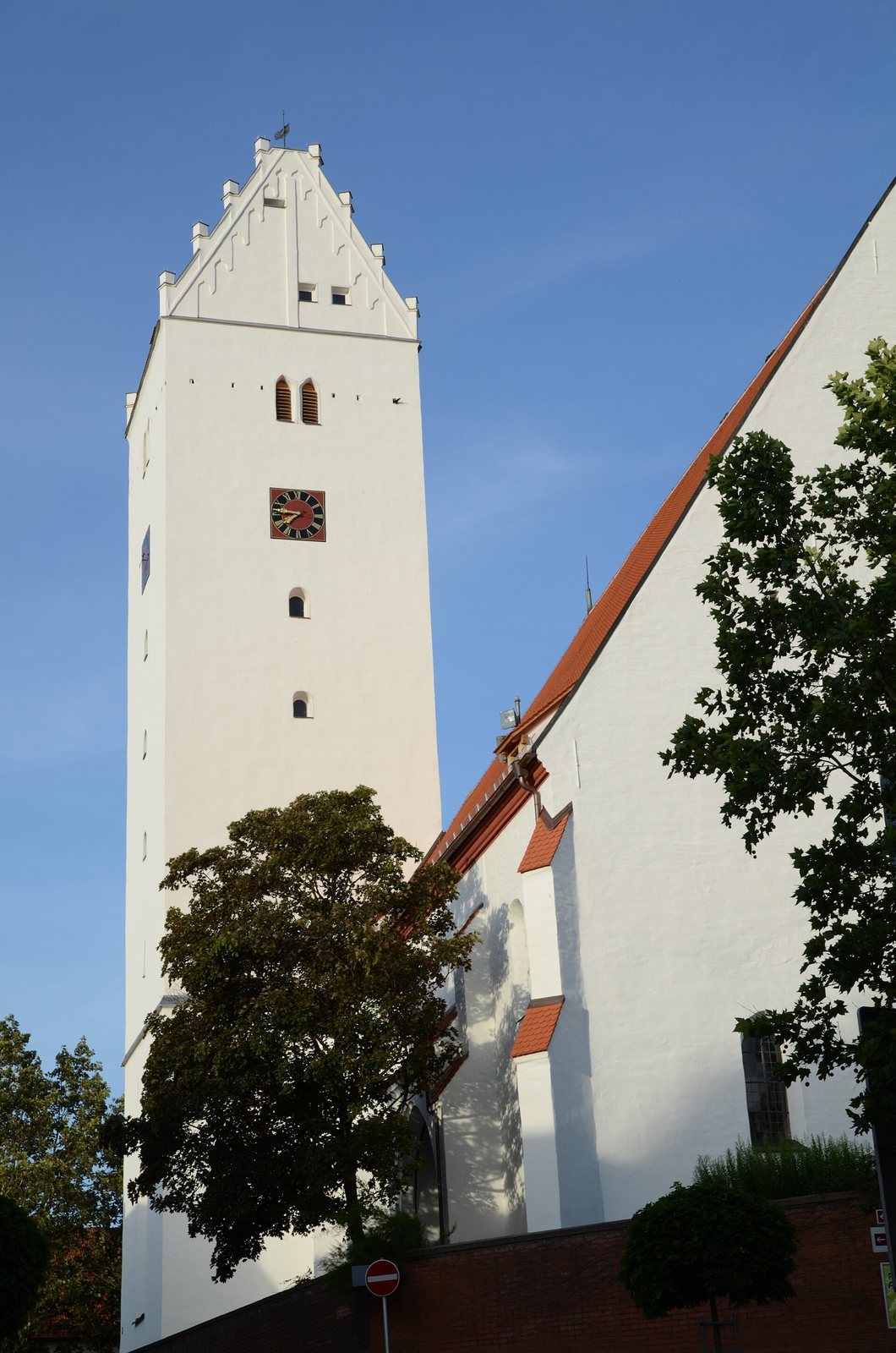
A tower stands against the choir’s northeast wall. It began as a late Romanesque choir tower and was later raised to make room for a clock and bell frame. Its saddle roof, with two sloping sides, lies between gables decorated with slender pinnacles. The high altar retable, or framed altar panel, was furnished by the older brother of Bonifacius Stöltzlin and depicts the Last Supper.
Organ
Schmahl’s instrument
Schmahl’s organ had one manual, played by hand, and a pedal, played by foot. Its specification included a pedal coupler linking the pedal to the manual. The C-sharp keys in both sounded C-sharp.
Schmid’s instrument and later changes
Schmid’s organ reused two windchests, which supply air to pipes, and 291 pipes from Schmahl’s instrument. Some pipes were moved and substantially changed in tone. The old case was adapted, and a rear organ division was added behind the player. The two-manual, pedal instrument used mechanical connections between keys and pipe controls, as well as slider windchests whose movable parts direct air to selected pipes. In 2026, an additional windchest was installed behind the old case, and the pipes’ dense arrangement was loosened.