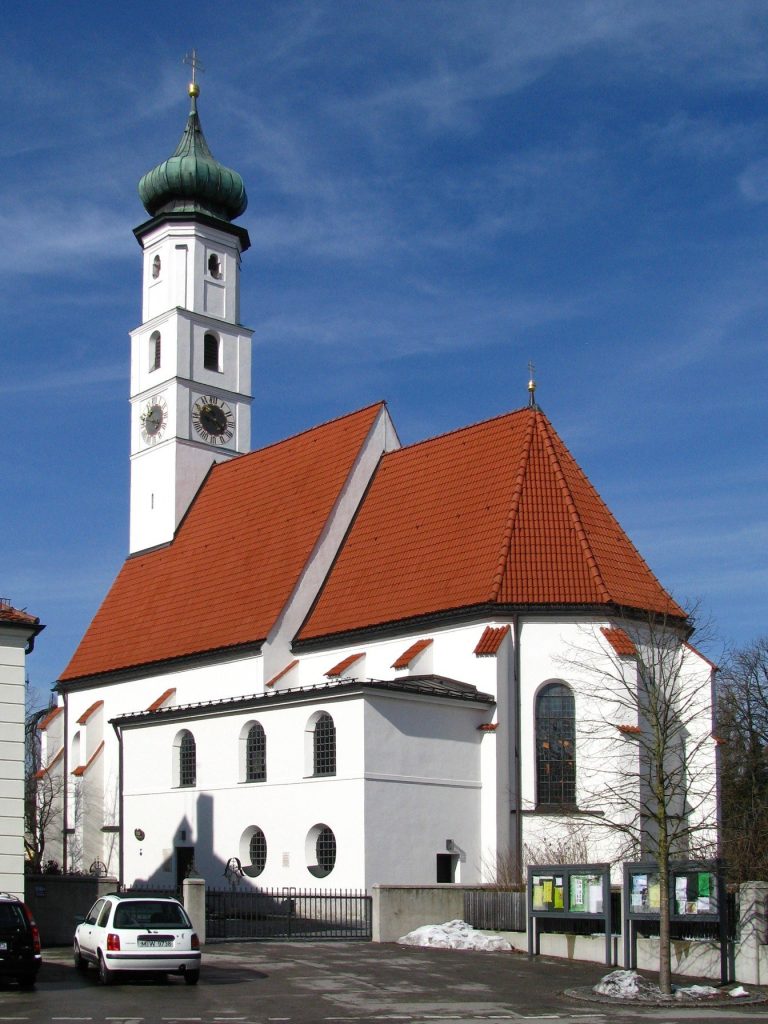
St. Stephan: Roman Catholic Parish Church in Oberhaching
Site at a Glance
- Popularity
- Very Low
- Country
- Germany
- Primary era
- Modern
- Eras represented
- Medieval, Early Modern, Modern
- Civilizations
- Duchy of Bavaria, Electorate of Bavaria, Holy Roman Empire, Kingdom of Bavaria
- Site type
- Religious
- Remains
- Church
On this page7 sections
History
St. Stephan is a Roman Catholic parish church in Oberhaching, Germany, first built in the thirteenth century as a Romanesque choir-tower church, with its tower above the area around the altar. It belongs to the Munich-Southeast deanery, a regional grouping of parishes, within the Archdiocese of Munich and Freising, a major territorial jurisdiction of the Catholic Church.
Medieval foundation
The church was established in the thirteenth century with a tower over the choir, the area around the altar. Its original form was Romanesque.
Baroque and Neo-Gothic rebuilding
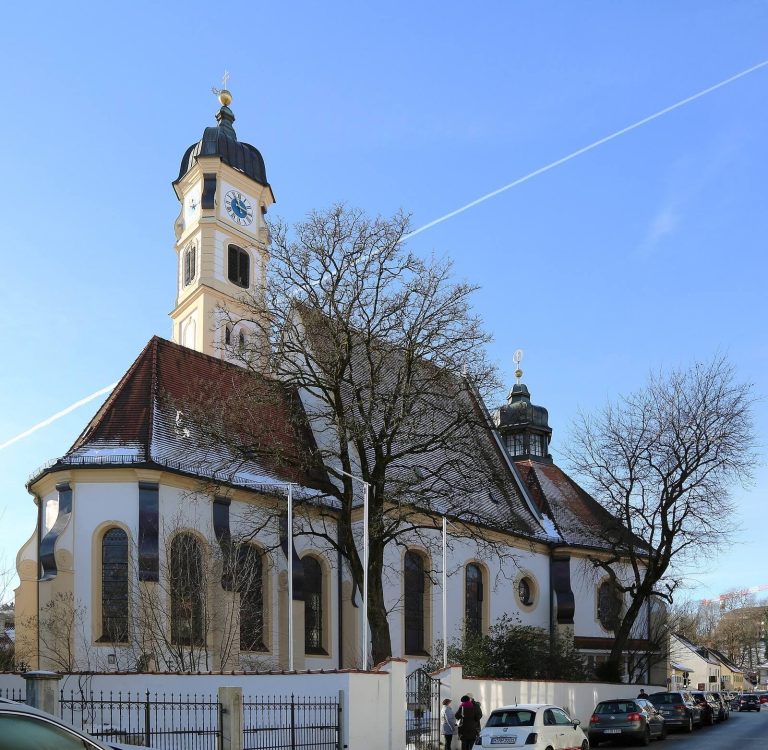
In 1725–26, the nave was enlarged in a Baroque redesign prepared by Georg Persch. In 1843, its exterior walls were reduced to 1.75 metres. They were rebuilt in the Neo-Gothic style in 1846–49 to plans by Gottfried Fischer, and the nave was extended by one bay.
Parish life and recent changes
Since 1978, horses and horse-drawn vehicles have made three circuits of the church each December 26 for the annual St. Stephen’s Day ride. The feast day commemorates Stephen and is traditionally observed on that date in Western churches. The church interior was renovated in 2023.
Remains
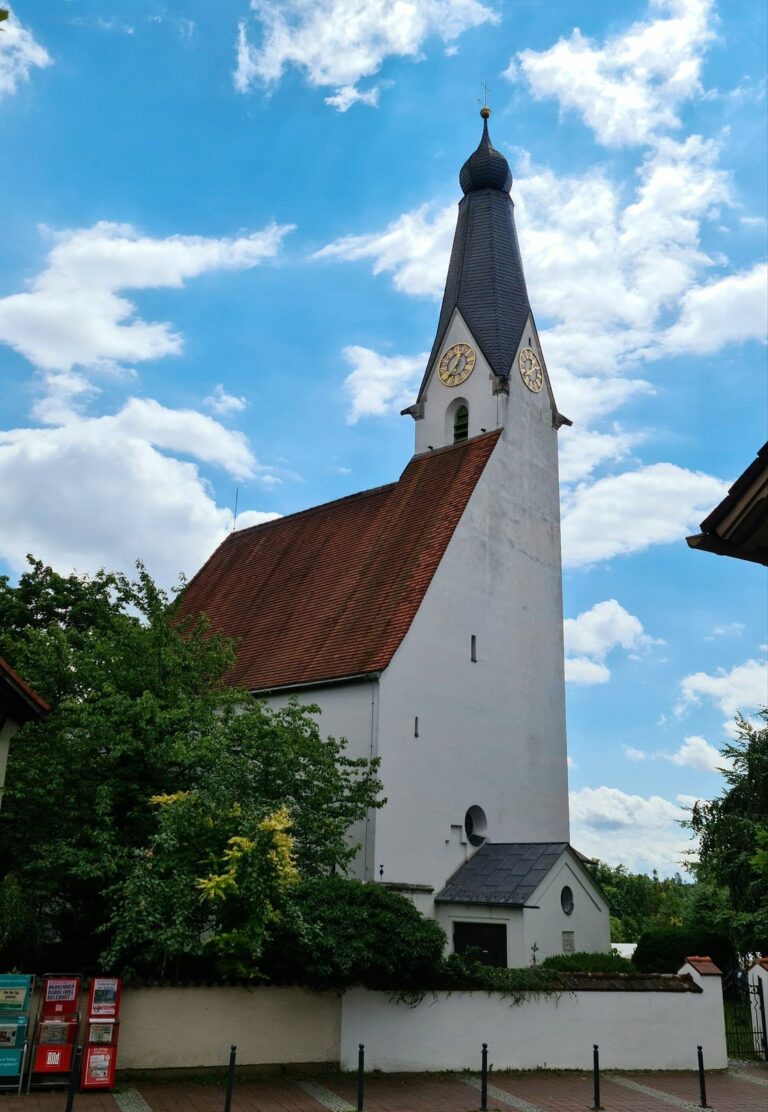
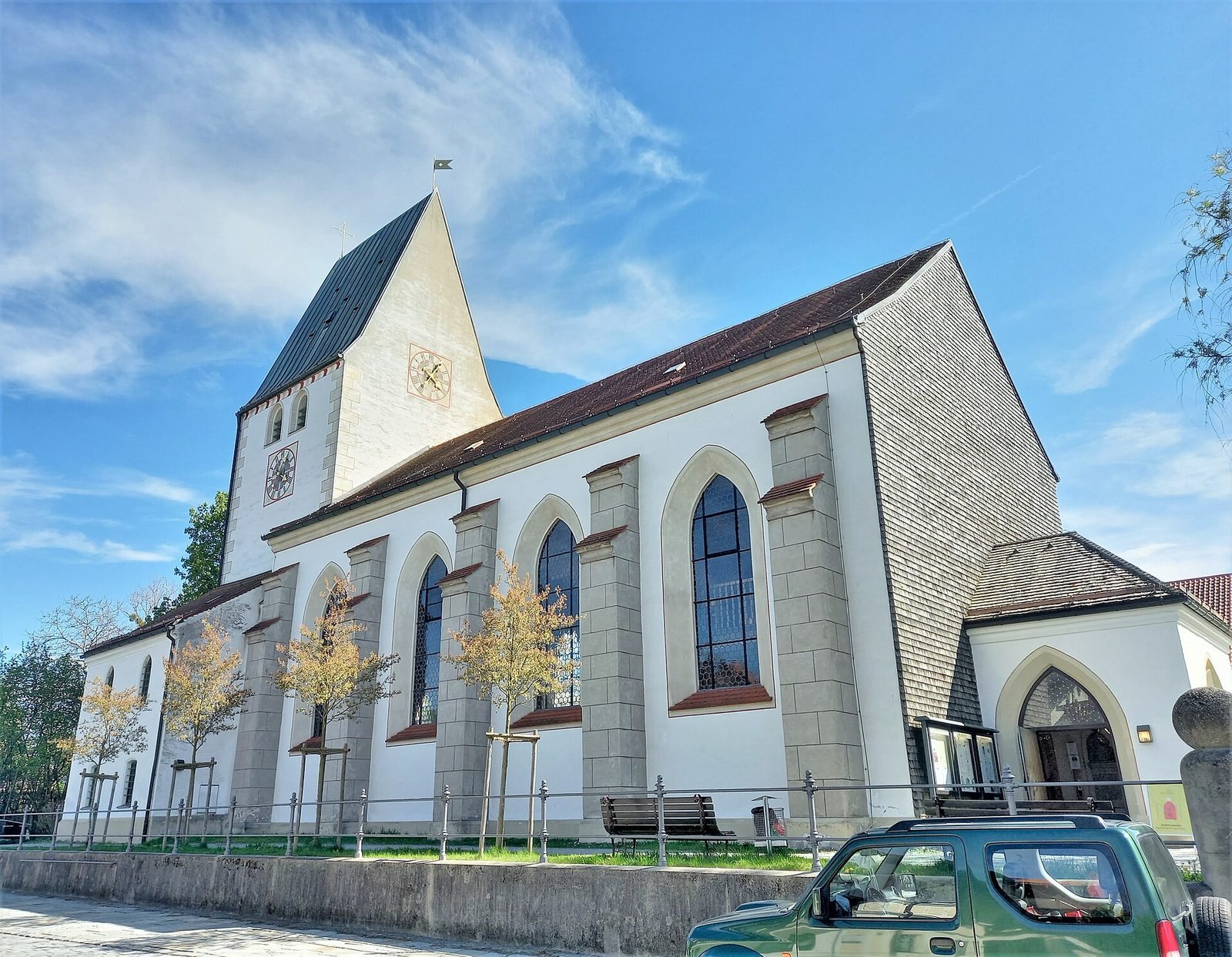
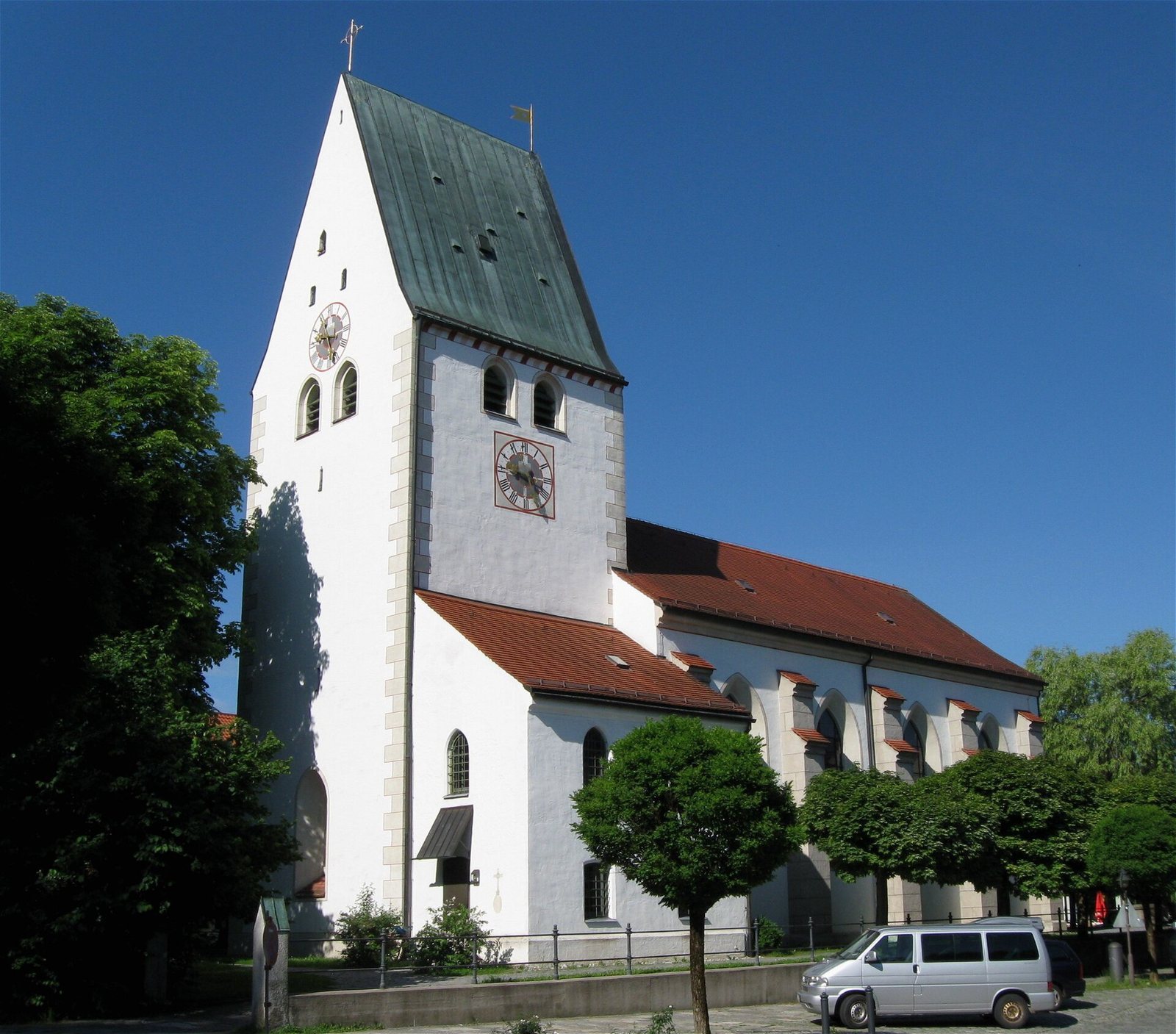
The church is arranged around a nave and a tower above the choir. Its exterior includes a west porch leading to the portal and a sacristy attached to the tower’s north wall.
Exterior and tower
Buttresses support the nave. An oratory, a room set aside for prayer, occupies the upper floor of the sacristy. The tower has a saddle roof, a roof with two sloping sides; its upper floor contains the clock and a wooden frame for the bells. Since 1997, five bronze bells cast by four different founders have hung side by side in that frame.
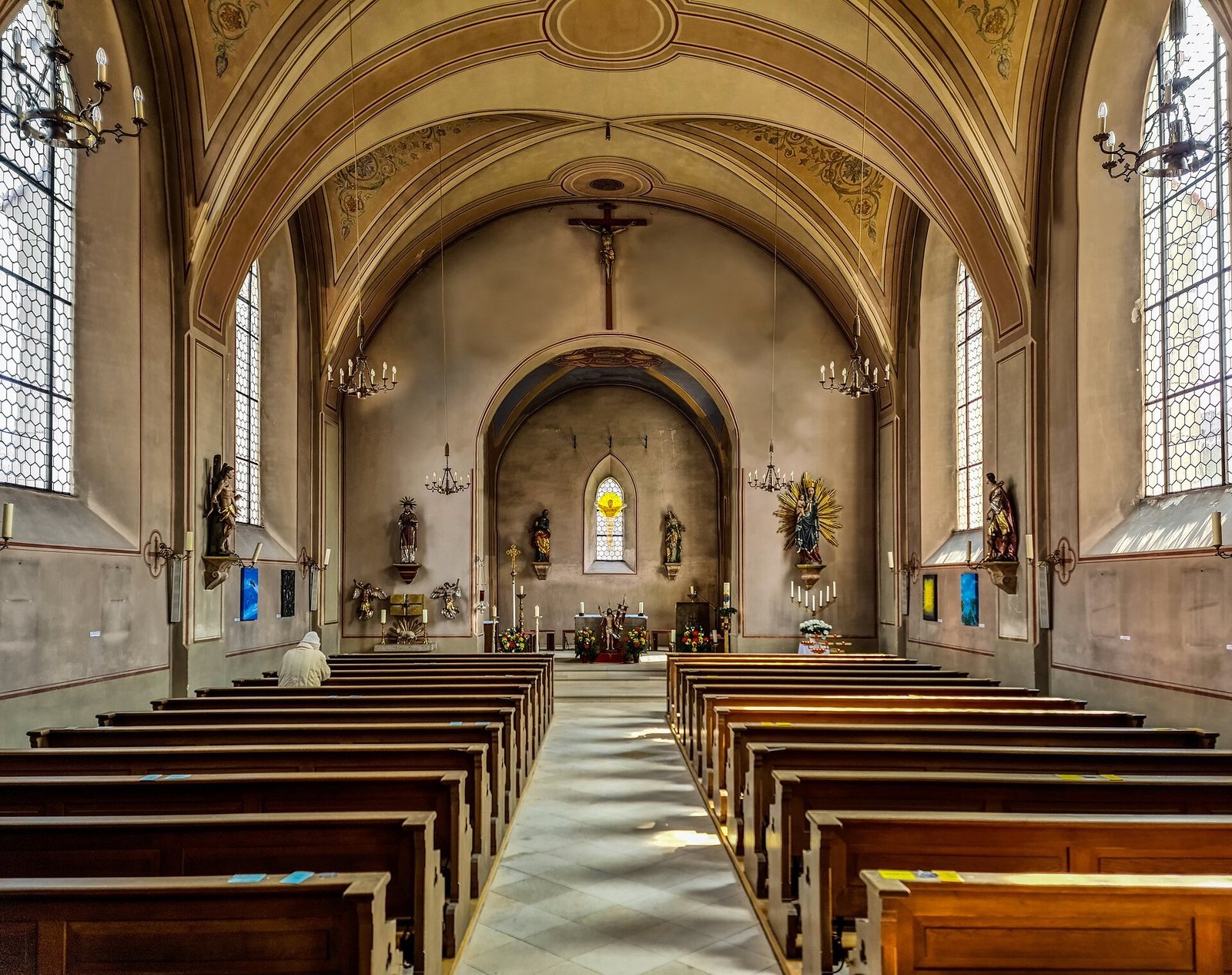
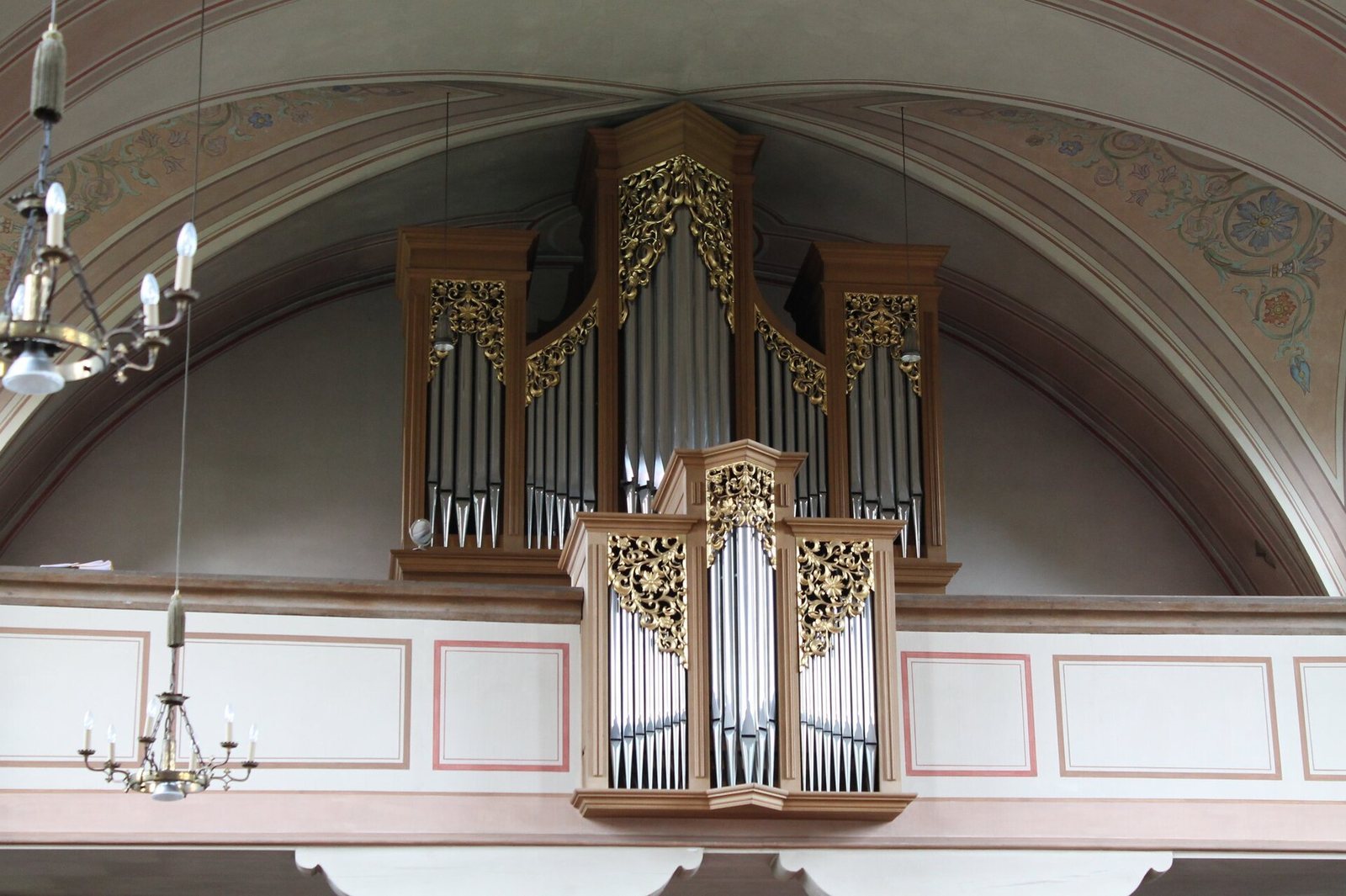
Interior and organ
The nave has a lunette vault, a barrel-shaped ceiling intersected by smaller vault openings, and an organ stands on the gallery. Built by Dieter Schingnitz in 1990, the instrument has 25 stops, which control its available sounds, two manuals (keyboards), and a foot-operated pedal. Slider chests distribute wind to the pipes, while mechanical key and stop action connects the player’s controls to the organ’s mechanisms. Standard couplers link its keyboards and pedal. The organ also has cuckoo and nightingale effects and uses Kirnberger III, a historical keyboard tuning.